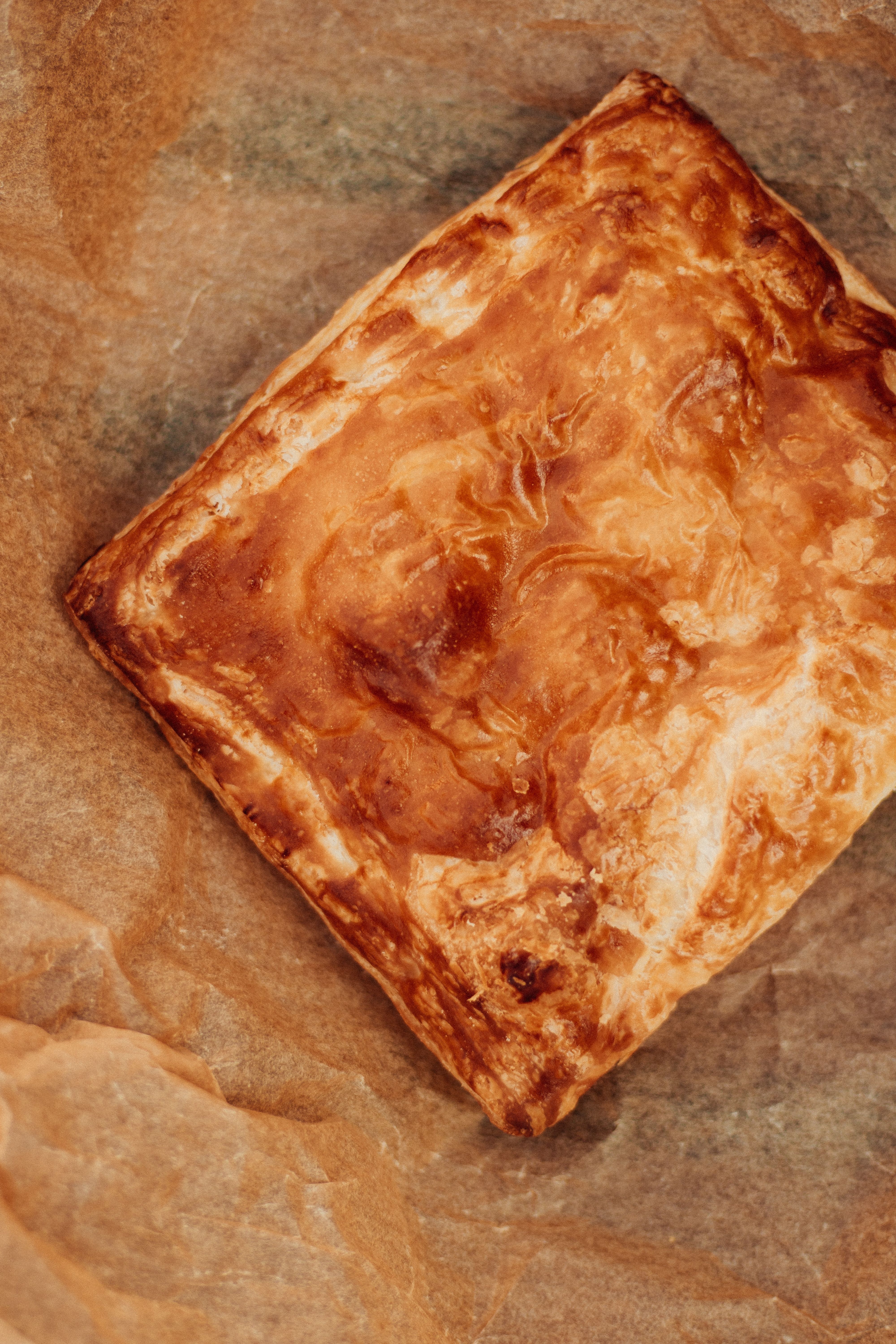
Photo: Anhelina Vasylyk / Pexels
Panamanian
Hojaldre
The diets react (see scores below)
Common Ingredients
- flour
- baking powder
- sugar
- salt
- butter
- water
- oil
Specific recipes may vary.
Incompatible with 11 of 11 diets
Diet Ratings
Hojaldre is a Panamanian fried dough made primarily from wheat flour and sugar — both of which are strictly incompatible with a ketogenic diet. Wheat flour is a high-glycemic grain that delivers a massive net carb load (roughly 70-75g net carbs per 100g), and added sugar compounds the problem further. Even a small serving would likely exceed an entire day's keto carb allowance. While butter and oil are keto-friendly fats, they cannot offset the dominant carbohydrate content from flour and sugar. This dish is essentially a fried bread, placing it in the same category as donuts or beignets — a clear avoid on any ketogenic protocol.
Hojaldre as listed contains butter, which is a dairy product derived from animal milk and therefore not vegan. The dish is a fried or baked dough common in Panamanian cuisine, and while most of its ingredients (flour, baking powder, sugar, salt, water, oil) are plant-based, butter is a clear animal-derived ingredient that disqualifies it from vegan approval. A vegan version is easily achievable by substituting butter with a plant-based alternative such as vegan margarine or additional oil, which would make it fully compliant.
Some plant-based whole-food advocates would note that even a butter-free version would still be a refined, heavily processed fried dough with little nutritional value, and would rate it as caution rather than approve regardless of the butter substitution.
Hojaldre is a Panamanian fried dough made almost entirely from non-paleo ingredients. Wheat flour is a grain and one of the most clearly excluded foods in the paleo framework. Baking powder is a processed additive. Sugar is refined. Salt is an excluded additive. Butter is dairy. The frying oil is almost certainly a seed or vegetable oil. There is not a single paleo-compliant ingredient in this dish — it is essentially pure grain-based, processed dough. This is as far from paleo as a food can get.
Hojaldre is a Panamanian fried dough made primarily from refined white flour, butter, and oil, then deep-fried. It directly contradicts Mediterranean diet principles on multiple fronts: it is made with refined grains (white flour) rather than whole grains, contains butter (a saturated animal fat rather than olive oil), is deep-fried, and offers minimal nutritional value. There are no whole grains, legumes, vegetables, or other plant-forward components. As a processed, refined-grain fried bread with added fats and sugar, it falls firmly in the 'avoid' category.
Hojaldre is a Panamanian fried dough made almost entirely from plant-based ingredients: wheat flour, baking powder, sugar, and plant oil. These are among the most prohibited foods on the carnivore diet. Flour is a grain product, sugar is a plant-derived sweetener, baking powder contains plant-derived starches, and the frying oil is plant-based. The only marginally carnivore-adjacent ingredient is butter, but even that is present in a negligible role within an otherwise entirely plant-based dish. There is no animal protein, no organ meat, no meaningful animal fat — this is a fried bread, completely incompatible with carnivore principles at every level.
Hojaldre is a Panamanian fried dough — essentially a bread/pastry made from wheat flour. Flour (a grain product) is explicitly excluded on Whole30, and sugar is also an excluded ingredient. Beyond the excluded ingredients, even if one attempted to make a grain-free, sugar-free version, Hojaldre falls squarely into the 'no recreating baked goods' rule — it is a fried dough/bread product explicitly the type of food Whole30 prohibits regardless of ingredient substitutions.
Hojaldre is a Panamanian fried dough made primarily from wheat flour, which is high in fructans — one of the most significant FODMAPs. Wheat flour is clearly rated high-FODMAP by Monash University, and there is no fermentation process (like in sourdough) or other mechanism to reduce fructan content in this recipe. A standard serving of hojaldre would involve a substantial amount of wheat flour, far exceeding any safe fructan threshold during the elimination phase. The remaining ingredients — baking powder, sugar, salt, butter, water, and oil — are all low-FODMAP and pose no concern. However, the wheat flour alone makes this dish unsuitable for the FODMAP elimination phase.
Hojaldre is a Panamanian fried bread made from refined white flour, butter, and deep-fried in oil. It conflicts with multiple core DASH principles: it is made from refined (not whole grain) flour, contains saturated fat from butter, is deep-fried adding significant total fat, contains added salt, and offers no meaningful potassium, magnesium, calcium, or fiber. DASH emphasizes whole grains over refined grains, limits saturated fat, and discourages fried foods. As a breakfast staple it provides mostly empty refined carbohydrates and fat with no lean protein or vegetables to offset its nutritional shortcomings.
Hojaldre is a Panamanian fried bread made almost entirely of refined white flour, butter, and oil, with added sugar. From a Zone Diet perspective, this dish is deeply problematic on multiple fronts. First, it provides virtually no protein — the Zone requires approximately 30% of calories from lean protein at every meal, and hojaldre offers none. Second, the carbohydrate base is high-glycemic refined white flour and sugar, exactly the type of 'unfavorable' carbohydrate Dr. Sears explicitly warns against, triggering rapid insulin spikes that push the body out of the Zone. Third, the fat profile is poor — butter contributes saturated fat and the frying oil is likely an omega-6-heavy seed oil, neither of which aligns with Zone's preference for monounsaturated fats and anti-inflammatory omega-3s. There is no meaningful fiber, no polyphenols, and no micronutrient density. Unlike most foods that can be incorporated into Zone blocks with careful portioning, hojaldre has no favorable macronutrient component to anchor a Zone meal. Pairing it with a protein source and vegetables could theoretically rescue the overall meal ratio, but the hojaldre itself contributes only glycemic load and inflammatory fat, offering nothing Zone-favorable in return.
Hojaldre is a Panamanian fried bread made from refined white flour, butter, sugar, and frying oil. From an anti-inflammatory perspective, this dish is problematic on multiple fronts. Refined white flour is a high-glycemic refined carbohydrate that spikes blood sugar and promotes inflammatory markers like CRP and IL-6. Added sugar compounds the glycemic load. Butter contributes saturated fat, which anti-inflammatory frameworks consistently recommend limiting. Deep or pan frying in oil (likely a refined vegetable or seed oil) adds additional pro-inflammatory potential, particularly if the oil is heated to high temperatures, which can generate oxidized lipids and aldehydes. There are no meaningful anti-inflammatory components — no omega-3s, antioxidants, polyphenols, fiber, or phytonutrients. The dish is essentially a combination of refined carbohydrates, saturated fat, and fried oil, which is precisely the nutritional profile that anti-inflammatory nutrition science identifies as promoting chronic low-grade inflammation.
Hojaldre is a Panamanian fried dough made primarily from refined flour, butter, and oil — deep-fried to achieve its characteristic puffy, crispy texture. It offers virtually no protein, no fiber, and is high in refined carbohydrates, saturated fat, and calories from frying oil. This combination is particularly problematic for GLP-1 patients: the high fat content worsens nausea, bloating, and reflux by further slowing already-delayed gastric emptying; the refined flour and sugar spike blood sugar with no nutritional payoff; and the fried preparation adds empty calories that displace nutrient-dense foods. As a breakfast item, it fails on nearly every GLP-1 dietary priority — protein (#1), fiber (#2), low fat (#3), and nutrient density (#6). A typical serving provides minimal satiety value relative to its caloric load, making it especially counterproductive when appetite is already suppressed.
*See how scores were generated at our methodology page.
Nutritional profile
Six traits that cut across every diet.
Fiber & Plants
How much whole-plant food and fiber it delivers.
Healthy Fats
The quality of its fats (unsaturated, omega-3).
Whole / Unprocessed
How close it is to its natural, unprocessed form.
Gut Gentle
How easy it is on digestion (low FODMAP, few irritants).
Low Glycemic
How little it spikes your blood sugar.
Protein Density
How much protein it packs per calorie.
Controversy Index
Higher controversy = more disagreement between diets.