Photo: Eliézer Fernandes / Pexels
Panamanian
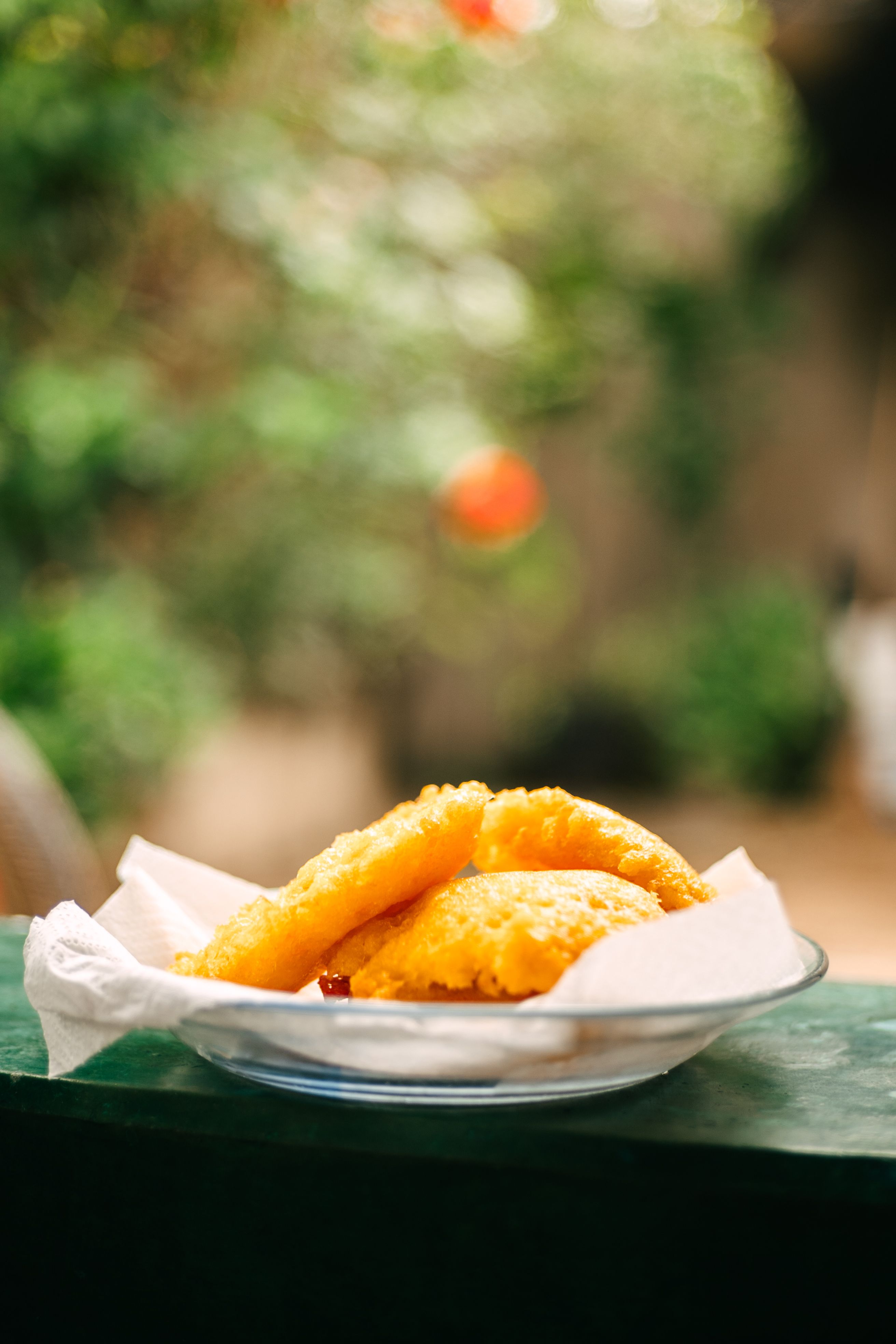
Patacones
The diets react (see scores below)
Common Ingredients
- green plantains
- oil
- salt
- garlic
- water
Specific recipes may vary.
Incompatible with 4 of 11 diets
Diet Ratings
Patacones are twice-fried green plantain slices, and despite being made with keto-friendly oil and salt, the primary ingredient — green plantains — is fundamentally incompatible with ketogenic diets. Green plantains are starchy vegetables with approximately 24-27g of net carbs per 100g. A typical serving of patacones (2-3 slices, ~100-150g of plantain) would consume virtually an entire day's carb budget in a single side dish, making ketosis unsustainable. The frying in oil does add fat, but this does not offset the extreme carbohydrate load. The fact that plantains are unripe (green) slightly reduces sugar content compared to ripe plantains, but they remain high in resistant starch and total carbohydrates — still far too high for keto.
Patacones are twice-fried green plantain slices, a traditional Panamanian (and broader Latin American) street food. All listed ingredients — green plantains, oil, salt, garlic, and water — are entirely plant-based with no animal products or animal-derived ingredients. The dish is minimally processed and built around a whole plant food (plantain), making it highly compatible with a whole-food plant-based diet. The only minor consideration is the type of oil used for frying, but oil itself is vegan. This is a straightforward approval with no meaningful debate within the vegan community.
Patacones (twice-fried green plantains) have multiple paleo violations. While green plantains themselves are a starchy fruit generally acceptable in paleo, the preparation introduces two clear disqualifiers: added salt and an unspecified oil. In Panamanian cooking, patacones are almost universally fried in seed oils (canola, vegetable, or corn oil), which are explicitly excluded from paleo. Added salt is also discouraged. Even if a compliant oil like coconut or avocado oil were substituted and salt omitted, the dish would still be borderline due to its heavily processed, deep-fried nature — which contradicts the paleo philosophy of minimally processed foods. The garlic and water are fine, but the oil and salt as listed make this a dish to avoid.
If prepared with a paleo-approved fat (coconut oil or avocado oil) and salt is omitted or minimized, some paleo practitioners — particularly those following Mark Sisson's Primal Blueprint approach — would consider unsalted plantains fried in coconut oil an acceptable occasional starch. The plantain itself is a whole food and not a grain or legume.
Patacones are twice-fried green plantains, a whole plant food with good fiber and resistant starch content. The ingredients are simple and minimally processed — green plantains, garlic, salt, and water are all Mediterranean-compatible. The key variable is the oil: the Mediterranean diet strongly favors extra virgin olive oil, but patacones are traditionally fried in vegetable or palm oil. If prepared with olive oil (or even a neutral oil), the dish becomes more compatible. However, deep frying in general adds significant fat and reduces the healthfulness compared to roasted or baked preparations. Green plantains themselves are nutritious starchy vegetables, analogous to potatoes, which are acceptable in the Mediterranean diet in moderation. The dish is not a staple Mediterranean food but does not fundamentally contradict its principles when prepared thoughtfully.
Some Mediterranean diet practitioners would rate this higher, noting that plantains are a whole, unprocessed plant food similar to root vegetables used in traditional Mediterranean cooking, and that frying in good-quality olive oil is consistent with Mediterranean culinary traditions (e.g., Spanish patatas bravas). Others would caution that deep-frying any food, regardless of oil type, is discouraged in modern clinical Mediterranean diet guidelines.
Patacones are fried green plantains — a classic Central American side dish made entirely from plant-based ingredients. Green plantains are a starchy fruit, garlic is a plant, and oil (unspecified, but contextually vegetable/plant oil) is also plant-derived. There are zero animal products in this dish. Every single ingredient violates carnivore diet principles: plantains are high-carbohydrate plant food, plant oils are explicitly excluded, and garlic is a plant seasoning. This dish is fundamentally incompatible with the carnivore diet at the most basic level.
Patacones (twice-fried green plantain slices) are made from entirely Whole30-compliant ingredients: green plantains, oil, salt, garlic, and water. All of these are explicitly allowed on the program. However, patacones fall into a gray zone similar to plantain chips or tostones — they are a starchy, fried, chip-like food that mimics the role of crackers or chips in a meal. The official Whole30 program explicitly lists 'chips' and 'french fries' as prohibited under Rule 4 (no recreating junk food/snack foods), even when made with compliant ingredients. Fried plantain slices served as a snack or dipper function essentially as chips, which conflicts with the spirit of the program. As a side dish accompanying a meal (not as a snack or chip substitute), the argument for compliance is stronger, but the dish's chip-like format and typical usage still invite scrutiny.
Official Whole30 guidelines explicitly exclude 'chips' and 'french fries' even from compliant ingredients, and some practitioners would classify patacones as a chip analog that violates the spirit of Rule 4. However, others in the Whole30 community argue that patacones are a culturally traditional whole-food side dish — not a packaged snack substitute — and that plantains as a whole food should not be penalized simply for being sliced and fried, much like roasted sweet potato slices are accepted.
Patacones are twice-fried green plantain slices. Green plantains themselves are low-FODMAP at moderate servings per Monash University (unripe/green plantains are generally considered low-FODMAP due to their resistant starch content rather than fermentable sugars). The oil and salt are FODMAP-free. However, the ingredient list includes garlic, which is one of the highest-FODMAP foods (fructans) and should be avoided during elimination phase. The critical question is how garlic is used: if it is only used in the soaking water (a common preparation method where plantains are briefly soaked in salted garlic water before the second fry), FODMAPs from garlic are water-soluble and may transfer into the plantain flesh to some degree, making this riskier than garlic-infused oil. If garlic is rubbed on the surface or included in a dipping sauce, FODMAP exposure increases further. The dish cannot be fully approved as typically prepared due to garlic presence. A garlic-free or garlic-infused-oil version would be low-FODMAP.
Monash University confirms garlic is high-FODMAP even in small amounts due to fructans, and clinical FODMAP practitioners universally advise avoiding garlic during elimination. While garlic-infused oil is safe (FODMAPs are water-soluble), garlic soaked in water — a common patacones preparation — can leach fructans into the food, making the safety of this dish preparation-dependent and difficult to guarantee in restaurant or traditional home-cooking settings.
Patacones (twice-fried green plantain discs) are made from green plantains, which are a nutritious whole food rich in potassium, fiber, and resistant starch — all aligned with DASH principles. However, the preparation method involves deep or shallow frying in oil, which significantly increases total fat and caloric density. The added salt is also a concern for sodium-conscious DASH followers. Green plantains themselves would be an excellent DASH food (approve-level), but the frying process moves this dish into the caution range. The oil used matters: if a heart-healthy unsaturated oil (e.g., canola, sunflower) is used and salt is minimal, this is a reasonable occasional side dish. The sodium level depends heavily on how much salt is added during preparation.
NIH DASH guidelines do not specifically address fried plantains, but emphasize limiting added fats and sodium. Some DASH-oriented nutritionists note that when patacones are prepared with moderate amounts of a heart-healthy unsaturated oil (not tropical oils) and minimal salt, the underlying nutritional value of green plantains (high potassium, fiber) makes them an acceptable moderate-portion side — more lenient DASH interpretations may rate these closer to a 6, while stricter sodium and fat guidelines would keep them at a 4-5.
Patacones (twice-fried green plantains) present a mixed Zone picture. Green plantains are notably lower on the glycemic index than ripe plantains or white starches, making them a more favorable carbohydrate than many alternatives. However, the frying process introduces a significant fat load — typically using vegetable or seed oils high in omega-6 fatty acids — which conflicts with Zone's anti-inflammatory emphasis on monounsaturated and omega-3 fats. As a side dish with no protein, patacones would need to be carefully portioned and paired with a lean protein and ideally a monounsaturated fat source to balance a Zone meal. A small serving (roughly 1-2 blocks of carbohydrate) could technically fit within a Zone-balanced plate, but the frying oil and the starchy density make careful measurement essential. The absence of protein means this dish contributes only to the carb and fat blocks, and the fat quality is unfavorable.
Some Zone practitioners and later Sears writings emphasize the anti-inflammatory index over strict glycemic index alone. Green plantains have a lower GI than ripe plantains and are a whole-food carbohydrate source with some resistant starch, which could be viewed more favorably. If cooked in olive oil or avocado oil rather than conventional vegetable oil, the fat quality concern is substantially reduced, potentially pushing the rating toward a 5-6.
Patacones (twice-fried green plantain slices) have a mixed anti-inflammatory profile. Green plantains themselves are a nutritional positive: they are a resistant starch-rich whole food with meaningful fiber, potassium, vitamin B6, and vitamin C, and resistant starch feeds beneficial gut microbiota — an indirect anti-inflammatory mechanism. Garlic adds genuine anti-inflammatory benefit (allicin, organosulfur compounds). Salt is neutral in modest culinary quantities. The critical variable is the frying oil. Patacones are traditionally fried in vegetable or refined oils — if a high omega-6 seed oil (corn, sunflower, cottonseed) is used repeatedly at high heat, the dish accumulates oxidized lipids and excess omega-6, which are pro-inflammatory. If fried in a more stable fat (coconut oil, avocado oil, or even lard), the inflammatory burden is lower, though still not ideal. The twice-frying method also adds meaningfully to total oil absorption compared to a single fry or baking. The dish is not processed, contains no added sugars, trans fats, or artificial additives, and the base ingredient is a whole food — so it avoids the worst-case anti-inflammatory concerns. Overall, it lands in the 'caution' range: acceptable occasionally, but the frying method and oil choice are pivotal, and it lacks the omega-3s, polyphenols, or antioxidants that would push it toward approval.
Some anti-inflammatory nutritionists would rate this more favorably, emphasizing that green plantains are a whole, minimally processed food with resistant starch and fiber that supports gut health — a core anti-inflammatory pillar — and that moderate frying in a stable oil is not meaningfully harmful in a balanced diet. Others following stricter anti-inflammatory protocols (such as those emphasizing low glycemic load or oil-free eating) would rate it lower, citing the frying process, oil oxidation risk, and the relatively high caloric density with minimal micronutrient payoff compared to the raw vegetable category.
Patacones are twice-fried green plantain discs — a preparation method that makes them fundamentally incompatible with GLP-1 dietary priorities. The double-frying process loads each serving with fat, worsens nausea and bloating (key GLP-1 side effects), and slows an already delayed gastric emptying. While green plantains do offer some resistant starch and modest fiber, those benefits are largely offset by the frying. The dish provides negligible protein, no declared protein source, and the calories present are dominated by fat and starch rather than nutrients GLP-1 patients critically need. As a side dish with empty-calorie profile, it competes directly with nutrient-dense foods for the limited appetite window these patients have.
*See how scores were generated at our methodology page.
Nutritional profile
Six traits that cut across every diet.
Fiber & Plants
How much whole-plant food and fiber it delivers.
Healthy Fats
The quality of its fats (unsaturated, omega-3).
Whole / Unprocessed
How close it is to its natural, unprocessed form.
Gut Gentle
How easy it is on digestion (low FODMAP, few irritants).
Low Glycemic
How little it spikes your blood sugar.
Protein Density
How much protein it packs per calorie.
Controversy Index
Higher controversy = more disagreement between diets.
Diet-Specific Tips
 Vegan — 9/10
View tips
- Green plantains are a whole plant food — fully vegan
- All five ingredients are plant-derived with no animal products
- Minimal processing: sliced, fried, smashed, re-fried
- Salt, garlic, and water are universally vegan
- Oil type may vary (vegetable, coconut, palm) but all are plant-based
- No cross-contamination concerns inherent to the dish itself
 Mediterranean — 5/10
View tips
- Green plantains are a whole plant food with fiber and resistant starch — Mediterranean-compatible ingredient
- Oil type is critical: traditional preparation uses non-olive oils, which are less aligned with Mediterranean principles
- Deep frying adds substantial fat and is not encouraged, even with olive oil
- Garlic, salt, and water are all Mediterranean-friendly ingredients
- No added sugars, processed ingredients, or animal products
- Conceptually similar to fried potatoes, which are acceptable occasionally in Mediterranean eating
 Whole30 — 5/10
View tips
- All individual ingredients (green plantains, oil, salt, garlic, water) are Whole30-compliant
- Patacones are twice-fried and function as a chip/cracker analog, which Whole30 Rule 4 explicitly prohibits
- Official Whole30 lists 'chips' and 'french fries' as excluded even with compliant ingredients
- Cultural context as a traditional side dish (not a packaged snack) may support a more lenient interpretation
- Compliant as a meal side component is more defensible than as a standalone snack or chip substitute
 Low-FODMAP — 5/10
View tips
- Green plantains are generally low-FODMAP at standard servings
- Garlic is high-FODMAP due to fructans and should be avoided during elimination phase
- Garlic soaked in water (common in patacones prep) can transfer water-soluble FODMAPs into the plantain
- Oil and salt are FODMAP-free
- Safety depends heavily on preparation method — garlic-free version would be approvable
- Dish is preparation-dependent; difficult to guarantee FODMAP safety as traditionally made
 DASH — 5/10
View tips
- Green plantains are naturally rich in potassium and fiber — strong DASH positives
- Frying significantly increases fat content and caloric density
- Added salt raises sodium concerns for both standard and low-sodium DASH
- Oil type matters: unsaturated oils (canola, sunflower) are preferable to tropical oils
- Portion control is important — a small serving is more compatible than a large one
- Preparation method (amount of oil, amount of salt) greatly influences DASH compatibility
 Zone — 4/10
View tips
- Green plantains have a lower glycemic index than ripe plantains, making them a more favorable Zone carbohydrate than many starchy foods
- Frying typically uses omega-6-heavy seed oils, which conflict with Zone's anti-inflammatory and monounsaturated fat priorities
- High caloric density from frying makes portion control critical to stay within Zone carb and fat block targets
- No protein content — must be paired with lean protein to form any portion of a Zone meal
- Small servings can fit within Zone carb blocks, but the dish is difficult to balance solo as a Zone component
- Oil choice (olive vs. vegetable) significantly affects Zone compatibility
 Anti-Inflammatory — 5/10
View tips
- Green plantains are a whole food with resistant starch, fiber, potassium, and vitamin C — moderate anti-inflammatory base
- Garlic provides allicin and organosulfur compounds with documented anti-inflammatory effects
- Twice-frying increases oil absorption significantly compared to baking or boiling
- Oil type is unspecified — high omega-6 seed oils (common in traditional preparation) would worsen the profile; stable oils (avocado, coconut) would improve it
- No added sugars, trans fats, artificial additives, or highly processed ingredients
- No omega-3 fatty acids, polyphenols, or other strongly anti-inflammatory components present
- Resistant starch in green plantains supports gut microbiome health, an indirect anti-inflammatory pathway