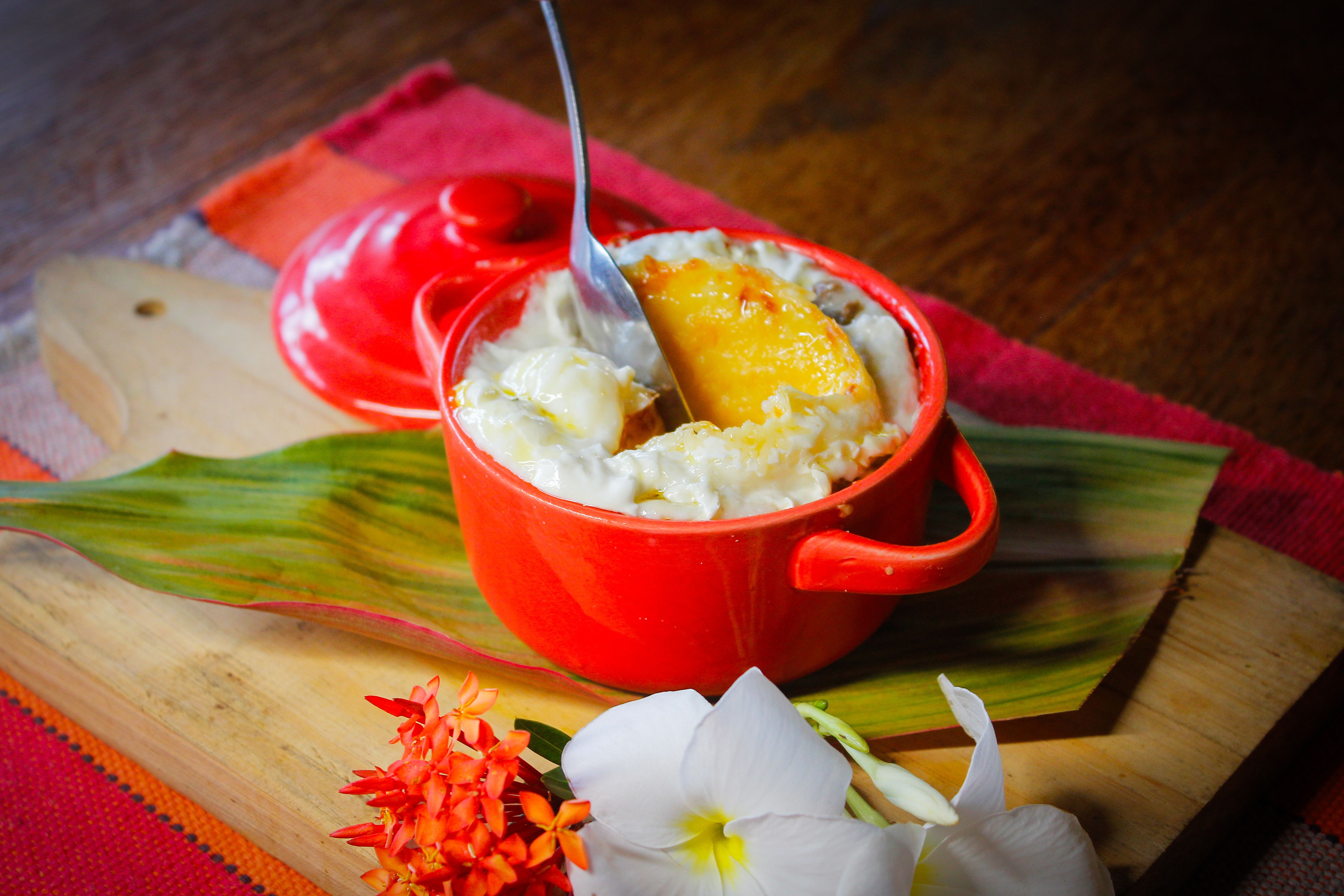
Photo: Caio Niceas / Pexels
Panamanian
Tamal de Olla
The diets react (see scores below)
Common Ingredients
- corn masa
- chicken
- tomatoes
- bell pepper
- olives
- raisins
- annatto
- onion
- garlic
Specific recipes may vary.
Incompatible with 6 of 11 diets
Diet Ratings
Tamal de Olla is built on a corn masa base, which is the primary and disqualifying ingredient for keto. Corn masa is a high-carb grain product — a typical serving delivers 25-40g of net carbs from the masa alone, immediately threatening or exceeding most keto daily limits in a single dish. Raisins compound the problem by adding significant sugar (dried fruit is strictly excluded on keto). The remaining ingredients — chicken, tomatoes, bell pepper, olives, onion, garlic, and annatto — are mostly keto-compatible in moderate amounts, but they cannot redeem a dish whose structural foundation is a high-carb grain. There is no practical portion size that makes this dish compatible with ketosis.
Tamal de Olla contains chicken as the primary protein, which is unambiguously an animal product and therefore incompatible with a vegan diet. All other ingredients (corn masa, tomatoes, bell pepper, olives, raisins, annatto, onion, garlic) are plant-based, but the presence of chicken alone disqualifies this dish entirely. A vegan adaptation could substitute the chicken with jackfruit, mushrooms, or legumes.
Tamal de Olla is fundamentally built on corn masa, a nixtamalized corn dough that is a grain product and a clear paleo exclusion. Corn is a grain, and masa (ground corn) is explicitly off-limits under all mainstream paleo frameworks regardless of preparation method. While the remaining ingredients — chicken, tomatoes, bell pepper, onion, garlic, and annatto — are paleo-friendly, and olives and raisins fall into acceptable territory, the dish's defining base ingredient is non-negotiable. No amount of compliant toppings or fillings can redeem a dish whose structural foundation is a prohibited grain. The olives may also contain added salt depending on preparation, adding a secondary concern.
Tamal de Olla is a Panamanian steamed corn masa dish with chicken, vegetables (tomatoes, bell pepper, onion, garlic), olives, raisins, and annatto. From a Mediterranean diet perspective, several elements are favorable: lean poultry as the protein (acceptable in moderation), a good array of vegetables, and olives (a core Mediterranean ingredient). Corn masa is a whole grain product, though not a traditional Mediterranean grain; it is relatively unprocessed and nutritionally comparable to other whole grains. The raisins add natural fruit sweetness without added sugar. The main concern is that olive oil is not specified as the fat source, and the preparation method and overall fat profile are unknown. Chicken places this dish in the 'moderate consumption' category rather than a daily staple. Overall, this is a relatively wholesome, minimally processed dish that aligns reasonably well with Mediterranean principles despite its Latin American origins.
Some Mediterranean diet purists would note that corn masa is not part of the traditional Mediterranean grain repertoire (which favors wheat, barley, and to a lesser extent rice), and that the dish's compatibility depends heavily on how it is prepared — specifically whether lard or olive oil is used as the fat, which is a common variation in Latin American tamale traditions.
Tamal de Olla is fundamentally incompatible with the carnivore diet. The dish is built on corn masa, a grain-based starch that is explicitly excluded from carnivore. Beyond the masa, it contains multiple plant foods: tomatoes, bell pepper, olives, raisins, annatto (a plant-derived colorant/spice), onion, and garlic. While chicken is carnivore-compatible, it is a minor component surrounded by a foundation of plant ingredients. No amount of modification short of a complete recipe overhaul would make this dish carnivore-appropriate.
Tamal de Olla contains corn masa as its primary structural ingredient. Corn is explicitly excluded on the Whole30 program as a grain. Masa (ground nixtamalized corn) is a direct corn product and falls squarely within the excluded grains category. The remaining ingredients — chicken, tomatoes, bell pepper, olives, raisins, annatto, onion, and garlic — are generally Whole30-compatible (though olives and raisins should be checked for added sugars or sulfites, both of which are now allowed per 2024 rule changes). However, the corn masa alone is sufficient to disqualify this dish. There is no compliant substitution that would preserve this dish's identity as a Tamal de Olla.
Tamal de Olla contains multiple high-FODMAP ingredients that make it unsuitable during the elimination phase. Onion and garlic are among the highest-FODMAP foods tested by Monash University, both rich in fructans, and there is no safe serving size for either during elimination. Raisins are high in excess fructose and fructans and are high-FODMAP even at small quantities (Monash flags them at as little as 1 tablespoon). Olives in typical serving sizes can contribute polyols (sorbitol). Corn masa (nixtamalized corn flour) is generally considered low-FODMAP at moderate servings, and chicken, tomatoes, bell pepper, and annatto are all low-FODMAP. However, the combination of onion, garlic, and raisins — all staple ingredients in this dish that cannot be removed without fundamentally altering the recipe — makes the dish clearly high-FODMAP as traditionally prepared.
Tamal de Olla is a Panamanian stew-style tamale that contains several DASH-friendly ingredients: lean chicken (good protein source), tomatoes, bell pepper, onion, and garlic (all excellent DASH vegetables rich in potassium and antioxidants), and annatto (a natural spice with no sodium concern). However, the dish raises moderate DASH concerns. Corn masa, while a whole-grain-derived product, is typically prepared with lard or shortening, adding saturated fat, and is often salted significantly during preparation. Olives contribute meaningful sodium (roughly 100-200mg per 5 olives) and are high in fat, though it is primarily monounsaturated. Raisins add natural sugars and calories but are not prohibited in DASH. The overall sodium load depends heavily on preparation — traditional recipes using salted masa and brined olives can push sodium toward DASH limits in a single serving. The dish is not inherently incompatible with DASH but requires meaningful modifications (reduced salt in masa, rinsed olives, skinless chicken, minimal added fat) to fit comfortably within the plan.
NIH DASH guidelines do not specifically address tamales or masa-based dishes; standard DASH interpretation flags the sodium from olives and salted masa as a concern. However, updated clinical interpretations note that when prepared with vegetable oil instead of lard, reduced-sodium masa, and rinsed olives, this dish's nutrient profile — lean protein, abundant vegetables, and fiber from masa — aligns reasonably well with DASH principles, and some DASH-oriented dietitians would conditionally approve a modified version.
Tamal de Olla is a Panamanian pot tamale featuring corn masa as its primary carbohydrate base. The dish has several Zone-friendly elements — lean chicken protein, tomatoes, bell peppers, onion, and garlic are all favorable Zone ingredients. However, the carbohydrate profile is problematic for Zone compliance. Corn masa is a high-glycemic, high-density carbohydrate that Dr. Sears categorizes as an 'unfavorable' carb. Raisins add additional high-glycemic, high-sugar carbohydrates (explicitly called out by Sears as unfavorable). Together, these two ingredients make the carb load difficult to balance within a 40/30/30 ratio without dramatically shrinking the serving size. The protein from chicken is favorable and lean, but in a traditional serving the masa-to-chicken ratio will heavily skew carbohydrates beyond the Zone target, spiking insulin rather than controlling it. Olives contribute beneficial monounsaturated fat. Annatto is nutritionally neutral. This dish is not impossible to Zone-portion — a very small serving of tamal paired with extra vegetables and lean protein on the side could approximate Zone ratios — but as traditionally served, the glycemic load is too high for comfortable Zone inclusion.
Some Zone practitioners note that corn masa, while higher-glycemic than most Zone carbs, still has a lower glycemic index than white bread or refined flour, and that the fat content in masa can blunt glucose response somewhat. In Sears' later writings on polyphenols, he emphasizes the anti-inflammatory benefits of tomatoes, peppers, garlic, and annatto (a rich polyphenol source). A Zone-conscious cook could reduce masa quantity, increase chicken proportion, and omit or minimize raisins to bring the dish closer to favorable ratios. In that modified form, some practitioners would rate this a 5-6.
Tamal de Olla is a Panamanian pot-cooked tamale with a mixed anti-inflammatory profile. On the positive side, the dish contains several beneficial ingredients: garlic and onion are well-established anti-inflammatory foods rich in allicin and quercetin; tomatoes provide lycopene and vitamin C; bell peppers are high in antioxidants including vitamin C and carotenoids; annatto (achiote) contains bixin, a carotenoid with antioxidant properties; and lean chicken is an acceptable moderate protein under anti-inflammatory guidelines. Raisins contribute polyphenols but also concentrated natural sugars, which in large amounts can be mildly pro-inflammatory. Olives are a net positive, providing monounsaturated fats and polyphenols consistent with anti-inflammatory eating. The main concern is the corn masa base: while whole-grain corn has some fiber and nutrients, commercial masa is typically made from nixtamalized refined corn flour, which has a moderate-to-high glycemic load and relatively low fiber compared to whole grains — making it a refined carbohydrate source that anti-inflammatory frameworks recommend limiting. The overall dish is far from a red-flag food: it contains no trans fats, no added sugars beyond raisins, no processed additives, and is built around vegetables and lean protein. However, the refined masa base and the dish's relatively carbohydrate-heavy, low-omega-3 composition prevent a full approval. It is a reasonable, moderately anti-inflammatory meal — especially compared to processed alternatives — but not optimized for anti-inflammatory eating.
Some anti-inflammatory practitioners, particularly those influenced by the AIP or grain-free protocols, would flag even nixtamalized corn as potentially problematic due to lectin content and glycemic impact. Mainstream anti-inflammatory authorities like Dr. Weil are more permissive of whole and traditionally prepared corn, and would likely view this dish favorably given its vegetable-rich, lean-protein composition and use of anti-inflammatory aromatics.
Tamal de Olla is a Panamanian pot tamale made with corn masa (the dominant ingredient by volume), chicken, and a sofrito-style filling with tomatoes, bell pepper, onion, garlic, olives, raisins, and annatto. The chicken provides a meaningful protein source, and the vegetables contribute fiber and micronutrients. However, corn masa is a refined, starchy carbohydrate with moderate caloric density and low protein density per calorie, which dilutes the overall protein-to-calorie ratio of the dish. Raisins and olives add sugar and fat respectively, though in small amounts typical for this recipe. The dish is generally low in saturated fat and not fried, making it reasonably easy to digest. The main concern for GLP-1 patients is the masa-heavy composition: a standard serving may deliver only 15-20g of protein while contributing a significant carbohydrate load, making it harder to hit protein targets without eating a larger portion — which conflicts with the small-portion reality of GLP-1 therapy. It is not a dish to avoid, but it benefits from pairing with an additional lean protein source or reducing the masa ratio. Preparation method (pot-cooked, not fried) is a meaningful advantage.
Some GLP-1-focused dietitians are comfortable with masa-based dishes because they are whole-food, home-cooked, and culturally appropriate — factors that support long-term dietary adherence, which is clinically significant. Others flag the high starch-to-protein ratio as a practical barrier to meeting daily protein targets on a reduced appetite, particularly in early stages of GLP-1 therapy when appetite suppression is strongest.
*See how scores were generated at our methodology page.
Nutritional profile
Six traits that cut across every diet.
Fiber & Plants
How much whole-plant food and fiber it delivers.
Healthy Fats
The quality of its fats (unsaturated, omega-3).
Whole / Unprocessed
How close it is to its natural, unprocessed form.
Gut Gentle
How easy it is on digestion (low FODMAP, few irritants).
Low Glycemic
How little it spikes your blood sugar.
Protein Density
How much protein it packs per calorie.
Controversy Index
Higher controversy = more disagreement between diets.
Diet-Specific Tips
 Mediterranean — 6/10
View tips
- Lean poultry protein — acceptable in moderation per Mediterranean guidelines
- Corn masa is a minimally processed whole grain, though not traditional to Mediterranean cuisine
- Olives are a core Mediterranean ingredient, adding authenticity
- Vegetables (tomatoes, bell pepper, onion, garlic) strongly align with Mediterranean principles
- Raisins provide natural fruit sweetness without added sugars
- Fat source unspecified — traditional tamales often use lard, which would reduce compatibility
- No red meat, refined grains, or added sugars identified
 DASH — 5/10
View tips
- Corn masa typically prepared with lard (saturated fat concern) and salt (sodium concern)
- Olives add notable sodium and should be rinsed or used sparingly
- Chicken is a DASH-approved lean protein source
- Tomatoes, bell pepper, onion, and garlic are core DASH vegetables
- Annatto is a DASH-neutral natural spice/colorant
- Raisins contribute natural sugars but are acceptable in small amounts
- Total sodium highly preparation-dependent; home-cooked version allows better control
- Substituting vegetable oil for lard and using low-sodium masa significantly improves DASH compatibility
 Zone — 4/10
View tips
- Corn masa is a high-glycemic 'unfavorable' Zone carbohydrate and dominates the dish's volume
- Raisins are explicitly categorized as unfavorable/high-glycemic in Zone methodology
- Chicken is a lean, favorable Zone protein source
- Tomatoes, bell peppers, onion, and garlic are all favorable low-glycemic Zone vegetables
- Olives provide favorable monounsaturated fat
- Traditional serving size will heavily over-represent carbohydrates relative to 40/30/30 targets
- Annatto is a polyphenol-rich ingredient aligned with Sears' anti-inflammatory focus
- Dish can be partially remediated by reducing masa and raisins and increasing chicken proportion
 Anti-Inflammatory — 6/10
View tips
- Garlic and onion: strong anti-inflammatory alliums with allicin and quercetin
- Bell peppers and tomatoes: rich in carotenoids, lycopene, and vitamin C
- Annatto (achiote): source of bixin, an antioxidant carotenoid
- Olives: monounsaturated fats and polyphenols — anti-inflammatory positive
- Lean chicken: acceptable moderate protein per anti-inflammatory guidelines
- Corn masa: refined carbohydrate with moderate glycemic load — a limiting factor
- Raisins: concentrated natural sugars offset polyphenol benefit
- No trans fats, seed oils, added sugars, or processed additives
- Low in omega-3 fatty acids — not optimized for anti-inflammatory profile
 GLP-1 Friendly — 5/10
View tips
- Corn masa dominates the dish, creating a high carbohydrate-to-protein ratio unfavorable for GLP-1 protein targets
- Chicken provides protein but its proportion relative to masa determines whether a serving meets the 15-30g per meal target
- Not fried and pot-cooked — easy digestibility is a genuine advantage for GLP-1 patients
- Raisins add simple sugars; olives add fat — both minor but worth noting at small GLP-1 portion sizes
- Vegetables (tomatoes, bell pepper, onion, garlic) add fiber and micronutrients, supporting the fiber priority
- No significant GLP-1 side-effect triggers (not greasy, not spicy, not carbonated)
- Best consumed as a smaller portion paired with additional lean protein to compensate for low protein density