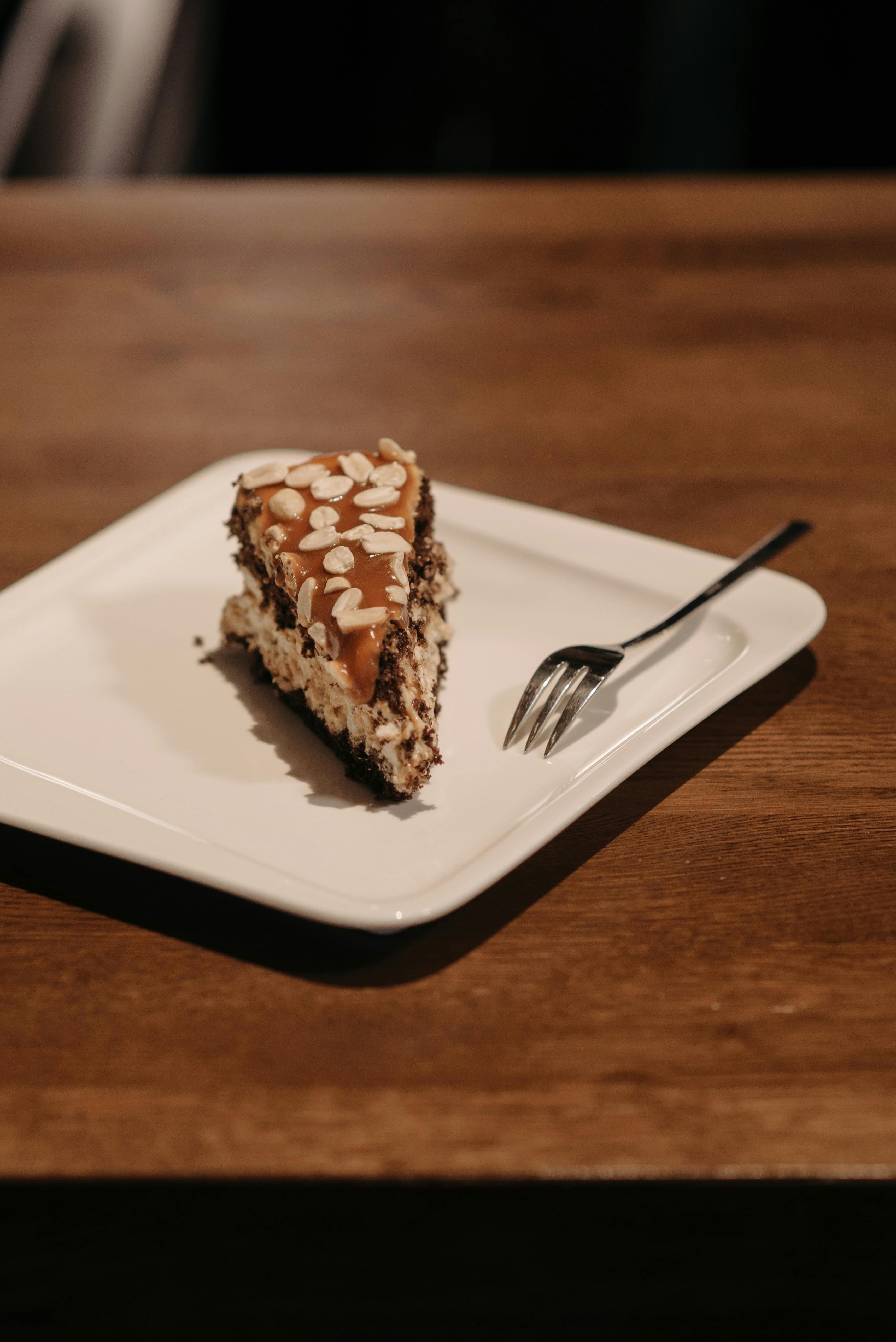
Photo: Pavel Danilyuk / Pexels
The diets react (see scores below)
Common Ingredients
- honey
- almonds
- hazelnuts
- candied orange peel
- candied citron
- flour
- cocoa powder
- cinnamon
- cloves
- nutmeg
Specific recipes may vary.
Incompatible with 8 of 11 diets
Diet Ratings
Panforte is fundamentally incompatible with a ketogenic diet. It is a dense Italian confection built almost entirely on high-carb, keto-prohibited ingredients: honey (pure sugar), flour (grain-based carbs), and candied fruits (candied orange peel and candied citron are loaded with added sugar). Even the nuts — otherwise keto-friendly — are overwhelmed by the surrounding sugar matrix. A single small serving (30–50g) would deliver well over 20–30g of net carbs, likely consuming or exceeding the entire daily keto carb budget in one bite. There is no meaningful modification possible while still calling the dish panforte.
Panforte contains honey as a primary binding/sweetening ingredient, which is excluded by most major vegan organizations (Vegan Society, PETA) as an animal-derived product. All other ingredients — almonds, hazelnuts, candied peels, flour, cocoa powder, and spices — are fully plant-based. The dish is not entirely off-limits in vegan discourse, however, because a notable minority of plant-based eaters consider honey acceptable. The score is kept low within the 'caution' range (4) because honey is not a trace or incidental ingredient here — it is structurally central to panforte's binding and flavor. A vegan-adapted version using agave syrup or maple syrup in place of honey would score 7-8.
Some plant-based health advocates and a minority of ethical vegans argue that honey from well-managed apiaries does not involve meaningful animal exploitation or harm, and would consider honey-sweetened foods like panforte acceptable. This contrasts with the mainstream vegan position that any commercial use of bee labor constitutes exploitation of an animal.
Panforte is a traditional Sienese confection that contains multiple non-paleo ingredients. Flour (wheat) is a grain and a clear paleo violation. Candied orange peel and candied citron are typically preserved with refined sugar, another strict exclusion. While honey, almonds, hazelnuts, cocoa powder, and the spices (cinnamon, cloves, nutmeg) are individually paleo-compatible or at least debatable, the presence of wheat flour and refined sugar in this heavily processed, baked confection makes the dish firmly non-paleo. Even setting aside the flour, candied fruits represent a processed, sugar-laden ingredient far removed from anything a Paleolithic human would have consumed. The dish as a whole is a processed food product combining multiple prohibited ingredients.
Panforte is a traditional Sienese Italian confection with a complex Mediterranean diet profile. On the positive side, it contains nuts (almonds, hazelnuts) and spices that are genuinely Mediterranean staples, and honey as a natural sweetener. However, it is fundamentally a dense sweet confection: honey is a significant added sugar source, candied peels add more sugar, and refined flour contributes refined carbohydrates. The overall sugar and caloric density places it firmly in the 'treat' category rather than a dietary staple. It is not highly processed in the industrial sense — it is a traditional whole-ingredient preparation — which distinguishes it from modern confectionery. Consumed in small portions occasionally, it aligns with the Mediterranean principle of enjoying traditional foods mindfully rather than eliminating them entirely.
Some Mediterranean diet advocates would rate Panforte more favorably, noting its deep traditional Italian roots, absence of industrial processing, and meaningful nut content — arguing small portions of traditional sweets fit within a Mediterranean lifestyle. Others would push it toward 'avoid,' emphasizing that its primary energy comes from sugar and refined carbohydrates, contradicting core dietary principles regardless of its traditional origins.
Panforte is entirely incompatible with the carnivore diet. Every single ingredient is plant-derived or a plant-based product: flour (grain), almonds and hazelnuts (nuts), candied orange peel and candied citron (fruit with added sugar), honey (debated but plant-derived nectar), cocoa powder (plant), and multiple spices (cinnamon, cloves, nutmeg). There are zero animal-derived ingredients. This is a dense, sugar-laden Italian confection with no place in any tier of the carnivore diet.
Panforte contains multiple excluded ingredients that make it clearly non-compliant with Whole30. First, flour (a grain product) is explicitly excluded. Second, candied orange peel and candied citron almost certainly contain added sugar, which is excluded. Third, even if those issues were resolved, panforte is a dense Italian sweet cake/confection that falls squarely into the 'no recreating baked goods/junk food' rule — it is effectively a dessert masquerading as a snack. The combination of grain-based flour and added sugar alone is sufficient to disqualify this dish, regardless of the compliant nuts, spices, and honey present.
Panforte contains multiple high-FODMAP ingredients that make it problematic during the elimination phase. Honey is high in excess fructose and is a significant FODMAP trigger. Wheat flour contains fructans and is high-FODMAP. Candied orange peel and candied citron are typically made with large amounts of sugar and the fruit peel itself — candied citron in particular is poorly tested, but citrus peel concentrates can carry polyols and excess fructose. Almonds are low-FODMAP only at 10 nuts (approximately 12g); hazelnuts are low-FODMAP at 15g (about 10 nuts). In a dense confection like panforte, nut quantities per slice are likely to exceed these thresholds. The combination of honey (high fructose), wheat flour (fructans), and concentrated candied fruits makes this dish high-FODMAP at any realistic serving size.
Monash University has not specifically tested panforte as a dish, so the verdict relies on ingredient-level analysis. Some FODMAP practitioners might consider a very small sliver (10–15g) marginally safer if wheat flour content is minimal, but the honey content alone is a near-certain trigger — clinical FODMAP practitioners would generally advise avoiding this food entirely during elimination phase.
Panforte is a dense Italian confection that contains some DASH-friendly ingredients (almonds, hazelnuts, cocoa powder, spices) but is ultimately a high-sugar, calorie-dense sweet. Honey and candied fruits (candied orange peel, candied citron) contribute substantial added sugars, which DASH guidelines recommend limiting. The nuts provide heart-healthy unsaturated fats, magnesium, and potassium — all valued by DASH — and cocoa powder offers antioxidant benefits. However, the overall sugar load from honey and candied fruits places this firmly in the 'sweets' category that DASH restricts to ≤5 servings per week (and small portions at that). Sodium is not a major concern here. The dish is best treated as an occasional small indulgence rather than a regular snack, consistent with DASH's allowance for limited sweets.
NIH DASH guidelines categorize sweets and added sugars as foods to limit, which would make panforte a marginal choice. However, some updated DASH-oriented clinicians note that the nut content and absence of saturated fat or sodium means small portions of panforte may be more compatible with DASH than typical sweets like candy or pastries made with butter and refined sugar — emphasizing that portion size and frequency matter more than categorical exclusion.
Panforte is a dense Italian confection that is fundamentally incompatible with Zone Diet principles. Its dominant macronutrient profile is heavily carbohydrate-skewed, driven primarily by honey and candied fruits (candied orange peel and candied citron), both of which are high-glycemic, sugar-dense ingredients that Dr. Sears explicitly categorizes as unfavorable. Honey is essentially concentrated fructose and glucose with a significant glycemic impact. Candied fruits are fruits processed with added sugar, making them even higher glycemic than the already-unfavorable fresh versions. The flour adds additional high-GI refined carbohydrate load. While the almonds and hazelnuts contribute some fat (monounsaturated, which is Zone-favorable) and modest protein, they are insufficient to bring the dish anywhere near a 40/30/30 ratio. There is no meaningful lean protein source, so the 30% protein target cannot be met. The carbohydrate-to-protein ratio is wildly skewed — this is essentially a candy/confection. Even a small portion would deliver a large glucose spike with negligible protein buffering, precisely the hormonal imbalance (elevated insulin) that the Zone Diet is designed to prevent. This is not a food that can be 'portioned into' a Zone meal in any practical sense as a snack component.
Panforte is a traditional Sienese confection with a genuinely mixed anti-inflammatory profile. On the positive side, it contains several strongly anti-inflammatory ingredients: almonds and hazelnuts provide vitamin E, healthy monounsaturated fats, and polyphenols; cinnamon, cloves, and nutmeg are potent anti-inflammatory spices with antioxidant properties; cocoa powder contributes flavanols linked to reduced CRP and improved endothelial function; and honey offers some antioxidant activity compared to refined sugar. These elements give panforte a meaningful anti-inflammatory foundation. However, the concerns are real: candied orange peel and candied citron are preserved in significant amounts of added sugar, and honey — while better than refined sugar — is still a concentrated sugar source. The flour component represents a refined carbohydrate, and the overall sugar load of the dish is high, which can promote glycemic spikes and associated inflammatory signaling (via AGEs and insulin response). The anti-inflammatory spice and nut content partially offsets this, but panforte is ultimately a dessert/confection with a sugar-dominant character. Occasional consumption as part of a broader anti-inflammatory diet is acceptable, but it should not be eaten regularly in quantity.
Some anti-inflammatory practitioners, particularly those emphasizing glycemic control (e.g., Barry Sears' Zone Diet approach or blood-sugar-focused anti-inflammatory frameworks), would rate panforte more harshly given its high sugar content and refined flour, arguing that the glycemic impact overrides the benefits of nuts and spices. Conversely, proponents of Dr. Weil's more Mediterranean-influenced approach might be more permissive, noting that small portions of traditionally made sweets containing nuts, spices, and cocoa fit within a balanced anti-inflammatory lifestyle.
Panforte is a dense, calorie-concentrated Sienese confection built almost entirely on high-sugar ingredients — honey and candied fruits dominate the composition, delivering a heavy glycemic load with minimal nutritional return. While almonds and hazelnuts contribute modest amounts of unsaturated fat and a small protein fraction, the overall protein content per serving is negligible and falls far short of the 15-30g per meal target critical for GLP-1 patients. The sugar concentration is high, fat content from nuts is significant, fiber is low relative to the caloric density, and the candied fruit adds essentially empty calories. The dense, sticky texture is also poorly suited to the slowed gastric emptying caused by GLP-1 medications, increasing the risk of nausea, bloating, and prolonged GI discomfort. Spices like cinnamon, cloves, and nutmeg are benign in the small quantities present, but they do not meaningfully offset the dish's core nutritional deficits. Panforte is a nutrient-poor, high-sugar, high-calorie food that works directly against the goals of GLP-1 therapy.
*See how scores were generated at our methodology page.
Nutritional profile
Six traits that cut across every diet.
Fiber & Plants
How much whole-plant food and fiber it delivers.
Healthy Fats
The quality of its fats (unsaturated, omega-3).
Whole / Unprocessed
How close it is to its natural, unprocessed form.
Gut Gentle
How easy it is on digestion (low FODMAP, few irritants).
Low Glycemic
How little it spikes your blood sugar.
Protein Density
How much protein it packs per calorie.
Controversy Index
Higher controversy = more disagreement between diets.
Diet-Specific Tips
 Mediterranean — 4/10
View tips
- High sugar content from honey and candied fruits contradicts Mediterranean low-added-sugar principle
- Almonds and hazelnuts are genuine Mediterranean staples and nutritionally positive
- No industrial processing — traditional whole-ingredient preparation
- Refined flour contributes refined carbohydrates, not preferred over whole grains
- Aromatic spices (cinnamon, cloves, nutmeg) are consistent with Mediterranean culinary tradition
- Appropriate only as an occasional small-portion treat, not a regular snack
 DASH — 4/10
View tips
- High added sugar from honey and candied fruits conflicts with DASH limits on sweets
- Almonds and hazelnuts are DASH-approved nuts providing magnesium, potassium, and healthy fats
- Candied fruits significantly increase sugar content compared to fresh fruit
- No significant sodium concern
- Cocoa powder contributes antioxidants and is acceptable in moderation on DASH
- Overall calorie density requires strict portion control
- Falls into DASH 'sweets' category, which is limited to ≤5 small servings per week
 Anti-Inflammatory — 5/10
View tips
- Almonds and hazelnuts provide vitamin E, monounsaturated fats, and polyphenols — anti-inflammatory
- Cinnamon, cloves, and nutmeg are potent antioxidant spices with demonstrated anti-inflammatory properties
- Cocoa powder contains flavanols associated with reduced inflammatory markers
- High sugar load from candied fruits (orange peel, citron) and honey is pro-inflammatory at regular intake
- Refined flour contributes to glycemic load with limited nutritional benefit
- Honey is preferable to refined sugar but still a concentrated simple sugar
- Overall: anti-inflammatory ingredients present but undermined by high sugar content — acceptable in small, occasional portions