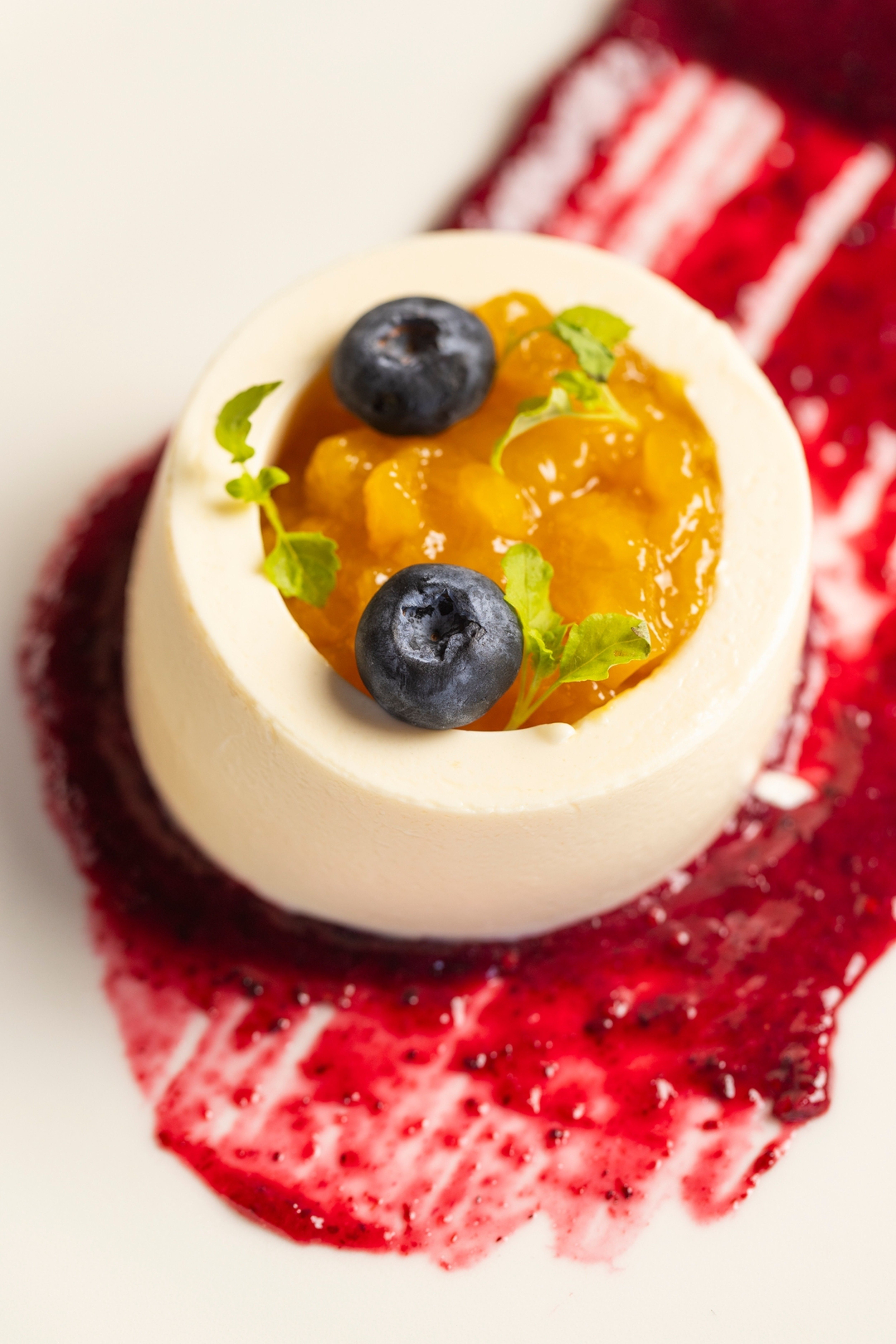
Photo: Bivouac canteen and bar / Pexels
Italian
Panna Cotta
The diets react (see scores below)
Common Ingredients
- heavy cream
- whole milk
- sugar
- gelatin
- vanilla extract
Specific recipes may vary.
Incompatible with 11 of 11 diets
Diet Ratings
Traditional Panna Cotta contains added sugar as a core ingredient alongside whole milk, making it incompatible with standard ketogenic guidelines. A typical serving (approximately 150ml) contains roughly 20-25g of net carbs from sugar alone, which can exhaust or exceed an entire day's carb allowance. The whole milk adds additional lactose carbs on top of that. While the heavy cream component is keto-friendly, the sugar and whole milk fundamentally disqualify this dish in its traditional form. A keto-adapted version using a sugar substitute (erythritol, allulose) and replacing whole milk with additional heavy cream or cream cheese would be a viable alternative, but the dish as described is not keto-compatible.
Some lazy keto or flexible keto practitioners might argue that a small portion (half serving) of a modified panna cotta — replacing sugar with keto sweeteners — could be acceptable, and might even consume the traditional version as an occasional treat if daily carbs are otherwise very low. However, the standard recipe with added sugar is broadly rejected across keto protocols.
Panna cotta is fundamentally incompatible with a vegan diet. It contains multiple animal-derived ingredients: heavy cream and whole milk are dairy products, and gelatin is derived from animal collagen (typically from boiled bones, skin, and connective tissue of pigs or cows). Every core structural ingredient in this dish is of animal origin. There is no ambiguity here — this is a classic dairy-and-gelatin dessert with no plant-based substitutions in its traditional form.
Panna Cotta is fundamentally incompatible with the paleo diet. Its core ingredients — heavy cream, whole milk, and sugar — are all explicitly excluded under paleo guidelines. Dairy in any form (including cream and milk) is a cornerstone exclusion of the paleo framework, as these foods were unavailable to Paleolithic hunter-gatherers. Refined sugar is similarly excluded as a processed, modern additive. Gelatin (from animal collagen) and vanilla extract are the only paleo-compatible components in this dish. There is no realistic paleo modification that preserves the identity of this dessert while removing its primary ingredients.
Panna cotta is a heavy cream and sugar-based dessert that conflicts significantly with Mediterranean diet principles. The primary ingredients are heavy cream (high saturated fat) and added sugar, both of which the Mediterranean diet minimizes. While dairy is permitted in moderation, the Mediterranean diet favors lower-fat dairy like yogurt and cheese in small amounts rather than heavy cream as a base ingredient. Added sugar in desserts is also discouraged. This dish provides little to no plant-based nutrition and is centered on ingredients the Mediterranean diet treats as occasional indulgences at best.
Traditional Italian cuisine, which is part of the broader Mediterranean culinary tradition, does include occasional sweet treats and dairy-based desserts as cultural foods eaten in small portions on special occasions. Some Mediterranean diet authorities, including those following the traditional dietary patterns of southern Italy, allow for modest dessert consumption as part of a balanced lifestyle, suggesting a small serving enjoyed rarely could fit within a flexible interpretation of the diet.
Panna Cotta is incompatible with the carnivore diet for multiple reasons. While heavy cream and gelatin are animal-derived, the dish contains sugar (a processed carbohydrate explicitly excluded from carnivore), vanilla extract (plant-derived flavoring), and whole milk (higher lactose dairy, debated even among permissive carnivore practitioners). The sugar alone is a hard disqualifier under any tier of carnivore eating — it is a processed plant-derived sweetener with no place in the diet. Vanilla extract adds further plant compounds. Even if one follows a lenient dairy-inclusive carnivore approach, this dessert cannot be salvaged without a fundamental reformulation that removes sugar and vanilla.
Panna Cotta contains multiple Whole30-excluded ingredients. Heavy cream and whole milk are dairy products, which are explicitly prohibited on the Whole30 program (only ghee and clarified butter are excepted). Sugar is an added sweetener, also explicitly excluded. This dish fails on at least three independent grounds, making it clearly incompatible with the program.
Panna cotta's FODMAP status hinges primarily on the whole milk content. Heavy cream is low-FODMAP even at generous servings because it is mostly fat with very little lactose. However, whole milk contains significant lactose and is rated high-FODMAP above 30ml (about 2 tablespoons) by Monash University. A standard panna cotta recipe typically incorporates a meaningful amount of whole milk alongside heavy cream. Sugar, gelatin, and vanilla extract are all low-FODMAP. The total lactose load from whole milk across a standard serving (roughly 120-150ml of finished dessert) is the key concern. If the recipe uses only a small proportion of whole milk (e.g., 60ml or less per serving), it may remain within low-FODMAP thresholds, but most traditional recipes use enough to push lactose into problematic territory. Some recipes can be adapted by substituting lactose-free milk or increasing the cream-to-milk ratio to reduce lactose load.
Monash University rates heavy cream as low-FODMAP and small amounts of whole milk may be borderline acceptable, so some clinical FODMAP practitioners consider panna cotta made with a high cream-to-milk ratio as cautiously permissible during elimination; however, strict elimination phase dietitians would advise substituting whole milk with lactose-free milk to eliminate the lactose risk entirely.
Panna cotta is fundamentally incompatible with DASH diet principles. Its primary ingredient is heavy cream, which is high in saturated fat — exactly what DASH explicitly limits. The DASH eating plan calls for fat-free or low-fat dairy, not full-fat cream. Additionally, the dish contains significant added sugar, another category DASH restricts. There are no redeeming DASH-positive nutrients in meaningful quantities: no potassium, magnesium, fiber, or calcium sufficient to offset the saturated fat and sugar load. As a snack, it provides calories almost entirely from saturated fat and simple sugars with no whole grains, vegetables, fruits, or lean protein. This is a dessert-style food that conflicts with DASH on multiple core criteria simultaneously.
Panna cotta is fundamentally incompatible with Zone Diet principles. Its primary ingredients — heavy cream, whole milk, and sugar — create a macronutrient profile that is the near-opposite of the 40/30/30 Zone target. Heavy cream contributes almost exclusively saturated fat with negligible protein, and sugar is a high-glycemic, nutritionally empty carbohydrate that Sears explicitly discourages. The protein contribution from dairy is minimal relative to the fat and carbohydrate load, making Zone balancing practically impossible without drastically reducing portion size to the point where the dish loses its culinary identity. The fat profile is dominated by saturated fat, which conflicts with Zone's emphasis on monounsaturated fats. Unlike many foods that can technically be 'blocked' into a Zone meal, panna cotta's ratio is structurally misaligned: very high fat (saturated), high simple-sugar carbs, and very low protein. Even a small portion contributes almost nothing useful toward a Zone block without massive compensatory adjustments elsewhere in the meal.
Panna cotta is built almost entirely on ingredients that anti-inflammatory frameworks place firmly in the 'limit' or 'avoid' categories. Heavy cream is high in saturated fat, which is consistently flagged as pro-inflammatory — driving up arachidonic acid pathways and potentially raising CRP. Whole milk adds further saturated fat and is a full-fat dairy product. Sugar (added refined sugar) is a central ingredient, and refined/added sugar is one of the most universally condemned pro-inflammatory substances across all anti-inflammatory protocols, directly linked to elevated IL-6 and TNF-alpha in research. There are no meaningful anti-inflammatory components: no omega-3s, no significant polyphenols or antioxidants, no fiber, no beneficial phytonutrients. Vanilla extract provides negligible benefit at culinary quantities. Gelatin is neutral. This dish is essentially a concentrated delivery vehicle for two of the most pro-inflammatory dietary components — saturated fat and added sugar — with nothing to offset them.
Panna cotta is a poor fit for GLP-1 patients. It is made almost entirely of heavy cream and whole milk, making it very high in saturated fat — exactly the fat profile that worsens GLP-1 side effects like nausea, bloating, and reflux. Slowed gastric emptying means high-fat foods linger in the stomach far longer, amplifying discomfort. Sugar is the second major contributor, adding empty calories with no fiber, no meaningful protein, and no micronutrient value. Gelatin provides a negligible amount of protein (roughly 1-2g per serving). With nearly zero fiber, poor protein density, high saturated fat, and high sugar, panna cotta fails on virtually every GLP-1 dietary priority. Even a small serving delivers empty calories that crowd out the nutrient-dense foods patients need most on a reduced appetite.
*See how scores were generated at our methodology page.
Nutritional profile
Six traits that cut across every diet.
Fiber & Plants
How much whole-plant food and fiber it delivers.
Healthy Fats
The quality of its fats (unsaturated, omega-3).
Whole / Unprocessed
How close it is to its natural, unprocessed form.
Gut Gentle
How easy it is on digestion (low FODMAP, few irritants).
Low Glycemic
How little it spikes your blood sugar.
Protein Density
How much protein it packs per calorie.
Controversy Index
Higher controversy = more disagreement between diets.