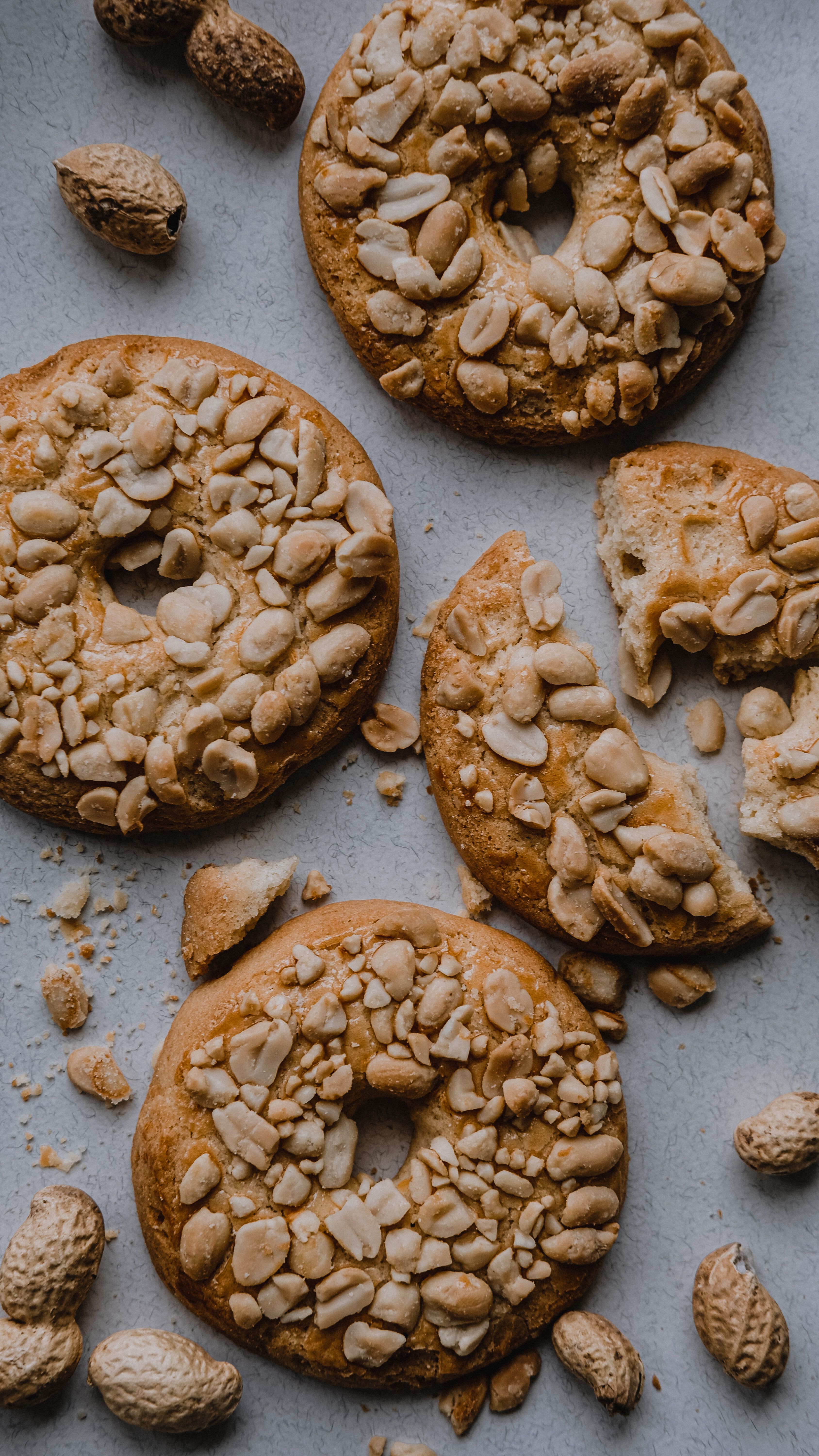
Photo: Anna Belousova / Pexels
American
Peanut Butter Cookie
The diets react (see scores below)
Common Ingredients
- peanut butter
- butter
- sugar
- brown sugar
- egg
- flour
- baking soda
- salt
- vanilla extract
Specific recipes may vary.
Incompatible with 11 of 11 diets
Diet Ratings
Peanut butter cookies are fundamentally incompatible with a ketogenic diet. The recipe contains three major keto-breaking ingredients: all-purpose flour (a grain, very high in net carbs), white sugar, and brown sugar. A single standard cookie would deliver 15-25g of net carbs, easily consuming an entire day's keto carb allowance in one serving. The sugar content alone is a zero-tolerance violation under keto rules. While peanut butter itself is borderline acceptable in strict portions, the overall formulation of this cookie is entirely incompatible with ketosis.
This peanut butter cookie recipe contains two clear animal-derived ingredients: butter (a dairy product) and egg. Both are unambiguously excluded from a vegan diet. Peanut butter, sugar, flour, baking soda, salt, and vanilla extract are all plant-based, but the presence of butter and egg makes this recipe non-vegan. Vegan versions of this cookie do exist and are common — substituting vegan butter or coconut oil for dairy butter, and using a flax egg, chia egg, or commercial egg replacer — but the recipe as listed is not vegan-compatible.
Peanut butter cookies are fundamentally incompatible with the paleo diet, containing multiple non-paleo ingredients. Peanut butter is derived from peanuts, which are legumes — strictly excluded from paleo. Wheat flour is a grain, also strictly excluded. Refined white sugar and brown sugar are processed sweeteners with no place in paleo eating. Butter is a dairy product, excluded under strict paleo guidelines. Baking soda and added salt are also non-paleo. The egg and vanilla extract are the only paleo-compliant ingredients in this recipe. With six of nine ingredients clearly violating core paleo principles, this dish is a definitive avoid with near-universal consensus across all major paleo authorities.
Peanut butter cookies are a highly processed American snack that contradicts nearly every core principle of the Mediterranean diet. The recipe is dominated by refined sugar, brown sugar, and white flour — exactly the added sugars and refined grains the Mediterranean diet minimizes. Butter replaces olive oil as the primary fat, adding saturated fat in a non-Mediterranean pattern. While peanut butter does contain plant-based protein and healthy fats, it is not a traditional Mediterranean food and here it is embedded in a high-sugar, refined-grain product that negates its nutritional value. This is an indulgent dessert-style snack with no meaningful Mediterranean credentials.
Peanut butter cookies are entirely incompatible with the carnivore diet. The vast majority of ingredients are plant-derived or processed: peanut butter (a legume), flour (grain), sugar and brown sugar (refined carbohydrates), vanilla extract (plant-derived), and baking soda. The only carnivore-compatible ingredient is the egg and butter, but they are minor components surrounded by wholly excluded foods. This is a processed, high-carbohydrate, plant-based snack with no meaningful animal nutrition.
Peanut Butter Cookies violate the Whole30 program on multiple levels. First, peanut butter is made from peanuts, which are legumes — a clearly excluded food category. Second, the recipe contains multiple forms of added sugar (white sugar and brown sugar), both explicitly banned. Third, butter (non-clarified) is a dairy product, also excluded. Fourth, flour is a grain-based ingredient, excluded. Fifth, even if all ingredients were somehow made compliant, this is a cookie — a baked good explicitly called out by Whole30 Rule 4 as a 'No Recreating Baked Goods/Junk Food' violation. This dish fails on nearly every Whole30 criterion simultaneously.
The primary FODMAP concern in this recipe is wheat flour, which is high in fructans at any standard serving size. A typical peanut butter cookie contains a meaningful amount of wheat flour, making it high-FODMAP during the elimination phase. While peanut butter itself is low-FODMAP at a standard 2-tablespoon serving (Monash rates it as low-FODMAP), and most other ingredients (butter, egg, sugar, vanilla extract, baking soda, salt) are low-FODMAP, the wheat flour is a dealbreaker. Even one or two cookies would deliver enough fructans from flour to trigger symptoms in sensitive individuals. Substituting wheat flour with a gluten-free alternative (like rice flour or a certified GF blend) would make this recipe low-FODMAP-friendly.
Peanut butter cookies are a poor fit for the DASH diet on multiple fronts. While peanut butter itself contains beneficial nutrients (potassium, magnesium, protein, healthy fats), this cookie combines it with butter (saturated fat), significant amounts of both white and brown sugar (added sugars), refined white flour (not a whole grain), and salt — all ingredients DASH explicitly limits or discourages. The end product is high in added sugar, saturated fat, sodium, and refined carbohydrates with minimal fiber, potassium, or other DASH-priority nutrients relative to caloric load. Sweets and cookies fall in the DASH 'limit' category, capped at ≤5 servings per week of small portions, and even within that allowance, a peanut butter cookie made with butter and dual sugars represents a poor use of that allowance compared to lower-fat, lower-sugar alternatives.
Peanut butter cookies are essentially a sugar and refined carbohydrate delivery vehicle with minimal Zone-friendly redeeming qualities. The macronutrient profile is severely imbalanced: dominated by high-glycemic carbohydrates (white sugar, brown sugar, refined white flour), significant saturated fat from butter, and omega-6-heavy fat from peanut butter. The 40/30/30 ratio is completely unachievable here — carbs and fat dominate while usable protein is negligible. Sugar and brown sugar are the highest-glycemic ingredients possible, which Sears explicitly lists as foods to avoid. White flour is another unfavorable high-glycemic carb. Butter adds saturated fat without the monounsaturated benefit of Zone-preferred fats like olive oil or avocado. Peanut butter itself, while containing some protein, is high in omega-6 fatty acids and is classified as an 'unfavorable' fat source in Zone methodology compared to almonds or macadamia nuts. There is no lean protein component, no low-glycemic vegetables or fruits, and no monounsaturated fat of note. Even portioning down to a single small cookie would provide almost no Zone block balance — it would simply be a small dose of the same imbalanced ratios. This is one of the clearest 'avoid' cases in Zone diet assessment.
Peanut butter cookies are a highly processed baked good with a strongly pro-inflammatory nutritional profile. The combination of refined white flour and two types of sugar (white sugar and brown sugar) represents a significant refined carbohydrate and added sugar load — both of which are well-established drivers of inflammatory markers like CRP and IL-6. Butter contributes saturated fat, which anti-inflammatory guidelines consistently recommend limiting. Peanut butter itself has a mixed profile: it contains some monounsaturated fat and resveratrol, but is relatively high in omega-6 fatty acids (linoleic acid) and lacks the omega-3 content of preferred anti-inflammatory nut butters like walnut or almond. When baked into a cookie alongside butter and sugar, any marginal benefit from the peanut butter is far outweighed by the overall inflammatory burden of the dish. The flour becomes a refined carbohydrate vehicle, the sugar load is substantial, and the saturated fat from butter pushes this firmly into pro-inflammatory territory. There are no meaningful anti-inflammatory components — no omega-3s, no polyphenols, no fiber in significant amounts, no antioxidant-rich ingredients. This is a quintessential treat food that anti-inflammatory frameworks would place firmly in the 'limit or avoid' category.
Peanut butter cookies are a poor fit for GLP-1 patients. Despite peanut butter contributing modest protein and some unsaturated fat, the overall nutritional profile is dominated by added sugars (white sugar and brown sugar), saturated fat (butter), and refined carbohydrates (white flour) — all with very low fiber and minimal micronutrient density. A standard cookie delivers roughly 8-10g of fat, 15-18g of carbohydrates (mostly sugar), and only 2-3g of protein per piece, making it a calorie-dense, nutrient-poor choice. The high sugar content risks blood sugar spikes, the saturated fat from butter can worsen GLP-1 GI side effects (nausea, bloating), and the refined flour adds empty carbohydrates without fiber. For patients already eating far fewer calories due to appetite suppression, every bite must deliver nutritional value — a cookie fails this standard decisively. The small serving size does not redeem it, as even one cookie displaces a nutritionally meaningful food choice.
*See how scores were generated at our methodology page.
Nutritional profile
Six traits that cut across every diet.
Fiber & Plants
How much whole-plant food and fiber it delivers.
Healthy Fats
The quality of its fats (unsaturated, omega-3).
Whole / Unprocessed
How close it is to its natural, unprocessed form.
Gut Gentle
How easy it is on digestion (low FODMAP, few irritants).
Low Glycemic
How little it spikes your blood sugar.
Protein Density
How much protein it packs per calorie.
Controversy Index
Higher controversy = more disagreement between diets.