Photo: ROMAN ODINTSOV / Pexels
The diets react (see scores below)
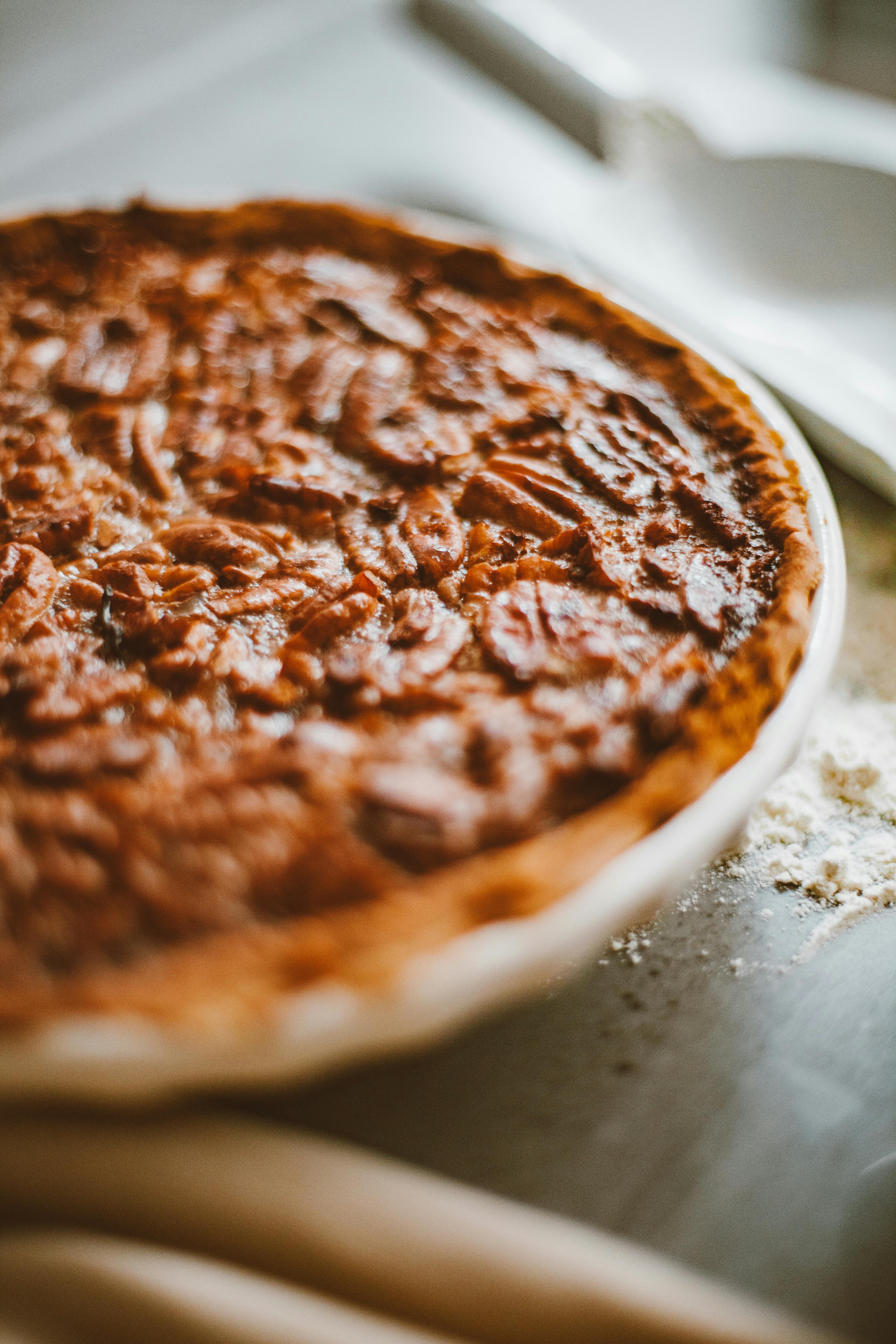
Common Ingredients
- pie crust
- pecans
- butter
- brown sugar
- eggs
- corn syrup
- vanilla extract
- salt
Specific recipes may vary.
Incompatible with 11 of 11 diets
Diet Ratings
Pecan pie is one of the most keto-incompatible desserts possible. The filling is almost entirely composed of corn syrup and brown sugar — two of the highest-glycemic sweeteners that exist — which alone would exceed an entire week's worth of keto carb allowance in a single slice. The pie crust is made from grain-based flour, adding additional starch and carbs. While pecans themselves are keto-friendly nuts, they are completely overshadowed by the massive carbohydrate load from the sweeteners and crust. A single slice of pecan pie contains approximately 60-70g of net carbs, more than triple the upper daily limit for ketosis. This dish would immediately and definitively break ketosis.
Pecan pie contains multiple animal-derived ingredients that make it clearly non-vegan. Butter is a dairy product (animal fat), and eggs are a direct animal product — both are explicitly excluded under vegan dietary rules. The pie crust as commonly made also typically contains butter or lard. While pecans, corn syrup, brown sugar, vanilla extract, and salt are plant-based, the presence of butter and eggs is unambiguous and non-negotiable from a vegan standpoint. Vegan versions of pecan pie do exist and are straightforward to make (using plant-based butter and flax eggs or commercial egg replacers), but the dish as described with its listed ingredients is not vegan.
Pecan Pie contains multiple non-paleo ingredients that make it clearly incompatible with the Paleolithic diet. The pie crust is made from grain-based flour (wheat), which is a direct violation of paleo principles. Corn syrup is a highly processed, refined sugar derived from corn — a grain — and is among the most disqualifying ingredients possible under any paleo interpretation. Brown sugar is refined sugar, also firmly excluded. Salt is an added ingredient discouraged under strict paleo guidelines. Butter is a dairy product, excluded under standard paleo rules. While pecans and eggs are paleo-approved, and vanilla extract is generally acceptable, the foundational ingredients of this dish (pie crust, corn syrup, brown sugar, butter) are all paleo violations. There is no version of traditional Pecan Pie that can be considered paleo-compatible without a complete recipe overhaul.
Pecan pie is a quintessential American dessert that contradicts nearly every core principle of the Mediterranean diet. The dominant ingredients are corn syrup and brown sugar, making it extremely high in added sugars. The refined pie crust contributes refined grains and saturated fat. Butter, while present in some Mediterranean regional cooking, is used here in large quantities alongside sugar rather than as a minor flavoring. While pecans themselves are a nut and would ordinarily be a Mediterranean-approved ingredient, their nutritional benefit is entirely overwhelmed by the massive sugar and refined carbohydrate load in this dish. Corn syrup in particular is a heavily processed ingredient with no place in Mediterranean eating patterns. This dessert is high in calories, added sugars, saturated fat, and refined grains — a combination that represents the antithesis of Mediterranean dietary principles.
Pecan Pie is almost entirely composed of plant-derived and processed ingredients that are completely incompatible with the carnivore diet. The pie crust is grain-based (wheat flour), pecans are nuts (plant food), brown sugar and corn syrup are processed plant-derived sweeteners, and vanilla extract is a plant-derived flavoring. The only marginally carnivore-compatible ingredients are butter, eggs, and salt — but they represent a tiny fraction of this dish and are completely overwhelmed by the plant and sugar content. This is a dessert built on carbohydrates, sugar, and nuts, making it one of the least carnivore-compatible foods imaginable.
Pecan pie contains multiple Whole30-excluded ingredients: pie crust (grain-based, contains wheat/gluten), butter (dairy, not ghee), brown sugar (added sugar), and corn syrup (added sugar). Additionally, pecan pie is a classic baked dessert that falls squarely under the 'no recreating baked goods/junk food' rule regardless of ingredients. This dish is unambiguously incompatible with Whole30 on multiple fronts.
Pecan pie contains multiple high-FODMAP ingredients that make it unsuitable during the elimination phase. The traditional pie crust is made from wheat flour, which is high in fructans — a primary FODMAP trigger. Corn syrup (especially if high-fructose corn syrup is used) contains excess fructose relative to glucose, making it high-FODMAP. Brown sugar in large quantities also contributes excess fructose. Even regular corn syrup is consumed in significant quantities in pecan pie, and the cumulative FODMAP load across the whole slice is very high. Pecans themselves are low-FODMAP at a standard serving (about 10 halves/20g per Monash), butter is low-FODMAP, eggs are low-FODMAP, vanilla extract and salt are negligible. However, the combination of wheat-based crust and large amounts of corn syrup makes a standard slice of pecan pie clearly high-FODMAP with no realistic portion adjustment that would make it safe.
Pecan pie is fundamentally incompatible with DASH diet principles. It is loaded with added sugars — brown sugar and corn syrup are the two primary filling ingredients — placing it firmly in the 'sweets' category that DASH explicitly limits to 5 or fewer servings per week, and even then only in small amounts. The butter-based pie crust contributes saturated fat and refined carbohydrates. Corn syrup adds significant calories with no nutritional benefit, and the overall sugar load is extremely high. While pecans themselves are a DASH-friendly nut rich in healthy fats and magnesium, they are a minor nutritional contributor in this context relative to the sugar and saturated fat content of the dish as a whole. The combination of high added sugar, saturated fat from butter and crust shortening, refined flour crust, and negligible fiber or beneficial micronutrients makes this a clear 'avoid' under DASH guidelines.
Pecan pie is one of the most Zone-incompatible foods possible. The filling is dominated by corn syrup and brown sugar — two of the highest-glycemic, nutritionally empty carbohydrate sources that Dr. Sears explicitly flags as the worst offenders for triggering insulin spikes. The white flour pie crust adds another high-glycemic refined carbohydrate layer. The fat profile is heavily saturated (butter) and, while pecans themselves contain favorable monounsaturated fats, they are buried in a matrix of sugar. There is virtually no lean protein present. The macro ratio is catastrophically imbalanced: overwhelmingly carbohydrate-heavy (and the wrong kind), moderate-to-high in saturated fat, and near-zero in protein. Even a single small slice would make Zone block balancing for the rest of the meal nearly impossible. This dish cannot be meaningfully portioned into a Zone-compatible snack — it would require eating a sliver so small as to be nutritionally negligible while still delivering a glycemic spike from the corn syrup and brown sugar.
Pecan pie is one of the most pro-inflammatory desserts in American cuisine. While pecans themselves have genuine anti-inflammatory merit — they contain omega-3 fatty acids, magnesium, and polyphenols — they are overwhelmed by the surrounding ingredients. Corn syrup (a concentrated form of glucose and often high-fructose corn syrup) is explicitly on the avoid list and is the dominant sweetener. Brown sugar adds further refined sugar load. Butter contributes saturated fat. The refined white flour pie crust adds processed carbohydrates that spike blood sugar and promote inflammatory glycation. The combined glycemic impact of corn syrup, brown sugar, and refined crust is substantial and directly associated with elevated inflammatory markers (CRP, IL-6, TNF-alpha) in research. The dish as a whole represents a convergence of the worst inflammatory triggers: refined sugar, corn syrup, saturated fat, and refined carbohydrates, with the pecan's benefits providing only a minor counterweight.
Pecan pie is one of the worst possible choices for GLP-1 patients. It is extremely high in sugar (brown sugar and corn syrup dominate the filling), high in saturated fat (butter, pie crust, and pecans combined), and provides virtually no meaningful protein or fiber relative to its caloric load. A standard slice delivers roughly 500+ calories with 60-70g of sugar and negligible protein. The slowed gastric emptying caused by GLP-1 medications means this sugar-and-fat bomb will sit heavily in the stomach, significantly worsening nausea, bloating, and reflux. The refined crust contributes empty refined carbohydrates. Corn syrup is among the worst ingredients for blood sugar stability. While pecans do contain healthy unsaturated fats and trace fiber, the quantity is far too small relative to the surrounding sugar load to confer meaningful benefit. This food fails on nearly every GLP-1 dietary priority: low protein density, low fiber, high fat, high sugar, poor digestibility, and very low nutrient density per calorie.
*See how scores were generated at our methodology page.
Nutritional profile
Six traits that cut across every diet.
Fiber & Plants
How much whole-plant food and fiber it delivers.
Healthy Fats
The quality of its fats (unsaturated, omega-3).
Whole / Unprocessed
How close it is to its natural, unprocessed form.
Gut Gentle
How easy it is on digestion (low FODMAP, few irritants).
Low Glycemic
How little it spikes your blood sugar.
Protein Density
How much protein it packs per calorie.
Controversy Index
Higher controversy = more disagreement between diets.