Photo: Ali Dashti / Pexels
Persian
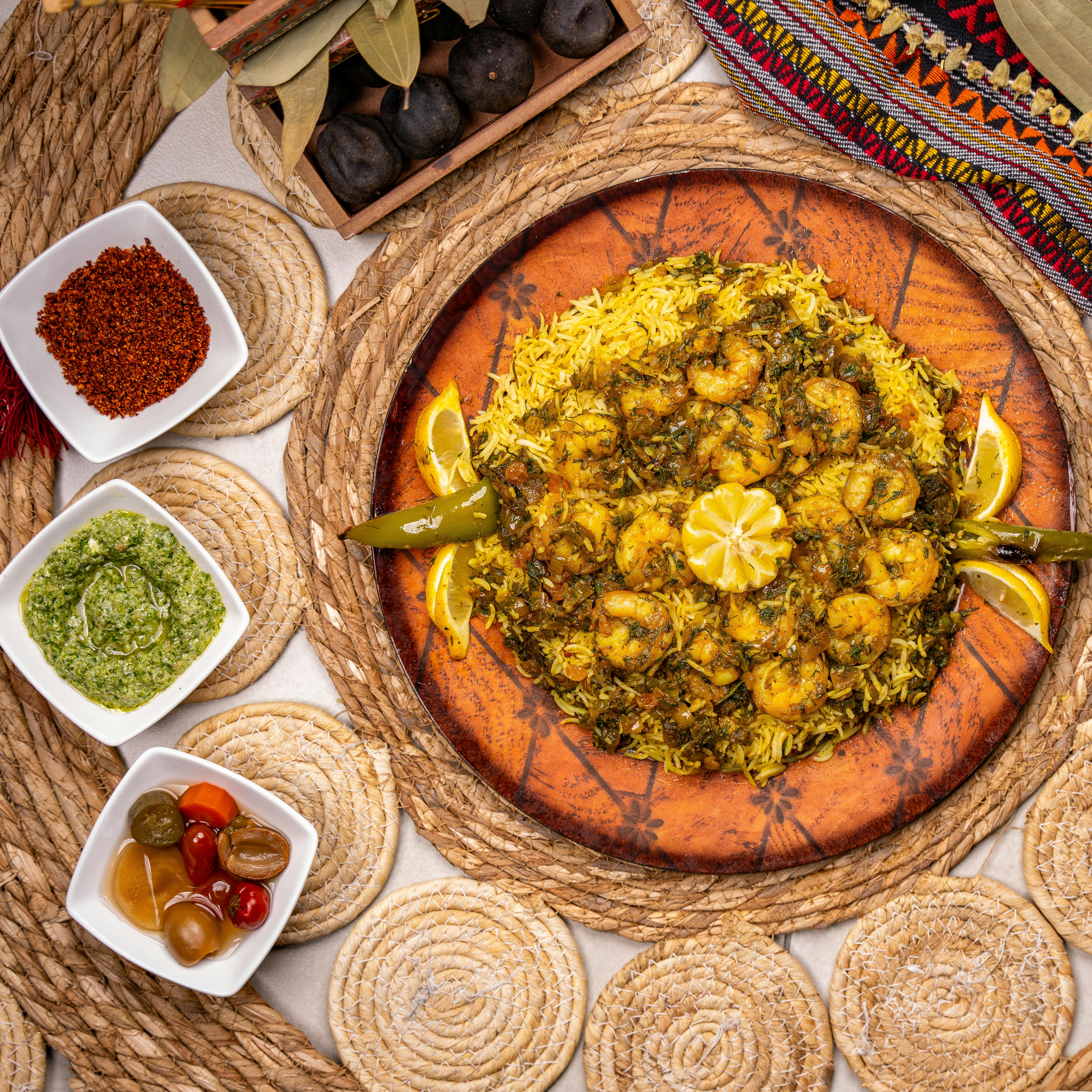
Baghali Polo
The diets react (see scores below)
Common Ingredients
- basmati rice
- fava beans
- dill
- lamb
- saffron
- butter
- onion
- garlic
Specific recipes may vary.
Incompatible with 7 of 11 diets
Diet Ratings
Baghali Polo is fundamentally incompatible with ketogenic diets. Its two primary base ingredients — basmati rice and fava beans — are both extremely high in net carbohydrates. A standard serving of basmati rice alone (about 1 cup cooked) contains roughly 44g of net carbs, immediately exceeding the daily keto limit. Fava beans add another 15-20g of net carbs per half-cup serving. Together, these two ingredients alone can deliver 60-80g+ of net carbs in a single meal, making ketosis impossible. While the lamb, butter, dill, saffron, onion, and garlic are keto-friendly components, they are entirely overshadowed by the dominant carb load. There is no practical way to modify this dish into a keto-compatible version without fundamentally changing its identity (e.g., replacing rice with cauliflower rice and eliminating fava beans).
Baghali Polo contains two clear animal products: lamb (meat) and butter (dairy). Both are unambiguously excluded under all vegan frameworks. While the base of the dish — basmati rice, fava beans, dill, saffron, onion, and garlic — is entirely plant-based, the inclusion of lamb as the primary protein and butter as a cooking fat makes this dish non-vegan. A vegan adaptation would require omitting the lamb entirely and substituting butter with a plant-based fat such as olive oil or vegan margarine.
Baghali Polo contains multiple core non-paleo ingredients that are clearly excluded by virtually all paleo frameworks. Basmati rice is a grain and is excluded under strict paleo (and most mainstream paleo) guidelines. Fava beans are legumes, also firmly excluded. Butter is a dairy product, excluded by Cordain-school paleo and most strict interpretations. These three ingredients are foundational to the dish and cannot simply be omitted — without them, it is no longer Baghali Polo. The lamb, dill, saffron, onion, and garlic are all paleo-compliant, but they are insufficient to redeem a dish whose identity depends on rice, legumes, and dairy.
Baghali Polo contains several elements that conflict with Mediterranean diet principles. Lamb is a red meat, which should be limited to only a few times per month under Mediterranean guidelines, and it is the primary protein here rather than an accent. Butter is used as the fat instead of extra virgin olive oil, the canonical Mediterranean fat source. Basmati rice is a refined/white grain rather than a whole grain. The dish does have redeeming elements — fava beans are an excellent legume staple strongly encouraged in the Mediterranean diet, dill is a beneficial herb, and onion and garlic are core aromatics. However, the combination of red meat as the primary protein, butter replacing olive oil, and white rice as the grain base pushes this dish firmly into 'avoid' territory as a regular meal.
Some Mediterranean diet interpreters note that legumes (fava beans) are a centerpiece of this dish and could be emphasized over the lamb, with the meat reduced to a flavoring role. Traditional Eastern Mediterranean and Levantine cuisines do incorporate lamb occasionally, and a small-portion adaptation using olive oil instead of butter and limiting lamb could make this an occasional 'caution'-level dish.
Baghali Polo is fundamentally incompatible with the carnivore diet. The dish is built around basmati rice (a grain) and fava beans (a legume) — both strictly excluded plant foods. Additional plant-based ingredients include dill (herb), saffron (spice), onion, and garlic, all of which are forbidden. While the dish does contain lamb (carnivore-approved) and butter (debated but generally accepted), these animal components are entirely overshadowed by the dominant plant-based structure of the dish. There is no version of this recipe that could be considered carnivore-compliant without fundamentally changing its identity.
Baghali Polo contains two clearly excluded ingredients: basmati rice (a grain, explicitly banned on Whole30) and butter (dairy, excluded — only ghee/clarified butter is the dairy exception). These are core components of the dish, not optional garnishes, making the dish fundamentally incompatible with Whole30 regardless of the other ingredients. Fava beans are also a legume and excluded (unlike the explicitly excepted green beans, sugar snap peas, and snow peas). Lamb, dill, saffron, onion, and garlic are all compliant, but they cannot redeem a dish built on three separate excluded ingredient categories.
Baghali Polo contains multiple high-FODMAP ingredients that make it unsuitable during the elimination phase. Onion and garlic are among the highest FODMAP foods tested by Monash University, rich in fructans, and are problematic even in small amounts. Fava beans (broad beans) are high in GOS (galacto-oligosaccharides) and fructans, making them a significant FODMAP source. Butter is generally low-FODMAP at small servings (lactose is minimal in butter), and basmati rice, dill, saffron, and lamb are all low-FODMAP. However, the combination of onion, garlic, and fava beans creates a triple high-FODMAP load that cannot be remediated by portion control alone. Even if onion and garlic were removed or replaced with garlic-infused oil and the green tops of spring onions, the fava beans alone would remain a barrier during the strict elimination phase.
Baghali Polo contains a mix of DASH-friendly and DASH-problematic ingredients. On the positive side, fava beans are an excellent source of fiber, potassium, and plant-based protein — core DASH foods. Dill, onion, and garlic are DASH-approved aromatics with no sodium concerns. Basmati rice is a refined grain (white), which DASH de-emphasizes in favor of whole grains, though it is not categorically excluded. The two main concerns are lamb and butter. Lamb is a red meat, which DASH limits due to its saturated fat content — traditional preparations of Baghali Polo use a substantial amount of lamb (often fatty cuts like shoulder). Butter adds saturated fat and is not the preferred fat source under DASH (which favors vegetable oils). The combination of lamb fat and butter can push saturated fat well above DASH targets. Saffron is a neutral spice. The dish is not inherently high in sodium, which is a positive. Overall, a modified version using lean lamb (leg), smaller portions, and olive oil instead of butter would be significantly more DASH-compatible.
NIH DASH guidelines categorically limit red meat including lamb due to saturated fat content. However, some updated DASH-oriented clinicians note that lean cuts of lamb (e.g., leg), trimmed of visible fat and consumed in modest portions (3 oz), may fit within weekly red meat allowances — particularly given that fava beans in this dish provide substantial fiber and plant protein that partially offset the overall dietary pattern.
Baghali Polo is a traditional Persian rice dish that presents several Zone Diet challenges. The dominant ingredient is basmati rice, which is a high-glycemic carbohydrate that Sears classifies as 'unfavorable' — it will spike insulin and disrupt the hormonal balance the Zone targets. While basmati has a lower GI than white rice, it still represents a dense, rapidly absorbed carb load. Fava beans add some protein and fiber (which helps moderate net carbs), and dill is a polyphenol-rich herb that Sears would appreciate. However, the lamb is a fatty red meat with significant saturated fat, and butter adds more saturated fat — both are restricted in Zone protocol. The overall macro ratio of a traditional serving would be heavily carb-skewed (likely 60-70% carbs by calories) with inadequate protein and excess saturated fat, making it very difficult to fit into Zone blocks as served. To make it Zone-compatible, one would need to dramatically reduce rice portion, increase the fava bean and lamb lean-meat ratio, substitute olive oil for butter, and add low-glycemic vegetables as sides — essentially deconstructing the dish significantly.
Some Zone practitioners and later Sears writings acknowledge that basmati rice, due to its lower glycemic index compared to other white rices, can be used in small block portions (e.g., 1/3 cup cooked per block). Fava beans provide meaningful protein and fiber that reduce net carb load, and lamb in moderate portions can fit Zone blocks if trimmed of excess fat. A carefully portioned small serving of Baghali Polo alongside additional vegetables and leaner protein could be worked into a Zone meal plan, placing this dish closer to a 5 on the caution scale rather than approaching avoid territory.
Baghali Polo is a mixed dish from an anti-inflammatory perspective. On the positive side, fava beans are a legume with fiber, plant protein, and anti-inflammatory phytonutrients. Dill is an herb with antioxidant flavonoids. Saffron has demonstrated anti-inflammatory properties (inhibiting COX enzymes and reducing IL-6 and CRP in research). Garlic and onion contain quercetin and allicin, both well-supported anti-inflammatory compounds. Basmati rice, while a refined-ish grain, has a lower glycemic index than many other white rices, moderating concern somewhat. However, lamb is red meat — a category the anti-inflammatory framework consistently flags for limiting due to saturated fat and arachidonic acid content, which can upregulate inflammatory pathways. Butter adds saturated fat (a LIMIT/AVOID item in this framework), and the dish is prepared with a notable amount of both. The dish lacks omega-3 sources, colorful antioxidant-rich vegetables, or olive oil. As a whole, the anti-inflammatory benefits of the herbs, legumes, and spices partially offset the lamb and butter, but this dish would not be considered anti-inflammatory-forward, particularly for those with elevated inflammatory markers or autoimmune concerns.
Some integrative practitioners (including those aligned with Dr. Weil's more permissive pyramid) would argue that lamb in moderate portions, combined with anti-inflammatory herbs, legumes, saffron, and garlic, results in a net-neutral or even mildly beneficial traditional Mediterranean-adjacent dish. On the other hand, strict anti-inflammatory protocols (and AIP frameworks) would more firmly flag red meat plus butter as pro-inflammatory and recommend against regular consumption.
Baghali Polo is a traditional Persian rice dish pairing fragrant basmati with fava beans, dill, and lamb, finished with butter and saffron. It has genuine nutritional strengths — fava beans contribute meaningful fiber and plant protein, dill adds micronutrients, and saffron is nutritionally benign. However, the dish has several GLP-1 compatibility issues. Lamb is a fatty red meat with significant saturated fat content, which can worsen nausea, reflux, and bloating — core GLP-1 side effects — especially given slowed gastric emptying. Butter adds additional saturated fat. Basmati rice is a refined-adjacent carbohydrate with modest fiber; a typical serving delivers a high carbohydrate load relative to its protein and fiber contribution. The overall meal as traditionally prepared is heavy, calorie-dense, and fat-forward in a way that GLP-1 patients frequently struggle to tolerate. A modified version — lamb shank trimmed of visible fat, reduced butter, smaller rice portion, extra fava beans — would score meaningfully higher. As served traditionally, it warrants caution rather than approval.
Some GLP-1-focused dietitians would note that lamb, while higher in saturated fat than chicken or fish, still delivers complete protein and that the fava beans provide meaningful fiber rarely found in comparable rice dishes — making this more nutritionally defensible than a plain rice-and-meat dish. Others maintain that any high-fat red meat preparation is reliably problematic for GLP-1 patients due to delayed gastric emptying compounding fat-induced GI distress, and would recommend substituting chicken or white fish entirely.
*See how scores were generated at our methodology page.
Nutritional profile
Six traits that cut across every diet.
Fiber & Plants
How much whole-plant food and fiber it delivers.
Healthy Fats
The quality of its fats (unsaturated, omega-3).
Whole / Unprocessed
How close it is to its natural, unprocessed form.
Gut Gentle
How easy it is on digestion (low FODMAP, few irritants).
Low Glycemic
How little it spikes your blood sugar.
Protein Density
How much protein it packs per calorie.
Controversy Index
Higher controversy = more disagreement between diets.
Diet-Specific Tips
 DASH — 4/10
View tips
- Lamb is a red meat limited under DASH due to saturated fat — a significant concern depending on cut and quantity
- Butter adds saturated fat; DASH recommends vegetable oils instead
- Fava beans are a DASH-approved food: high in fiber, potassium, and plant protein
- White basmati rice is a refined grain; DASH favors whole grains but does not prohibit white rice
- Dish is naturally low in sodium (no processed ingredients), which is a DASH positive
- Portion size of lamb is critical — smaller portions of lean lamb improve DASH compatibility considerably
- Substituting olive oil for butter and using lean lamb leg would raise the score to the 6–7 range
 Zone — 4/10
View tips
- Basmati rice is high-glycemic and classified as 'unfavorable' in Zone — it dominates the dish's carbohydrate load
- Traditional serving is heavily carb-skewed, likely 60-70% of calories from carbs, far above the 40% Zone target
- Lamb is a fatty red meat with significant saturated fat, discouraged in Zone protein guidelines
- Butter adds additional saturated fat, not aligned with Zone's preference for monounsaturated fats like olive oil
- Fava beans contribute fiber, protein, and polyphenols — a Zone-positive element that reduces net carbs
- Dill and saffron are polyphenol-rich spices that align with Sears' anti-inflammatory emphasis
- Dish could partially align with Zone only through aggressive portioning and modification (much less rice, olive oil instead of butter, added vegetables)
- Onion and garlic are Zone-favorable low-glycemic vegetables adding anti-inflammatory benefit
 Anti-Inflammatory — 5/10
View tips
- Lamb (red meat): pro-inflammatory — high in saturated fat and arachidonic acid; anti-inflammatory framework recommends limiting
- Butter: saturated fat source — flagged as LIMIT in anti-inflammatory guidelines
- Fava beans: anti-inflammatory — legume with fiber, plant protein, and phytonutrients
- Saffron: anti-inflammatory — research shows reduction in CRP, IL-6, and COX inhibition
- Dill: anti-inflammatory herb with antioxidant flavonoids
- Garlic and onion: anti-inflammatory — quercetin, allicin, organosulfur compounds
- Basmati rice: lower GI than many white rices, but refined grain — neutral to mild caution
- No omega-3 sources, EVOO, or colorful antioxidant vegetables present
 GLP-1 Friendly — 4/10
View tips
- Lamb is a fatty red meat — high saturated fat worsens GLP-1 GI side effects (nausea, reflux, bloating)
- Butter adds additional saturated fat load
- Basmati rice is high-carbohydrate with modest fiber per serving
- Fava beans are a genuine positive — fiber and plant protein contribution
- Dill is a micronutrient-positive, GLP-1-neutral herb
- Traditional portion size is large and calorie-dense — conflicts with small-portion guidance
- Dish can be modified (lean lamb or substitute protein, less butter, more fava beans) to score higher
- Not fried or ultra-processed — preparation method is a relative positive