Photo: Shameel mukkath / Pexels
Persian
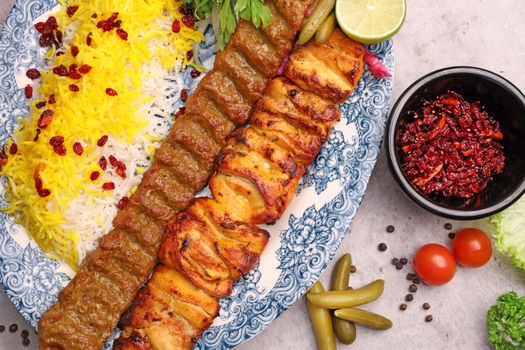
Chelow Kabab
The diets react (see scores below)
Common Ingredients
- ground beef
- lamb
- basmati rice
- onion
- saffron
- butter
- sumac
- egg yolk
Specific recipes may vary.
Incompatible with 7 of 11 diets
Diet Ratings
Chelow Kabab is a Persian dish centered on basmati rice, which is a high-glycemic grain and one of the most keto-incompatible staples. A standard serving of basmati rice (~150-200g cooked) delivers approximately 45-55g of net carbs on its own, easily exceeding the entire daily keto carb budget in a single component. The kabab portion (ground beef, lamb, onion, egg yolk, saffron, butter, sumac) is largely keto-friendly on its own, but the dish as traditionally served is defined by and inseparable from the rice. Without the rice it becomes a different dish entirely. The onion adds minor additional carbs. There is no realistic way to consume Chelow Kabab in its traditional form while maintaining ketosis.
Chelow Kabab is a Persian dish centered on grilled ground beef and lamb, served over saffron-scented basmati rice. It contains multiple animal products: ground beef and lamb (slaughtered animal flesh), butter (dairy), and egg yolk (animal byproduct). These are unambiguous animal-derived ingredients that place this dish firmly outside vegan dietary guidelines. There is no version of this dish that could be considered vegan without a complete restructuring of its core components.
Chelow Kabab is built around basmati rice, a grain that is clearly excluded from the paleo diet by all major paleo authorities. Butter is a dairy product also excluded under strict paleo guidelines. While the kabab components — ground beef, lamb, onion, saffron, egg yolk, and sumac — are largely paleo-compliant, the dish as traditionally prepared is fundamentally defined by its rice base, making it incompatible with paleo principles. The grilled meat portion alone could be considered paleo-friendly, but the dish in its complete, traditional form cannot be approved.
Chelow Kabab is a Persian dish centered on ground beef and lamb as the primary proteins, served with buttered basmati rice. Red meat (beef and lamb) is a core component, which the Mediterranean diet limits to a few times per month. The dish is also prepared with butter rather than olive oil, contradicting the Mediterranean diet's primary fat principle. Basmati rice is a refined/white grain rather than a whole grain. The egg yolk and onion are relatively benign, and saffron and sumac are beneficial spices, but these positives are outweighed by the red meat-centric nature and butter fat source. Overall, this dish conflicts with multiple core Mediterranean diet principles simultaneously.
Some Mediterranean diet interpreters note that occasional lean red meat consumption (e.g., once weekly) is not strictly prohibited, and lamb is consumed in traditional Greek and Middle Eastern Mediterranean cuisines. From this perspective, a smaller portion of Chelow Kabab eaten infrequently could be considered a marginal 'caution' rather than a firm 'avoid,' especially given the beneficial spices.
Chelow Kabab is fundamentally incompatible with the carnivore diet. While the dish contains carnivore-approved ingredients (ground beef, lamb, butter, egg yolk), the majority of the dish by volume is basmati rice — a grain that is strictly excluded on any version of the carnivore diet. Additional plant-based ingredients include onion, saffron (a plant spice), and sumac (a plant-derived spice/powder). There is no version or tier of the carnivore diet that permits grains or plant aromatics as core dish components. The meat and egg yolk elements alone would be approved, but as a complete dish, Chelow Kabab cannot be consumed in its traditional form.
Chelow Kabab contains two clearly excluded ingredients: basmati rice (a grain, explicitly excluded on Whole30) and butter (dairy, explicitly excluded — only ghee/clarified butter is the allowed exception). The kabab portion itself (ground beef, lamb, onion, saffron, sumac, egg yolk) is largely compliant, but the dish as traditionally prepared cannot be made Whole30-compatible without fundamentally altering it by removing the rice and swapping butter for ghee.
Chelow Kabab contains onion as a core ingredient, which is high in fructans and a significant FODMAP trigger. Onion is one of the highest-FODMAP foods tested by Monash University and cannot be made safe at any reasonable serving size — even small amounts cooked into a dish can leach fructans into the food. Ground beef, lamb, basmati rice, saffron, egg yolk, and sumac are all low-FODMAP, but the presence of onion (typically mixed directly into the kabab mixture and used in rice preparation) makes this dish a clear avoid during the elimination phase. Butter is low-FODMAP at standard servings (lactose is minimal in butter). The dish as traditionally prepared cannot be rendered safe without a fundamental recipe modification removing onion entirely.
Chelow Kabab is a Persian dish combining ground beef and lamb kabab served over basmati rice, typically finished with butter, egg yolk, and sumac. From a DASH perspective, the dish has both favorable and problematic elements. On the positive side, basmati rice is a whole-grain-adjacent carbohydrate, onion adds beneficial nutrients, and sumac is a low-sodium spice rich in antioxidants. However, the combination of ground beef and lamb introduces significant saturated fat — DASH explicitly limits red meat and advises favoring lean poultry or fish. The butter adds saturated fat on top of the meat's own fat content, further conflicting with DASH's emphasis on limiting total and saturated fat. Egg yolk adds dietary cholesterol, which is a moderate concern. Sodium levels depend heavily on preparation — if salt is used liberally in the marinade or rice (common in restaurant preparations), sodium can become a significant issue. The red meat component alone pushes this dish into caution territory per NIH DASH guidelines, which recommend limiting red meat to small portions and infrequent consumption. Occasional, portion-controlled servings with leaner meat substitutions (e.g., ground turkey or chicken) and reduced butter would improve DASH compatibility.
NIH DASH guidelines explicitly limit red meat and saturated fat, placing this dish in the caution category. However, some updated DASH-oriented clinicians note that lean cuts of lamb and moderate amounts of egg yolk are acceptable within an otherwise DASH-compliant diet, and the 2020-2025 Dietary Guidelines removed the strict cholesterol cap — suggesting occasional red meat dishes like Chelow Kabab may fit a broader heart-healthy eating pattern when portion-controlled and prepared with minimal added fat.
Chelow Kabab presents several Zone Diet challenges. The basmati rice is the primary carbohydrate source and while it has a lower glycemic index than white rice, it is still a high-glycemic starch that Dr. Sears classifies as an 'unfavorable' carbohydrate — one that should be minimized or strictly limited in Zone meals. The ground beef and lamb mixture is a higher-fat protein source, making it harder to hit the lean 30% protein target without overshooting on saturated fat. Butter adds saturated fat rather than the preferred monounsaturated fats. The dish as traditionally served is carbohydrate-heavy (large rice portions) with fatty protein and saturated fat — a macro profile that skews away from the 40/30/30 Zone ratio. That said, the protein component (kabab) itself is a legitimate protein block source, and onion and saffron are Zone-friendly. With significant modifications — drastically reducing rice, substituting leaner ground beef, eliminating butter, and adding low-glycemic vegetables — this dish could be Zone-adapted, but as traditionally served it does not align well with Zone methodology.
Chelow Kabab is a Persian classic built around grilled ground beef and lamb served over saffron-scented basmati rice, typically finished with butter and egg yolk. The dish has a mixed anti-inflammatory profile. On the positive side, saffron is one of the most potent anti-inflammatory spices, containing crocin and safranal which have demonstrated reductions in inflammatory markers in research. Sumac is rich in gallic acid and anthocyanins, offering meaningful antioxidant and anti-inflammatory activity. Onion provides quercetin and other flavonoids. Basmati rice, while a refined carbohydrate by anti-inflammatory standards, has a lower glycemic index than most white rices and is less problematic than heavily processed grains. The grilling method (vs. frying) also avoids adding inflammatory seed oils. On the negative side, the primary proteins — ground beef and lamb — are red meats high in saturated fat and arachidonic acid, both of which are linked to elevated inflammatory markers (CRP, IL-6) in research. The butter adds additional saturated fat. Egg yolk is a moderate concern due to arachidonic acid content, though it also contributes beneficial choline and selenium. The dish lacks vegetables, omega-3 sources, or legumes that would balance the pro-inflammatory protein load. Overall, this is an acceptable occasional meal for a generally healthy person following anti-inflammatory principles, but should not be a regular fixture due to the red meat and saturated fat content.
Some anti-inflammatory practitioners (e.g., those following Mediterranean-adjacent frameworks) would argue that lamb, as a pastured red meat, contains a more favorable omega-6 to omega-3 ratio than grain-fed beef, and that traditional whole-food preparations like this are far preferable to processed foods — making occasional consumption reasonable. Conversely, stricter anti-inflammatory protocols (and updated guidance from researchers like Dr. Frank Sacks) would emphasize that any regular red meat intake is problematic given associations with elevated CRP and IL-6, and would recommend substituting with fatty fish or poultry.
Chelow Kabab is a traditional Persian dish of grilled ground beef and lamb kebab served over saffron-buttered basmati rice. It has meaningful protein content from the meat, which supports GLP-1 dietary goals, but several components create concern. The ground beef and lamb blend is moderately to high in saturated fat, especially as traditionally prepared with fatty cuts to maintain kebab texture and cohesion. Butter is added to the rice, compounding the saturated fat load. Basmati rice is a refined carbohydrate with relatively low fiber content, contributing empty calories in the context of a reduced-appetite patient who needs every calorie to be nutrient-dense. The egg yolk adds minor saturated fat. Sumac and onion are positive additions — sumac is antioxidant-rich and onion provides mild prebiotic fiber. The dish is not fried and is not heavily spiced, which is a digestibility positive. Overall, the dish can provide a reasonable protein hit (roughly 25-35g depending on serving size) but the fat profile, low fiber, and butter-enriched white rice make it a caution rather than an approve for GLP-1 patients. A modified version using leaner ground beef only, reduced butter or olive oil substitution, and a smaller rice portion with a side of vegetables would score significantly higher.
Some GLP-1-focused dietitians would be more permissive with this dish, noting that grilled kebab (not fried) is one of the cleaner high-protein options in Middle Eastern cuisine and that the fat content, while elevated, is primarily from whole-food sources rather than ultra-processed fats. Others apply a stricter ceiling on saturated fat given GLP-1 patients' heightened sensitivity to fat-driven nausea and delayed gastric emptying, and would recommend avoiding the lamb-beef blend and butter entirely.
*See how scores were generated at our methodology page.
Nutritional profile
Six traits that cut across every diet.
Fiber & Plants
How much whole-plant food and fiber it delivers.
Healthy Fats
The quality of its fats (unsaturated, omega-3).
Whole / Unprocessed
How close it is to its natural, unprocessed form.
Gut Gentle
How easy it is on digestion (low FODMAP, few irritants).
Low Glycemic
How little it spikes your blood sugar.
Protein Density
How much protein it packs per calorie.
Controversy Index
Higher controversy = more disagreement between diets.
Diet-Specific Tips
 DASH — 4/10
View tips
- Red meat (ground beef and lamb) is limited on DASH due to saturated fat content
- Butter adds additional saturated fat, conflicting with DASH fat guidelines
- Basmati rice is an acceptable carbohydrate source on DASH
- Sumac is a DASH-friendly, low-sodium spice with antioxidant properties
- Egg yolk contributes dietary cholesterol — moderate concern under updated guidelines
- Sodium level is preparation-dependent; restaurant versions may be high in added salt
- Portion control is critical — smaller meat portions with more rice and vegetables would improve DASH score
 Zone — 4/10
View tips
- Basmati rice is an 'unfavorable' high-glycemic carbohydrate in Zone terminology — typically served in large portions that dominate the meal
- Ground beef and lamb are fatty proteins high in saturated fat, making it difficult to hit the Zone's lean protein target
- Butter adds saturated fat rather than preferred monounsaturated fat (olive oil, avocado, almonds)
- Egg yolk adds additional saturated fat and cholesterol with minimal Zone benefit
- The dish is protein-rich in the kabab component, which is a positive, but the overall macro ratio skews too carb- and fat-heavy as traditionally served
- Onion, saffron, and sumac are Zone-friendly ingredients with anti-inflammatory polyphenol properties
- Significant portion modification and vegetable additions would be required to bring this into Zone balance
 Anti-Inflammatory — 4/10
View tips
- Red meat (ground beef + lamb): pro-inflammatory saturated fat and arachidonic acid — limit per anti-inflammatory guidelines
- Saffron: potent anti-inflammatory spice, crocin and safranal shown to reduce inflammatory markers
- Sumac: high in anthocyanins and gallic acid, meaningful antioxidant contribution
- Butter: adds saturated fat, nudges dish toward inflammatory end
- Basmati rice: lower glycemic index than standard white rice but still a refined carbohydrate
- Egg yolk: mixed — arachidonic acid is a concern, but choline and selenium offer partial offset
- Onion: quercetin and flavonoids provide anti-inflammatory benefit
- Grilled preparation: avoids inflammatory seed oils, preserves nutrient integrity
- Dish lacks vegetables, omega-3 sources, or legumes to balance pro-inflammatory protein load
 GLP-1 Friendly — 4/10
View tips
- Ground beef and lamb blend is moderately high in saturated fat, which can worsen GLP-1 GI side effects
- Butter on basmati rice adds additional saturated fat and empty calories
- Basmati rice is low fiber and a refined carbohydrate — poor nutrient density per calorie
- Grilled preparation (not fried) is a digestibility positive
- Protein content is adequate (estimated 25-35g per serving) supporting the #1 GLP-1 dietary priority
- Sumac and onion are minor positives for antioxidants and prebiotic fiber
- No vegetables or fiber-rich sides in the base dish reduces overall meal nutritional balance
- Portion sensitivity is high — a large serving amplifies fat and refined carb load significantly