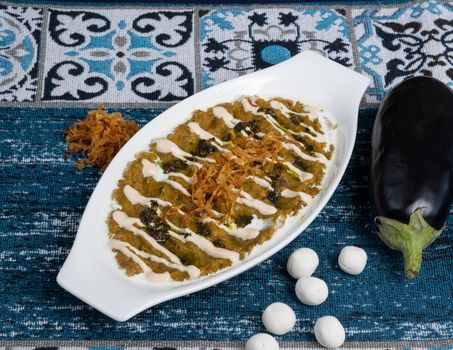
Photo: Shameel mukkath / Pexels
Persian
Kashk e Bademjan
The diets react (see scores below)
Common Ingredients
- eggplant
- kashk
- garlic
- onion
- dried mint
- walnuts
- turmeric
- olive oil
Specific recipes may vary.
Incompatible with 5 of 11 diets
Diet Ratings
Kashk e Bademjan is a Persian eggplant dip made with ingredients that are individually keto-compatible in moderation, but the cumulative carb load requires portion control. Eggplant (~6g net carbs per 100g cooked) is a moderate-carb vegetable acceptable on keto in small servings. Kashk (fermented whey) is protein-rich and relatively low-carb but contains some lactose. Walnuts add healthy fats and fiber. Garlic and onion contribute small but non-trivial carbs. Olive oil is keto-ideal. As a condiment served in a standard ~100-150g portion, total net carbs likely land in the 8-14g range, which is manageable within a daily keto budget but not negligible. The dish is fat-forward thanks to kashk, walnuts, and olive oil, which aligns with keto macros. However, it must be tracked carefully to avoid pushing over the daily 20-50g net carb ceiling when combined with other foods.
Some strict keto practitioners flag kashk (fermented whey) as potentially insulinogenic due to its dairy protein content, following the same logic applied to other whey-based foods. Additionally, zero-tolerance carnivore-adjacent keto protocols would exclude eggplant and onion as unnecessary carb sources when fat-only condiments are available.
Kashk e Bademjan is a traditional Persian eggplant dip whose defining ingredient is kashk, a fermented whey product derived from dairy (specifically the liquid byproduct of yogurt or cheese-making). Kashk is unambiguously an animal-derived dairy ingredient, making this dish non-vegan in its traditional form. All other ingredients — eggplant, garlic, onion, dried mint, walnuts, turmeric, and olive oil — are fully plant-based, but the kashk alone disqualifies the dish. Vegan versions can be made by substituting kashk with plant-based alternatives such as cashew cream mixed with a small amount of lemon juice and miso to approximate the tangy, fermented flavor profile, but that would constitute a different recipe.
Kashk e Bademjan is disqualified primarily by kashk, a fermented whey product that is a concentrated dairy derivative. Unlike ghee, which has casein and lactose largely removed, kashk retains dairy proteins and is essentially a whey concentrate — firmly excluded under paleo rules regardless of which school of paleo thought you follow. All other ingredients (eggplant, garlic, onion, dried mint, walnuts, turmeric, olive oil) are paleo-compliant, but kashk is the dish's defining ingredient and cannot be substituted without fundamentally changing the dish. This is a dairy-based condiment at its core.
Kashk e Bademjan is a Persian eggplant dip featuring several Mediterranean-friendly ingredients: eggplant (a staple vegetable), garlic, onion, walnuts, dried mint, turmeric, and olive oil are all strongly aligned with Mediterranean diet principles. The main complicating factor is kashk, a fermented whey product (dried or liquid cultured dairy). Dairy is acceptable in the Mediterranean diet but is categorized as a moderate, not daily-staple food. Kashk is used as a flavoring/topping rather than a primary ingredient by volume, which mitigates its impact. The dish is plant-forward overall, rich in beneficial plant compounds, healthy fats from olive oil and walnuts, and is a condiment portion rather than a main. The dairy component prevents a full 'approve,' but the dish is largely compatible with Mediterranean principles when consumed in typical condiment quantities.
Some Mediterranean diet authorities, particularly those following traditional Middle Eastern and Levantine dietary patterns, would treat fermented dairy products like kashk as a probiotic-rich, traditional food deserving regular inclusion — pushing this dish closer to an 'approve.' Conversely, stricter clinical Mediterranean diet protocols that emphasize minimizing saturated fat from dairy might advise limiting kashk-heavy dishes.
Kashk e Bademjan is almost entirely plant-based and incompatible with the carnivore diet. The primary ingredient is eggplant, a nightshade vegetable that is strictly excluded. The dish also contains garlic, onion, dried mint, walnuts, turmeric, and olive oil — all plant-derived foods that are prohibited on carnivore. Kashk (fermented whey) is the only animal-derived ingredient, but it is a minor component in a dish dominated by plant foods. Even the most lenient 'animal-based' carnivore practitioners who tolerate some dairy would not consume this dish due to the overwhelming presence of excluded plant ingredients. There is no meaningful animal protein source.
Kashk e Bademjan is a classic Persian eggplant dip, and most ingredients are fully Whole30 compliant (eggplant, garlic, onion, dried mint, walnuts, turmeric, olive oil). However, the defining ingredient — kashk — is a fermented whey product derived from dairy. Whey is a dairy derivative, placing kashk squarely in the excluded dairy category. There is no compliant substitute that would still make this dish 'kashk e bademjan.' Because the dish's identity is inseparable from its excluded primary ingredient, it cannot be approved.
Kashk e Bademjan contains multiple high-FODMAP ingredients that make it unsuitable during the elimination phase. Garlic is one of the highest-FODMAP foods known, rich in fructans, and is a core ingredient in this dish. Onion is similarly high in fructans and is used in significant quantities. Kashk (a fermented whey product) is high in lactose, making it problematic for those restricting disaccharides. Eggplant is low-FODMAP at small servings (75g) but can become moderate at larger amounts. Walnuts are low-FODMAP at 10 walnut halves but add up. The combination of garlic, onion, and kashk alone renders this dish a clear avoid for the elimination phase — there is no realistic way to prepare a traditional Kashk e Bademjan without these high-FODMAP components.
Kashk e Bademjan contains several DASH-friendly ingredients — eggplant (a fiber-rich vegetable), garlic, onion, olive oil, turmeric, and walnuts all align well with DASH principles. However, the key concern is kashk (fermented whey), which is a full-fat, high-sodium dairy product. DASH specifically calls for low-fat or fat-free dairy and limits sodium; kashk can be quite high in both sodium and saturated fat, particularly in traditional preparations. Walnuts are beneficial (heart-healthy unsaturated fats, magnesium) but are calorie-dense and require portion control. Olive oil is DASH-compatible in moderate amounts. When used as a condiment in small portions, the dish is more manageable, but the kashk component remains a meaningful concern for both sodium and saturated fat intake.
NIH DASH guidelines specify low-fat dairy and sodium restriction, which traditional kashk does not satisfy. However, updated clinical interpretations note that fermented dairy products may have cardiovascular benefits independent of fat content, and some DASH practitioners may allow small portions of fermented full-fat dairy — especially when the dish is consumed as a condiment rather than a main dish, limiting overall exposure.
Kashk e Bademjan is a Persian eggplant dip featuring several Zone-friendly ingredients. Eggplant is a favorable low-glycemic vegetable. Olive oil is an ideal Zone monounsaturated fat. Garlic, onion, turmeric, and dried mint are anti-inflammatory polyphenol-rich additions that Sears would applaud. Walnuts provide monounsaturated and omega-3 fats, also Zone-positive. The main concern is kashk (a fermented whey product), which is high in protein but also relatively high in saturated fat and sodium. As a condiment with no primary protein, this dish is carb-and-fat dominant, meaning it would need to be paired with a lean protein source to form a balanced Zone meal. Portion control is important because the kashk contributes saturated fat and the caloric density is moderate. Used as a condiment or small appetizer alongside lean protein, it fits reasonably well. The anti-inflammatory profile (olive oil, walnuts, turmeric, polyphenol-rich vegetables) is strongly aligned with Sears' later Zone writings. The missing lean protein and the saturated fat in kashk prevent a higher score.
In Sears' earlier Zone books (Enter the Zone), saturated fat from dairy sources like kashk would be flagged as unfavorable, keeping this dish in cautious territory. However, in his later anti-inflammatory framework (The OmegaRx Zone, Zone Perfect Meals in Minutes), fermented dairy is viewed more favorably due to its probiotic properties and the overall anti-inflammatory ingredient profile here (turmeric, walnuts, olive oil, eggplant) could push some practitioners toward a modest approval when used as a condiment paired with lean protein.
Kashk e Bademjan is a Persian eggplant and whey dip with a genuinely mixed anti-inflammatory profile. On the positive side: eggplant is rich in nasunin (a potent anthocyanin antioxidant) and chlorogenic acid, both with anti-inflammatory properties. Garlic and turmeric are well-established anti-inflammatory spices. Walnuts provide a meaningful dose of ALA omega-3s and polyphenols. Olive oil (if extra virgin) contains oleocanthal, one of the most studied anti-inflammatory compounds in any food. Dried mint adds minor polyphenol value. Onion contributes quercetin. The problematic element is kashk — a fermented, concentrated whey product that is very high in saturated fat and full-fat dairy content. While fermentation adds probiotic potential that may modulate gut inflammation, the saturated fat load places it in the 'limit' category under anti-inflammatory frameworks. The dish is also often prepared with generous amounts of kashk, making full-fat dairy a dominant component rather than a minor one. Collectively, the dish scores well on plant diversity, spice quality, and healthy fats from olive oil and walnuts, but is pulled back by the high saturated fat content of kashk. As a condiment (used in small portions), its overall impact is more acceptable than if consumed as a main dish.
Some fermented food advocates (including functional medicine practitioners) would argue kashk's fermentation process and probiotic content partially offset its saturated fat content by supporting gut microbiome health, which is increasingly linked to systemic inflammation reduction — potentially rating this dish higher. Conversely, strict anti-inflammatory practitioners who follow AIP or dairy-free protocols would lower the score further, pointing to full-fat dairy's saturated fat content and dairy proteins as potential inflammatory triggers, particularly in autoimmune contexts.
Kashk e Bademjan is a Persian eggplant dip featuring several GLP-1-friendly elements alongside a few notable concerns. On the positive side, eggplant provides fiber and is easy to digest when cooked soft; kashk (fermented whey) contributes meaningful protein and probiotics; garlic and turmeric offer anti-inflammatory nutrients; and olive oil provides unsaturated fat. However, the dish is classified as a condiment with no primary protein, meaning it should not anchor a meal for GLP-1 patients who must hit 15–30g protein per serving. Walnuts add healthy omega-3 fats but also increase the calorie and fat density per small serving. Kashk is also a dairy product — fermented whey — which may trigger temporary lactose sensitivity that is more common in GLP-1 patients. The olive oil quantity used in traditional preparation (often generous, used for frying onion and garlic and drizzled on top) can push the fat content higher than ideal for patients prone to nausea or reflux. Served as a small-portion dip alongside a high-protein main, it is a reasonable choice; used as a primary dish, it falls short on protein and may cause GI discomfort.
Some GLP-1-focused dietitians view kashk as a valuable high-protein dairy addition worth actively incorporating, particularly for patients struggling to meet protein targets through meat, and would rate this dish more favorably when kashk is used generously. Others flag the high fat load from walnuts and cooking oil combined with the gastroparesis-like effect of GLP-1s as a meaningful nausea risk, particularly on injection days, and would recommend limiting it more strictly.
*See how scores were generated at our methodology page.
Nutritional profile
Six traits that cut across every diet.
Fiber & Plants
How much whole-plant food and fiber it delivers.
Healthy Fats
The quality of its fats (unsaturated, omega-3).
Whole / Unprocessed
How close it is to its natural, unprocessed form.
Gut Gentle
How easy it is on digestion (low FODMAP, few irritants).
Low Glycemic
How little it spikes your blood sugar.
Protein Density
How much protein it packs per calorie.
Controversy Index
Higher controversy = more disagreement between diets.
Diet-Specific Tips
 Keto — 5/10
View tips
- Eggplant is moderate in net carbs (~6g/100g cooked), requires portion control
- Kashk (fermented whey) is low-carb but contains lactose; may be flagged by strict dairy-cautious keto followers
- Walnuts contribute healthy fats and fiber, improving net carb profile
- Onion and garlic add minor but cumulative carbs
- Olive oil is keto-ideal and improves fat ratio
- As a condiment, realistic serving size (~50-100g) keeps net carbs manageable
- Overall macro profile is fat-moderate, not high-fat enough to be a clear approve
 Mediterranean — 6/10
View tips
- Eggplant is a Mediterranean staple vegetable — strongly positive
- Olive oil as primary cooking fat — aligns perfectly with Mediterranean principles
- Walnuts add healthy polyunsaturated fats and are encouraged
- Garlic, onion, herbs, and turmeric are all beneficial plant additions
- Kashk (fermented whey dairy) is the main limiting factor — dairy is 'moderate' in the Mediterranean diet
- Served as a condiment means dairy load per serving is relatively low
- No processed ingredients, added sugars, or refined grains — positive
 DASH — 5/10
View tips
- Kashk is a full-fat, high-sodium fermented whey product — conflicts with DASH low-fat dairy and sodium guidelines
- Eggplant is a DASH-approved vegetable, rich in fiber and potassium
- Olive oil is a DASH-compatible fat source
- Walnuts provide heart-healthy fats and magnesium but require portion control
- Garlic and onion are DASH-friendly aromatics with cardiovascular benefits
- Condiment serving size mitigates but does not eliminate sodium and saturated fat concerns
- Low-sodium or reduced-fat kashk alternatives would improve the DASH compatibility of this dish
 Zone — 6/10
View tips
- Eggplant is a favorable low-glycemic Zone vegetable
- Olive oil provides ideal monounsaturated fat for Zone fat blocks
- Walnuts contribute beneficial omega-3 and monounsaturated fats
- Kashk (fermented whey) adds protein but also saturated fat
- Turmeric, garlic, and onion are anti-inflammatory polyphenol sources aligned with Sears' later work
- No primary protein source — must be paired with lean protein for Zone balance
- Condiment role means small portions reduce glycemic and saturated fat concerns
- Overall macro profile is fat-and-carb dominant without protein balance built in
 Anti-Inflammatory — 6/10
View tips
- Kashk (full-fat fermented whey) is high in saturated fat — a 'limit' ingredient under anti-inflammatory guidelines
- Eggplant provides nasunin and chlorogenic acid — potent antioxidants with anti-inflammatory research support
- Walnuts contribute ALA omega-3 fatty acids and polyphenols
- Turmeric and garlic are among the most evidence-backed anti-inflammatory spices
- Olive oil (if extra virgin) adds oleocanthal with COX-inhibiting anti-inflammatory properties
- Fermentation of kashk may add probiotic value that partially offsets dairy concerns
- Condiment serving size mitigates saturated fat exposure compared to a main dish portion
- High plant ingredient diversity supports antioxidant and polyphenol intake
 GLP-1 Friendly — 5/10
View tips
- No primary protein source — cannot anchor a GLP-1 meal on its own
- Kashk (fermented whey) provides moderate protein and probiotics but is a dairy product with lactose sensitivity risk
- Eggplant is fiber-rich and soft-cooked, supporting digestion and GLP-1 gut motility concerns
- Walnuts add omega-3 fats but increase calorie and fat density in a small serving
- Olive oil used in traditional preparation can be generous, raising fat-per-serving concerns for nausea and reflux
- Nutrient-dense overall but portion-sensitive — works best as a small accompaniment, not a standalone dish
- Turmeric and garlic are anti-inflammatory additions with no GLP-1 side effect concerns at condiment quantities