Persian
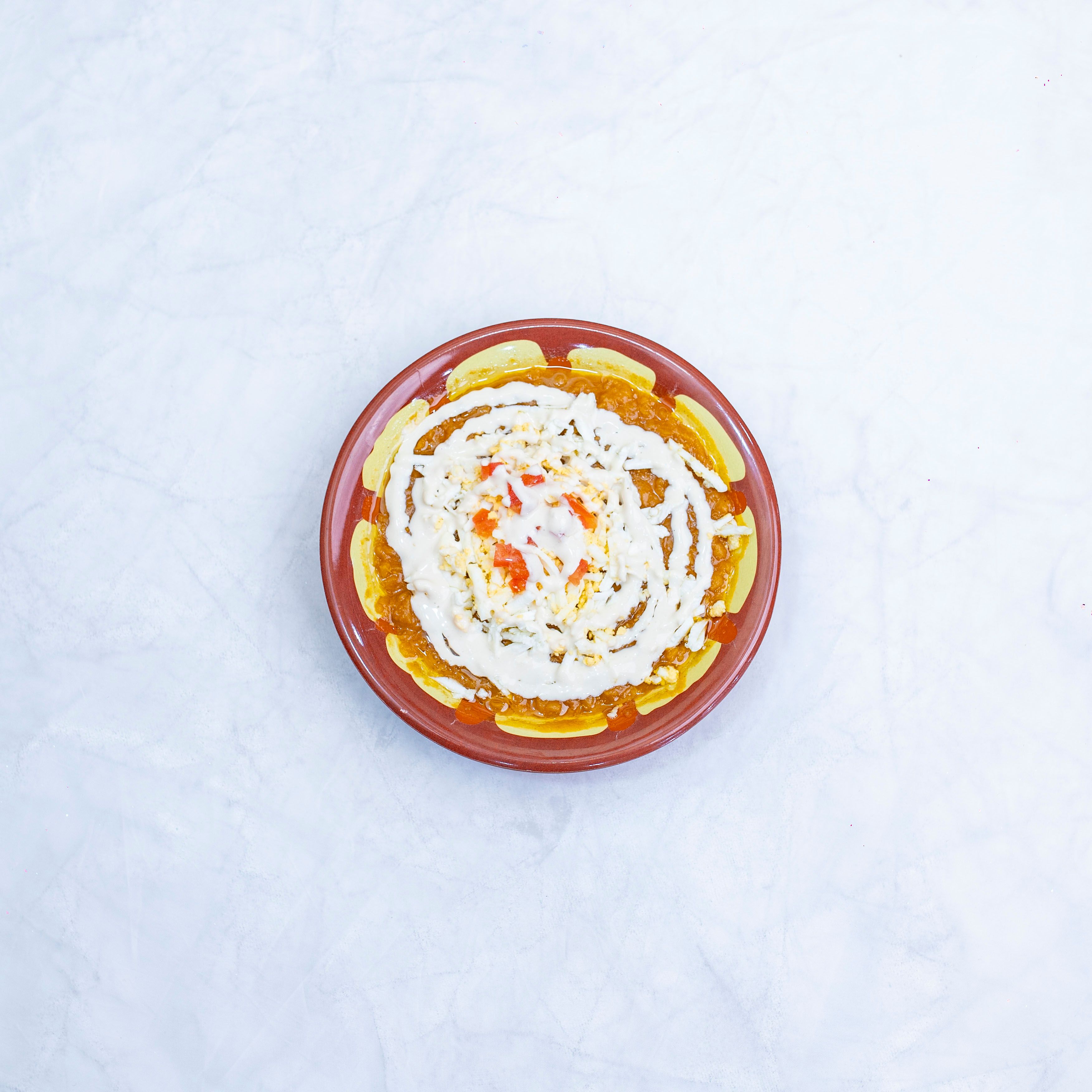
Mirza Ghasemi
The diets react (see scores below)
Common Ingredients
- eggplant
- eggs
- tomatoes
- garlic
- turmeric
- olive oil
- salt
Specific recipes may vary.
Incompatible with 3 of 11 diets
Diet Ratings
Mirza Ghasemi is a Persian roasted eggplant dish made with eggs, tomatoes, garlic, and olive oil — all reasonably keto-friendly ingredients. The main concern is eggplant and tomatoes, which contribute moderate net carbs. A standard serving (~150-200g) of this dish likely contains 6-10g net carbs, which is manageable within a keto budget if portions are controlled. Eggplant has roughly 3g net carbs per 100g, and tomatoes add additional carbs. The olive oil and eggs provide healthy fats and protein, supporting ketosis. As a condiment or side dish in moderate portions, it can fit within a keto day, but liberal servings or pairing with other carb-containing foods could push daily limits. No grains, added sugars, or high-carb starches are present.
Stricter keto practitioners may flag the cumulative carb load from both eggplant and tomatoes together, arguing that as a condiment it is easy to over-consume, and some clinical keto protocols targeting very low carb ceilings (under 20g/day) would prefer to avoid nightshade-based dishes like this entirely to maintain a comfortable safety margin.
Mirza Ghasemi is a traditional Persian smoked eggplant dish that contains eggs as a primary protein ingredient. Eggs are an animal product and are explicitly excluded under vegan dietary rules. All other ingredients — eggplant, tomatoes, garlic, turmeric, olive oil, and salt — are fully plant-based, but the inclusion of eggs makes this dish non-vegan. A vegan adaptation could be made by omitting the eggs, which would result in a smoky eggplant and tomato dish similar to a simple eggplant spread.
Mirza Ghasemi is a Persian eggplant and egg dish made with mostly paleo-approved ingredients: eggplant, eggs, tomatoes, garlic, turmeric, and olive oil are all fully compliant. The single disqualifying ingredient is salt, which is excluded under strict paleo rules as an 'added salt' that was unavailable in refined form to Paleolithic hunter-gatherers. Most of the dish is nutrient-dense and unprocessed, so the verdict hinges almost entirely on this one ingredient. Strict paleo authorities like Loren Cordain exclude added salt categorically, which prevents a full approval despite the otherwise excellent ingredient profile.
Many modern paleo practitioners and frameworks (including Mark Sisson's Primal Blueprint) consider moderate use of unrefined salt — such as sea salt or Himalayan pink salt — acceptable, arguing that Paleolithic humans consumed sodium through organ meats and coastal foods. Under this interpretation, Mirza Ghasemi would comfortably earn an 'approve' rating of 8-9.
Mirza Ghasemi is a Persian dish built almost entirely from Mediterranean diet staples: eggplant (a vegetable deeply rooted in Mediterranean cooking), tomatoes, garlic, olive oil, and anti-inflammatory turmeric. Eggs are the primary protein, which falls into the moderate/acceptable category (dairy, eggs, poultry). The combination of abundant vegetables cooked in olive oil with eggs as a secondary binder is very much in the spirit of Mediterranean eating — comparable to dishes like shakshuka or Greek briam with eggs. The olive oil is the primary fat, there are no refined grains, added sugars, or processed ingredients. The egg content keeps it from a perfect score, but overall this dish is a strong fit.
Some stricter Mediterranean diet frameworks would rate this as 'caution' rather than 'approve' because eggs are classified as a moderate food (a few servings per week), and if Mirza Ghasemi is consumed frequently as a condiment/side, egg intake could accumulate. Modern clinical guidelines (e.g., from the American Heart Association) have historically advised limiting egg yolks, though traditional Mediterranean populations did consume eggs regularly in vegetable-forward preparations like this.
Mirza Ghasemi is a Persian eggplant-based dish that is fundamentally incompatible with the carnivore diet. While eggs are an acceptable carnivore food, they are a minor component here. The dish is dominated by plant foods: eggplant (vegetable), tomatoes (fruit/vegetable), garlic (vegetable/allium), turmeric (plant spice), and olive oil (plant oil). All of these are strictly excluded on any tier of the carnivore diet. The salt is the only other acceptable ingredient. With the overwhelming majority of ingredients being plant-derived, this dish cannot be modified into a carnivore-compatible form without fundamentally changing what it is.
Mirza Ghasemi is a Persian roasted eggplant and egg dish made entirely from Whole30-compliant ingredients. Eggplant, eggs, tomatoes, garlic, turmeric, olive oil, and salt are all whole, unprocessed foods explicitly allowed on the Whole30 program. There are no excluded ingredients — no grains, legumes, dairy, added sugars, or other banned substances. This is a straightforward savory dish, not a recreation of a banned food category.
Mirza Ghasemi contains two high-FODMAP ingredients that make it unsuitable during the elimination phase. First, garlic is one of the highest-FODMAP foods tested by Monash University, being rich in fructans — even a small amount (e.g., a clove used in cooking) renders a dish high-FODMAP. Second, eggplant is high-FODMAP at typical serving sizes; Monash rates eggplant as low-FODMAP only at a very small portion (43g), but a standard condiment serving of Mirza Ghasemi would easily exceed this threshold given that eggplant is the primary bulk ingredient. The remaining ingredients — eggs, tomatoes (canned or fresh at standard amounts), turmeric, olive oil, and salt — are all low-FODMAP and unproblematic. However, the combination of garlic and a large quantity of eggplant makes this dish a clear avoid during elimination.
Mirza Ghasemi is a Persian eggplant and egg dish with a strong DASH-compatible ingredient profile. Eggplant is a fiber-rich vegetable, tomatoes provide potassium and lycopene, garlic offers cardiovascular benefits, turmeric is anti-inflammatory, and olive oil is a heart-healthy unsaturated fat explicitly supported by DASH guidelines. Eggs are the primary protein and represent the main area of nuance — historically DASH was cautious about dietary cholesterol, but current evidence and updated dietary guidelines have softened this stance. Salt is listed as an ingredient, and sodium control depends entirely on the quantity used in preparation; home-prepared versions can easily stay within DASH sodium limits. As a condiment/dip, portion sizes are typically moderate, which further limits any cholesterol or sodium concerns. Overall, this dish aligns well with DASH principles: vegetable-forward, cooked in olive oil, with eggs in a supporting role.
NIH DASH guidelines historically emphasized limiting dietary cholesterol and did not prominently feature eggs; some conservative DASH clinicians still recommend limiting whole eggs to 3–4 per week. However, updated clinical interpretations — including the 2020–2025 Dietary Guidelines for Americans — removed the strict cholesterol cap, and most current DASH-oriented practitioners accept eggs in moderation, making the egg component of this dish generally acceptable for most individuals.
Mirza Ghasemi is a Persian eggplant dish made with Zone-friendly ingredients: eggplant (a low-glycemic, high-fiber vegetable), eggs (a solid lean protein source), tomatoes (low-glycemic carb with polyphenols), garlic (anti-inflammatory polyphenol source), turmeric (potent anti-inflammatory), and olive oil (ideal monounsaturated fat). The macro profile aligns well with Zone principles — the fat comes from olive oil (monounsaturated), the protein from eggs (moderate fat but manageable), and the carbs from low-glycemic vegetables. As a condiment or dip, portion size is naturally modest, which helps Zone balance. The main caveat is that whole eggs contribute saturated fat and the fat-to-protein ratio can skew high depending on how much olive oil is used in preparation, potentially disrupting the 30/30 fat-to-protein calorie balance. The dish is also protein-light as a condiment, so it works best paired with an additional lean protein source to complete a Zone block meal. Turmeric and garlic align with Sears' anti-inflammatory emphasis in later works.
Early Zone methodology would flag whole eggs for their saturated fat content and prefer egg whites for cleaner protein blocks. Sears' later writings (The OmegaRx Zone, Zone Perfect Meals in Minutes) became more permissive about whole eggs given their nutrient density and omega-3 profile, especially from pasture-raised sources. Some strict Zone practitioners would reduce olive oil quantity and substitute egg whites to tighten the macro ratio.
Mirza Ghasemi is a Persian eggplant and egg dish with a strong anti-inflammatory profile overall. Eggplant contains nasunin (a potent anthocyanin antioxidant in the skin) and chlorogenic acid, both associated with reduced oxidative stress and inflammation. Tomatoes contribute lycopene, especially when cooked, which is a well-established anti-inflammatory carotenoid. Garlic is rich in allicin and organosulfur compounds with documented anti-inflammatory and immunomodulatory effects. Turmeric provides curcumin, one of the most researched natural anti-inflammatory compounds. Olive oil, ideally extra virgin, delivers oleocanthal and oleic acid, both strongly anti-inflammatory. Eggs are the one ingredient with a mixed profile — they contain pro-inflammatory arachidonic acid but also anti-inflammatory choline and selenium, and the research on net inflammatory effect is genuinely contested. The overall dish is whole-food, plant-forward, spice-rich, and cooked with EVOO, making it a strong fit for anti-inflammatory eating. Confidence is medium rather than high primarily due to the egg debate and, to a lesser extent, the nightshade status of eggplant and tomatoes in autoimmune contexts.
Mainstream anti-inflammatory authorities (Dr. Weil, Mediterranean diet researchers) would consider all ingredients here beneficial or neutral. However, Autoimmune Protocol (AIP) advocates such as Dr. Tom O'Bryan would flag both the nightshade vegetables (eggplant, tomatoes) for solanine and lectin content, and eggs for arachidonic acid, making this dish problematic for individuals with autoimmune-driven inflammation specifically.
Mirza Ghasemi is a Persian roasted eggplant and egg dish cooked with tomatoes, garlic, turmeric, and olive oil. It is nutrient-dense, made from whole-food ingredients, and contains no fried, ultra-processed, or high-sugar components. Eggplant is high in fiber and water content, supporting two key GLP-1 priorities (fiber and hydration). Eggs provide complete protein, though the total protein per typical condiment-sized serving is modest — likely 4-8g depending on egg ratio and portion. Olive oil is a preferred unsaturated fat, but the quantity used in traditional preparation can be generous, raising the fat-per-serving concern. Turmeric has anti-inflammatory properties and is well tolerated. Garlic is generally fine in cooked form but may cause mild GI discomfort in sensitive GLP-1 patients. As a condiment or side dish, it scores well on digestibility, ingredient quality, and nutrient density, but falls short on protein density per serving and may require pairing with a primary protein source to meet meal targets. The olive oil quantity is the main controllable variable — a lighter hand improves the score meaningfully.
Some GLP-1-focused RDs would rate this higher as a vegetable-forward, anti-inflammatory whole-food dish that pairs well with lean proteins and supports fiber and hydration goals — particularly for patients struggling with appetite and GI tolerance. Others would note that egg-based dishes can trigger nausea in some GLP-1 patients, especially early in treatment, and that the oil content needs active portion management to avoid worsening reflux or bloating.
*See how scores were generated at our methodology page.
Nutritional profile
Six traits that cut across every diet.
Fiber & Plants
How much whole-plant food and fiber it delivers.
Healthy Fats
The quality of its fats (unsaturated, omega-3).
Whole / Unprocessed
How close it is to its natural, unprocessed form.
Gut Gentle
How easy it is on digestion (low FODMAP, few irritants).
Low Glycemic
How little it spikes your blood sugar.
Protein Density
How much protein it packs per calorie.
Controversy Index
Higher controversy = more disagreement between diets.
Diet-Specific Tips
 Keto — 6/10
View tips
- Eggplant is a moderate-carb vegetable (~3g net carbs/100g) requiring portion control
- Tomatoes add additional net carbs (~3-4g per 100g)
- Olive oil and eggs provide keto-friendly fats and protein
- No grains, added sugars, or starchy ingredients present
- Manageable in small-to-moderate servings within a 20-50g daily net carb budget
- Risk of over-consumption given condiment framing — portion awareness critical
 Paleo — 6/10
View tips
- Eggplant: fully paleo-approved vegetable
- Eggs: fully paleo-approved
- Tomatoes: fully paleo-approved
- Garlic and turmeric: fully paleo-approved herbs/spices
- Olive oil: preferred paleo fat, fully approved
- Salt: excluded under strict paleo rules as a refined/added salt — the sole non-compliant ingredient
- No grains, legumes, dairy, or seed oils present
 Mediterranean — 8/10
View tips
- Eggplant is a core Mediterranean vegetable, heavily featured in regional cuisines
- Olive oil is the primary cooking fat — a foundational Mediterranean diet element
- Tomatoes and garlic are staple Mediterranean aromatics with strong health profiles
- Eggs are the only animal protein — acceptable in moderation per Mediterranean guidelines
- No processed ingredients, refined grains, or added sugars
- Turmeric adds anti-inflammatory benefit, though not traditional to Mediterranean cuisine
 Whole30 — 9/10
View tips
- Eggplant: fully compliant vegetable
- Eggs: explicitly allowed protein
- Tomatoes: compliant whole food
- Garlic: compliant seasoning/vegetable
- Turmeric: compliant spice
- Olive oil: compliant natural fat
- Salt: explicitly allowed
- No excluded ingredients present
- Savory dish — does not fall under the 'no recreating baked goods/junk food' rule
 DASH — 7/10
View tips
- Eggplant is a DASH-approved high-fiber vegetable that anchors the dish
- Tomatoes contribute potassium and antioxidants, core DASH nutrients
- Olive oil is a preferred DASH fat, replacing saturated and tropical oils
- Eggs add protein; acceptable in moderation under updated dietary guidelines but historically flagged under strict DASH due to cholesterol
- Garlic and turmeric offer cardiovascular and anti-inflammatory benefits with no sodium penalty
- Salt content is preparation-dependent; home cooks should use sparingly to stay within DASH sodium limits (<2,300mg/day)
- Condiment/dip serving size limits total egg and sodium exposure per meal
 Zone — 7/10
View tips
- Eggplant is a favorable Zone carbohydrate — low glycemic, high fiber, reduces net carb count
- Olive oil provides ideal monounsaturated fat, central to Zone fat block recommendations
- Tomatoes and garlic contribute polyphenols and anti-inflammatory compounds aligned with Sears' later anti-inflammatory protocol
- Eggs provide protein but also saturated fat; whole eggs require portioning discipline to stay within Zone fat block limits
- Turmeric is a top-tier anti-inflammatory spice explicitly endorsed in Sears' later Zone writings
- As a condiment, this dish is typically low-volume — needs pairing with lean protein to form a complete Zone meal
- No high-glycemic carbohydrates, refined sugars, or seed oils — fully Zone-compatible ingredient list
 Anti-Inflammatory — 8/10
View tips
- Eggplant provides nasunin and chlorogenic acid — potent antioxidants
- Cooked tomatoes deliver bioavailable lycopene, a key anti-inflammatory carotenoid
- Garlic contains allicin and organosulfur compounds with strong anti-inflammatory evidence
- Turmeric (curcumin) is one of the most researched natural anti-inflammatory spices
- Olive oil contributes oleocanthal and oleic acid, core to anti-inflammatory eating
- Eggs have a mixed inflammatory profile — arachidonic acid (pro) vs. choline/selenium (anti)
- Nightshade vegetables (eggplant, tomatoes) may be problematic for autoimmune-sensitive individuals
- No processed ingredients, refined carbs, seed oils, or added sugars
 GLP-1 Friendly — 6/10
View tips
- Moderate protein per condiment serving — eggs are quality protein but portion size limits total contribution
- High fiber and water content from eggplant supports GLP-1 digestive and hydration priorities
- Olive oil is a preferred fat source but traditional preparation may use generous amounts — fat quantity is portion-sensitive
- Whole-food ingredients with no ultra-processed components, refined grains, or added sugar
- Garlic in cooked form is generally well tolerated but may cause mild GI sensitivity in some GLP-1 patients
- Best used as a side or topping paired with a primary protein source to meet 15-30g per meal target
- Easy digestibility — roasted and cooked-down texture is gentle on slowed gastric emptying