Persian
Sabzi Khordan
The diets react (see scores below)
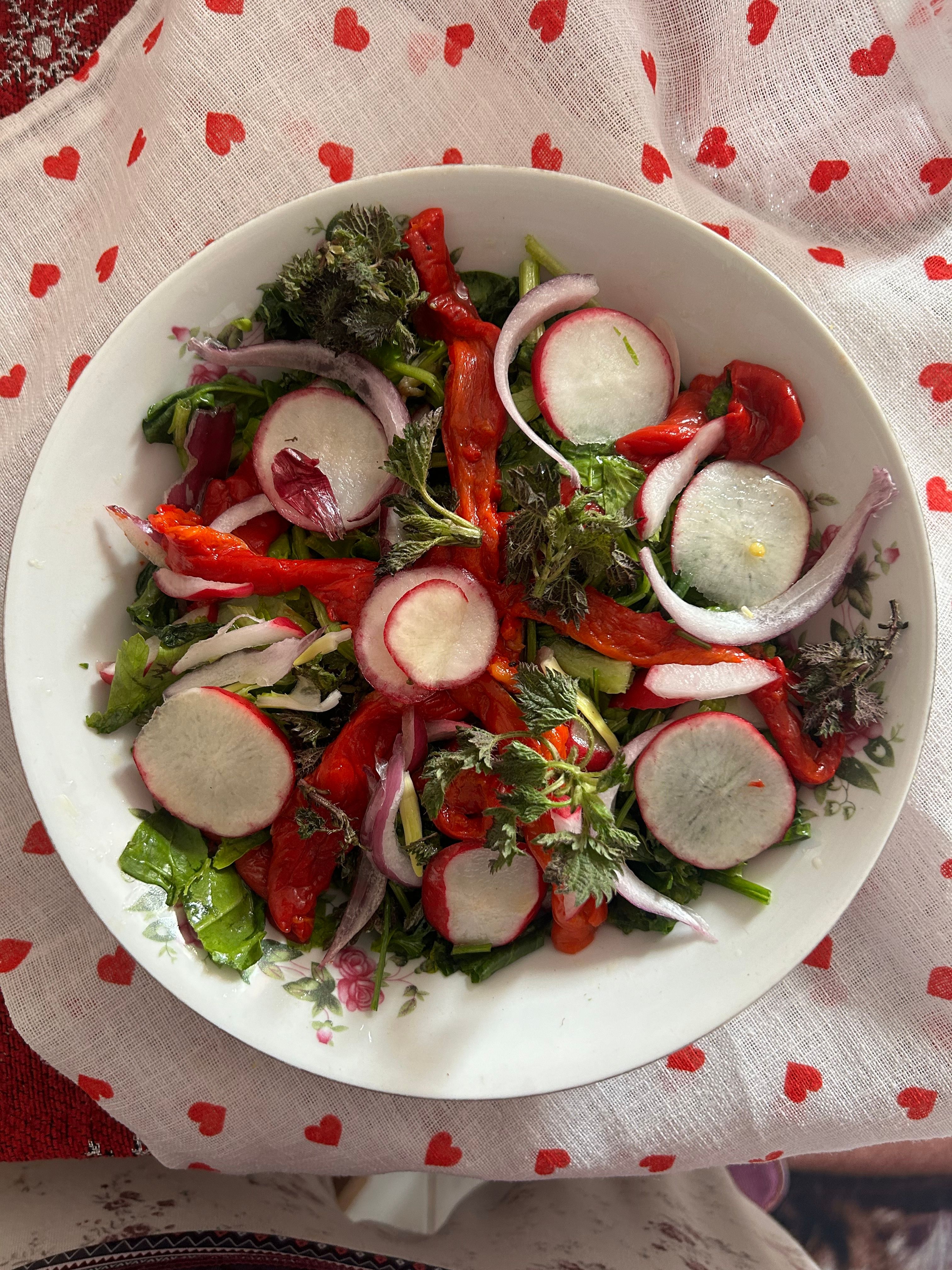
Common Ingredients
- basil
- mint
- tarragon
- radishes
- scallions
- walnuts
- feta
- flatbread
Specific recipes may vary.
Incompatible with 6 of 11 diets
Diet Ratings
Sabzi Khordan as traditionally served includes flatbread, which is a grain-based high-carb component that is fundamentally incompatible with ketogenic eating. The flatbread alone can contribute 15-30g+ of net carbs per serving, easily pushing past daily keto limits. Without the flatbread, the remaining components — fresh herbs (basil, mint, tarragon), radishes, scallions, walnuts, and feta — are largely keto-friendly. However, the dish is evaluated in its most common form, which includes flatbread as a core element, not a garnish. Scallions also add minor carbs. The dish as a whole cannot be approved due to the flatbread's central role.
Sabzi Khordan is a traditional Persian fresh herb platter that is largely plant-based — basil, mint, tarragon, radishes, scallions, and walnuts are all fully vegan-compliant whole foods. However, the dish as listed includes feta cheese, which is a dairy product made from sheep's or goat's milk. Dairy is unambiguously excluded from a vegan diet. The flatbread is typically vegan (flour, water, salt) but can occasionally contain dairy or eggs depending on the recipe; in its standard form it is plant-based. The presence of feta disqualifies this dish. A vegan version is easily achievable by omitting the feta or substituting a plant-based feta alternative (e.g., tofu-based or almond-based vegan feta).
Sabzi Khordan contains two clear paleo violations: feta cheese (dairy) and flatbread (grain-based). Both are categorically excluded under all mainstream paleo frameworks. The fresh herbs (basil, mint, tarragon), radishes, scallions, and walnuts are all paleo-approved foods, but the presence of feta and flatbread makes this dish incompatible with the paleo diet. The compliant ingredients are simply accompaniments to two staple non-paleo components that are central to the dish's identity.
Sabzi Khordan is a Persian fresh herb platter that aligns strongly with Mediterranean diet principles. The base is an abundance of fresh herbs and vegetables (basil, mint, tarragon, radishes, scallions) — exactly the kind of plant-forward eating the diet emphasizes. Walnuts are a Mediterranean-approved nut rich in healthy fats and omega-3s. Feta is a traditional Mediterranean dairy used in moderation, consistent with the diet's allowance for moderate dairy servings. The main caveat is the flatbread: if made from refined flour, it conflicts with the preference for whole grains, though the quantity per serving is typically small. Overall, this dish is dominated by whole plant foods and fits well within Mediterranean principles.
The flatbread component introduces refined grains, which modern Mediterranean diet clinical guidelines (e.g., PREDIMED-aligned recommendations) discourage in favor of whole grains. Some interpreters would lower the score or flag caution specifically due to this ingredient, though traditional Mediterranean and Middle Eastern practice commonly includes flatbread as a vehicle for fresh vegetables and herbs.
Sabzi Khordan is an entirely plant-based Persian herb and vegetable platter. Every single ingredient — basil, mint, tarragon, radishes, scallions, walnuts, and flatbread — is plant-derived and explicitly excluded from the carnivore diet. The only ingredient with any animal connection is feta cheese, which is a dairy product and itself debated within carnivore circles, but it represents a tiny fraction of a dish that is otherwise 100% plants. This dish is the antithesis of the carnivore diet: it is a celebration of fresh herbs, vegetables, nuts, and bread with zero animal protein as its primary component. There is no meaningful carnivore modification possible here.
Sabzi Khordan contains two clearly excluded ingredients: feta cheese (dairy, explicitly excluded on Whole30) and flatbread (a grain-based product, excluded both as a grain and as a bread/baked good under the 'no recreating baked goods' rule). The remaining ingredients — fresh herbs (basil, mint, tarragon), radishes, scallions, and walnuts — are all fully Whole30-compliant. However, the presence of feta and flatbread as listed ingredients makes the dish as traditionally served non-compliant.
Sabzi Khordan contains multiple high-FODMAP ingredients that make it problematic during the elimination phase. The flatbread is the most significant issue — traditional Persian flatbread (lavash, sangak, barbari) is wheat-based and high in fructans, making it a clear avoid. Scallions (green onions) are a well-known FODMAP trigger: the green tops are low-FODMAP but the white bulb portions contain fructans, and scallions in Sabzi Khordan are typically served whole or in large bunches. Feta cheese contains lactose, which is a FODMAP disaccharide — at small amounts (40g or less) Monash rates it as low-FODMAP, but the portion typically served in this dish as a centerpiece component is likely to exceed that threshold. Walnuts are low-FODMAP at 10 walnuts (30g) but become high-FODMAP at larger servings, and the generous handful typically served in this dish creates risk. On the positive side, basil, mint, tarragon, and radishes are all low-FODMAP at standard servings. However, the combination of wheat flatbread (high-fructan, unavoidable), likely-problematic scallion white parts, and borderline feta and walnut portions means this dish is not safe during elimination.
Some FODMAP practitioners note that if the flatbread is replaced with a gluten-free alternative, scallion whites are removed, feta is kept to a 40g portion, and walnuts are capped at ~30g, the herb-and-radish base of the dish is entirely low-FODMAP. The dish could in principle be modified to a 'caution' rating, but as traditionally served it is an avoid.
Sabzi Khordan is a Persian fresh herb platter that contains several DASH-friendly components alongside a few that require moderation. The fresh herbs (basil, mint, tarragon), radishes, and scallions are excellent DASH foods — low sodium, rich in micronutrients and fiber, and strongly encouraged. Walnuts are a DASH-approved nut source providing healthy unsaturated fats, magnesium, and protein. However, feta cheese is a significant sodium concern: a typical 1 oz serving contains 300-400mg sodium, and feta is a full-fat cheese rather than the low-fat dairy DASH emphasizes. Flatbread varies widely — traditional thin Persian flatbread (lavash, sangak) is often made with refined flour and moderate sodium, neither a whole grain nor a high-sodium red flag, but not an ideal DASH grain. The dish as a whole is not disqualifying, but the feta cheese alone introduces enough sodium and saturated fat to warrant a caution rating rather than approval. Portioning feta carefully (small amounts) and choosing whole-grain flatbread would meaningfully improve the DASH profile of this dish.
NIH DASH guidelines explicitly limit sodium and specify low-fat dairy, placing standard feta cheese outside the ideal category; however, some updated clinical interpretations note that emerging research on full-fat fermented dairy does not consistently worsen cardiovascular outcomes, and some DASH-oriented clinicians accept small amounts of feta as a flavor agent, particularly given the otherwise highly nutrient-dense herb and vegetable base of this dish.
Sabzi Khordan is a traditional Persian fresh herb and accompaniment platter that presents a mixed Zone profile. The dish's strengths are notable: fresh herbs (basil, mint, tarragon), radishes, and scallions are all excellent low-glycemic, polyphenol-rich Zone-favorable carbohydrates that Sears would enthusiastically endorse. Walnuts provide monounsaturated and omega-3 fats, aligning well with Zone's anti-inflammatory emphasis. However, the dish has two Zone friction points: feta cheese contributes saturated fat (less ideal than monounsaturated sources) and adds protein, while flatbread introduces a higher-glycemic refined carbohydrate that Sears classifies as 'unfavorable.' The dish also lacks a primary lean protein source, making it difficult to anchor a complete Zone meal. As a side dish rather than a standalone meal, it can work well alongside a lean protein (grilled fish, chicken) if flatbread portions are minimized or eliminated. The 40/30/30 ratio is achievable if the flatbread is reduced to a small amount or skipped, and the feta is portioned carefully. The herb and vegetable base is genuinely Zone-favorable; the flatbread and feta are the elements requiring moderation.
Some Zone practitioners, particularly those following Sears' later anti-inflammatory writings, would be more permissive with small amounts of flatbread (treating it as 1 carb block) and feta (a modest saturated fat source that also contributes protein blocks). In that reading, Sabzi Khordan with minimal flatbread could score as a 6-7 caution-to-approve, especially when paired with a lean protein entrée. The herb and vegetable richness — packed with polyphenols — is exactly what Sears highlights in his omega-3 and polyphenol protocols.
Sabzi Khordan is a traditional Persian herb platter that is overwhelmingly plant-forward and rich in anti-inflammatory compounds. Fresh basil, mint, and tarragon are all recognized anti-inflammatory herbs containing polyphenols, flavonoids, and volatile oils (e.g., eugenol in basil, rosmarinic acid in mint) that have demonstrated anti-inflammatory effects in research. Radishes and scallions contribute antioxidants, sulfur compounds (quercetin, anthocyanins), and prebiotic fiber. Walnuts are a standout anti-inflammatory ingredient — one of the best plant sources of ALA (omega-3), polyphenols, and ellagitannins, all associated with reduced CRP and IL-6. These components alone would likely qualify the dish for a strong approval. The two moderating factors are feta cheese and flatbread. Feta is a full-fat dairy product, which the anti-inflammatory framework recommends limiting due to saturated fat content, though its traditionally small portion size in this dish mitigates concern. Flatbread (typically refined wheat) introduces refined carbohydrates, which are flagged as mildly pro-inflammatory. However, both feta and flatbread are consumed in relatively modest quantities alongside a large volume of anti-inflammatory herbs and walnuts, so the overall dish profile remains net anti-inflammatory. The dish earns a 7 rather than higher due to feta and refined flatbread, which prevent a top-tier score.
Most anti-inflammatory authorities would rate this dish favorably given its herb and walnut base. However, practitioners following stricter anti-inflammatory protocols (such as those emphasizing dairy elimination for autoimmune or gut health concerns) would flag the feta as problematic due to saturated fat and potential dairy sensitivity triggers. Similarly, some low-glycemic anti-inflammatory frameworks (e.g., The Inflammation Spectrum by Dr. Will Cole) would recommend substituting a whole grain or grain-free flatbread to avoid the refined carbohydrate component.
Sabzi Khordan is a traditional Persian fresh herb platter typically served alongside meals. The base of fresh herbs (basil, mint, tarragon), radishes, and scallions is excellent — high water content, micronutrient-dense, fiber-contributing, and very easy to digest. However, the dish as traditionally composed includes walnuts (healthy unsaturated fats but calorie-dense and high in fat per small volume), feta cheese (moderate protein but high in saturated fat and sodium), and flatbread (refined carbohydrates, low fiber, low protein, easy to overconsume). As a side dish with no primary protein, it does not meaningfully advance the GLP-1 priority of 15–30g protein per meal. The walnuts provide omega-3 fats (a positive) but add significant calorie density in a context where every calorie must work hard. Flatbread is the weakest element — refined, low-nutrient, and easy to overconsume when appetite suppression is reduced. As a small accompaniment to a protein-rich main dish, this platter is largely acceptable and even beneficial (herbs, radishes). As a standalone side in larger portions, it underdelivers on protein and risks excess fat and refined carb intake.
Some GLP-1-focused RDs view the walnut and feta components favorably, arguing that small amounts of high-fat, high-flavor foods increase meal satisfaction and adherence, reducing the risk of patients abandoning structured eating altogether. Others caution that feta's saturated fat content and flatbread's refined carbohydrate load make both poor choices when stomach capacity is limited and nutrient density is paramount.
*See how scores were generated at our methodology page.
Nutritional profile
Six traits that cut across every diet.
Fiber & Plants
How much whole-plant food and fiber it delivers.
Healthy Fats
The quality of its fats (unsaturated, omega-3).
Whole / Unprocessed
How close it is to its natural, unprocessed form.
Gut Gentle
How easy it is on digestion (low FODMAP, few irritants).
Low Glycemic
How little it spikes your blood sugar.
Protein Density
How much protein it packs per calorie.
Controversy Index
Higher controversy = more disagreement between diets.
Diet-Specific Tips
 Mediterranean — 8/10
View tips
- Abundant fresh herbs (basil, mint, tarragon) are strongly plant-forward and encouraged
- Radishes and scallions add vegetable diversity aligned with Mediterranean principles
- Walnuts provide heart-healthy fats and are a staple Mediterranean nut
- Feta cheese is a traditional Mediterranean dairy, acceptable in moderate amounts
- Flatbread is likely refined grain, which is a minor concern but quantity is typically small
- No red meat, processed foods, or added sugars
- Persian herb platters mirror the plant-emphasis of Mediterranean eating cultures
 DASH — 5/10
View tips
- Fresh herbs (basil, mint, tarragon) are excellent DASH foods — nutrient-dense, very low sodium
- Radishes and scallions are DASH-approved vegetables
- Walnuts are a DASH-recommended nut providing healthy fats and magnesium
- Feta cheese is high in sodium (~300-400mg/oz) and is full-fat dairy, both concerns under DASH
- Flatbread is typically refined grain rather than whole grain, a missed DASH opportunity
- Overall sodium load elevated primarily by feta; portion control is key
- Dish is largely plant-based and herb-forward, which aligns with DASH principles
 Zone — 5/10
View tips
- Fresh herbs (basil, mint, tarragon) are Zone-favorable low-glycemic, polyphenol-rich carbohydrates
- Radishes and scallions are excellent Zone vegetables
- Walnuts provide omega-3 and monounsaturated fats aligned with Zone anti-inflammatory goals
- Flatbread is a higher-glycemic 'unfavorable' carbohydrate in Zone terminology
- Feta contributes saturated fat, less preferred than monounsaturated fat sources
- No primary lean protein makes this difficult to balance as a standalone Zone meal
- Works best as a side dish alongside lean protein with flatbread minimized
 Anti-Inflammatory — 7/10
View tips
- Basil, mint, and tarragon provide polyphenols, flavonoids, and anti-inflammatory volatile oils
- Walnuts are among the best plant sources of ALA omega-3s and ellagitannins — strong anti-inflammatory credentials
- Radishes and scallions contribute quercetin, anthocyanins, sulfur compounds, and prebiotic fiber
- Feta is a full-fat dairy product (saturated fat) — recommended to limit in anti-inflammatory diets, though portion is typically small
- Flatbread (refined wheat) introduces refined carbohydrates, a mild pro-inflammatory factor
- Overall dish is heavily herb- and walnut-dominant, making the net inflammatory profile positive
 GLP-1 Friendly — 5/10
View tips
- No meaningful protein contribution — does not support the 15–30g per meal target
- Fresh herbs and radishes are nutrient-dense, high water content, and GLP-1 friendly
- Walnuts provide beneficial omega-3 fats but are calorie-dense in a low-volume context
- Feta adds some protein but is high in saturated fat and sodium
- Flatbread is refined, low-fiber, and low-protein — weakest element of the dish
- Best used as a small accompaniment to a protein-rich main, not as a standalone side
- Herb and vegetable components support hydration and digestion