The diets react (see scores below)
Common Ingredients
- basmati rice
- chicken
- yogurt
- egg yolk
- saffron
- butter
- barberries
- onion
Specific recipes may vary.
Incompatible with 6 of 11 diets
Diet Ratings
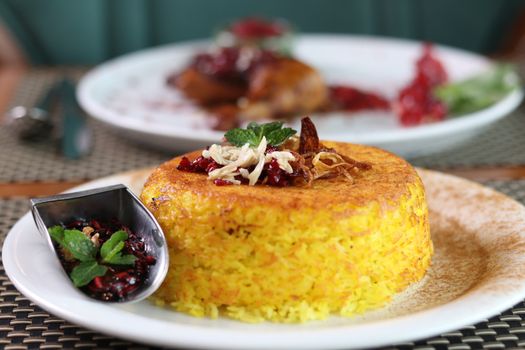
Tahchin is a Persian rice cake where basmati rice is the dominant ingredient and structural foundation of the dish. A single serving contains an enormous amount of net carbs — a typical portion can easily deliver 60-90g of net carbs from the rice alone, far exceeding the entire daily keto allowance of 20-50g. While some ingredients are keto-friendly (chicken, butter, egg yolk, yogurt, saffron) and barberries add only minimal carbs, the rice is non-negotiable and cannot be reduced without fundamentally destroying the dish. This is unambiguously incompatible with ketosis.
Tahchin contains multiple animal products: chicken (poultry/meat), yogurt (dairy), egg yolk (egg), and butter (dairy). This dish is fundamentally incompatible with a vegan diet. Four of the eight listed ingredients are animal-derived, making this a clear and unambiguous avoid verdict.
Tahchin is fundamentally a rice-based dish — basmati rice is its defining ingredient and a grain explicitly excluded from the paleo diet. Beyond the rice, yogurt is a dairy product (avoid), and butter is also dairy (avoid or debated). Saffron, egg yolk, onion, and barberries are all paleo-approved, and chicken is an excellent paleo protein, but the core structural ingredients (basmati rice, yogurt, butter) make this dish incompatible with paleo principles. No substitution could retain the dish's identity while making it paleo-compliant.
Tahchin is a Persian baked rice dish with several Mediterranean-compatible elements alongside some that require moderation. Chicken is acceptable poultry (moderate consumption), yogurt and egg yolk are dairy/egg components permitted in small amounts, saffron and barberries add antioxidant-rich, plant-based value, and onion is a encouraged vegetable. However, butter is used as the primary fat rather than extra virgin olive oil, which is the canonical Mediterranean fat. Basmati rice is a refined/white grain, not a whole grain, which is less preferred but tolerated in moderation. The combination of butter, egg yolk, and yogurt mixed into the rice base creates a relatively rich, fat-forward dish. Overall it is not a core Mediterranean dish but is acceptable occasionally, with the main concerns being butter use over olive oil and white rice over whole grains.
Some Mediterranean diet practitioners, particularly those drawing on Middle Eastern and Levantine culinary traditions, view dishes like Tahchin favorably given their use of yogurt (a probiotic dairy staple in many Mediterranean-adjacent cultures), lean poultry, and anti-inflammatory saffron. Substituting olive oil for butter would bring it closer to Mediterranean ideals, and moderate portions of white rice are accepted in traditional Levantine and Greek contexts.
Tahchin is fundamentally incompatible with the carnivore diet. The dish is built on a foundation of basmati rice, a grain that is strictly excluded from all tiers of carnivore eating. Additional plant-based ingredients include saffron (a plant spice), barberries (a fruit), and onion (a vegetable). While the dish does contain some carnivore-compatible components — chicken, egg yolk, yogurt, and butter — these animal-derived ingredients are entirely overshadowed by the dominant plant-based carbohydrate base and other plant additives. No version of carnivore, from the strictest Lion Diet to the more liberal animal-based approach, would permit a rice-centered dish.
Tahchin contains multiple excluded ingredients that make it incompatible with Whole30. Basmati rice is a grain and is explicitly excluded from the program. Yogurt is a dairy product and is also explicitly excluded. Butter (regular, not ghee) is excluded as well. Any one of these three ingredients alone would disqualify the dish; together they make it clearly non-compliant. The chicken, egg yolk, saffron, barberries, and onion are all Whole30-compatible, but they cannot redeem the dish given the foundational excluded ingredients.
Tahchin contains two significant high-FODMAP ingredients that make it unsuitable during the elimination phase: onion and yogurt. Onion is one of the highest-FODMAP foods tested by Monash University, containing substantial fructans at any culinary serving size — there is no safe portion of cooked onion during elimination. Yogurt contains lactose, which is a disaccharide FODMAP; standard yogurt is high-FODMAP at a typical serving (Monash rates regular yogurt as high-FODMAP at portions above roughly 23g). The remaining ingredients are generally low-FODMAP: basmati rice is low-FODMAP and a staple of the diet, chicken breast is FODMAP-free, egg yolk is low-FODMAP, saffron is used in negligible quantities, butter is low-FODMAP (fat contains no FODMAPs), and barberries are low-FODMAP at small servings. However, the combination of onion and lactose-containing yogurt as structural ingredients — both used in meaningful quantities in traditional Tahchin — makes this dish clearly high-FODMAP as prepared. Modification would require omitting onion entirely and substituting lactose-free yogurt, which would substantially alter the dish.
Tahchin is a Persian baked rice dish combining several DASH-aligned ingredients with a few that require moderation. Basmati rice is a refined grain (not whole grain), which is acceptable but not emphasized in DASH. Chicken is a lean protein and fits well within DASH guidelines. Yogurt is a low-fat dairy source if using plain low-fat yogurt, which DASH endorses, but traditional recipes often use full-fat yogurt. Egg yolk adds saturated fat and cholesterol, which DASH historically limited, though current guidelines are somewhat more permissive. Butter is a saturated fat source that DASH explicitly limits — this is the most problematic ingredient. Barberries are a fruit with antioxidant properties and align with DASH fruit recommendations. Saffron and onion are DASH-friendly. The dish is naturally low in sodium, which is a strong positive. The main concerns are the butter content (saturated fat) and full-fat dairy, making this a 'caution' food rather than an 'avoid' — it can fit into a DASH diet with modifications such as substituting olive oil or a small amount of plant-based spread for butter and using low-fat yogurt.
NIH DASH guidelines explicitly limit saturated fat and specify low-fat dairy, which would penalize the butter and full-fat yogurt in traditional Tahchin. However, updated clinical interpretations note that the overall sodium content is very low, the dish is rich in DASH-friendly nutrients from chicken, yogurt, and barberries, and modest butter use in an otherwise balanced dish may be acceptable — particularly if low-fat yogurt is substituted and olive oil replaces butter.
Tahchin is a Persian baked rice cake that is dominated by basmati rice, which is a high-glycemic, starchy carbohydrate that Zone methodology classifies as 'unfavorable.' The dish is structurally rice-forward — the rice is the primary volume and caloric component, meaning the macronutrient ratio will be heavily skewed toward carbohydrates, far exceeding the 40% carb target by calories. While the chicken provides lean protein and yogurt adds some protein value, the egg yolk and butter introduce saturated fat rather than the preferred monounsaturated fat. Barberries are a favorable addition (low-glycemic, high polyphenol), and saffron is anti-inflammatory, but these are minor components. The fundamental problem is that a typical serving of Tahchin cannot be portioned into Zone blocks without drastically reducing the rice portion to a few tablespoons — which would not resemble the dish. Butter is a saturated fat source that Zone methodology discourages (especially in early Sears writings), compounding the issue. This dish could theoretically be consumed in a very small portion as a carb block alongside additional lean protein and vegetables, but as a standalone main dish it significantly over-delivers carbohydrates and saturated fat while under-delivering the lean protein-to-carb balance the Zone requires.
Tahchin is a Persian baked rice dish with a mixed anti-inflammatory profile. On the positive side, saffron is a potent anti-inflammatory spice rich in crocin and safranal, shown to reduce CRP and oxidative stress markers. Barberries (zereshk) are exceptionally high in berberine and antioxidants, with meaningful anti-inflammatory and antimicrobial properties — a genuine nutritional highlight. Chicken (lean protein) and yogurt (probiotics, moderate anti-inflammatory) are acceptable in the 'moderate' category. Onion provides quercetin. However, the dish is centered on white basmati rice, a refined carbohydrate that lacks fiber and has a high glycemic index, which can promote modest inflammatory responses over time. Butter is a saturated fat that anti-inflammatory guidelines recommend limiting. Egg yolk is a moderate consideration. The combination of butter-crisped rice (tahdig) and refined starch makes this a caution-level dish overall — not harmful, but not optimized for anti-inflammatory eating. Substituting part of the butter with extra virgin olive oil and incorporating more vegetables or legumes would substantially improve its profile.
Some anti-inflammatory practitioners, particularly those aligned with Dr. Weil's broader Mediterranean/Asian-inspired framework, would view basmati rice more favorably than other refined grains due to its relatively lower glycemic index compared to other white rices and its cultural role in balanced meals. Additionally, the potent bioactive compounds in saffron and barberries are genuinely significant — a minority of researchers might rate this dish more favorably, emphasizing the synergistic anti-inflammatory spice content over the refined carbohydrate concern.
Tahchin is a Persian baked rice cake layered with chicken, yogurt, egg yolk, saffron, butter, and topped with barberries. The chicken provides a meaningful protein contribution, and yogurt adds additional protein along with probiotics. Barberries are low-calorie and rich in antioxidants. However, the dish is structurally dominated by basmati rice — a refined carbohydrate with moderate glycemic impact and low fiber — making it calorie-dense relative to its protein and fiber yield per serving. Butter is used to achieve the signature crispy tahdig crust, adding saturated fat that can worsen GLP-1 side effects like nausea and reflux. Egg yolk contributes additional fat. The dish is not fried but is baked at high heat with butter, producing a rich, heavy result. Portion control is critical: a small serving centered on the chicken layer is workable, but standard restaurant or home portions skew heavily toward rice. Digestibility is moderate — the rice is soft and well-cooked, which helps, but the fat content slows gastric emptying further on top of the GLP-1 effect. Not a first-choice GLP-1 meal, but manageable in a small, protein-forward portion with the rice minimized.
Some GLP-1-focused dietitians would view this more favorably, noting that the yogurt-and-egg marinade meaningfully increases protein density compared to plain rice dishes, and that saffron has emerging evidence for appetite and mood support relevant to weight loss patients. Others would rate it lower, emphasizing that butter-enriched rice dishes are structurally difficult to portion-control and that the saturated fat load is a consistent trigger for GI discomfort in GLP-1 patients, particularly in the first several months of treatment.
*See how scores were generated at our methodology page.
Nutritional profile
Six traits that cut across every diet.
Fiber & Plants
How much whole-plant food and fiber it delivers.
Healthy Fats
The quality of its fats (unsaturated, omega-3).
Whole / Unprocessed
How close it is to its natural, unprocessed form.
Gut Gentle
How easy it is on digestion (low FODMAP, few irritants).
Low Glycemic
How little it spikes your blood sugar.
Protein Density
How much protein it packs per calorie.
Controversy Index
Higher controversy = more disagreement between diets.
Diet-Specific Tips
 Mediterranean — 5/10
View tips
- Chicken is an acceptable moderate-consumption protein
- Butter used as primary fat instead of extra virgin olive oil
- Basmati (white) rice is a refined grain, less preferred than whole grains
- Yogurt and egg yolk acceptable in moderation
- Saffron and barberries provide antioxidant and polyphenol value
- Onion is an encouraged plant-based ingredient
- Overall dish is rich in saturated fat from butter and egg yolk combination
 DASH — 5/10
View tips
- Butter adds saturated fat, which DASH explicitly limits
- Full-fat yogurt in traditional recipes conflicts with DASH low-fat dairy recommendation; low-fat yogurt substitution improves score
- Chicken is a DASH-approved lean protein
- Basmati rice is a refined grain — whole grain rice would be preferred
- Dish is naturally very low in sodium, a significant DASH positive
- Barberries contribute fruit servings with antioxidants
- Egg yolk adds cholesterol and saturated fat, though in modest quantities per serving
- No processed or cured meats, sweets, or high-sodium additives
 Zone — 4/10
View tips
- Basmati rice is the dominant ingredient — an 'unfavorable,' high-glycemic carbohydrate in Zone terminology
- Carbohydrate-to-protein ratio is heavily skewed; a typical serving far exceeds 40% calories from carbs
- Butter and egg yolk provide saturated fat rather than Zone-preferred monounsaturated fat
- Chicken and yogurt are favorable Zone protein sources but are volumetrically secondary in this dish
- Barberries and saffron are favorable — anti-inflammatory and low-glycemic
- Dish structure makes it difficult to portion into balanced Zone blocks without fundamentally altering the recipe
- Onion is a favorable, low-glycemic carbohydrate addition
 Anti-Inflammatory — 5/10
View tips
- Saffron: strong anti-inflammatory spice with crocin and safranal shown to reduce CRP
- Barberries: rich in berberine and antioxidants — a standout anti-inflammatory ingredient
- White basmati rice: refined carbohydrate, high glycemic index, low fiber — modest pro-inflammatory concern
- Butter: saturated fat, recommended to limit in anti-inflammatory diets
- Chicken: lean protein, acceptable in moderate category
- Yogurt: probiotics may support gut health and reduce inflammation
- Onion: quercetin content provides mild anti-inflammatory benefit
- Overall dish is high in refined starch and saturated fat, offsetting the beneficial spices
 GLP-1 Friendly — 5/10
View tips
- Chicken provides solid protein but its proportion relative to rice varies by serving and preparation
- Basmati rice is the dominant ingredient — refined carb, low fiber, moderate glycemic index
- Butter used for tahdig crust adds saturated fat, worsening nausea and reflux risk on GLP-1s
- Yogurt and egg yolk contribute additional protein but also fat
- Barberries are a positive addition — low calorie, antioxidant-rich, negligible fat
- Low fiber overall — no significant vegetable or legume content
- Portion sensitivity is high — small chicken-forward servings are acceptable, standard portions are not
- Slowed gastric emptying from GLP-1 compounded by fat content increases discomfort risk
- Not fried, which is a relative advantage over heavier rice dishes