Photo: Shameel mukkath / Pexels
Persian
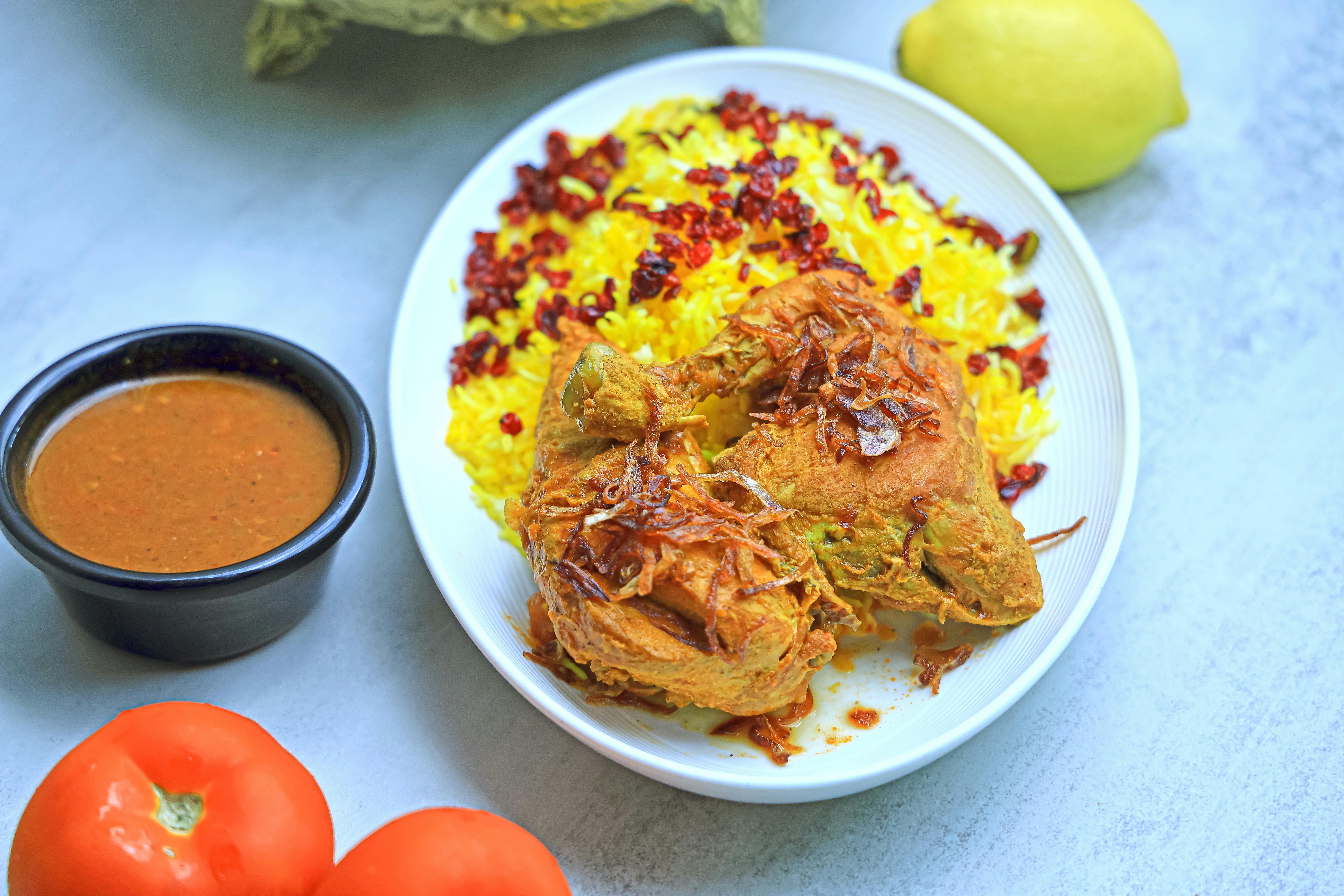
Zereshk Polo
The diets react (see scores below)
Common Ingredients
- basmati rice
- chicken
- barberries
- saffron
- onion
- butter
- sugar
- tomato paste
Specific recipes may vary.
Incompatible with 6 of 11 diets
Diet Ratings
Zereshk Polo is fundamentally incompatible with ketogenic diet principles. The primary component is basmati rice, a high-glycemic grain that contains approximately 45g of net carbs per 100g cooked — a single serving would obliterate the entire daily carb budget. Additionally, sugar is explicitly added to the barberry mixture, introducing direct simple carbohydrates. Tomato paste adds further carbs. While the chicken, saffron, onion, and butter are keto-friendly components, the structural foundation of this dish (rice + sugar) makes it impossible to consume in any meaningful portion while maintaining ketosis. This is not a dish that can be adapted with portion control — the rice is the dish.
Zereshk Polo contains multiple animal-derived ingredients that make it incompatible with a vegan diet. Chicken is a clear animal product (poultry), and butter is a dairy derivative. Both are explicitly excluded under vegan dietary rules. While several ingredients are plant-based — basmati rice, barberries, saffron, onion, sugar, and tomato paste — the presence of chicken and butter disqualifies this dish entirely.
Zereshk Polo is fundamentally built around basmati rice, a grain that is explicitly excluded from the paleo diet. Grains are among the clearest 'avoid' categories in paleo, rejected unanimously by all major paleo authorities (Cordain, Sisson, Wolf) due to their anti-nutrient content (lectins, phytates) and the fact that they were absent from the Paleolithic diet. Beyond the rice, butter is a dairy product (avoid), and refined sugar is explicitly excluded. Tomato paste may contain additives or added salt depending on the product. The chicken, barberries, saffron, and onion are paleo-friendly, but they are minority ingredients in a dish whose entire structure depends on a grain base. No meaningful paleo adaptation is possible without fundamentally deconstructing and rebuilding the dish.
Zereshk Polo is a Persian dish with several elements that partially align with Mediterranean principles but also contain notable deviations. Chicken (poultry) is acceptable in moderation under Mediterranean guidelines. Barberries are a nutritious fruit rich in antioxidants, comparable to other berries encouraged in the diet. Saffron and onion are wholesome, plant-based flavor components. However, the dish uses butter as the primary fat rather than extra virgin olive oil, which is the canonical fat source in the Mediterranean diet. Basmati rice is a refined or semi-refined grain, not a whole grain, though it has a lower glycemic index than many refined grains. The addition of sugar — even in small amounts to balance the tartness of barberries — introduces unnecessary added sugar. Tomato paste is a concentrated, minimally processed ingredient generally acceptable in moderation. Overall, this dish is a reasonable occasional meal but does not align closely with core Mediterranean principles due to butter, refined rice, and added sugar.
Some Mediterranean diet researchers allow moderate butter use in regional traditions (e.g., parts of the Middle East and Eastern Mediterranean), and basmati rice's relatively low glycemic index leads some practitioners to treat it more favorably than other white rices. In this view, Zereshk Polo with chicken could be seen as an acceptable cross-cultural adaptation, especially if butter is used sparingly.
Zereshk Polo is fundamentally incompatible with the carnivore diet. The dish is dominated by plant-based ingredients: basmati rice (grain), barberries (fruit), saffron (plant spice), onion (vegetable), sugar (processed plant-derived sweetener), and tomato paste (vegetable product). While chicken and butter are animal-derived, they are minor components in a dish that is structurally built around grains and plant foods. No amount of the animal ingredients redeems this as a carnivore-compatible meal — the rice and barberries alone would disqualify it entirely.
Zereshk Polo contains multiple excluded ingredients. Basmati rice is a grain and is explicitly excluded on Whole30. Butter (regular, not ghee) is a dairy product and is excluded — only ghee/clarified butter is the allowed exception. Sugar is an added sweetener and is explicitly excluded. These three violations independently disqualify the dish, making this a clear avoid with high confidence.
Zereshk Polo contains two clear high-FODMAP ingredients that make it unsafe during the elimination phase at standard servings. Onion is one of the highest-fructan foods known and is high-FODMAP even in very small amounts — it cannot be made low-FODMAP simply by reducing quantity in a dish where it plays a primary flavoring role. Barberries (zereshk) are high in fructose and have been identified as high-FODMAP. The remaining ingredients are generally low-FODMAP: basmati rice is approved, chicken is approved, saffron is approved, butter is low-FODMAP at normal quantities, sugar is low-FODMAP, and tomato paste is low-FODMAP at small servings (up to 2 tablespoons). However, the combination of onion and barberries as core structural ingredients makes this dish incompatible with the elimination phase without significant modification.
Zereshk Polo (barberry rice with chicken) contains several DASH-friendly elements alongside some concerns. Basmati rice is an acceptable grain, though white basmati is refined and lacks the fiber of brown rice. Chicken is a lean protein well-aligned with DASH. Barberries are nutrient-dense, antioxidant-rich berries with potassium and low sugar. Saffron and onion are DASH-positive. However, butter contributes saturated fat, which DASH limits — traditional recipes use enough butter to meaningfully raise saturated fat intake. The addition of sugar (used to balance the tartness of barberries) adds unnecessary calories and falls into the 'sweets' category DASH recommends limiting. Tomato paste is generally DASH-friendly but canned versions can carry moderate sodium. As traditionally prepared, the dish is moderately compatible with DASH — lean protein and vegetables are positives, but butter and sugar require moderation. Substituting olive oil for butter, using a small amount of sugar or omitting it, and opting for low-sodium tomato paste would significantly improve DASH alignment. Brown basmati rice would also be preferred over white.
NIH DASH guidelines explicitly limit saturated fat and added sugars, placing butter and sugar in this recipe at odds with core recommendations. However, some updated clinical DASH interpretations note that small amounts of butter in an otherwise nutrient-dense dish with lean protein and antioxidant-rich barberries may be acceptable within overall daily saturated fat targets, particularly if portion size is controlled.
Zereshk Polo is a traditional Persian dish combining basmati rice with chicken, barberries, saffron, onion, butter, sugar, and tomato paste. From a Zone perspective, the dish has several significant challenges. The dominant carbohydrate source is basmati rice, which is a high-glycemic refined grain — classified as 'unfavorable' in Zone terminology. While basmati has a somewhat lower GI than white rice, it still drives a significant insulin spike and is not a Zone-preferred carbohydrate. The added sugar used to sweeten the barberry topping further worsens the carb profile. Butter contributes saturated fat rather than the preferred monounsaturated fat (olive oil, avocado, almonds), which goes against Zone anti-inflammatory principles. On the positive side, chicken is an excellent lean Zone protein source, barberries are low-sugar and polyphenol-rich (strongly anti-inflammatory and actually aligned with Sears' later writings on polyphenols), saffron has anti-inflammatory properties, and onion and tomato paste provide some favorable vegetable-based carbs. In practice, Zereshk Polo as traditionally prepared is rice-heavy, making the macro ratio very carb-dominant and protein/fat light — nearly the inverse of what Zone targets. To make it Zone-compatible, one would need to drastically reduce rice portion, eliminate added sugar, replace butter with olive oil, and increase the chicken portion — essentially deconstructing the dish. As served in traditional portions, the 40/30/30 ratio is very difficult to achieve.
Zereshk Polo is a Persian dish with a genuinely mixed anti-inflammatory profile. On the positive side, barberries are the standout ingredient — they are rich in berberine, a compound with well-documented anti-inflammatory and antioxidant properties, and anthocyanins that reduce oxidative stress. Saffron contains crocin and safranal, potent anti-inflammatory and antioxidant compounds supported by research. Onion provides quercetin and other flavonoids. Lean chicken is an acceptable moderate protein source within anti-inflammatory guidelines. Basmati rice, while a refined-adjacent grain, has a lower glycemic index than most white rices, making it somewhat more acceptable than typical refined carbohydrates. Tomato paste contributes lycopene, a carotenoid with anti-inflammatory properties. However, several factors temper the dish's rating: butter is a saturated fat the anti-inflammatory framework recommends limiting; added sugar (used to balance the tartness of barberries) is a pro-inflammatory ingredient even in small amounts; and basmati rice, while better than short-grain white rice, is still a refined grain rather than a whole grain. The dish is not deeply problematic, but modifications — swapping butter for extra virgin olive oil, reducing or eliminating added sugar, and reducing portion size of rice — would substantially improve its anti-inflammatory profile.
Some anti-inflammatory practitioners, particularly those following Dr. Andrew Weil's broader Mediterranean-Persian fusion approach, may rate this dish more favorably given the exceptional properties of saffron and barberries, arguing the small amounts of butter and sugar are negligible in context. Conversely, stricter anti-inflammatory protocols (such as those focused on insulin response) would flag white basmati rice and added sugar more harshly, potentially pushing the score lower.
Zereshk Polo is a Persian rice dish featuring saffron-scented basmati rice topped with tart barberries, served with chicken. The chicken component is a clear positive — lean protein that aligns well with GLP-1 dietary priorities. However, the dish is fundamentally rice-forward, meaning the protein-to-carbohydrate ratio per typical serving is unfavorable for GLP-1 patients who need to prioritize protein in every small meal. Butter is used in preparation, adding saturated fat that can worsen nausea and GI side effects. Sugar is added to the barberry topping to balance tartness, contributing empty calories in a context where every calorie must be nutrient-dense. Basmati rice is a refined grain with moderate glycemic impact and minimal fiber, providing little digestive support against GLP-1-associated constipation. The dish is not fried or heavily spiced, and saffron and onion are benign — easy to digest and anti-inflammatory. Tomato paste adds modest micronutrients. The dish scores in caution territory because the chicken saves it from a lower rating, but the butter, sugar, and rice-heavy structure make it a poor fit for small GLP-1 portions unless significantly modified: increasing chicken portion, reducing rice, omitting or minimizing butter and sugar.
Some GLP-1-focused dietitians may rate this more favorably when chicken is portioned generously and rice is treated as a small side, arguing that basmati rice is one of the more digestible grains and saffron has modest anti-nausea properties that may benefit GLP-1 patients with GI sensitivity. Others maintain that any butter-and-sugar preparation warrants a lower score regardless of modification potential, given how little volume GLP-1 patients can eat.
*See how scores were generated at our methodology page.
Nutritional profile
Six traits that cut across every diet.
Fiber & Plants
How much whole-plant food and fiber it delivers.
Healthy Fats
The quality of its fats (unsaturated, omega-3).
Whole / Unprocessed
How close it is to its natural, unprocessed form.
Gut Gentle
How easy it is on digestion (low FODMAP, few irritants).
Low Glycemic
How little it spikes your blood sugar.
Protein Density
How much protein it packs per calorie.
Controversy Index
Higher controversy = more disagreement between diets.
Diet-Specific Tips
 Mediterranean — 5/10
View tips
- Chicken is an acceptable moderate protein in the Mediterranean diet
- Butter replaces olive oil as the primary fat, conflicting with core Mediterranean principles
- Basmati rice is a refined grain, not a whole grain, though lower GI than many alternatives
- Added sugar contradicts Mediterranean diet's emphasis on minimal added sugars
- Barberries are antioxidant-rich and aligned with the diet's emphasis on fruits
- Saffron and onion are wholesome, plant-based aromatics consistent with Mediterranean cooking
 DASH — 5/10
View tips
- Lean chicken protein is DASH-approved
- Barberries are antioxidant-rich and nutrient-dense, a DASH-positive ingredient
- Butter adds saturated fat, which DASH limits
- Added sugar conflicts with DASH guidelines on sweets
- White basmati rice is refined; brown basmati would be preferred for fiber content
- Tomato paste may contain moderate sodium depending on brand — low-sodium versions preferred
- Overall dish can be DASH-compatible with modifications: replace butter with olive oil, reduce or eliminate sugar, use brown rice
 Zone — 4/10
View tips
- Basmati rice is a high-glycemic 'unfavorable' carbohydrate in Zone terminology
- Added sugar in the barberry glaze worsens the glycemic load
- Butter is a saturated fat, not the preferred monounsaturated fat
- Chicken is an excellent lean Zone protein — a genuine positive
- Barberries are polyphenol-rich and very low in sugar — strongly aligned with Sears' anti-inflammatory focus
- Traditional serving ratios are heavily carb-dominant, making 40/30/30 balance nearly impossible without major modification
- Saffron and onion provide minor anti-inflammatory benefits consistent with Zone principles
 Anti-Inflammatory — 5/10
View tips
- Barberries: rich in berberine and anthocyanins — strong anti-inflammatory credentials
- Saffron: contains crocin and safranal with documented anti-inflammatory and antioxidant effects
- Butter: saturated fat — should be limited per anti-inflammatory guidelines
- Added sugar: pro-inflammatory even in modest amounts
- Basmati rice: refined grain with moderate glycemic index — not ideal but better than short-grain white rice
- Lean chicken: acceptable moderate protein source
- Onion: provides quercetin and flavonoids
- Tomato paste: concentrated source of lycopene
 GLP-1 Friendly — 5/10
View tips
- Chicken provides lean protein — a strong positive
- Rice-dominant structure crowds out protein in small-portion context
- Butter adds saturated fat, increasing risk of nausea and GI discomfort
- Added sugar in barberry preparation contributes empty calories
- Basmati rice is low fiber, does not support constipation prevention
- Not fried or heavily spiced — easy to digest
- Dish is highly modifiable: more chicken, less rice, less butter improves rating significantly
- Saffron is benign and may have mild anti-inflammatory properties