Photo: Joao Sócola / Pexels
Peruvian
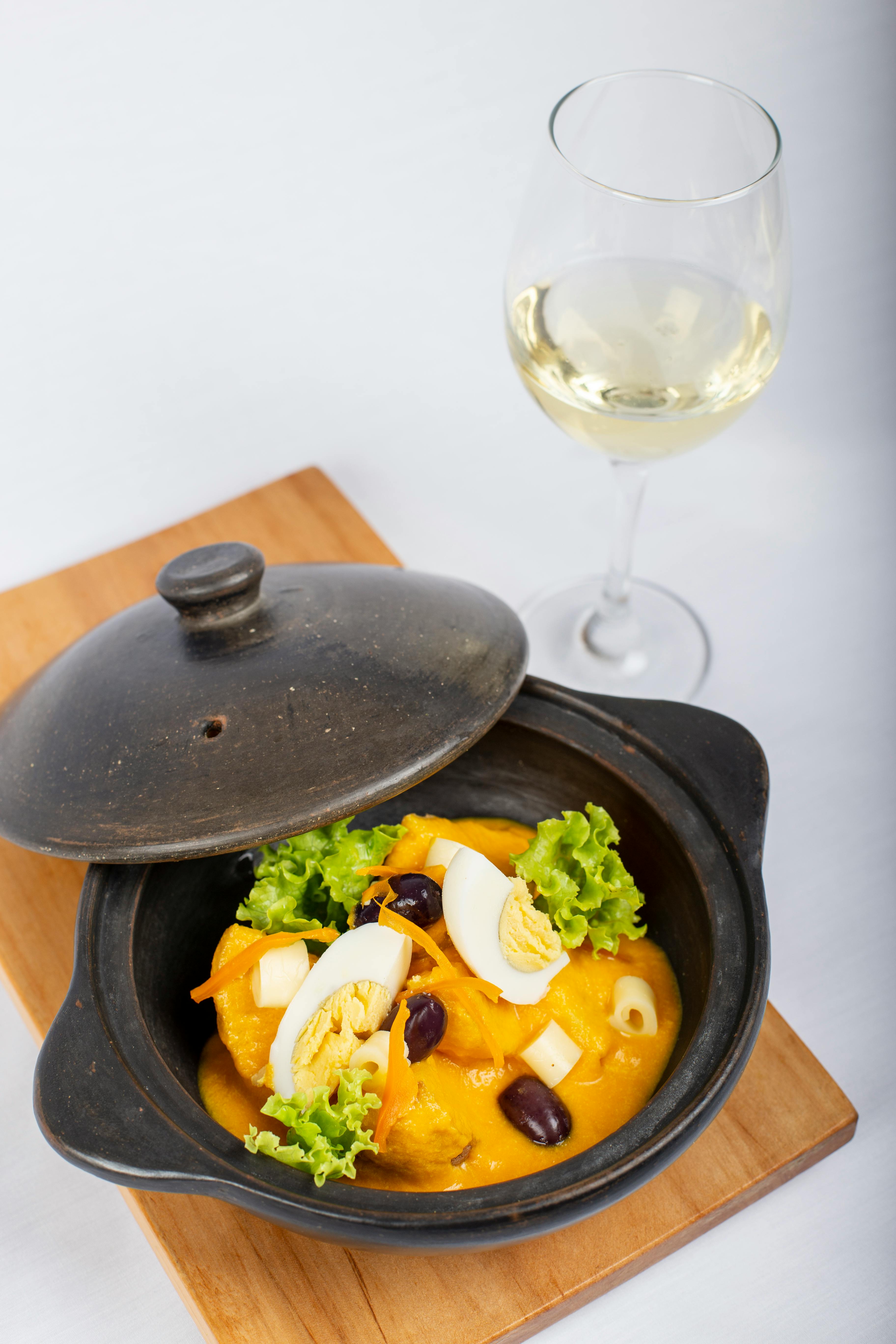
Aji de Camarones
The diets react (see scores below)
Common Ingredients
- shrimp
- aji amarillo
- evaporated milk
- bread
- queso fresco
- onion
- garlic
- potatoes
Specific recipes may vary.
Incompatible with 6 of 11 diets
Diet Ratings
Aji de Camarones contains multiple high-carb ingredients that make it clearly incompatible with ketosis. Potatoes are a starchy vegetable with very high net carbs (roughly 15-17g per 100g), bread is a grain-based ingredient that adds significant carbohydrates, and evaporated milk contains lactose-derived sugars. Even in moderate portions, the combination of potatoes and bread alone would almost certainly push a single serving well beyond the 20-50g daily net carb limit, leaving no room for other foods throughout the day. The shrimp itself is keto-friendly, as is garlic and onion in small amounts, but the structural carb-heavy ingredients (potatoes, bread) are not incidental — they are core to the dish's composition and texture.
Aji de Camarones contains multiple animal products and animal-derived ingredients that are unambiguously non-vegan. Shrimp is seafood (an animal product), evaporated milk is a dairy product, and queso fresco is a fresh cheese made from animal milk. This dish fails the vegan test on three separate counts, making it clearly incompatible with a vegan diet. There is no meaningful debate within the vegan community about any of these ingredients.
Aji de Camarones contains multiple non-paleo ingredients that make it incompatible with the diet. Evaporated milk is a dairy product, explicitly excluded. Bread (typically wheat-based) is a grain product, one of the clearest paleo exclusions. Queso fresco is a fresh dairy cheese, also firmly excluded. While shrimp, aji amarillo, onion, garlic, and potatoes are paleo-compatible (with potatoes being debated), the presence of three distinct non-paleo ingredients — dairy (evaporated milk, queso fresco) and grain (bread) — disqualifies this dish as a whole. The dish would require substantial reformulation to approach paleo compatibility.
Aji de Camarones features shrimp as its primary protein, which strongly aligns with Mediterranean diet principles encouraging fish and seafood 2-3 times weekly. Shrimp is an excellent lean protein source. The dish also includes vegetables (onion, garlic, aji amarillo pepper) and potatoes, all plant-based components consistent with the diet. However, the use of evaporated milk and queso fresco introduces significant dairy content, and the bread (likely white/refined) serves as a thickening agent rather than a whole grain. The combination of evaporated milk and cheese together creates a heavier dairy load than Mediterranean guidelines typically endorse in a single dish. If olive oil were used in preparation, that would be a positive factor, but traditional Peruvian preparation may use other fats. Overall, the dish is a moderate fit — the excellent shrimp base is offset by the dairy-heavy sauce and refined bread component.
Some Mediterranean diet practitioners would score this higher, arguing that modest dairy (cheese, milk) is acceptable in the Mediterranean pattern, and the shrimp-forward, vegetable-rich profile is more important than the sauce components. Traditional Mediterranean cuisines (e.g., Greek, Spanish) do incorporate milk-based sauces and fresh cheese alongside seafood, making this dish structurally similar.
Aji de Camarones is almost entirely incompatible with the carnivore diet. While shrimp is a carnivore-approved seafood, the dish is built around multiple plant-based and processed ingredients that are strictly excluded. Aji amarillo (a chili pepper) is a plant food; bread is a grain-based food; onion, garlic, and potatoes are all plant foods. Queso fresco is a dairy product (debated but conditionally accepted by some), and evaporated milk is a processed dairy product. The overwhelming proportion of plant-derived and grain-based ingredients disqualifies this dish entirely. There is no meaningful way to consume this dish as prepared within a carnivore framework — only the shrimp itself would be acceptable in isolation.
Aji de Camarones contains multiple Whole30-excluded ingredients. Evaporated milk is a dairy product and is explicitly excluded from the Whole30 program. Queso fresco is a cheese, also excluded dairy. Bread is a grain-based product, also explicitly excluded. These three ingredients are clear, hard violations of Whole30 rules, making this dish incompatible with the program in its traditional form.
Aji de Camarones contains multiple high-FODMAP ingredients that make it unsuitable during the elimination phase. Garlic and onion are among the highest-FODMAP foods tested by Monash University, both being significant sources of fructans with no safe serving size during elimination. Bread (wheat-based) is high in fructans. Queso fresco is a soft fresh cheese with moderate-to-high lactose content. Evaporated milk is high in lactose. While shrimp, aji amarillo (in moderate amounts), and potatoes are low-FODMAP, the combination of garlic, onion, wheat bread, lactose-containing dairy, and soft cheese creates an unavoidable high-FODMAP dish. Substantial recipe modification would be required to make this safe during elimination — replacing garlic/onion with garlic-infused oil and green onion tops, using gluten-free bread, and substituting lactose-free evaporated milk and a hard aged cheese.
Aji de Camarones contains several DASH-friendly components — shrimp is a lean protein low in saturated fat, aji amarillo and onion are vegetables, garlic adds flavor without sodium, and potatoes provide potassium and fiber. However, the dish raises DASH concerns in a few areas. Evaporated milk is typically full-fat (or at minimum higher in fat than low-fat dairy recommended by DASH), queso fresco is a moderate-sodium cheese that can contribute meaningfully to daily sodium intake, and bread used as a thickener (often white bread) adds refined carbohydrates. The traditional preparation style also tends to yield a rich, creamy sauce that is calorie-dense and may push saturated fat toward DASH limits. Shrimp itself has historically been viewed with mixed signals under DASH due to its moderate dietary cholesterol content, though updated guidelines have softened concerns. Overall, this dish is not a DASH staple but can be made more compatible with modifications: using low-fat evaporated milk, rinsing or limiting queso fresco, and using whole-grain bread.
NIH DASH guidelines emphasize low-fat dairy and portion control on higher-sodium cheeses like queso fresco, which would push this dish toward caution. However, updated clinical interpretations note that shrimp's cholesterol is less cardiovascular-relevant than its low saturated fat profile, and that when prepared with low-fat evaporated milk and minimal queso fresco, this dish's nutrient profile (lean protein, potassium-rich vegetables, peppers) aligns reasonably well with DASH principles.
Aji de Camarones has a mixed Zone profile. The protein source — shrimp — is excellent: lean, low-fat, and easy to portion into Zone blocks (~7g protein per ounce). Aji amarillo, onion, and garlic are favorable low-glycemic, polyphenol-rich carbohydrates that align well with Zone principles. However, the dish has two significant Zone problems. First, potatoes are explicitly 'unfavorable' carbohydrates in Zone terminology — high-glycemic and starchy, they spike insulin and make it difficult to maintain the 40/30/30 ratio without very careful portioning. Second, the sauce base relies on bread and evaporated milk for thickening, both of which contribute high-glycemic, processed carbs that crowd out favorable carbohydrate blocks. The queso fresco adds some saturated fat and protein but is not a lean dairy source. The overall dish skews carbohydrate-heavy with a significant proportion of those carbs coming from unfavorable, high-glycemic sources. A Zone practitioner could adapt this by eliminating the potato, replacing bread with a small amount of oat bran as thickener, and reducing the evaporated milk — but as traditionally prepared, it requires substantial modification to fit Zone ratios.
Aji de Camarones presents a mixed anti-inflammatory profile. On the positive side, shrimp provides lean protein and some omega-3 fatty acids (though lower than fatty fish), and is a good source of astaxanthin, a potent antioxidant carotenoid. Aji amarillo is a vibrant yellow chili pepper rich in capsaicin, vitamin C, and carotenoids — all with meaningful anti-inflammatory properties. Garlic and onion contribute quercetin, allicin, and other polyphenols that reduce inflammatory markers. These are real strengths. However, the dish has notable concerns: evaporated milk is full-fat dairy, which contributes saturated fat — a category to limit under anti-inflammatory principles. Queso fresco is a high-fat cheese, also adding saturated fat. White bread (a thickener in the sauce) is a refined carbohydrate with little nutritional value and a high glycemic impact. White potatoes are a mixed case — nutritious but high-glycemic and a nightshade. The overall dish isn't disqualifying, but the combination of full-fat dairy (evaporated milk + queso fresco) and refined carbohydrates (bread, potatoes) tempers what could otherwise be a more anti-inflammatory shrimp-and-pepper dish. A moderate portion of a traditionally prepared version is acceptable, but the dairy and refined carb components prevent a full approval.
Mainstream anti-inflammatory guidance (including Dr. Weil's framework) treats full-fat dairy as something to limit rather than strictly avoid, and some researchers note that dairy's inflammatory impact is highly individual and context-dependent. Additionally, AIP and stricter autoimmune-focused protocols would flag both nightshade peppers (aji amarillo) and potatoes as potentially pro-inflammatory for sensitive individuals, while mainstream anti-inflammatory nutrition considers colorful peppers to be strongly beneficial due to their antioxidant content.
Aji de Camarones is a mixed dish for GLP-1 patients. Shrimp is an excellent lean protein source — high protein density, low fat, easy to digest — and scores well on the most critical GLP-1 priority. However, the dish introduces several moderate concerns. Evaporated milk adds saturated fat and is calorie-dense relative to its nutritional contribution; it can also worsen GI symptoms in patients who develop lactose sensitivity on GLP-1 medications, which is common. Bread used as a thickener adds refined carbohydrates with minimal fiber or protein value. Queso fresco adds some protein but also saturated fat and sodium, making it a net neutral to mild negative. Potatoes are a moderate glycemic starch that adds bulk and carbohydrates; they are not inherently problematic but displace higher-fiber, higher-nutrient options and may contribute to gastric heaviness given GLP-1's slowed gastric emptying. Aji amarillo, while a defining flavor, is a moderately spicy pepper that may worsen reflux or nausea in sensitive patients, a known GLP-1 side effect risk. Onion and garlic are fine in cooked form. The dish is not fried and is generally easy to consume in small portions, which are positives. Overall, a traditional restaurant preparation is likely moderate-fat and moderate-carb with decent but not exceptional protein density — qualifying it as a caution rather than an approve.
Some GLP-1-focused dietitians would rate this more favorably, emphasizing that shrimp is one of the best protein sources available and that the aji amarillo spice level in this dish is mild-to-moderate rather than extreme — individual spice tolerance varies widely among GLP-1 patients and is not universally problematic. Others would be more cautious specifically about the evaporated milk and bread thickener combination, flagging the lactose sensitivity risk and refined carbohydrate load as meaningful drawbacks in a reduced-appetite context where every calorie must be nutritionally justified.
*See how scores were generated at our methodology page.
Nutritional profile
Six traits that cut across every diet.
Fiber & Plants
How much whole-plant food and fiber it delivers.
Healthy Fats
The quality of its fats (unsaturated, omega-3).
Whole / Unprocessed
How close it is to its natural, unprocessed form.
Gut Gentle
How easy it is on digestion (low FODMAP, few irritants).
Low Glycemic
How little it spikes your blood sugar.
Protein Density
How much protein it packs per calorie.
Controversy Index
Higher controversy = more disagreement between diets.
Diet-Specific Tips
 Mediterranean — 5/10
View tips
- Shrimp is an ideal Mediterranean protein — seafood encouraged 2-3 times weekly
- Evaporated milk and queso fresco add substantial dairy load beyond moderate guidelines
- Bread used as thickener is likely refined grain, not whole grain
- Onion, garlic, aji amarillo, and potatoes are positive plant-based components
- Dish is minimally processed and made from whole ingredients
- No red meat, added sugars, or highly processed components
 DASH — 5/10
View tips
- Shrimp is a lean, low-saturated-fat protein — DASH-friendly
- Evaporated milk is typically full-fat; low-fat version recommended for DASH
- Queso fresco contributes moderate sodium — portion control needed
- Potatoes and aji amarillo provide potassium and fiber — DASH-positive
- Bread thickener is often refined white bread — whole-grain preferred
- Creamy sauce texture signals higher calorie and fat density
- Overall sodium load from cheese plus any added salt may challenge DASH sodium limits
 Zone — 4/10
View tips
- Shrimp is an ideal Zone lean protein source, easily portioned into blocks
- Potatoes are explicitly 'unfavorable' high-glycemic carbohydrates in Zone methodology
- Bread used as thickener adds high-glycemic, processed carbohydrate load
- Evaporated milk increases caloric density and glycemic contribution beyond low-fat dairy norms
- Aji amarillo, onion, and garlic are favorable Zone carbohydrates with polyphenol benefits
- Dish is carbohydrate-heavy relative to the 40/30/30 Zone target, with the wrong type of carbs dominating
- Significant modification (removing potato, replacing bread thickener) would be needed to Zone-balance this dish
 Anti-Inflammatory — 5/10
View tips
- Shrimp provides lean protein and astaxanthin, an anti-inflammatory carotenoid
- Aji amarillo is rich in capsaicin, vitamin C, and carotenoids with anti-inflammatory effects
- Garlic and onion contribute allicin and quercetin, known to reduce inflammatory markers
- Evaporated milk is full-fat dairy — a saturated fat source to limit under anti-inflammatory guidelines
- Queso fresco adds additional saturated fat from high-fat cheese
- White bread used as a thickener is a refined carbohydrate with pro-inflammatory glycemic impact
- White potatoes are a nightshade with mixed anti-inflammatory standing and high glycemic index
- Overall dish is not strongly pro-inflammatory but contains multiple components that temper its anti-inflammatory potential
 GLP-1 Friendly — 5/10
View tips
- Shrimp is a lean, high-protein, easily digestible primary protein — strong positive
- Evaporated milk adds saturated fat and lactose, which may worsen GI side effects common on GLP-1 medications
- Bread as thickener contributes refined carbohydrates with low fiber and protein value — displaces nutrient-dense calories
- Queso fresco adds moderate saturated fat alongside minimal protein benefit
- Potatoes are a moderate glycemic starch that adds gastric volume and carbohydrate load
- Aji amarillo may trigger reflux or nausea in GLP-1 patients with heightened GI sensitivity
- Dish is not fried and is generally portionable — moderate positive
- Overall protein density per serving is decent but diluted by starch and dairy components