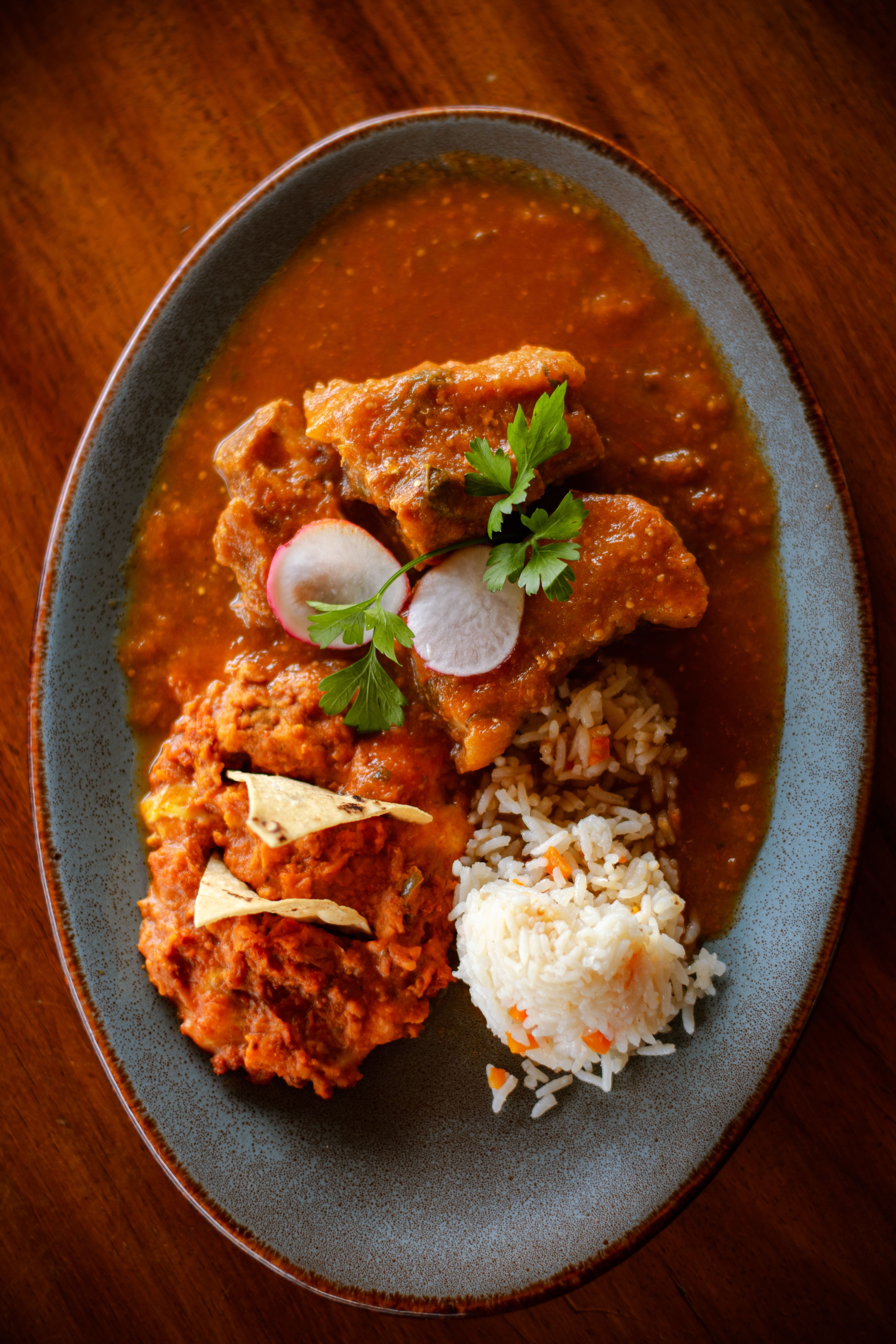
Photo: César O'neill / Pexels
The diets react (see scores below)
Common Ingredients
- dried potatoes
- pork
- peanuts
- aji panca
- garlic
- onion
- cumin
- chocolate
Specific recipes may vary.
Incompatible with 8 of 11 diets
Diet Ratings
Carapulcra is fundamentally incompatible with a ketogenic diet. The primary ingredient is dried potatoes (papa seca), which are extremely high in starch and net carbs — a single serving would easily exceed the entire daily keto carb limit of 20-50g. Peanuts add moderate carbs on top of that. While pork, garlic, onion, aji panca, cumin, and even small amounts of dark chocolate can be keto-friendly in isolation, the dish is built around dried potatoes as its core structural component, making it impossible to consume in any meaningful portion without breaking ketosis. There is no practical way to modify Carapulcra and still call it Carapulcra — the dried potato is the defining ingredient.
Carapulcra contains pork as its primary protein, which is a direct animal product and unambiguously excluded from a vegan diet. There is no debate within the vegan community about whether pork is acceptable — it is not. The remaining ingredients (dried potatoes, peanuts, aji panca, garlic, onion, cumin, chocolate) are all plant-based, but the inclusion of pork makes the dish entirely incompatible with vegan eating.
Carapulcra contains multiple non-paleo ingredients that make it incompatible with the diet. Dried potatoes (papa seca) are a processed, dehydrated form of potato — even setting aside the debate over white potatoes, this processing disqualifies them. Peanuts are legumes, which are strictly excluded from the paleo diet. These two violations alone are disqualifying. Additionally, chocolate would need to be evaluated carefully (dark, minimally processed cacao can be cautiously accepted), but combined with the legume and processed starch issues, the dish as a whole is a clear avoid.
Carapulcra is a traditional Peruvian stew with several ingredients that conflict with Mediterranean diet principles. Pork is the primary protein — classified as red meat, which the Mediterranean diet limits to only a few times per month. While some individual ingredients like garlic, onion, peanuts, and cumin are Mediterranean-compatible, pork as the dominant protein source is a significant negative factor. Dried potatoes (papa seca) are a refined/processed starch with a high glycemic impact, quite different from whole Mediterranean staples. The dish also lacks olive oil, fish, or plant-forward protein sources. The small amounts of chocolate and aji panca are relatively neutral. Overall, this dish centers on a protein source (pork) that directly contradicts core Mediterranean diet guidelines, making it a poor fit.
Carapulcra is a traditional Peruvian stew that is almost entirely plant-based in composition despite containing pork. The dish is built around dried potatoes (papa seca) as its primary base, with peanuts, aji panca (a dried chili pepper), garlic, onion, cumin, and chocolate all being strictly plant-derived ingredients. The pork, while carnivore-compatible on its own, is a minor component swimming in a stew of plant foods. Every single non-pork ingredient violates carnivore diet rules: potatoes are starchy plant carbohydrates, peanuts are legumes, aji panca and cumin are plant spices, garlic and onion are vegetables, and chocolate is a plant-derived product. This dish cannot be modified into a carnivore-compatible version without essentially replacing the entire recipe. There is universal consensus in the carnivore community that this dish is completely off-limits.
Carapulcra contains peanuts, which are legumes and explicitly excluded on the Whole30 program. This single ingredient is a clear disqualifier. Additionally, the chocolate ingredient is problematic — most chocolate contains added sugar and/or dairy (milk solids), both of which are excluded. Even 100% cacao is technically compliant, but 'chocolate' as commonly used in this dish almost certainly refers to a sweetened product. The remaining ingredients (dried potatoes, pork, aji panca, garlic, onion, cumin) are all Whole30-compatible, but the peanuts alone make this dish a firm avoid.
Carapulcra contains multiple high-FODMAP ingredients that make it unsuitable during the elimination phase. Garlic and onion are among the highest-FODMAP foods tested by Monash University, both rich in fructans, and they appear as core aromatics in this dish. Peanuts are high in GOS (oligosaccharides) and are rated high-FODMAP at typical serving sizes (safe only at a very restricted 28g/10 peanuts). These three ingredients alone would disqualify this dish. Dried potatoes (papa seca) are a traditional Peruvian ingredient not specifically tested by Monash, but potato itself is generally low-FODMAP; the drying process is unlikely to introduce new FODMAPs. Pork is a plain protein and is low-FODMAP. Aji panca (a dried red chili) is low-FODMAP in small quantities. Cumin is low-FODMAP at culinary amounts. Dark chocolate is low-FODMAP at small servings (≤30g). Despite a few low-FODMAP components, the combination of garlic, onion, and peanuts as fundamental ingredients makes this dish clearly high-FODMAP and inappropriate during elimination.
Carapulcra is a traditional Peruvian stew with several DASH-aligned ingredients (dried potatoes, peanuts, garlic, onion, cumin, aji panca, and small amounts of chocolate) but is complicated by its primary protein — pork. In traditional preparations, fatty cuts of pork (such as pork shoulder or belly) are used, contributing saturated fat that DASH guidelines recommend limiting. Peanuts add healthy unsaturated fats, magnesium, and protein, which are DASH-positive. Dried potatoes (chuño/papa seca) are a whole food carbohydrate source with potassium and fiber. The spice blend and aromatics are DASH-friendly. However, the dish's overall saturated fat load from pork, potential high sodium from seasoning and preparation, and the use of pork fat in cooking pull it away from core DASH recommendations. If prepared with lean pork loin, reduced salt, and controlled portions, it could be more acceptable. As typically prepared, it warrants caution rather than approval.
NIH DASH guidelines broadly limit red meat and fatty pork due to saturated fat content, but some updated clinical interpretations note that lean pork cuts are nutritionally closer to poultry and may be permissible in moderation within a DASH framework — the 2020-2025 Dietary Guidelines also do not categorically exclude lean pork. Some DASH-oriented dietitians would view a portion-controlled serving of this dish with lean pork as acceptable within a generally DASH-compliant diet, given the favorable micronutrient profile of the other ingredients.
Carapulcra is a traditional Peruvian stew with several Zone challenges. The primary carbohydrate source is dried potatoes (papa seca), which are high-glycemic and explicitly 'unfavorable' in Zone terminology — potatoes are among the carbs Dr. Sears specifically flags to avoid. Pork provides the protein but is typically fattier than Zone-ideal lean proteins like skinless chicken or fish, adding saturated fat. Peanuts contribute both fat and protein but are high in omega-6 fatty acids, which runs counter to Zone's anti-inflammatory emphasis. The small amount of chocolate (likely dark) and aji panca actually offer polyphenol benefits aligned with Sears' later anti-inflammatory focus. Aromatics (garlic, onion, cumin) are Zone-friendly. The macro ratio of this dish as traditionally prepared likely skews carb-heavy and fat-heavy relative to protein, making block balancing difficult without significant portion modification. A Zone-adapted version might reduce the potato portion substantially, trim the pork carefully, and supplement with low-glycemic vegetables, but as traditionally served, the dish poses real ratio challenges. It is not categorically unavoidable — a small, carefully portioned serving alongside lean protein supplementation could technically fit — but it requires significant dietary discipline.
Some Zone practitioners in later Sears-influenced frameworks note that small portions of starchy carbs can be incorporated as part of a larger balanced plate. Additionally, Sears' post-2000 writings (The OmegaRx Zone, The Anti-Inflammation Zone) place more emphasis on polyphenols and omega-3s than strict glycemic avoidance, meaning the chocolate and aji panca's polyphenol content offer partial redemption. A strict early-Zone reading (Enter the Zone) would score this lower (likely 3), while a more modern Zone-adjacent approach might accept a small portion at 5.
Carapulcra is a traditional Peruvian stew with a mixed anti-inflammatory profile. On the positive side, it contains several beneficial ingredients: aji panca (a dried red chili pepper) contributes capsaicin and carotenoids with anti-inflammatory properties; garlic and onion provide allicin, quercetin, and polyphenols that reduce inflammatory markers; cumin offers antioxidant compounds; and dark chocolate (if used in small amounts as a flavor enhancer, which is traditional in some versions) contributes flavanols. Peanuts provide some anti-inflammatory monounsaturated fats, resveratrol, and polyphenols, though their omega-6 content warrants moderation. The primary concern is pork: as a red/fatty meat, it is in the 'limit' category for anti-inflammatory eating, particularly if fatty cuts are used. The dish's inflammatory load depends heavily on the cut of pork — lean pork loin is more acceptable than fatty shoulder or belly. Dried potatoes (chuño or papa seca) are a minimally processed whole food with resistant starch and modest antioxidants, which is neutral to mildly positive. Overall, the dish has a genuinely mixed profile — several strong anti-inflammatory spices and vegetables balanced against pork as the primary protein and peanuts' omega-6 load.
Some anti-inflammatory practitioners would rate this more favorably, noting that the spice-rich base (chili, garlic, cumin) and modest chocolate content meaningfully offset the pork, and that peanuts' polyphenol and MUFA content is often underappreciated. Others following stricter protocols (such as AIP or those emphasizing minimal red/fatty meat) would rate this more harshly, viewing pork as a consistent inflammatory driver regardless of accompanying ingredients.
Carapulcra is a traditional Peruvian stew built around dried potatoes (papa seca) and pork, slow-cooked with peanuts, aji panca, and chocolate. While it contains some protein from the pork and peanuts, the overall nutritional profile is poorly matched to GLP-1 dietary needs. The primary protein source is pork, which in traditional preparations typically uses fattier cuts (shoulder or belly), driving saturated fat content high. Peanuts add further fat load per serving. Dried potatoes are a starchy, low-fiber, low-protein base — the opposite of what GLP-1 patients need from their limited caloric intake. The combination of high fat, starchy base, and dense ingredients is likely to worsen nausea, bloating, and reflux due to slowed gastric emptying. Peanuts also add caloric density without offsetting protein efficiency. Aji panca is a mild chili and unlikely to cause significant reflux irritation, and the small amount of dark chocolate is negligible. The dish is not fried, which prevents it from scoring a 1, but its fat content, saturated fat load, starchy base, and poor protein-to-calorie ratio make it a poor choice for GLP-1 patients.
Some GLP-1-focused dietitians may note that a carefully portioned serving with lean pork loin substituted for fatty cuts could recover some protein value, and that peanuts provide unsaturated fats. However, the starchy dried potato base and overall fat density of even a modified version make this dish difficult to rehabilitate for GLP-1 patients without fundamentally altering the recipe.
*See how scores were generated at our methodology page.
Nutritional profile
Six traits that cut across every diet.
Fiber & Plants
How much whole-plant food and fiber it delivers.
Healthy Fats
The quality of its fats (unsaturated, omega-3).
Whole / Unprocessed
How close it is to its natural, unprocessed form.
Gut Gentle
How easy it is on digestion (low FODMAP, few irritants).
Low Glycemic
How little it spikes your blood sugar.
Protein Density
How much protein it packs per calorie.
Controversy Index
Higher controversy = more disagreement between diets.
Diet-Specific Tips
 DASH — 4/10
View tips
- Pork as primary protein adds saturated fat, inconsistent with DASH emphasis on lean meats
- Traditional preparation often uses fatty pork cuts (shoulder/belly), increasing saturated fat load
- Peanuts contribute healthy unsaturated fats, magnesium, and plant protein — DASH-positive
- Dried potatoes (chuño) provide whole food carbohydrates, potassium, and fiber
- Garlic, onion, cumin, and aji panca are DASH-friendly aromatics with no sodium concerns in natural form
- Sodium content depends heavily on added salt and preparation method — traditional versions can be high
- Small amount of chocolate (likely dark) is a minor concern for added sugar but not a dominant factor
- Could be modified toward DASH compliance using lean pork loin and reduced sodium
 Zone — 4/10
View tips
- Dried potatoes (papa seca) are high-glycemic, explicitly 'unfavorable' in Zone — a primary Zone concern
- Pork is a higher-fat protein; saturated fat content depends on cut and preparation
- Peanuts are high in omega-6 fatty acids, contrary to Zone anti-inflammatory principles
- Traditional macro ratio likely skews carb-heavy and fat-heavy relative to Zone's 40/30/30 target
- Aji panca and dark chocolate provide polyphenols, positively aligned with Sears' anti-inflammatory focus
- Garlic, onion, and cumin are Zone-favorable aromatics
- Dish can be partially rehabilitated with smaller potato portions and trimmed lean pork, but requires significant modification
 Anti-Inflammatory — 5/10
View tips
- Pork as primary protein — pro-inflammatory, in the 'limit' category; cut selection matters significantly
- Aji panca — anti-inflammatory capsaicin and carotenoids
- Garlic and onion — well-documented anti-inflammatory polyphenols and allicin
- Cumin — antioxidant and anti-inflammatory phenolic compounds
- Chocolate — if dark (>70% cacao), contributes beneficial flavanols; small traditional amounts are a positive factor
- Peanuts — mixed profile: MUFAs and resveratrol are beneficial, but omega-6 content warrants moderation
- Dried potatoes (chuño/papa seca) — minimally processed whole food, neutral to mildly positive with resistant starch