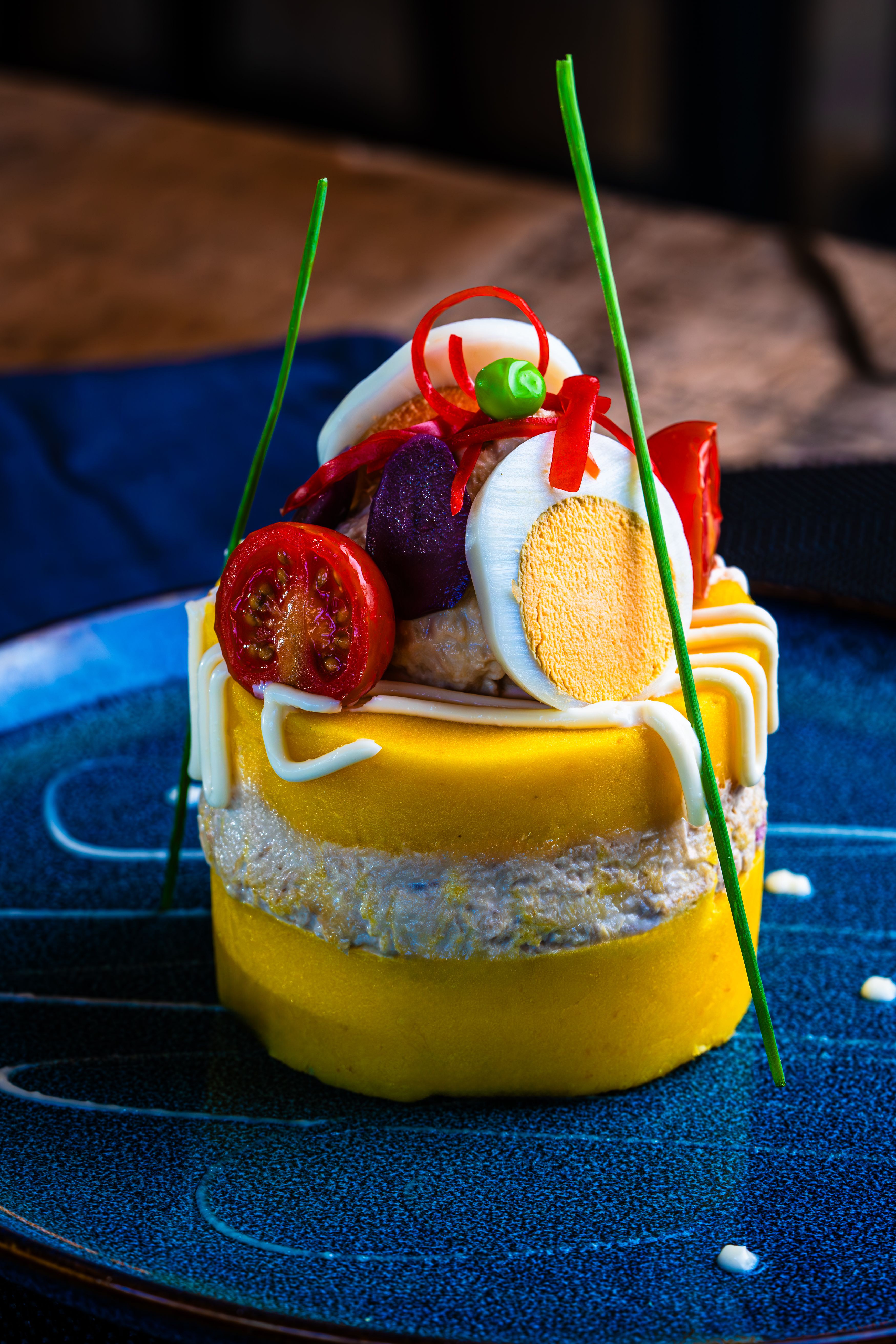
Photo: Nano Erdozain / Pexels
Peruvian
Causa Limena
The diets react (see scores below)
Common Ingredients
- yellow potatoes
- aji amarillo
- lime
- chicken
- mayonnaise
- avocado
- eggs
- olives
Specific recipes may vary.
Incompatible with 5 of 11 diets
Diet Ratings
Causa Limeña is built on a foundation of yellow potatoes, which are a high-starch vegetable and the primary incompatibility with ketogenic eating. A typical serving contains 20-35g of net carbs from the potato base alone, easily exceeding the entire daily keto carb budget in one side dish. While several ingredients are individually keto-friendly — avocado, mayonnaise, chicken, eggs, and olives are all excellent keto foods — the potato base is non-negotiable in this dish and disqualifies it entirely. The aji amarillo paste also contributes minor sugars. There is no realistic portion size that makes this dish compatible with ketosis.
Causa Limeña contains multiple animal-derived ingredients that are strictly excluded from a vegan diet. Chicken is poultry (animal flesh), mayonnaise is typically made with eggs, and eggs are listed as a separate ingredient. These are clear animal products with no ambiguity under any mainstream vegan framework. The dish is fundamentally incompatible with vegan eating in its traditional form.
Causa Limeña is built on a yellow potato base, which — like white potatoes — is a debated and largely discouraged ingredient in strict paleo frameworks (The Paleo Diet's official guide discourages potatoes). Beyond the potato issue, commercial mayonnaise is a significant disqualifier: it is almost universally made with soybean or canola oil, both seed oils explicitly excluded from paleo. These two core structural ingredients — the potato mash and the mayo — make the dish fundamentally non-compliant in its traditional form. The remaining ingredients (chicken, avocado, eggs, lime, aji amarillo, olives) are individually paleo-approved, but they cannot redeem a dish whose base and binding agent violate core paleo principles.
Some modern paleo practitioners (e.g., Mark Sisson's Primal Blueprint) accept potatoes in moderation, and homemade avocado-oil or olive-oil mayonnaise is considered paleo-compliant. Under this more flexible interpretation, a modified Causa Limeña using paleo-friendly mayo could edge into caution territory, though the potato base remains contested even in lenient frameworks.
Causa Limena contains several Mediterranean-compatible ingredients — avocado, olives, eggs, lime, and lean chicken — but is problematic primarily due to its heavy use of mayonnaise as a binding agent, which is a processed, refined-oil condiment not aligned with Mediterranean principles. Yellow potatoes are a whole food and acceptable in moderation, though not a Mediterranean staple. Chicken is a moderate-category protein. The avocado and olives are positive elements, bringing healthy fats. Overall, the dish is a mixed plate: whole-food components undermined by a significant quantity of commercial mayonnaise. It could be adapted (e.g., substituting mashed avocado or olive oil for mayonnaise) to score better, but as traditionally prepared it sits in the caution zone.
Some Mediterranean diet interpreters would score this lower (toward 'avoid') specifically because mayonnaise is a core structural ingredient rather than a condiment used sparingly — large quantities of refined soybean or canola oil-based mayo substantially diverge from the olive-oil-as-primary-fat principle. Others, noting the whole-food density (eggs, avocado, olives, chicken), might argue a homemade olive-oil mayo version brings it closer to approval.
Causa Limena is fundamentally incompatible with the carnivore diet. The dish is built on a base of yellow potatoes, a starchy plant food that is strictly excluded. It also contains aji amarillo (a plant-based chili pepper), lime juice (citrus fruit), and avocado (a fruit). Olives are also plant-derived. While the dish does include carnivore-compatible ingredients — chicken, eggs, and mayonnaise — these animal-derived components are entirely secondary to the plant-based foundation of the dish. There is no version of Causa Limena that could be adapted to carnivore without fundamentally deconstructing it into something unrecognizable. The overwhelming plant content makes this an unambiguous avoid.
Causa Limeña is a layered Peruvian potato dish. Most of the ingredients—yellow potatoes, aji amarillo pepper, lime juice, chicken, avocado, eggs, and olives—are Whole30-compliant on their own. The critical concern is the mayonnaise: store-bought mayo almost universally contains soybean oil and sometimes added sugar or other non-compliant ingredients, making commercial mayo a 'avoid.' However, Whole30-compliant homemade mayo (made with avocado oil or light olive oil and compliant ingredients) is explicitly allowed. If compliant mayo is used, the dish itself is technically Whole30-compatible. The dish is also a molded, layered presentation that could be seen as 'recreating' a comfort/festive food, though it doesn't fall neatly into the banned baked goods or junk food categories (no pancakes, bread, etc.). The biggest practical hurdle is sourcing or making compliant mayo.
Official Whole30 guidelines allow homemade or compliant-labeled mayo (e.g., Primal Kitchen avocado oil mayo), so the dish can be made compliant with careful ingredient selection. However, some community members argue that elaborately layered, presentation-focused dishes like Causa push against the spirit of eating simple, whole foods during the 30 days, even when technically compliant.
Causa Limena contains several ingredients that require careful portion consideration. Yellow potatoes are low-FODMAP at a standard serving (up to ~300g). Chicken, mayonnaise, lime juice, and eggs are low-FODMAP. However, two ingredients create practical challenges: avocado is low-FODMAP only at 1/8 fruit (30g) per Monash — a typical serving of causa often includes more than this threshold. Aji amarillo (yellow chili pepper) is not definitively tested by Monash, though fresh chili peppers in general are considered low-FODMAP in small amounts. Olives are generally low-FODMAP at standard garnish portions (~15g). As a composed layered dish, the cumulative serving of avocado per portion is the main concern — if avocado content is kept to less than 1/8 fruit per serving, the dish can be considered low-FODMAP, but in practice Peruvian causa often uses a more generous avocado layer.
Monash University rates avocado as low-FODMAP only at 30g (approx. 1/8 of a fruit), but many clinical FODMAP practitioners advise avoiding avocado during the strict elimination phase because typical real-world portions almost always exceed this threshold. The aji amarillo ingredient also lacks direct Monash testing, adding further uncertainty for the elimination phase.
Causa Limena is a layered Peruvian potato dish with several DASH-compatible ingredients (yellow potatoes, lime, chicken, avocado, eggs) but also two significant concerns: mayonnaise and olives. Mayonnaise is high in fat and often contains sodium, and is typically used in generous amounts in this dish. Olives, while containing healthy monounsaturated fats, are very high in sodium — a single serving can add 200-400mg. Avocado is a DASH-friendly food rich in potassium and healthy fats. Chicken (especially breast) is a lean protein aligned with DASH. Aji amarillo pepper is a whole food and DASH-compatible. Yellow potatoes provide potassium and fiber. The overall dish is moderately acceptable but the mayonnaise and olive content push it into 'caution' territory — sodium and saturated fat from mayo are the main limiting factors. A DASH-modified version using light mayo sparingly and reducing olive quantity would improve the score.
NIH DASH guidelines clearly limit high-sodium condiments and foods like olives and full-fat mayonnaise. However, some DASH-oriented clinicians note that when mayo and olives are used in modest portions within an otherwise vegetable- and lean-protein-rich dish, the overall nutritional profile can still fit within daily DASH targets — portion size of the entire dish matters considerably, and avocado's potassium content may partially offset sodium impact.
Causa Limeña presents a significant Zone Diet challenge primarily because yellow potatoes form the structural base of the dish. Potatoes are explicitly listed as an 'unfavorable' high-glycemic carbohydrate in Dr. Sears' Zone framework — they spike blood glucose and are difficult to balance against Zone ratios when consumed in the quantities required to form a molded terrine. The carbohydrate load from potatoes will almost certainly skew the 40/30/30 ratio heavily toward carbs, making the dish hard to Zone-balance without drastically reducing portion size. On the positive side, several ingredients are Zone-friendly: chicken provides lean protein, avocado supplies excellent monounsaturated fat, eggs contribute protein and fat, aji amarillo and lime are low-glycemic flavor contributors, and olives offer monounsaturated fats. Mayonnaise adds fat (some saturated, some monounsaturated depending on type) and should be portioned carefully. The dish is not a complete Zone failure — the protein and fat components are reasonable — but the potato foundation makes it structurally 'unfavorable' in Zone terminology. A very small portion (perhaps a single slice) paired with additional low-glycemic vegetables could help rebalance the macro ratio, but the dish as typically served would be carbohydrate-dominant.
Some Zone practitioners and later Sears writings emphasize overall anti-inflammatory quality over strict glycemic categorization. Yellow potatoes have a slightly lower glycemic index than white or russet potatoes and provide polyphenols. A small, controlled portion of Causa Limeña — using the chicken, avocado, and eggs as the primary macro contributors — could arguably fit into a Zone meal if treated as a single carbohydrate block with careful portioning. The anti-inflammatory profile of avocado, olive oil-based mayo, and omega-3-rich eggs partially offsets the glycemic concern.
Causa Limeña presents a mixed anti-inflammatory profile. On the positive side, avocado contributes healthy monounsaturated fats and anti-inflammatory compounds, aji amarillo pepper provides capsaicin and carotenoids with antioxidant properties, lime adds vitamin C and flavonoids, and olives offer oleic acid and polyphenols. Eggs contribute choline and selenium. However, the dish is anchored by a substantial base of yellow potatoes — a starchy, high-glycemic ingredient that is neutral-to-mildly pro-inflammatory depending on portion size and preparation — and mayonnaise, which is typically made with refined seed oils (soybean or canola) high in omega-6 fatty acids, representing the most notable inflammatory concern in this dish. Commercial mayonnaise in particular can contain additives and preservatives. Chicken is a lean protein and falls in the 'moderate' category. The overall dish is not aggressively pro-inflammatory, but the combination of high-starch potatoes and omega-6-heavy mayonnaise in what is often a generously portioned layered terrine keeps this firmly in caution territory. Substituting avocado-based or EVOO-based mayonnaise would substantially improve the profile.
Mainstream nutrition science (AHA guidelines) considers canola and soybean-based mayonnaise acceptable fats, and some anti-inflammatory researchers argue that the omega-6 concern is overstated when total caloric context is considered. From a more permissive anti-inflammatory standpoint, the aji amarillo, avocado, lime, and olives provide meaningful anti-inflammatory value that could push this dish closer to acceptable. Conversely, strict anti-inflammatory protocols (and autoimmune protocol/AIP frameworks) would flag both the potato starch load and the nightshade pepper alongside the refined seed oil mayo as compounding inflammatory risks.
Causa Limeña is a layered Peruvian potato dish that presents a mixed nutritional profile for GLP-1 patients. The base is yellow potatoes — a refined, starchy carbohydrate with moderate fiber and low protein density. The ají amarillo adds mild-to-moderate spice that may irritate some GLP-1 patients prone to reflux or nausea. The chicken filling is a positive: lean protein that supports the #1 priority. However, the dish typically binds the chicken with a notable amount of mayonnaise — a high-fat, calorie-dense ingredient that increases saturated fat load and can worsen nausea and bloating. Avocado contributes healthy unsaturated fats but adds to the overall fat density per serving. Eggs and olives are reasonable in small amounts. The net result is a dish where the fat content (mayo, avocado, olives) competes heavily with the protein benefit of chicken, and the potato-heavy base offers limited fiber relative to its carbohydrate load. Portion size is critical: a small serving centered on the chicken layer is manageable, but a standard restaurant-sized causa is likely too fatty and carbohydrate-dense for comfortable GLP-1 digestion.
Some GLP-1-focused dietitians may view a homemade, mayo-reduced causa with extra chicken as an acceptable protein vehicle, particularly for patients who tolerate avocado well and need calorie-dense options due to very low intake. Others would flag the mayo-potato combination as a reliable nausea trigger given slowed gastric emptying, and recommend avoiding it entirely during active GI side effect phases.
*See how scores were generated at our methodology page.
Nutritional profile
Six traits that cut across every diet.
Fiber & Plants
How much whole-plant food and fiber it delivers.
Healthy Fats
The quality of its fats (unsaturated, omega-3).
Whole / Unprocessed
How close it is to its natural, unprocessed form.
Gut Gentle
How easy it is on digestion (low FODMAP, few irritants).
Low Glycemic
How little it spikes your blood sugar.
Protein Density
How much protein it packs per calorie.
Controversy Index
Higher controversy = more disagreement between diets.
Diet-Specific Tips
 Mediterranean — 5/10
View tips
- Mayonnaise is a significant ingredient and primary fat source, replacing Mediterranean-preferred olive oil
- Avocado and olives contribute heart-healthy monounsaturated fats, a positive element
- Chicken is an acceptable moderate-category protein
- Yellow potatoes are a whole food but refined starch with limited Mediterranean tradition
- Eggs contribute moderate-category protein and nutrients
- No red meat, processed meats, or added sugars
- Non-Mediterranean cuisine but ingredient-level assessment is feasible
 Whole30 — 5/10
View tips
- Yellow potatoes are Whole30-compliant
- Aji amarillo, lime, avocado, eggs, olives, and chicken are all compliant
- Mayonnaise is the critical ingredient — commercial versions almost always contain soybean oil and/or sugar, requiring compliant homemade or store-bought alternative (e.g., Primal Kitchen)
- No grains, dairy, legumes, or added sugars in the base recipe if mayo is compliant
- Dish does not fall into the banned 'junk food recreation' categories (no baked goods, pasta, etc.)
- Olives should be checked for sulfites, though sulfites are no longer eliminated per 2024 Whole30 rule change
 DASH — 5/10
View tips
- Mayonnaise adds significant saturated fat and sodium — a key DASH concern
- Olives are high in sodium, conflicting with DASH sodium limits (<2300mg/day)
- Yellow potatoes provide potassium, supporting DASH mineral goals
- Avocado contributes healthy monounsaturated fats and potassium
- Chicken is a lean DASH-approved protein
- Aji amarillo and lime are whole-food, DASH-compatible flavorings
- Eggs are acceptable in moderation under current DASH-aligned clinical guidance
- Portion size of the layered dish is critical — larger servings amplify sodium and fat concerns
 Zone — 4/10
View tips
- Yellow potatoes are an 'unfavorable' high-glycemic carbohydrate in Zone framework and form the structural base of this dish
- Chicken provides lean Zone-favorable protein
- Avocado and olives supply excellent monounsaturated fats aligned with Zone fat recommendations
- Mayonnaise adds fat but may contain omega-6-heavy seed oils depending on brand — use olive oil mayo for best Zone alignment
- Eggs contribute additional protein and fat blocks
- Aji amarillo and lime are negligible-carb, Zone-neutral flavor contributors
- Dish as typically served will be carbohydrate-dominant and difficult to balance at 40/30/30 without very small portions
- Could be incorporated into a Zone meal plan as a small side with strict portion control and additional lean protein and vegetables
 Anti-Inflammatory — 5/10
View tips
- Avocado: rich in monounsaturated fats and anti-inflammatory compounds — a positive contributor
- Aji amarillo pepper: capsaicin and carotenoids with antioxidant and anti-inflammatory properties
- Lime: vitamin C and flavonoids support antioxidant defense
- Olives: polyphenols and oleic acid are anti-inflammatory
- Mayonnaise: typically made with refined seed oils high in omega-6 — primary inflammatory concern
- Yellow potatoes: high glycemic load, starchy base that may promote inflammatory response in excess
- Chicken: lean protein, neutral to mildly positive — acceptable in moderation
- Eggs: mixed profile — choline and selenium are beneficial, arachidonic acid content is debated
 GLP-1 Friendly — 4/10
View tips
- High mayonnaise content significantly raises fat load and nausea risk
- Yellow potato base is starchy with low fiber density relative to carbohydrate content
- Chicken provides lean protein but is diluted by the overall dish composition
- Avocado and olives add healthy unsaturated fats but increase caloric density per small serving
- Ají amarillo may trigger reflux or GI discomfort in sensitive GLP-1 patients
- Dish is highly portion-sensitive — small servings focused on the chicken layer are more tolerable
- Not inherently nutrient-dense enough per calorie given reduced appetite context