Peruvian
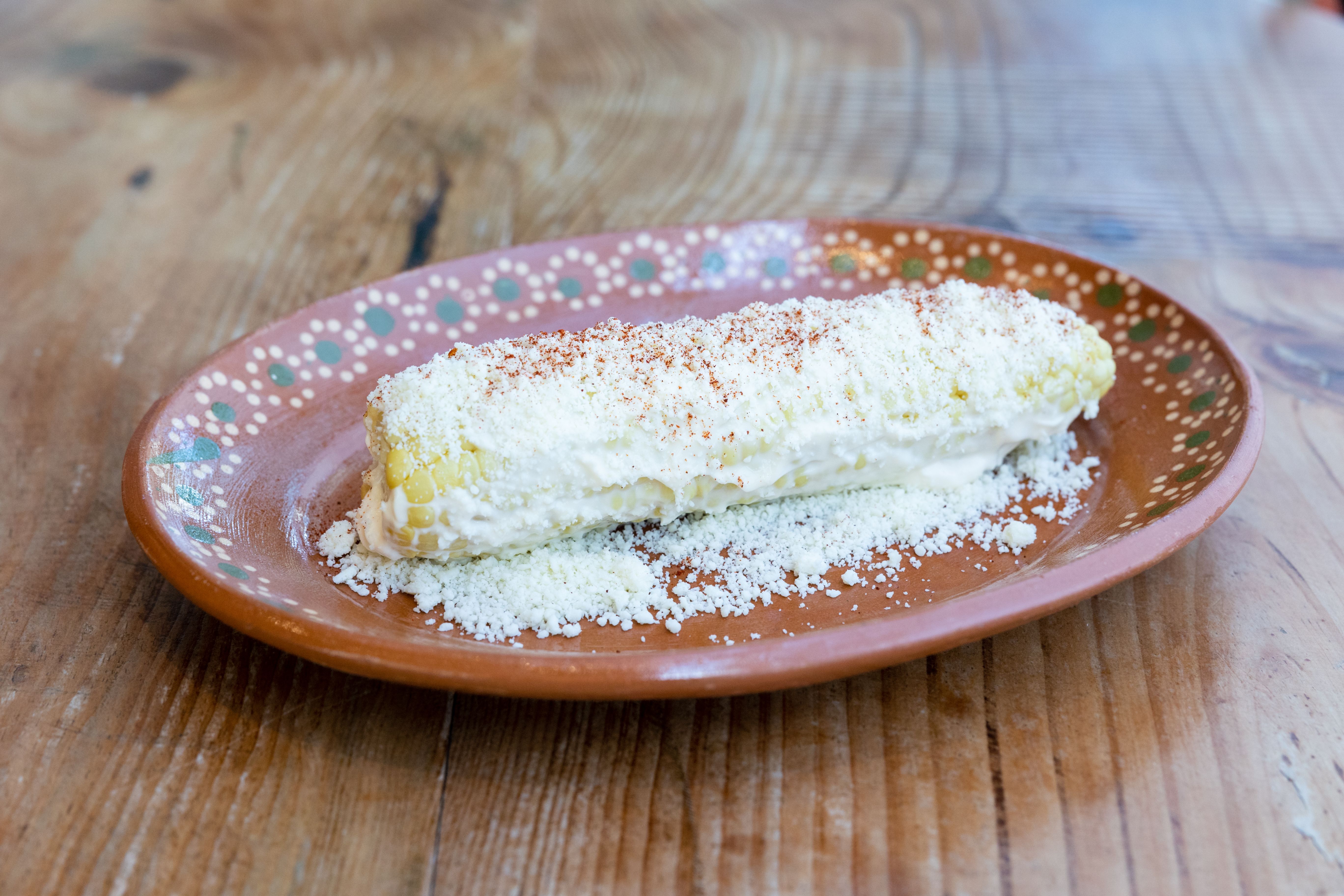
Choclo con Queso
The diets react (see scores below)
Common Ingredients
- choclo corn
- queso fresco
- salt
- aniseed
- water
Specific recipes may vary.
Incompatible with 5 of 11 diets
Diet Ratings
Choclo con Queso is fundamentally incompatible with ketogenic dieting. The primary ingredient, choclo (Peruvian large-kernel corn), is a starchy grain that is extremely high in net carbohydrates — a single cob of choclo can contain 35-45g of net carbs, which alone would meet or exceed the entire daily keto carb allowance. Corn is explicitly excluded from ketogenic diets regardless of variety or preparation method. The queso fresco component is keto-friendly on its own, but it cannot offset the massive carbohydrate load from the corn. Aniseed contributes negligible carbs in the small quantities used. There is no meaningful way to make this dish keto-compatible, as corn is the defining ingredient.
Choclo con Queso contains queso fresco, a fresh dairy cheese made from cow's milk. Dairy is an animal product explicitly excluded under vegan dietary rules. While the other ingredients — choclo corn, salt, aniseed, and water — are entirely plant-based, the cheese is a non-negotiable disqualifier. There is no meaningful debate within the vegan community about whether dairy cheese is vegan-compatible; it is not. A vegan adaptation could substitute the queso fresco with a plant-based cheese alternative.
Choclo con Queso contains multiple non-paleo ingredients that disqualify it outright. Choclo is a variety of corn, which is a grain explicitly excluded from the paleo diet. Queso fresco is a fresh dairy cheese, also excluded. Salt (added) is discouraged. All three primary components violate core paleo principles, making this dish firmly in the 'avoid' category with high confidence.
Choclo con Queso is a simple, whole-food snack consisting of large-kernel Andean corn (choclo) boiled with salt, aniseed, and water, served with queso fresco. The corn itself is a minimally processed whole grain and aligns well with Mediterranean plant-forward principles. Aniseed is a traditional Mediterranean spice. However, queso fresco is a fresh dairy cheese, which places the dish in the 'moderate' dairy category — acceptable but not a core Mediterranean staple. The combination is low in unhealthy fats and free of refined grains, added sugars, or processed ingredients, making it a reasonably compatible snack. The primary reservation is the cheese component, which should be consumed in moderation per Mediterranean guidelines, and the fact that corn (especially a starchy variety like choclo) is not a traditional Mediterranean grain. Overall, this is a clean, whole-food snack that fits comfortably in moderation.
Some Mediterranean diet practitioners would score this higher, noting that fresh cheeses like queso fresco are analogous to feta or ricotta — traditional Mediterranean dairy consumed regularly in small portions. Others might caution that choclo is a high-glycemic starchy food that, unlike legumes or whole grains such as farro or barley, lacks the fiber profile favored in strict Mediterranean dietary guidelines.
Choclo con Queso is fundamentally incompatible with the carnivore diet. The primary ingredient is choclo corn, a large-kernel Peruvian corn that is a plant-based grain and entirely excluded from all tiers of carnivore eating. Aniseed is a plant-derived spice, also prohibited. While queso fresco is an animal-derived dairy product that some carnivore practitioners include (with debate), and salt is acceptable, the dominant ingredients are plant foods. Even the most liberal 'animal-based' carnivore approaches do not include grains. This dish is essentially a plant-forward snack with a minor animal component.
Choclo con Queso contains two excluded ingredients: (1) choclo corn, which is a variety of corn and corn is explicitly excluded from the Whole30 program as a grain, and (2) queso fresco, which is a fresh dairy cheese and dairy is explicitly excluded from Whole30. The remaining ingredients — salt, aniseed, and water — are all compliant. However, the two core components of this dish are both disqualifying, making it definitively non-compliant.
Choclo con Queso consists of large-kernel Peruvian corn (choclo) served with queso fresco, salt, aniseed, and water. The key FODMAP concerns are: (1) Choclo corn — standard sweet corn is low-FODMAP at one cob (Monash-approved), but choclo is a distinct variety with larger, starchier kernels. Monash has not specifically tested choclo, so its FODMAP profile is extrapolated from sweet corn data with some uncertainty. A standard serving (roughly one cob or ~150g) is likely low-FODMAP if similar to sweet corn, but uncertainty exists. (2) Queso fresco — this is a fresh, soft cheese with moderate lactose content, unlike aged hard cheeses which are low-FODMAP. Monash rates fresh cheeses like ricotta and cottage cheese as high-FODMAP above small servings; queso fresco falls in a similar category and can trigger symptoms at typical serving sizes (50–100g). A small garnish amount (~30g) may be tolerable for some, but a standard serving is problematic. (3) Aniseed — used in small amounts as a flavoring; Monash has limited data on aniseed specifically, though small culinary amounts are generally considered low-risk. Salt and water are FODMAP-free. Overall, queso fresco is the primary concern as a fresh soft cheese with lactose, making this dish risky at standard serving sizes during elimination.
Monash University has not specifically tested choclo corn or queso fresco, so verdicts rely on extrapolation from similar foods. Clinical FODMAP practitioners typically advise avoiding all soft fresh cheeses during the elimination phase due to lactose content, whereas some may permit very small portions (under 30g) of queso fresco if individual lactose tolerance is higher.
Choclo con Queso consists of large-kernel Peruvian corn (choclo) served with queso fresco, salt, aniseed, and water. The corn itself is a positive element — it is a whole grain/starchy vegetable rich in fiber, potassium, and magnesium, aligning well with DASH principles. However, queso fresco introduces two concerns: it is a full-fat cheese (DASH specifies low-fat or fat-free dairy) and it contains moderate-to-significant sodium, typically 200–400mg per ounce depending on preparation. The added salt during boiling further increases sodium load, which is the primary concern for DASH, especially the low-sodium variant (<1,500mg/day). Aniseed is a negligible DASH factor. Overall, the dish is not inherently harmful but requires portion control on the queso fresco and restraint on added salt to fit within DASH guidelines.
NIH DASH guidelines specify low-fat dairy and sodium limits that make standard queso fresco a suboptimal choice. However, some updated clinical interpretations note that recent meta-analyses (including work published in the Lancet and NEJM) suggest full-fat dairy may not significantly worsen cardiovascular outcomes, and if a low-sodium queso fresco is used with minimal added salt, this dish could be considered more DASH-compatible by practitioners following modernized dietary guidance.
Choclo con Queso presents a mixed Zone profile. Choclo (Peruvian large-kernel corn) is a starchy, relatively high-glycemic carbohydrate — corn is explicitly listed as an 'unfavorable' carb in Zone methodology alongside potatoes and bananas. However, choclo has a lower glycemic index than standard sweet corn or processed corn products due to its larger, starchier kernels and higher resistant starch content, creating some nuance. Queso fresco provides protein but is a full-fat dairy cheese with moderate saturated fat, making it a less preferred Zone protein source compared to egg whites or skinless chicken. The combination as served is carb-heavy with insufficient protein and no deliberate monounsaturated fat source, making the 40/30/30 ratio difficult to achieve. To bring this into Zone balance, portion of choclo would need to be small (roughly 1/3 cup cooked kernels per block), paired with a more generous portion of queso fresco or supplemented with lean protein, and ideally a small amount of olive oil or avocado. As a standalone snack in typical Peruvian serving proportions, it skews heavily carbohydrate with the ratio badly off-balance.
Some Zone practitioners note that choclo's resistant starch content and lower glycemic response compared to processed corn products make it more manageable than Sears' blanket 'avoid corn' guideline suggests. Additionally, queso fresco is lower in fat than many aged cheeses, and its modest protein content can contribute meaningfully to a Zone block when portioned carefully. In later anti-inflammatory Zone writing, Sears softened his stance on whole, minimally processed starchy foods when consumed in controlled portions, which could elevate this dish's usability slightly.
Choclo con Queso is a simple Peruvian street snack consisting of large-kernel Andean corn (choclo) boiled with aniseed and salt, served with a slice of queso fresco. From an anti-inflammatory perspective, the dish is a mixed bag. Choclo corn is a whole food source of fiber, B vitamins, and some antioxidants, and the large kernel variety is less processed than refined corn products — though corn is a starchy carbohydrate with moderate glycemic load, and is not an emphasized anti-inflammatory food. Queso fresco is a fresh, relatively low-fat soft cheese with less saturated fat than aged hard cheeses, placing it in the 'moderate' rather than 'avoid' dairy category. Aniseed is a mildly beneficial spice with some anti-inflammatory and antioxidant properties (trans-anethole). Salt is neutral at typical serving amounts. The dish contains no refined sugars, trans fats, seed oils, or artificial additives, which is a meaningful positive. However, it lacks strong anti-inflammatory drivers — no omega-3s, no dark leafy greens, no polyphenol-rich fruits, no turmeric or ginger. The dairy component introduces some saturated fat, and the corn-heavy base offers limited antioxidant density compared to colorful vegetables. Overall, this is a minimally processed, whole-food snack that is neither notably pro- nor anti-inflammatory — a reasonable occasional choice.
Some anti-inflammatory practitioners following AIP or stricter low-glycemic protocols may flag corn as a lectin-containing grain that can promote gut irritation and modest blood sugar spikes, and would also restrict all dairy including queso fresco due to casein and saturated fat content. Mainstream anti-inflammatory guidance (Dr. Weil's pyramid) accepts whole corn in moderation and permits moderate low-fat dairy, supporting the neutral-to-acceptable classification given here.
Choclo con Queso is a traditional Peruvian snack of large-kernel Andean corn served with a slice of queso fresco. It is a simple, minimally processed, whole-food snack with moderate nutritional value for GLP-1 patients. Choclo is a starchy corn variety with modest fiber content and is easy to digest. Queso fresco provides some protein (roughly 4–6g per 1 oz serving) but is a relatively low-protein, moderate-fat dairy food — it is not a high-density protein source. The combination delivers carbohydrates as the dominant macronutrient with limited protein per serving, which is a meaningful drawback on GLP-1 therapy where every eating occasion should maximize protein intake. Fat content from queso fresco is moderate and mostly saturated, which is acceptable in a small portion but not ideal. On the positive side, the dish is whole-food, not fried, not ultra-processed, not high in sugar, and the aniseed may support digestion. Portion size is naturally small, fitting GLP-1 eating patterns. Salt is a minor concern only if sodium intake is otherwise high. Overall this is an acceptable occasional snack but falls short as a GLP-1-optimized choice due to low protein density and limited fiber.
Some GLP-1-focused dietitians would rate this more favorably as a small, whole-food, culturally appropriate snack that avoids the common pitfalls of processed snack foods — arguing that moderate saturated fat from real cheese is preferable to ultra-processed alternatives. Others would rate it lower, noting that the protein-to-calorie ratio is poor and that a GLP-1 patient would be better served using every snack opportunity to close the protein gap with a higher-density source like cottage cheese or a hard-boiled egg.
*See how scores were generated at our methodology page.
Nutritional profile
Six traits that cut across every diet.
Fiber & Plants
How much whole-plant food and fiber it delivers.
Healthy Fats
The quality of its fats (unsaturated, omega-3).
Whole / Unprocessed
How close it is to its natural, unprocessed form.
Gut Gentle
How easy it is on digestion (low FODMAP, few irritants).
Low Glycemic
How little it spikes your blood sugar.
Protein Density
How much protein it packs per calorie.
Controversy Index
Higher controversy = more disagreement between diets.
Diet-Specific Tips
 Mediterranean — 5/10
View tips
- Choclo corn is a whole, minimally processed plant food — compatible with Mediterranean principles
- Queso fresco is a fresh dairy cheese, acceptable in moderation per Mediterranean guidelines
- No refined grains, added sugars, or processed ingredients — clean ingredient profile
- Aniseed is a traditional Mediterranean spice, adding flavor without dietary concern
- Dish lacks olive oil, the canonical Mediterranean fat source
- Corn is not a traditional Mediterranean grain; whole grains like barley, farro, or bulgur are preferred
 Low-FODMAP — 5/10
View tips
- Queso fresco is a fresh soft cheese with significant lactose — high-FODMAP at standard serving sizes (50–100g), borderline at small garnish portions
- Choclo corn has not been specifically tested by Monash; extrapolated from sweet corn which is low-FODMAP at one cob (~150g)
- Aniseed used in small culinary quantities is unlikely to contribute significant FODMAPs
- Salt and water are FODMAP-free
- Dish is borderline safe only if queso fresco is used as a very small garnish and choclo behaves similarly to sweet corn
 DASH — 5/10
View tips
- Choclo corn is a fiber- and potassium-rich whole grain/starchy vegetable, supportive of DASH
- Queso fresco is full-fat dairy — DASH specifies low-fat or fat-free dairy alternatives
- Queso fresco adds moderate sodium (200–400mg/oz), conflicting with DASH sodium limits
- Added salt during cooking further increases sodium content and is a DASH concern
- Portion size of queso fresco is critical — small amounts are more manageable within daily DASH limits
- Low-sodium queso fresco and minimal added salt would significantly improve DASH compatibility
- Aniseed is nutritionally negligible in the quantities used
 Zone — 4/10
View tips
- Choclo corn is classified as an 'unfavorable' high-glycemic carbohydrate in Zone methodology (corn is explicitly avoided)
- Choclo has lower GI than standard sweet corn due to resistant starch, adding nuance to blanket corn avoidance
- Queso fresco is full-fat dairy with saturated fat — less preferred Zone protein source
- As typically served, the dish is heavily carbohydrate-dominant with poor 40/30/30 ratio
- No monounsaturated fat source present (no olive oil, avocado, or nuts)
- Small, carefully controlled portions of choclo (~1/3 cup) could technically fit within Zone carb blocks
- Aniseed is negligible nutritionally but provides polyphenols consistent with Zone anti-inflammatory goals
 Anti-Inflammatory — 5/10
View tips
- Choclo is a whole, unrefined corn — no added sugars, flours, or seed oils
- Queso fresco is relatively low in fat compared to aged cheeses — moderate dairy, not flagged as high-saturated-fat
- Aniseed provides mild anti-inflammatory anethole compounds
- No omega-3 sources, antioxidant-rich vegetables, or emphasized anti-inflammatory foods present
- Low-processed, additive-free ingredient list is a positive baseline
- Moderate glycemic load from starchy corn — not ideal for blood sugar-sensitive individuals
- Dairy introduces some saturated fat, placing dish in the 'caution' rather than 'approve' tier
 GLP-1 Friendly — 5/10
View tips
- Low protein density — queso fresco delivers limited protein per serving, falling short of the 15–30g per meal target
- Choclo is a starchy carbohydrate with only modest fiber compared to legumes or vegetables
- Moderate saturated fat from queso fresco is acceptable in small portions but not ideal for GLP-1 patients
- Whole-food, minimally processed ingredients — no frying, no added sugar, no ultra-processed components
- Naturally small portion size aligns well with reduced appetite on GLP-1 medications
- Aniseed may support digestion, which is a minor positive for GI side effect management
- Not a strong hydration contributor
- Culturally specific dish with limited substitution flexibility