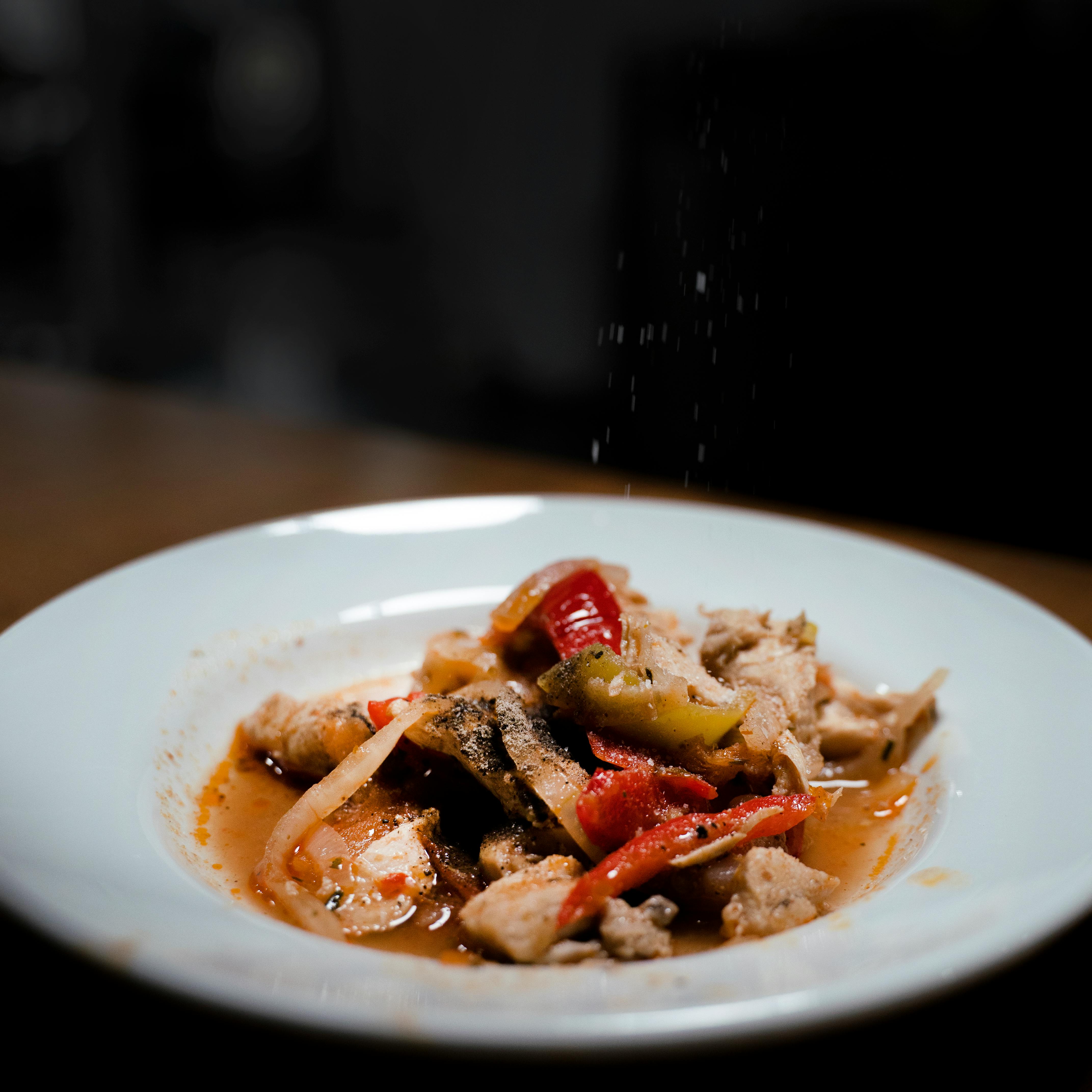
Photo: Amine İspir / Pexels
Peruvian
Escabeche de Pescado
The diets react (see scores below)
Common Ingredients
- white fish
- onion
- aji amarillo
- vinegar
- garlic
- eggs
- olives
- sweet potato
Specific recipes may vary.
Incompatible with 4 of 11 diets
Diet Ratings
Escabeche de Pescado is fundamentally incompatible with ketogenic eating due to the inclusion of sweet potato, a high-starch vegetable that alone can contain 20-25g of net carbs per medium serving — easily exceeding an entire day's keto carb budget. While many ingredients are keto-friendly (white fish, vinegar, garlic, eggs, olives, aji amarillo in moderation), the sweet potato is a non-negotiable disqualifier. Traditional Peruvian escabeche is served with sweet potato as a core component, not a garnish, making this dish structurally incompatible with ketosis. Aji amarillo also contributes modest carbs and should be used sparingly even in a modified version.
Escabeche de Pescado contains multiple animal-derived ingredients that are strictly prohibited on a vegan diet. White fish is a direct animal product (seafood), and eggs are an animal product explicitly excluded under all vegan frameworks. These two ingredients alone make this dish clearly incompatible with veganism. Olives, onion, aji amarillo, vinegar, garlic, and sweet potato are all plant-based, but the presence of fish and eggs renders the entire dish non-vegan with no ambiguity.
Escabeche de Pescado is largely paleo-friendly, built around white fish, eggs, onions, garlic, aji amarillo, olives, and sweet potato — all approved paleo ingredients. The main point of contention is vinegar. Most vinegars (especially apple cider vinegar) are accepted by mainstream paleo practitioners like Mark Sisson and Robb Wolf, but strict Cordain-school paleo discourages fermented/processed condiments. White wine vinegar or distilled vinegar, common in this dish, sits in a gray zone. Olives are generally approved (whole, unprocessed). Sweet potato is a well-accepted paleo tuber. No grains, legumes, dairy, or seed oils are present, which is a strong positive. The dish scores well overall but lands in caution due to the vinegar ingredient and the possibility of added salt in preparation, which is excluded under strict paleo rules.
Strict Cordain-school paleo (The Paleo Diet) discourages vinegar as a processed, fermented product and would also flag any added salt used in curing or marinating the fish. These practitioners would recommend avoiding the dish as prepared traditionally.
Escabeche de Pescado aligns well with Mediterranean diet principles. White fish is an excellent lean protein encouraged 2-3 times weekly. The dish is built around whole, minimally processed ingredients: vegetables (onion, garlic), a starchy vegetable (sweet potato), and olives — all Mediterranean staples. Vinegar-based pickling is a traditional preservation technique common in both Peruvian and Mediterranean cuisines. Eggs add moderate protein and are acceptable in a few servings per week. The primary concern is the absence of explicit olive oil as the cooking fat (Peruvian escabeche may use other oils), and vinegar in large quantities is not a core Mediterranean component, though it is used in Mediterranean escabeche/en escabèche preparations. Overall, the ingredient profile is whole-food, plant-forward, and fish-centered.
Some Mediterranean diet purists may note that aji amarillo and the Peruvian flavor profile place this outside traditional Mediterranean culinary context, and the cooking oil used may not be extra virgin olive oil. If prepared with a neutral vegetable oil rather than olive oil, the dish loses a core Mediterranean characteristic, warranting a 'caution' rating by stricter interpretations.
Escabeche de Pescado contains multiple plant-based ingredients that are strictly excluded from the carnivore diet. While the white fish and eggs are carnivore-approved animal products, the dish is fundamentally built around plant foods: onion, aji amarillo (a pepper), garlic, vinegar (plant-derived fermentation product), olives, and sweet potato. The sweet potato alone is a starchy carbohydrate that is completely off-limits. The aji amarillo and onion are vegetables/plant seasonings, garlic is a plant, and olives are a plant fruit. Even the vinegar is typically derived from plant sources. This dish cannot be modified into a carnivore-compatible meal without essentially reconstructing it entirely — it would just be plain fish and eggs at that point, not Escabeche de Pescado.
Escabeche de Pescado is a Peruvian marinated fish dish whose listed ingredients are all Whole30-compliant. White fish is a clean protein explicitly allowed on the program. Onion, aji amarillo (a Peruvian yellow chili pepper), garlic, and sweet potato are all whole vegetables allowed without restriction. Vinegar is explicitly permitted on Whole30 (with the exception of malt vinegar, which is not used here). Eggs are a staple Whole30 protein. Olives are a compliant whole food and natural fat source. No grains, dairy, legumes, added sugars, alcohol, or other excluded ingredients are present in the listed ingredients. The dish is a whole-food preparation rather than a recreation of a junk food or baked good. One practical note: olives should be checked for any non-compliant additives on the label, and the vinegar used should not be malt vinegar.
Escabeche de Pescado contains multiple high-FODMAP ingredients that make it unsuitable during the elimination phase. Onion is one of the highest-FODMAP foods tested by Monash University, rich in fructans, and is a core structural ingredient in this dish — not a garnish. Garlic is similarly high in fructans at any meaningful culinary quantity. These two ingredients alone disqualify the dish. Aji amarillo (yellow chili pepper) has limited Monash data but chili peppers in general are low-FODMAP in small amounts; however, its role here is secondary to the onion/garlic issue. Olives are low-FODMAP in standard servings (approximately 15 small olives). White fish, eggs, vinegar, and sweet potato are all low-FODMAP at standard servings. Despite several safe ingredients, the mandatory presence of onion and garlic as primary aromatics — used in quantities far exceeding any safe threshold — makes this dish a clear avoid during the elimination phase. Modification would fundamentally alter the dish's character.
Escabeche de Pescado is built around white fish, a lean protein explicitly encouraged by DASH guidelines, alongside DASH-friendly vegetables (onion, garlic, aji amarillo) and sweet potato, which is rich in potassium and fiber — both core DASH nutrients. However, several elements introduce complexity. Vinegar-based escabeche marinades are often prepared or served with added salt to balance acidity, which can push sodium levels into moderate-to-high territory depending on preparation. Olives are high in sodium (a single tablespoon of cured olives can add 150-300mg), and their quantity matters significantly. Eggs are present, introducing cholesterol and some saturated fat, though the 2020-2025 Dietary Guidelines no longer set a strict cholesterol cap. The dish is not inherently a DASH staple due to the pickled/brined components, but its lean fish base and vegetable-forward profile keep it in the acceptable range with portion awareness and low-sodium preparation choices.
NIH DASH guidelines emphasize lean fish as a core protein and vegetables as foundational — a fish-and-vegetable dish aligns well in principle. However, updated clinical interpretation notes that pickled and brined components (vinegar marinades, cured olives) can substantially raise sodium content, and some DASH-oriented dietitians would rate this closer to 'avoid' unless explicitly prepared with minimal added salt and reduced olive quantities.
Escabeche de Pescado has a strong Zone-compatible foundation but requires portioning adjustments to fit cleanly into Zone blocks. White fish is an excellent lean protein source, perfectly aligned with Zone principles. Onion, garlic, and aji amarillo are favorable low-glycemic vegetables that contribute polyphenols and anti-inflammatory compounds. Vinegar is essentially neutral and may even help moderate glycemic response. Olives provide desirable monounsaturated fats. Eggs add protein and some fat. The primary concern is sweet potato, which Dr. Sears classifies as an 'unfavorable' carbohydrate due to its moderate-to-high glycemic index — higher than most Zone-preferred vegetables. Traditional servings of sweet potato can easily throw off the 40/30/30 ratio, pushing carbohydrate calories too high and spiking insulin response. The dish also uses eggs whole (including yolks), adding saturated fat that must be accounted for against the fat block budget. With careful portion control — limiting sweet potato to a small block, ensuring fish dominates protein content, and relying on olives as the primary fat source — this dish can be made Zone-compatible. However, as typically served in traditional Peruvian portions, the sweet potato component creates a real imbalance risk.
Some Zone practitioners in later iterations of Sears' work (particularly his anti-inflammatory protocol) would note that sweet potato, while 'unfavorable,' is still a whole food with significant polyphenol content, fiber, and a lower glycemic load in moderate portions compared to white rice or bread. A small portion of sweet potato alongside the fish-heavy protein base could keep the meal within acceptable Zone ratios, potentially earning a score of 7. The dish's vinegar content may also blunt glycemic response somewhat.
Escabeche de Pescado is a Peruvian pickled fish dish with a generally favorable anti-inflammatory profile. White fish (such as corvina or sole) provides lean protein and, depending on species, modest omega-3 fatty acids. Aji amarillo is a vibrant Peruvian chili pepper rich in capsaicin and carotenoids, both of which have well-documented anti-inflammatory properties. Garlic and onion contribute quercetin, allicin, and other polyphenols that reduce inflammatory markers. Sweet potato is an excellent anti-inflammatory food — high in beta-carotene, fiber, and antioxidants. Vinegar (typically red or white wine vinegar) is largely neutral to mildly beneficial and helps preserve the dish without inflammatory additives. Olives contribute monounsaturated fats and polyphenols consistent with anti-inflammatory eating. Eggs are a moderate ingredient — beneficial micronutrients (choline, selenium) but some anti-inflammatory protocols flag arachidonic acid content. The primary concern is that white fish is leaner and lower in omega-3s than fatty fish like salmon or mackerel, reducing the dish's omega-3 impact. If prepared with olive oil (common in many versions), this further boosts its anti-inflammatory credentials. Overall, the ingredient list is predominantly plant-rich, spice-forward, and uses lean protein — hallmarks of anti-inflammatory eating.
Eggs are the main point of debate: Dr. Weil's framework includes eggs in moderation, but some anti-inflammatory practitioners flag arachidonic acid as potentially pro-inflammatory, particularly for those with autoimmune conditions. Additionally, aji amarillo and other nightshade-adjacent chili peppers may be cautioned by AIP (Autoimmune Protocol) advocates due to capsaicin and potential gut irritation in sensitive individuals, though mainstream anti-inflammatory nutrition considers them beneficial.
Escabeche de Pescado is built around white fish, a lean, high-quality protein source that aligns well with GLP-1 dietary priorities. Eggs add additional protein and micronutrients. Sweet potato contributes fiber, complex carbohydrates, and vitamins, and is easy to digest. Onion, garlic, and vinegar are low-calorie, gut-friendly ingredients. However, aji amarillo (a moderately spicy Peruvian chili) may worsen reflux or nausea in GLP-1 patients sensitive to spice — a meaningful concern given slowed gastric emptying. Olives, while a source of healthy unsaturated fats, add fat density in a dish where portions are already small. The vinegar-marinated preparation method is actually favorable — no frying, no heavy sauces — but the spice level and olive fat content prevent a full approve. Protein per serving is solid but depends on fish portion size. Overall a nutritionally reasonable GLP-1 meal that warrants moderate caution around spice tolerance and fat from olives.
Some GLP-1-focused dietitians would approve this dish outright, noting that aji amarillo is mild-to-moderate in heat compared to chilies like habanero, and that the olive fat is unsaturated and heart-healthy in small amounts. Others would flag that any added spice and fat unpredictability in a restaurant or home preparation context makes it a higher-risk choice for patients in early GLP-1 titration when GI side effects are most pronounced.
*See how scores were generated at our methodology page.
Nutritional profile
Six traits that cut across every diet.
Fiber & Plants
How much whole-plant food and fiber it delivers.
Healthy Fats
The quality of its fats (unsaturated, omega-3).
Whole / Unprocessed
How close it is to its natural, unprocessed form.
Gut Gentle
How easy it is on digestion (low FODMAP, few irritants).
Low Glycemic
How little it spikes your blood sugar.
Protein Density
How much protein it packs per calorie.
Controversy Index
Higher controversy = more disagreement between diets.
Diet-Specific Tips
 Paleo — 5/10
View tips
- White fish: fully approved paleo protein
- Eggs: approved paleo food
- Sweet potato: approved paleo tuber
- Aji amarillo and garlic: approved herbs/vegetables
- Olives: generally approved in unprocessed form
- Vinegar: gray area — accepted by most modern paleo practitioners but discouraged by strict Cordain-school paleo
- No grains, legumes, or dairy present
- Added salt likely used in traditional preparation — excluded under strict paleo rules
 Mediterranean — 8/10
View tips
- White fish as primary protein strongly aligns with Mediterranean fish consumption guidelines
- Whole-food ingredients: onion, garlic, sweet potato, olives are all Mediterranean-compatible
- Olives contribute healthy monounsaturated fats consistent with Mediterranean principles
- Eggs are acceptable in moderation per Mediterranean guidelines
- Vinegar-based preparation echoes Mediterranean en escabèche traditions
- No red meat, processed foods, refined grains, or added sugars
- Cooking fat (likely not olive oil in traditional Peruvian preparation) is an uncertainty
 Whole30 — 5/10
View tips
- White fish: explicitly allowed protein
- Vinegar: explicitly allowed (non-malt varieties)
- Eggs: Whole30 staple protein
- Olives: compliant whole food fat source — check labels for additives
- Aji amarillo pepper: compliant whole spice/vegetable
- Sweet potato: compliant whole vegetable
- No grains, dairy, legumes, or added sugars present
- Not a recreation of a junk food or baked good
 DASH — 6/10
View tips
- White fish is a DASH-approved lean protein source
- Sweet potato provides potassium, fiber, and magnesium — core DASH nutrients
- Olives are high in sodium and can significantly elevate total dish sodium
- Vinegar marinade often prepared with added salt — preparation method is critical
- Eggs add modest saturated fat and cholesterol, acceptable in moderation under current guidelines
- Aji amarillo, onion, and garlic are DASH-compatible aromatics with nutritional benefit
- Dish can be DASH-compliant if prepared with minimal salt and limited olive portions
 Zone — 6/10
View tips
- White fish is an ideal Zone lean protein source, approximately 7g protein per ounce
- Sweet potato is classified 'unfavorable' in Zone due to moderate-to-high glycemic index; portion control is critical
- Olives provide Zone-preferred monounsaturated fat, supporting the 30% fat target
- Whole eggs contribute both protein and saturated fat; yolk content must be counted in fat blocks
- Aji amarillo, onion, and garlic are favorable low-glycemic Zone vegetables with anti-inflammatory polyphenols
- Vinegar may moderately blunt glycemic response, a minor benefit aligned with Zone principles
- Traditional serving sizes of sweet potato likely exceed a single carb block, risking carbohydrate imbalance
 Anti-Inflammatory — 7/10
View tips
- White fish provides lean protein with moderate omega-3 content — beneficial but less potent than fatty fish
- Aji amarillo is rich in capsaicin and carotenoids with strong anti-inflammatory properties
- Garlic and onion contribute allicin, quercetin, and polyphenols that reduce CRP and IL-6
- Sweet potato is a high-antioxidant, fiber-rich anti-inflammatory carbohydrate source
- Olives contribute monounsaturated fats and anti-inflammatory polyphenols
- Eggs are moderately rated — beneficial micronutrients but some anti-inflammatory controversy around arachidonic acid
- Vinegar is largely neutral and adds preservation without inflammatory additives
- Dish is free of refined carbohydrates, added sugars, trans fats, and seed oils
 GLP-1 Friendly — 6/10
View tips
- White fish is a lean, high-protein, easily digestible protein source — ideal for GLP-1 patients
- Eggs add additional high-quality protein and micronutrients
- Sweet potato provides fiber and complex carbohydrates with good digestibility
- Aji amarillo introduces moderate spice that may trigger or worsen nausea and reflux due to slowed gastric emptying
- Olives contribute healthy unsaturated fat but add fat density — portion-sensitive
- Vinegar-based preparation avoids frying and heavy sauces — favorable cooking method
- No refined grains, no added sugar, no carbonation — clean ingredient profile
- Spice tolerance is highly individual and a key variable for GLP-1 patients, especially during titration