Photo: Deivis Sandoval / Pexels
The diets react (see scores below)
Common Ingredients
- squash
- sweet potato
- flour
- yeast
- anise
- chancaca
- cinnamon
- cloves
Specific recipes may vary.
Incompatible with 9 of 11 diets
Diet Ratings
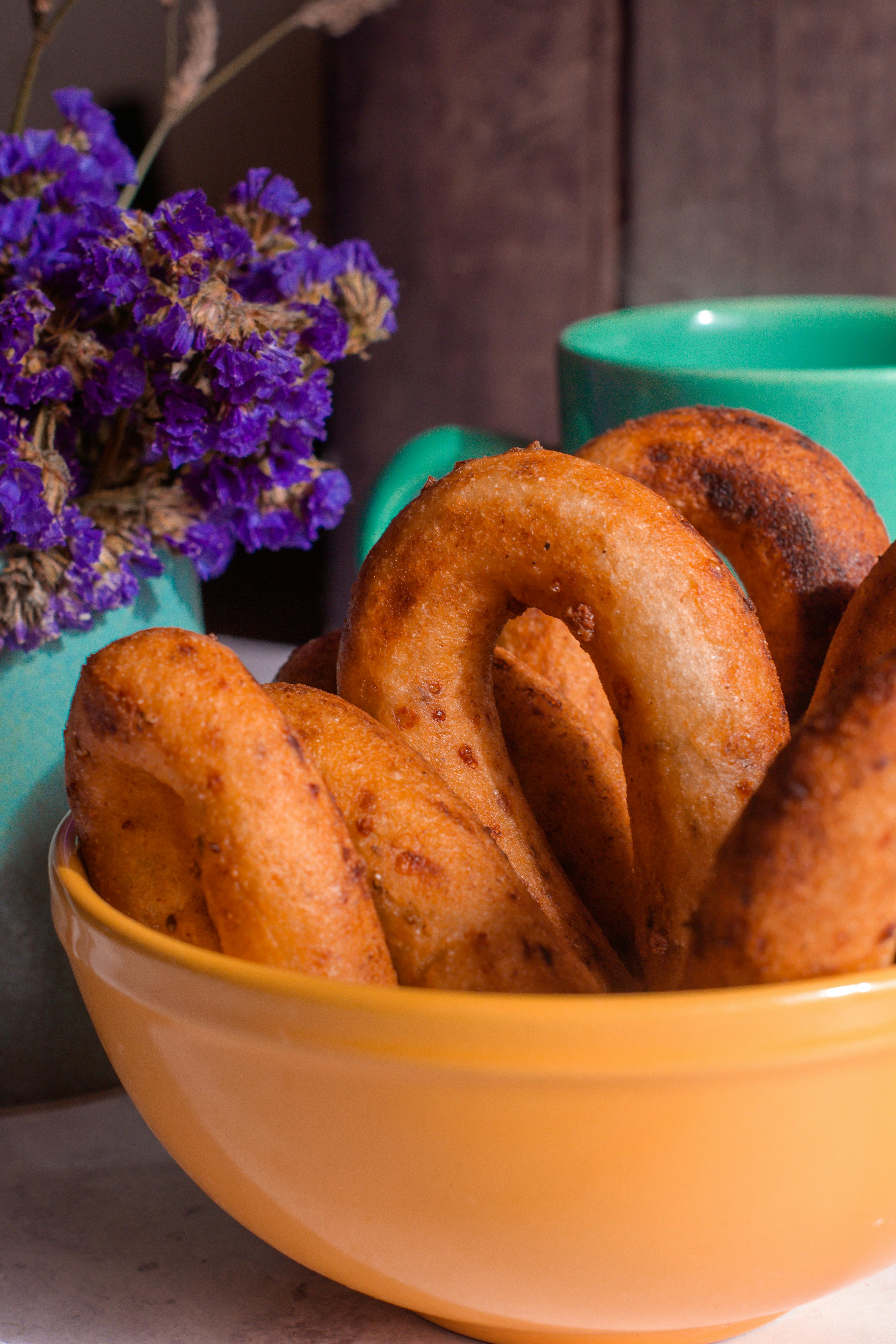
Picarones are Peruvian doughnuts made from squash and sweet potato as the base, combined with flour, yeast, and served with chancaca (raw cane sugar syrup). This dish is a trifecta of keto-incompatible ingredients: sweet potato and squash contribute significant net carbs, wheat flour adds high-glycemic starch, and chancaca is essentially pure sugar used as a topping syrup. Together, these ingredients would deliver an enormous carbohydrate load far exceeding the entire daily keto net carb limit in a single serving. There is no realistic portion size that makes this dish compatible with ketosis.
Picarones as listed contain entirely plant-based ingredients: squash and sweet potato form the base, flour and yeast provide structure and leavening, anise adds flavor, and chancaca (unrefined cane sugar syrup) with cinnamon and cloves make the traditional syrup. All ingredients are derived from plants with no animal products present. Traditional Peruvian picarones are notably one of the few fried dough desserts that do not rely on eggs or dairy, which makes them naturally vegan. The dish scores an 8 rather than a perfect 10 because it is a fried, sugar-heavy snack rather than a whole food, placing it in the healthier end of the approved processed/snack category.
Picarones are a Peruvian fried doughnut made primarily from squash and sweet potato, but the addition of flour (wheat) and yeast makes this dish clearly non-paleo. Wheat flour is a grain and one of the most definitively excluded foods in paleo. Chancaca (raw unrefined cane sugar syrup used as a topping) is also a refined sugar product and excluded. While squash, sweet potato, anise, cinnamon, and cloves are all paleo-approved ingredients, the foundational components — wheat flour and chancaca — are clear violations. The dish is also typically deep-fried, likely in a seed oil. There is no meaningful paleo substitution that would preserve the identity of this dish.
Picarones are Peruvian deep-fried doughnuts made from squash and sweet potato, served with chancaca (raw cane sugar syrup). While squash and sweet potato are nutritious plant-based ingredients, the dish is deep-fried (typically in oil that is not olive oil) and topped with a sugar-based syrup, making it a high-sugar, fried confection. This directly contradicts Mediterranean diet principles discouraging added sugars, refined preparations, and deep-frying. The refined flour base further reduces its compatibility. Despite containing vegetables at its core, the overall preparation method and sweetener push this firmly into avoid territory.
Some Mediterranean diet interpreters might note that squash and sweet potato are wholesome plant foods, and that occasional traditional sweets made with unrefined sweeteners like chancaca (analogous to how some Mediterranean traditions use honey or molasses in pastries) could be acceptable as a rare treat, similar to how baklava or loukoumades appear in Mediterranean festive food culture.
Picarones are a traditional Peruvian fried doughnut made entirely from plant-based ingredients: squash, sweet potato, wheat flour, and yeast form the dough, while chancaca (unrefined cane sugar syrup), cinnamon, cloves, and anise make up the sweet topping. There is not a single animal-derived ingredient in this dish. It contains multiple categories of food explicitly excluded from the carnivore diet — starchy vegetables, grains, sugar, and plant spices. This is a dessert/snack that is fundamentally incompatible with carnivore principles at every level.
Picarones are Peruvian doughnuts made from squash and sweet potato, deep-fried in a ring shape and drizzled with chancaca syrup. This dish contains multiple excluded ingredients: (1) flour — a grain product explicitly excluded on Whole30; (2) chancaca — a raw cane sugar (panela/piloncillo) used as a sweetener, which is an added sugar explicitly excluded on Whole30. Even setting aside the excluded ingredients, picarones are essentially a fried doughnut — exactly the kind of baked good/junk food recreation that Rule 4 prohibits by name. There is no compliant version of this dish possible without fundamentally changing its nature.
Picarones are Peruvian doughnuts made primarily from squash, sweet potato, and wheat flour, fried and drizzled with chancaca (raw cane sugar syrup spiced with cinnamon and cloves). The dish has multiple FODMAP concerns. Wheat flour is the dominant FODMAP offender — it is high in fructans and problematic during elimination phase at any standard serving size. Sweet potato is moderate-FODMAP at servings above 70g (it contains excess fructose and polyols at higher amounts), and a standard picarone portion would easily exceed this threshold. Squash (likely butternut or similar) is low-FODMAP at small serves (~75g) but can become high-FODMAP at larger portions due to fructans. Chancaca syrup is essentially concentrated raw sugar, which is generally low-FODMAP, but anise seed used in both the dough and syrup can be problematic at culinary amounts due to fructans. Cinnamon and cloves at typical spice quantities are generally low-FODMAP. The combination of wheat flour (unavoidable high-FODMAP ingredient), sweet potato in likely high quantities, and anise makes this dish high-FODMAP overall during the elimination phase. The yeast-leavening does not eliminate fructans from wheat flour the way long sourdough fermentation can partially reduce them.
Some FODMAP practitioners note that the squash and chancaca components alone could be consumed in small amounts without triggering symptoms, but in the context of a wheat-flour-based fried dough, there is no realistic serving size of picarones that would be low-FODMAP. Monash University has not tested picarones as a composite dish, so FODMAP load estimates rely on individual ingredient data.
Picarones are Peruvian doughnuts made from squash and sweet potato — ingredients that are individually DASH-friendly — but the preparation method fundamentally changes their nutritional profile. The dough is deep-fried, introducing significant amounts of fat, and they are served with chancaca (raw cane sugar syrup infused with cinnamon and cloves), making them a high-added-sugar, high-fat dessert/snack. DASH specifically limits sweets and added sugars, and deep-frying adds substantial calories and potentially unhealthy fats depending on the oil used. While the squash and sweet potato base provides some fiber and potassium, and the sodium content is low, the overall dish is dominated by refined flour, deep-fried fat, and sugar syrup — characteristics DASH discourages. The dish falls into the 'sweets' category that DASH limits to 5 or fewer servings per week, and even then, lower-fat, lower-sugar options are preferred.
Some DASH-oriented nutritionists may note that picarones use vegetable-based ingredients (squash, sweet potato) and have lower sodium than many processed snacks, and that occasional small portions could fit within DASH's allowance of up to 5 sweets servings per week. However, NIH DASH guidelines emphasize minimizing added sugars and high-fat preparation methods like deep-frying, which are central to this dish.
Picarones are Peruvian deep-fried doughnuts made primarily from squash and sweet potato, but the preparation method and accompaniments make them highly problematic for the Zone Diet. The dough is made with refined wheat flour and yeast, then deep-fried (introducing significant saturated/omega-6 fats from frying oil), and served drenched in chancaca syrup — a raw cane sugar syrup spiced with cinnamon, cloves, and anise. This combination creates a very high-glycemic, high-calorie snack with essentially no lean protein, no monounsaturated fat, and a carbohydrate profile dominated by high-GI refined flour, sweet potato starch, and pure sugar. The chancaca syrup alone is functionally equivalent to a sugar syrup, which Zone categorizes as 'avoid.' There is no realistic way to portion-adjust picarones into a Zone-balanced snack — the macronutrient ratio is overwhelmingly carbohydrate-heavy with poor-quality fats and zero protein. While squash and sweet potato individually have some Zone utility, their benefits are entirely negated here by the frying and sugar syrup. This is one of the rare cases where a dish earns a low score because the preparation and added sugar make Zone balancing essentially impossible without fundamentally changing the dish.
Picarones are Peruvian doughnuts made from squash and sweet potato, deep-fried and drizzled with chancaca (raw cane sugar syrup). The dish has genuinely mixed anti-inflammatory properties. On the positive side: squash and sweet potato are rich in beta-carotene, vitamin C, and fiber — all with meaningful anti-inflammatory credentials. Anise, cinnamon, and cloves are notable anti-inflammatory spices; cloves in particular rank among the highest antioxidant foods by ORAC value, and cinnamon is well-supported for reducing inflammatory markers. Yeast contributes B vitamins. Chancaca (unrefined panela/rapadura-style cane sugar) retains some minerals and polyphenols compared to refined white sugar, though it is still a significant source of added sugar. The main anti-inflammatory concerns are: (1) deep-frying — the cooking method introduces oxidized fats and substantially increases the inflammatory load regardless of base ingredients; (2) refined flour adds refined carbohydrates with minimal fiber; (3) the chancaca syrup adds considerable sugar, which promotes inflammatory pathways at the quantities used in this dessert context. The dish is not inherently as inflammatory as a purely refined/processed snack, thanks to its vegetable base and spice profile, but the frying method and sugar content prevent an 'approve' rating. Occasional consumption is acceptable within an anti-inflammatory framework; regular consumption is not recommended.
Some whole-food advocates might rate the squash and sweet potato base more favorably, noting that chancaca is less processed than HFCS or refined sugar and that traditional spices like cloves and cinnamon provide meaningful antioxidant value — suggesting this is meaningfully better than conventional doughnuts. Conversely, stricter anti-inflammatory practitioners following protocols like AIP or low-glycemic approaches would flag the combined glycemic load (flour + sweet potato + chancaca syrup) and the deep-frying method more harshly, potentially recommending avoidance rather than caution.
Picarones are Peruvian deep-fried doughnuts made from squash and sweet potato, served with chancaca (raw cane sugar) syrup flavored with cinnamon and cloves. Despite the vegetable base offering some fiber and nutrients, the cooking method (deep frying) and the sweet syrup topping make this a poor fit for GLP-1 patients. The high fat content from frying worsens nausea, bloating, and reflux — core GLP-1 side effects. The chancaca syrup adds significant sugar with minimal nutritional value, representing empty calories. There is virtually no protein. The combination of fried dough and sugar syrup is among the most problematic food profiles for GLP-1 patients: high fat, high sugar, no protein, low nutrient density per calorie, and likely to trigger or worsen gastrointestinal side effects. Anise may slightly aid digestion, but this does not meaningfully offset the other concerns.
*See how scores were generated at our methodology page.
Nutritional profile
Six traits that cut across every diet.
Fiber & Plants
How much whole-plant food and fiber it delivers.
Healthy Fats
The quality of its fats (unsaturated, omega-3).
Whole / Unprocessed
How close it is to its natural, unprocessed form.
Gut Gentle
How easy it is on digestion (low FODMAP, few irritants).
Low Glycemic
How little it spikes your blood sugar.
Protein Density
How much protein it packs per calorie.
Controversy Index
Higher controversy = more disagreement between diets.
Diet-Specific Tips
 Vegan — 8/10
View tips
- Squash and sweet potato are whole plant foods
- Chancaca is unrefined cane sugar — fully plant-based
- No eggs, dairy, or animal-derived ingredients in the ingredient list
- Naturally vegan by tradition, unlike many fried dough desserts
- Fried preparation and sugar content lower the score slightly within the approve range
 Anti-Inflammatory — 4/10
View tips
- Squash and sweet potato provide beta-carotene, vitamin C, and fiber — anti-inflammatory positives
- Cinnamon and cloves are potent anti-inflammatory spices with strong antioxidant profiles
- Deep-frying introduces oxidized fats and significantly raises the inflammatory potential of the dish
- Refined wheat flour contributes refined carbohydrates with minimal nutritional benefit
- Chancaca syrup adds substantial sugar, promoting inflammatory pathways despite being less refined than white sugar
- Overall glycemic load is high due to the combination of sweet potato, flour, and sugar syrup
- Occasional consumption is acceptable; not suitable for regular intake on an anti-inflammatory diet