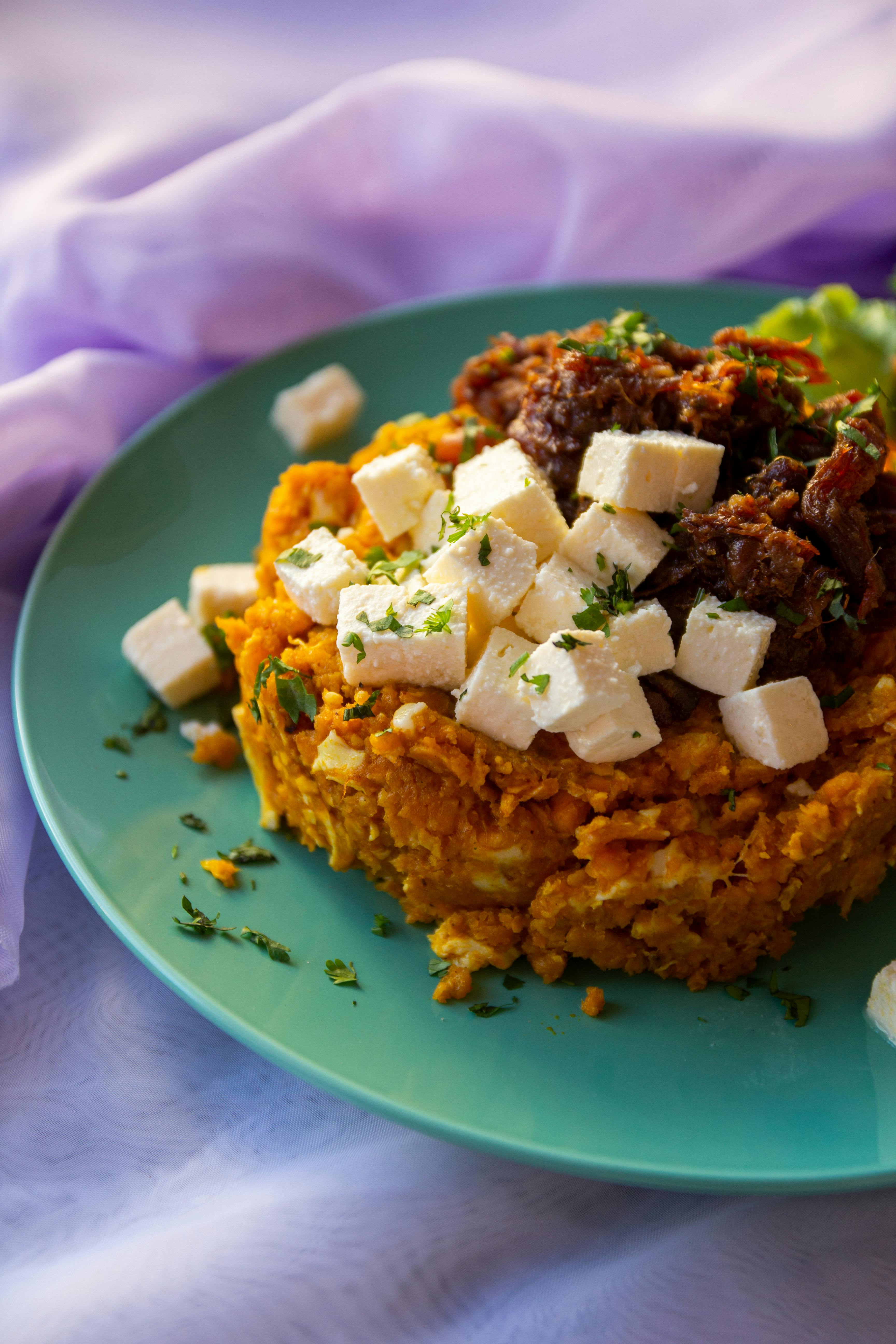
The diets react (see scores below)
Common Ingredients
- canary beans
- rice
- onion
- garlic
- aji amarillo
- oil
- eggs
Specific recipes may vary.
Incompatible with 6 of 11 diets
Diet Ratings
Tacu Tacu is fundamentally incompatible with a ketogenic diet. Its two primary ingredients — canary beans and rice — are both high-carbohydrate foods that would obliterate the daily net carb limit in a single serving. Rice is a refined grain with approximately 45g of net carbs per cup, and canary beans contain roughly 30-35g of net carbs per half-cup serving. Together, a standard portion of Tacu Tacu would deliver well over 60-80g of net carbs, far exceeding the entire daily keto allowance of 20-50g. While eggs and oil are keto-friendly, they are minor components that cannot offset the carbohydrate load from the beans and rice base. The aji amarillo and onion add minor additional carbs. This dish is structurally a carb-dominant meal and cannot be consumed in any reasonable portion without breaking ketosis.
Tacu Tacu as listed contains eggs, which are a direct animal product and clearly incompatible with a vegan diet. The dish's base of canary beans, rice, onion, garlic, aji amarillo, and oil is entirely plant-based and would score highly on its own, but the inclusion of eggs makes this a non-vegan dish. Traditionally in Peruvian cuisine, Tacu Tacu is often served topped with a fried egg, which is reflected here as a listed ingredient. A vegan version of this dish is entirely achievable by simply omitting the egg, which would yield an excellent whole-food plant-based meal.
Tacu Tacu is fundamentally incompatible with the paleo diet. Its two primary components — canary beans (a legume) and rice (a grain) — are both explicitly excluded from paleo eating. Legumes are avoided due to their lectin and phytate content, and all grains including rice are excluded as non-Paleolithic agricultural foods. The unspecified 'oil' likely refers to a seed oil (e.g., vegetable or canola oil), which is also a paleo avoid. While onion, garlic, aji amarillo, and eggs are all paleo-approved, these minor ingredients cannot redeem a dish whose entire structural foundation consists of non-paleo foods.
Tacu Tacu is a Peruvian dish built around canary beans and rice pan-fried together, typically topped with eggs. The beans are an excellent Mediterranean-compatible legume, providing plant-based protein and fiber that aligns well with diet principles. Onion, garlic, and aji amarillo are all wholesome aromatic vegetables consistent with Mediterranean cooking. Eggs are acceptable in moderation. However, the dish relies on white rice (a refined grain) rather than a whole grain, and the pan-frying technique may use more oil than typical Mediterranean preparations. The combination of white rice and eggs shifts this from a core Mediterranean meal to a moderate one. Overall it is a reasonably nutritious, plant-forward dish that fits the spirit of Mediterranean eating with some caveats.
Some Mediterranean diet authorities, particularly those referencing traditional Southern European and Middle Eastern practices, accept white rice as a culturally appropriate grain eaten in moderation — traditional Greek and Spanish cuisines regularly include white rice dishes like pilafi or arroz. From this perspective, the bean-and-rice combination could score higher as a complete plant protein source.
Tacu Tacu is almost entirely plant-based and is fundamentally incompatible with the carnivore diet. The dish's base consists of canary beans and rice — both legumes and grains are strictly excluded from carnivore. Onion, garlic, and aji amarillo are plant-derived vegetables/spices, also excluded. Plant-based oil is not an animal fat. The only carnivore-compatible ingredient is eggs, which are a minor component here. The dish's entire structure, flavor, and caloric content derive from plant foods, making it a clear avoid with high confidence across all carnivore tiers.
Tacu Tacu contains two explicitly excluded ingredient categories: canary beans (legumes) and rice (grains). Both are core prohibited foods on the Whole30 program with no exceptions. The dish is fundamentally built around these two ingredients — they are the base and primary components — making substitution impossible while remaining true to the dish. The eggs, onion, garlic, aji amarillo, and oil are all compliant, but they cannot redeem a dish whose foundation is entirely non-compliant.
Tacu Tacu is a traditional Peruvian dish that combines several high-FODMAP ingredients that make it unsuitable during the elimination phase. The core problem is the combination of canary beans (menestras/frijoles canarios), onion, and garlic — all of which are high-FODMAP at any standard serving size. Canary beans are a legume high in GOS (galacto-oligosaccharides), which are poorly absorbed and highly fermentable. Onion is one of the highest fructan-containing foods and is high-FODMAP even in small quantities. Garlic similarly contains high levels of fructans and is a well-established FODMAP trigger. While rice, oil, and eggs are low-FODMAP, and aji amarillo (in small amounts) may be tolerable, the foundational ingredients of this dish — beans, onion, and garlic — collectively make it a high-FODMAP dish that cannot be safely consumed during the elimination phase without a complete recipe overhaul.
Tacu Tacu is a Peruvian dish made from leftover beans and rice pan-fried together into a cake, typically topped with eggs. The base ingredients — canary beans, rice, onion, garlic, and aji amarillo — are broadly DASH-compatible. Beans are a DASH staple, offering potassium, magnesium, fiber, and plant protein. Rice provides carbohydrates, though white rice (most commonly used) is less preferred than brown rice on DASH. Eggs add lean protein but introduce cholesterol considerations. The main concerns are: (1) the frying method adds oil and increases fat content beyond what DASH emphasizes; (2) traditional preparation often adds notable sodium through seasoning; (3) white rice rather than whole grain is the norm. The dish is not inherently high in saturated fat, sodium, or added sugar, but the pan-frying technique and refined grain content prevent a full approval. A modified version using brown rice, minimal oil, and controlled sodium would score higher (7-8).
NIH DASH guidelines emphasize beans as a core food and do not prohibit egg consumption, but historically cautioned about cholesterol from whole eggs; updated 2020-2025 Dietary Guidelines removed the cholesterol cap, and most current DASH-oriented clinicians accept eggs in moderation. Some conservative cardiologists still recommend limiting egg yolks to 3-4 per week, which could affect the topped-egg preparation.
Tacu Tacu is a traditional Peruvian dish combining canary beans and rice fried together into a patty, typically topped with eggs. From a Zone perspective, this dish presents significant macronutrient imbalance challenges. The combination of rice (high-glycemic, unfavorable Zone carb) and beans creates a carbohydrate-heavy foundation that will far exceed the 40% carb target in a typical serving. Beans themselves are an 'unfavorable' carb in Zone terminology — they're high in protein relative to other carbs, but their carb load is substantial and they count primarily as a carb block, not a protein block. The egg topping does add lean protein and is Zone-favorable, but the ratio will remain skewed heavily toward carbohydrates. The oil used for frying adds fat, but the overall macronutrient profile — dominated by starch from rice and carb-dense beans — makes Zone balancing extremely difficult without drastically reducing portion size. Aji amarillo, onion, and garlic are Zone-friendly aromatics. To bring this dish into Zone compliance, one would need to dramatically reduce the rice component, increase egg or other lean protein, and add monounsaturated fat — which would fundamentally alter the dish. The eggs provide some saving grace, preventing a lower score.
Some Zone practitioners note that beans occupy a unique middle ground — Sears himself acknowledges legumes as a moderate protein-carb source with fiber that lowers net glycemic impact. If canary beans are treated as partially contributing to the protein block (they do contain meaningful protein) and the rice portion is kept very small, a modified Tacu Tacu could theoretically be portioned into a Zone-balanced meal. The dish's traditional use as a base with protein toppings (eggs here) also mirrors the Zone plate approach if the starch ratio is controlled.
Tacu Tacu is a traditional Peruvian dish made from leftover beans and rice, pan-fried together with aromatics. Its anti-inflammatory profile is mixed. On the positive side, canary beans (a legume) provide fiber, plant protein, and polyphenols that support gut health and reduce inflammatory markers — legumes are explicitly emphasized in anti-inflammatory frameworks. Garlic contains allicin and organosulfur compounds with well-documented anti-inflammatory effects. Aji amarillo is a chili pepper rich in capsaicin and carotenoids, both of which have anti-inflammatory properties. Onion adds quercetin, a potent flavonoid. Eggs contribute choline and selenium, which have some anti-inflammatory roles, though their overall profile is debated. The main concerns are the white rice (a refined carbohydrate with a high glycemic index that can promote insulin spikes and inflammatory signaling) and the generic 'oil' used for frying — if a refined seed oil (sunflower, corn) is used, this introduces a significant omega-6 load and potential oxidation products from high-heat cooking. If extra virgin olive oil is used instead, the dish becomes considerably more anti-inflammatory. The fried preparation method also matters: pan-frying at high heat is less ideal than other cooking methods. Overall, this is a moderately nutritious dish with meaningful anti-inflammatory ingredients offset by refined carbs and an uncertain oil source.
A strict anti-inflammatory or low-glycemic interpretation would flag the white rice component as promoting insulin-driven inflammation, and would be concerned about seed oil use in frying — protocols like AIP or IF-Rating systems would rate this lower. However, mainstream anti-inflammatory guidance (including Dr. Weil's framework) recognizes beans as a cornerstone food and accepts rice in moderation, especially when combined with fiber-rich legumes that blunt the glycemic response.
Tacu Tacu is a traditional Peruvian dish made by pan-frying a patty of leftover beans and rice, typically topped with eggs. The beans (canary beans) provide meaningful plant-based protein and fiber — two top GLP-1 priorities — and the eggs add further high-quality protein. However, the dish has notable drawbacks for GLP-1 patients. First, the rice contributes refined carbohydrates with limited fiber, diluting the overall nutrient density per calorie. Second, the preparation method involves pan-frying the bean-rice patty in oil, increasing the fat content and making the dish heavier and greasier than ideal — GLP-1 medications slow gastric emptying, and fried or oily preparations can worsen nausea, bloating, and reflux. Third, aji amarillo is a moderately spicy pepper that may irritate the GI tract in sensitive patients, though it is milder than habanero or sriracha. Fourth, the dish is relatively carbohydrate-dense and calorie-dense for its protein yield — a patient eating small portions may not hit adequate protein targets from this dish alone. The eggs on top are a meaningful positive, boosting protein density significantly. A modified version (baked or lightly sautéed rather than pan-fried, with brown rice or reduced rice ratio, and eggs included) would score higher. As prepared traditionally, this is an acceptable occasional meal but not an ideal GLP-1 staple.
Some GLP-1-focused dietitians may rate this dish more favorably, emphasizing that beans are one of the best combined protein-and-fiber sources available and that the moderate oil used in home preparation is less problematic than deep frying. Others will flag the fried preparation and refined rice more strictly, particularly for patients in early medication stages when GI side effects are most pronounced.
*See how scores were generated at our methodology page.
Nutritional profile
Six traits that cut across every diet.
Fiber & Plants
How much whole-plant food and fiber it delivers.
Healthy Fats
The quality of its fats (unsaturated, omega-3).
Whole / Unprocessed
How close it is to its natural, unprocessed form.
Gut Gentle
How easy it is on digestion (low FODMAP, few irritants).
Low Glycemic
How little it spikes your blood sugar.
Protein Density
How much protein it packs per calorie.
Controversy Index
Higher controversy = more disagreement between diets.
Diet-Specific Tips
 Mediterranean — 5/10
View tips
- Canary beans are an excellent legume source strongly encouraged on the Mediterranean diet
- White rice is a refined grain, less preferred than whole grains like farro or barley
- Eggs are acceptable in moderation but not a daily staple
- Aromatics (onion, garlic, aji amarillo) are Mediterranean-compatible flavor builders
- Pan-frying method may add excess oil beyond typical Mediterranean preparation
- No red meat, processed ingredients, or added sugars present
 DASH — 6/10
View tips
- Canary beans are DASH-approved: high in fiber, potassium, magnesium, and plant protein
- White rice is a refined grain — less preferred on DASH than brown rice or whole grains
- Pan-frying adds oil and increases total fat content beyond DASH recommendations
- Eggs are nutritionally acceptable under current guidelines but introduce cholesterol nuance
- Aji amarillo, onion, and garlic are DASH-compatible flavor enhancers with minimal nutritional concern
- Sodium content depends heavily on preparation — traditional seasoning can push sodium higher
- No high-saturated-fat ingredients (no full-fat dairy, red meat, or tropical oils) is a positive factor
 Zone — 4/10
View tips
- Rice is an 'unfavorable' high-glycemic carbohydrate in Zone methodology and dominates the carb load
- Canary beans are carb-heavy despite containing protein; they count primarily as carb blocks in Zone, not protein blocks
- The combined bean-rice base creates a carbohydrate overload far exceeding the 40% Zone target in typical servings
- Eggs are a Zone-favorable lean protein source and partially rescue the dish's protein balance
- Aji amarillo, onion, and garlic are low-glycemic, Zone-approved aromatics
- Oil adds fat but the type matters — if olive oil is used, it's monounsaturated and Zone-favorable
- Dish would require significant portion reduction and modification to fit Zone macros, undermining its traditional preparation
 Anti-Inflammatory — 5/10
View tips
- Canary beans are a legume — explicitly emphasized in anti-inflammatory diets for fiber, plant protein, and polyphenols
- Garlic provides allicin and organosulfur compounds with strong anti-inflammatory evidence
- Aji amarillo contributes capsaicin and carotenoids, both anti-inflammatory
- Onion adds quercetin, a well-studied anti-inflammatory flavonoid
- White rice is a refined carbohydrate with high glycemic index — a meaningful anti-inflammatory concern
- Legumes co-ingested with rice blunt glycemic response somewhat
- Oil type is unspecified — seed oils (sunflower, corn) would be pro-inflammatory at frying temperatures; EVOO would be preferable
- Eggs have a mixed profile — moderate concern for arachidonic acid, some benefit from choline and selenium
- Pan-frying method is less ideal than steaming or baking from an anti-inflammatory standpoint
 GLP-1 Friendly — 5/10
View tips
- Canary beans provide plant-based protein (~7-9g per half cup) and meaningful dietary fiber — both GLP-1 priorities
- Eggs add high-quality complete protein, improving the dish's overall protein density
- Pan-fried preparation increases fat content and can worsen GLP-1 GI side effects (nausea, bloating, reflux)
- White rice is a refined carbohydrate with low fiber, reducing nutrient density per calorie
- Aji amarillo adds mild-to-moderate spice that may irritate sensitive GI tracts on GLP-1 medications
- Dish is carbohydrate-dense relative to its protein yield — small-portion eaters may under-consume protein
- Portion sensitivity is high: a larger serving improves protein and fiber intake but increases fat and calorie load