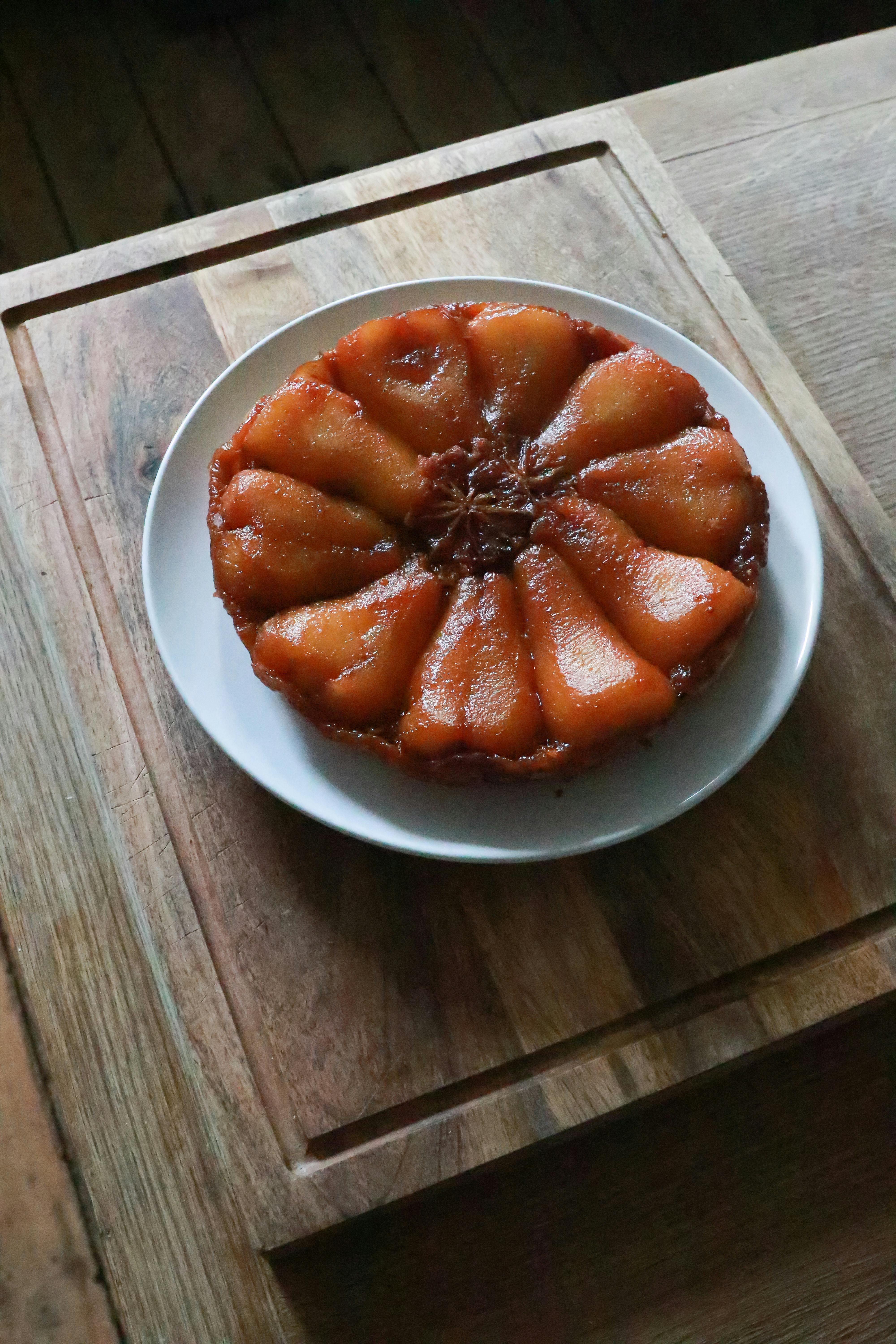
Photo: Geraud pfeiffer / Pexels
American
Pineapple Upside-Down Cake
The diets react (see scores below)
Common Ingredients
- butter
- brown sugar
- pineapple
- flour
- sugar
- eggs
- baking powder
- vanilla extract
- salt
- milk
Specific recipes may vary.
Incompatible with 11 of 11 diets
Diet Ratings
Pineapple Upside-Down Cake is fundamentally incompatible with a ketogenic diet. It contains multiple high-carb ingredients: all-purpose flour (a grain), brown sugar, granulated sugar, and pineapple — all of which are explicitly excluded from keto. A single standard serving would contain well over 50g of net carbs, easily exceeding the entire daily keto carb allowance. There is no meaningful way to consume this dish in its traditional form while maintaining ketosis.
Pineapple Upside-Down Cake contains multiple animal-derived ingredients that disqualify it from a vegan diet. Butter is a dairy product, milk is a dairy product, and eggs are an animal product. All three are explicitly excluded under vegan rules. While the pineapple, flour, sugar, baking powder, vanilla extract, and salt are plant-based, the presence of butter, eggs, and milk makes this dish non-vegan in its traditional recipe. A vegan version is achievable by substituting plant-based butter (e.g., vegan margarine), a flax egg or commercial egg replacer, and plant-based milk (oat, almond, soy), but the dish as described here is not vegan-compliant.
Pineapple Upside-Down Cake is fundamentally incompatible with the Paleo diet. The recipe contains multiple core non-Paleo ingredients: flour (wheat grain), refined sugar, brown sugar, butter (dairy), milk (dairy), baking powder (processed leavening agent), and added salt. While pineapple and eggs are Paleo-approved, and vanilla extract is borderline acceptable, the overwhelming majority of this dish's structure depends on excluded foods. This is a highly processed baked good that violates virtually every foundational Paleo principle — no grains, no dairy, no refined sugar, no processed additives.
Pineapple Upside-Down Cake directly contradicts core Mediterranean diet principles on multiple fronts. It is built around refined white flour and two forms of added sugar (brown sugar and granulated sugar), both of which the Mediterranean diet minimizes. Butter is the primary fat rather than extra virgin olive oil, introducing saturated fat in a non-traditional form. The dish is a processed, high-sugar dessert with no meaningful contribution of whole grains, legumes, vegetables, or healthy fats. While eggs and milk are acceptable in moderation, they are minor components here and do not redeem the overall nutritional profile. The only modest positive is the inclusion of pineapple, which provides some fruit-derived nutrients, but this is vastly outweighed by the sugar and refined grain content.
Pineapple Upside-Down Cake is entirely incompatible with the carnivore diet. The dish is composed almost entirely of plant-derived and processed ingredients: flour (grain), sugar, brown sugar, pineapple (fruit), baking powder, vanilla extract, and milk. While butter and eggs are animal-derived, they are minor components in a dessert that is fundamentally a grain-and-sugar confection. There is no meaningful animal protein, the carbohydrate load is extreme, and the dish violates virtually every core principle of the carnivore diet. This is one of the clearest possible 'avoid' cases with unanimous consensus across all carnivore camps.
Pineapple Upside-Down Cake is excluded on multiple grounds. First, it contains several directly prohibited ingredients: butter (dairy, not ghee), brown sugar (added sugar), granulated sugar (added sugar), flour (wheat grain), and milk (dairy). Second, and independently sufficient, it is explicitly a baked good — cake is named directly in the spirit-of-the-program rule prohibiting recreating baked goods and junk food even with compliant ingredients. This dish fails on both ingredient compliance and categorical grounds simultaneously.
Pineapple Upside-Down Cake contains multiple high-FODMAP ingredients that make it unsuitable during the elimination phase. Wheat flour is high in fructans — a primary FODMAP trigger — and there is no substitute here. Regular milk contains lactose, adding a second FODMAP category. Pineapple itself is low-FODMAP at small servings (~140g per Monash), but in a cake context the brown sugar topping often concentrates pineapple and adds excess fructose. Brown sugar in large quantities may also contribute to excess fructose load. The combination of wheat flour (fructans) and milk (lactose) alone is sufficient to classify this dish as avoid during elimination, regardless of pineapple portion size.
Pineapple Upside-Down Cake is a poor fit for the DASH diet. It is built around butter (saturated fat), brown sugar, and refined white flour — three ingredients that DASH explicitly limits or discourages. The topping alone combines butter and brown sugar in generous quantities, delivering significant saturated fat and added sugar in every serving. The cake batter adds more refined flour, additional sugar, and whole milk, compounding the concerns. While pineapple itself is a DASH-friendly fruit (rich in potassium and vitamin C), it is present in a nutritionally unfavorable context that overwhelms its benefits. The dish provides virtually no fiber (refined flour), no meaningful potassium relative to its calorie load, no lean protein, and no whole grains. It is essentially a high-calorie, high-added-sugar, high-saturated-fat dessert that aligns with none of DASH's core nutritional priorities. Occasional, very small portions might be tolerated within an otherwise strict DASH plan, but the dish itself is not DASH-compatible.
Pineapple Upside-Down Cake is one of the clearest examples of a food that conflicts with Zone Diet principles. The dish is dominated by high-glycemic, nutritionally empty carbohydrates — refined white flour, white sugar, and brown sugar — which together create a massive glycemic spike that would completely disrupt the hormonal balance (insulin control) that is the entire foundation of the Zone Diet. The butter topping adds saturated fat with no compensating monounsaturated fat profile. There is essentially no lean protein and no favorable fat to speak of. Even the pineapple, which might otherwise be a usable fruit carb in the Zone, is overshadowed by the sugar-laden context it sits in and contributes additional glycemic load. As a snack, this is particularly problematic — Zone snacks are supposed to be mini-meals maintaining the 40/30/30 ratio, typically something like a few almonds with a small piece of fruit or a bit of low-fat cheese. A slice of this cake provides almost no protein block equivalent, excessive carb blocks from unfavorable sources, and saturated fat blocks. It would be virtually impossible to portion-correct this dish into Zone compliance without eating a medically trivial amount (a single bite). Dr. Sears explicitly identifies refined flour and sugar as the core dietary villains that elevate insulin and promote inflammation — this cake is built almost entirely from those ingredients.
Pineapple Upside-Down Cake is a classic American dessert with a heavily pro-inflammatory ingredient profile. The base is refined white flour and multiple forms of added sugar (brown sugar and white sugar), which drive rapid glycemic spikes and promote inflammatory markers like CRP and IL-6. Butter is the primary fat, contributing saturated fat linked to inflammatory pathways when consumed in excess. There is no meaningful anti-inflammatory offset: pineapple contains bromelain, which has modest anti-inflammatory properties, but in this application it is candied in a thick layer of butter and brown sugar, largely negating any benefit. Eggs provide minor nutritional value but cannot compensate for the overall profile. The dish is essentially a confection built on refined carbohydrates, saturated fat, and added sugars — three of the primary drivers of dietary inflammation. As a snack (rather than an occasional small dessert portion), the concern is amplified.
Pineapple upside-down cake is a poor fit for GLP-1 patients on virtually every key criterion. It is high in added sugar (brown sugar plus granulated sugar), high in saturated fat (butter), made from refined flour with negligible fiber, and provides essentially no protein. With reduced appetite being the mechanism of GLP-1 medications, every calorie counts — and this dessert delivers mostly empty calories from sugar and fat. The high sugar content risks blood sugar spikes, the butter content can worsen nausea and reflux due to slowed gastric emptying, and the refined carbohydrates offer no meaningful nutritional return. It is not portion-friendly in the sense that even a small slice delivers a dense hit of sugar and fat with no compensating protein or fiber. As a snack category item, it is especially problematic — snacks on GLP-1 regimens should prioritize protein and fiber to maximize the nutritional value of limited appetite windows.
*See how scores were generated at our methodology page.
Nutritional profile
Six traits that cut across every diet.
Fiber & Plants
How much whole-plant food and fiber it delivers.
Healthy Fats
The quality of its fats (unsaturated, omega-3).
Whole / Unprocessed
How close it is to its natural, unprocessed form.
Gut Gentle
How easy it is on digestion (low FODMAP, few irritants).
Low Glycemic
How little it spikes your blood sugar.
Protein Density
How much protein it packs per calorie.
Controversy Index
Higher controversy = more disagreement between diets.