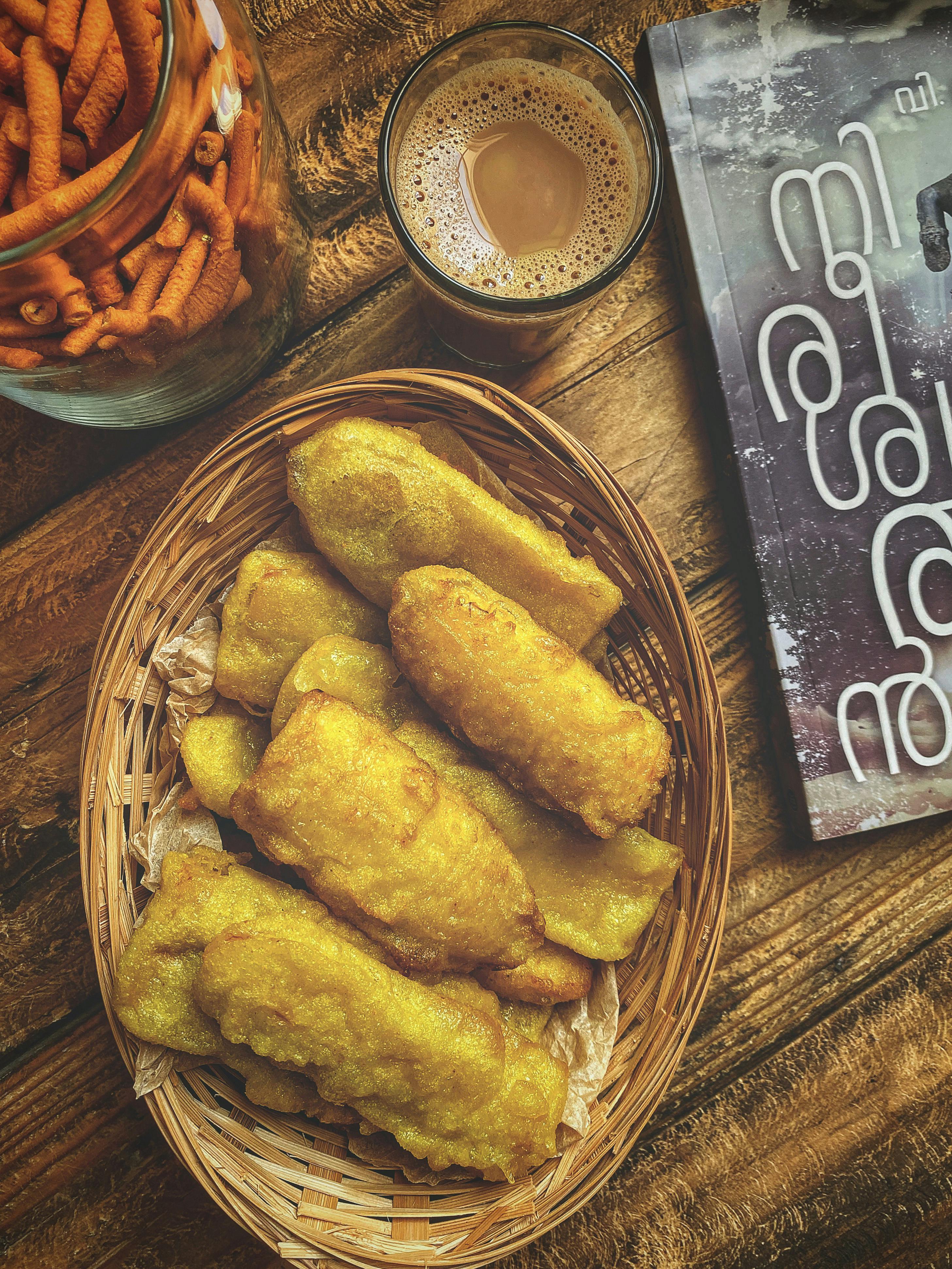
Photo: Saveurs Secretes / Pexels
Indonesian
Pisang Goreng
The diets react (see scores below)
Common Ingredients
- banana
- wheat flour
- sugar
- egg
- baking powder
- salt
- oil
Specific recipes may vary.
Incompatible with 9 of 11 diets
Diet Ratings
Pisang Goreng (Indonesian fried banana fritters) is fundamentally incompatible with a ketogenic diet. The dish combines two major keto offenders: bananas (a high-sugar fruit with roughly 20-27g net carbs per medium banana) and wheat flour (a grain-based batter with high net carbs). Added sugar further compounds the carbohydrate load. A single serving of Pisang Goreng could easily contain 40-60g or more of net carbs, which alone would exceed or completely consume an entire day's keto carb budget. The frying oil is the only keto-friendly component, but it cannot offset the overwhelming carbohydrate content from the other ingredients.
Pisang Goreng as listed contains egg, which is an animal product and therefore not vegan. The dish is otherwise plant-based — banana, wheat flour, sugar, baking powder, salt, and oil are all vegan-compatible — but the inclusion of egg disqualifies it. A vegan version is easily achievable by substituting the egg with a flax egg, aquafaba, or simply omitting it, as many batter recipes work without egg.
Pisang Goreng (Indonesian fried banana fritters) contains multiple paleo-prohibited ingredients. Wheat flour is a grain and a clear paleo exclusion. Sugar is refined and excluded. Baking powder is a processed additive. Salt is excluded. The frying oil is unspecified but almost certainly a seed oil (palm, canola, or vegetable oil) used in commercial and home Indonesian cooking — all excluded under paleo. While banana and egg are paleo-approved, the dish as a whole is built on a grain-based batter with refined sugar and processed additives, making it firmly non-paleo. The only paleo-compliant components are the banana and egg, which are overwhelmed by the non-compliant batter and frying medium.
Pisang Goreng is a deep-fried banana fritter that conflicts with Mediterranean diet principles on multiple fronts. While bananas themselves are a whole fruit and acceptable, the preparation method involves deep-frying in oil (likely refined vegetable oil, not extra virgin olive oil), coating in refined wheat flour batter, and adding sugar — all of which run counter to Mediterranean diet guidelines. The refined flour and added sugar represent processed, low-nutrient-density ingredients, and deep-frying significantly increases unhealthy fat content and caloric density. This is a processed snack food, not a whole food, and the combination of refined grains, added sugar, and deep-frying places it firmly in the 'avoid' category.
Pisang Goreng is a deep-fried banana fritter that is fundamentally incompatible with the carnivore diet. The dish is almost entirely plant-derived: banana (fruit), wheat flour (grain), sugar (processed plant carbohydrate), baking powder (plant-based leavening), and plant oil. The only animal-derived ingredient is egg, which is a minor component. There is no meaningful animal protein or fat as a primary component. This dish represents exactly what the carnivore diet excludes — fruit, grains, sugar, and plant oils combined into a high-carbohydrate processed snack.
Pisang Goreng (Indonesian fried banana fritters) contains multiple excluded ingredients. Wheat flour is a grain and is explicitly excluded on Whole30. Sugar is an added sweetener, also explicitly excluded. Furthermore, even if these ingredients were swapped for compliant alternatives, the dish is a fried fritter — a battered, deep-fried snack food that falls squarely into the 'No Recreating Junk Food' rule (analogous to chips or fritters). The combination of grain-based batter and added sugar makes this clearly non-compliant.
Pisang Goreng contains two significant high-FODMAP ingredients that make it unsuitable during the elimination phase. First, wheat flour is high in fructans and is a primary FODMAP concern — it forms the batter and cannot be consumed in any meaningful quantity during elimination. Second, ripe bananas are moderate-to-high in fructans and excess fructose depending on ripeness; Monash rates unripe (firm) banana as low-FODMAP at 1 medium serve, but ripe bananas become high-FODMAP due to increased fructan content as starch converts during ripening. Pisang Goreng is typically made with very ripe, sweet bananas (often plantains or overripe cavendish) to maximize sweetness and softness, placing them firmly in the high-FODMAP category. The combination of wheat flour batter and ripe banana creates a dish that is high-FODMAP from multiple angles, making avoidance necessary during the elimination phase.
Pisang Goreng (Indonesian fried banana fritters) presents a mixed DASH profile. The base ingredient — banana — is an excellent DASH food, rich in potassium and fiber. However, the preparation method (deep-frying in oil) significantly increases total fat content and calories, and the batter adds refined wheat flour, sugar, and salt, shifting this dish away from DASH ideals. The frying oil, depending on type used in traditional preparation (often palm oil or coconut oil in Indonesian cooking), may introduce saturated fat that DASH explicitly limits. While not as problematic as cured meats or full-fat dairy, the combination of added sugar, refined flour, and frying places this firmly in the 'caution' zone — acceptable occasionally but not a DASH staple. If fried in a vegetable oil (canola, sunflower) and consumed in small portions, it is more tolerable, but the refined carbohydrate and added fat load remain concerns.
NIH DASH guidelines emphasize whole fruits over processed or cooked fruit preparations with added sugar and fat, making fried banana fritters a poor fit. However, some DASH-aligned nutritionists note that if the dish is prepared with a DASH-friendly oil (canola), minimal added sugar, and eaten as an occasional small portion, the banana's potassium and fiber content partially offset the negatives — this perspective accepts modest indulgences within a broader DASH-compliant diet.
Pisang Goreng (Indonesian fried banana fritters) is extremely difficult to fit into a Zone framework. It combines three Zone-unfavorable elements simultaneously: bananas are explicitly classified as 'unfavorable' high-glycemic fruit in Zone methodology due to their high sugar content and glycemic load; wheat flour and added sugar create a high-glycemic batter that spikes insulin rapidly; and deep-frying in oil (typically omega-6-heavy vegetable oil) adds inflammatory fat with no protein counterbalance. As a snack with no protein source, it cannot form any Zone block ratio — it is essentially pure high-glycemic carbohydrate plus inflammatory fat. There is no lean protein component, no low-glycemic vegetable carbohydrate, and no monounsaturated fat profile. This is precisely the type of processed snack food (high GI carb + bad fat, no protein) that the Zone Diet was designed to avoid, as it would trigger a significant insulin spike followed by eicosanoid imbalance. Even in very small portions, the macro ratio cannot approach 40/30/30 without adding substantial external protein, at which point the dish itself is no longer the food being consumed.
Pisang Goreng (Indonesian fried banana fritters) presents a mixed anti-inflammatory profile. On the positive side, bananas contain potassium, vitamin B6, vitamin C, and resistant starch (especially in less-ripe versions), along with dopamine and catechin antioxidants. However, the preparation method introduces several concerns. The wheat flour batter creates refined carbohydrates with a high glycemic impact, and added sugar compounds this. Deep-frying in oil — typically a high-omega-6 seed oil such as palm, sunflower, or vegetable oil — is problematic: frying oxidizes oils and can generate harmful aldehydes and advanced glycation end products (AGEs), both of which are pro-inflammatory. The overall dish is a deep-fried, refined-carbohydrate snack with added sugar, which works against the anti-inflammatory framework despite the beneficial fruit at its core. Occasional consumption is unlikely to cause harm, but it lacks meaningful anti-inflammatory value and cannot be recommended as a regular snack on this diet.
Some nutritionists argue that the banana itself provides meaningful polyphenols and prebiotic fiber that support gut health and reduce systemic inflammation, and that occasional fried treats made with whole-food ingredients are compatible with a generally anti-inflammatory lifestyle. The anti-inflammatory framework's flexibility (Rule 5) allows room for culturally significant foods in moderation, and a small portion fried in a more stable oil (e.g., coconut oil or avocado oil) would be considered less harmful by practitioners focused on oil quality rather than frying itself.
Pisang Goreng is deep-fried battered banana, making it a poor fit for GLP-1 patients on nearly every relevant dimension. The frying process loads each serving with absorbed oil, producing high fat content that directly worsens GLP-1 side effects including nausea, bloating, and reflux — especially problematic given that gastric emptying is already slowed by the medication. The batter is made from refined wheat flour and sugar, delivering refined carbohydrates with minimal fiber and negligible protein. Banana itself offers modest natural fiber and potassium, but those benefits are largely negated by the frying and added sugar. The dish is essentially empty calories in a high-fat, high-sugar, low-protein format — the opposite of what GLP-1 patients need when appetite suppression means every calorie must count nutritionally. There is no meaningful protein contribution, no fiber advantage over simpler fruit options, and the preparation method is categorically flagged under GLP-1 dietary guidance.
*See how scores were generated at our methodology page.
Nutritional profile
Six traits that cut across every diet.
Fiber & Plants
How much whole-plant food and fiber it delivers.
Healthy Fats
The quality of its fats (unsaturated, omega-3).
Whole / Unprocessed
How close it is to its natural, unprocessed form.
Gut Gentle
How easy it is on digestion (low FODMAP, few irritants).
Low Glycemic
How little it spikes your blood sugar.
Protein Density
How much protein it packs per calorie.
Controversy Index
Higher controversy = more disagreement between diets.
Diet-Specific Tips
 DASH — 4/10
View tips
- Banana base provides potassium and fiber — positive DASH attributes
- Deep-frying adds significant fat, increasing saturated fat risk especially if palm/coconut oil is used
- Refined wheat flour and added sugar reduce nutritional quality compared to whole fruit
- Salt in batter adds unnecessary sodium
- Portion size critical — a single small fritter is more acceptable than multiple pieces
- Traditional Indonesian preparation often uses palm oil, which DASH explicitly limits as a tropical oil
 Anti-Inflammatory — 4/10
View tips
- Bananas provide antioxidants (dopamine, catechins), potassium, and prebiotic fiber — anti-inflammatory positives
- Deep-frying generates AGEs and oxidizes unsaturated oils, producing pro-inflammatory byproducts
- Refined wheat flour batter raises glycemic load and glycemic index significantly
- Added sugar contributes to insulin spikes and potential inflammatory signaling
- Frying oil (typically high-omega-6 seed oil) is not specified but likely pro-inflammatory
- Egg adds some neutral-to-beneficial protein and choline
- Overall profile: nutrient-poor snack with pro-inflammatory preparation method, despite beneficial base ingredient