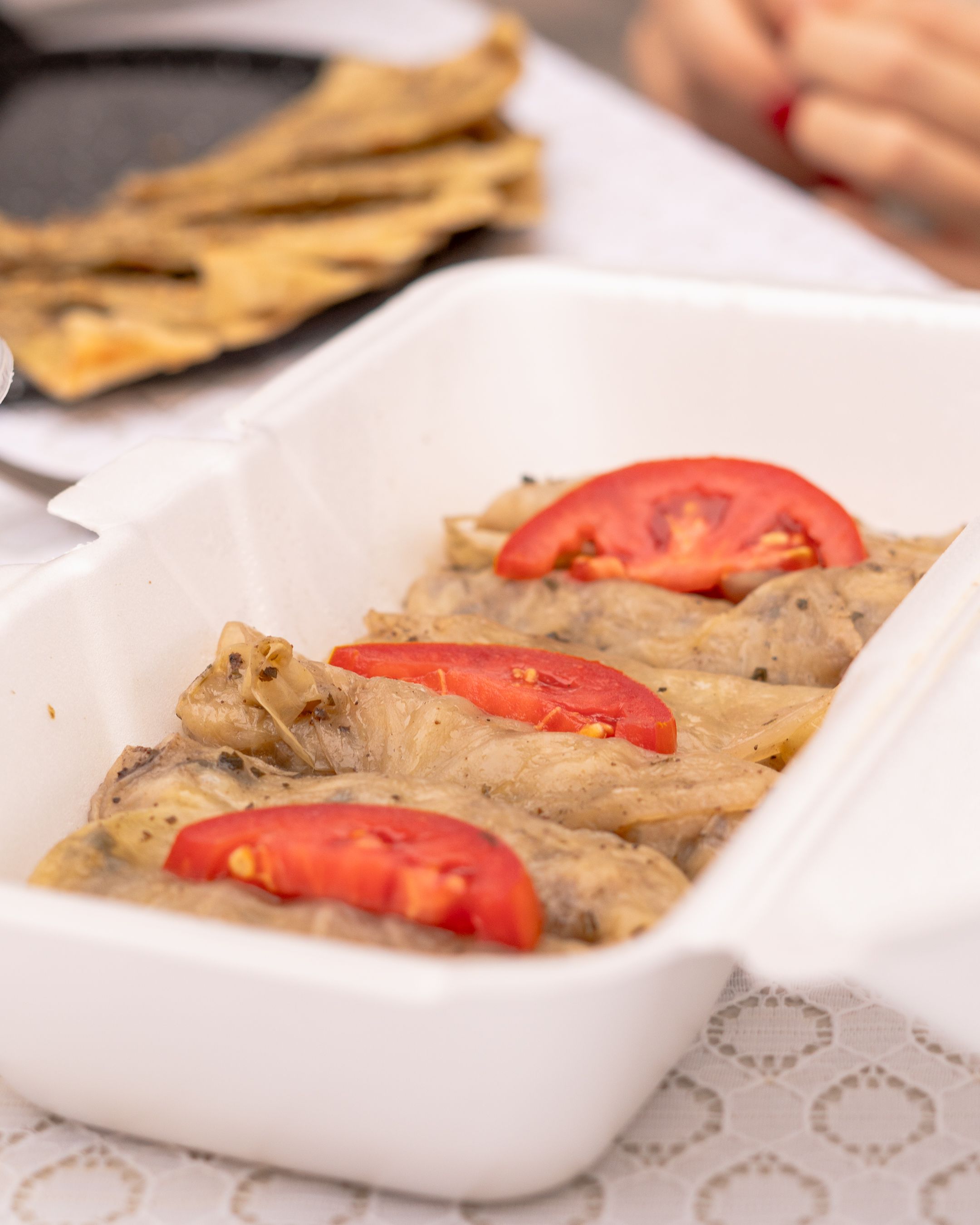
Photo: Alejandro Aznar / Pexels
The diets react (see scores below)
Common Ingredients
- cabbage
- ground pork
- rice
- onion
- tomatoes
- garlic
- paprika
- pepper
Specific recipes may vary.
Incompatible with 7 of 11 diets
Diet Ratings
Golabki (stuffed cabbage rolls) are fundamentally incompatible with ketogenic eating due to rice as a core filling ingredient. A standard serving of 2-3 cabbage rolls contains roughly 25-40g of net carbs primarily from the white rice mixed into the pork filling, which alone can exceed or fill the entire daily keto carb budget. While cabbage itself is low-carb and ground pork is keto-friendly, the rice cannot be reduced without fundamentally altering the dish. The tomato sauce adds additional carbs (4-6g per serving). There is no meaningful portion size of traditional golabki that fits within keto macros.
Golabki (Polish stuffed cabbage rolls) contain ground pork as the primary protein, which is a direct animal product and categorically incompatible with a vegan diet. Pork is meat — there is no ambiguity here. While the dish also contains fully plant-based ingredients (cabbage, rice, onion, tomatoes, garlic, paprika, pepper), the inclusion of ground pork makes the dish non-vegan. A vegan version could theoretically be made by substituting the pork with lentils, mushrooms, or a plant-based ground meat alternative.
Golabki (Polish stuffed cabbage rolls) are disqualified from the paleo diet primarily due to rice, a grain that is explicitly excluded under core paleo principles. Rice is a grain with anti-nutrients and was not part of the Paleolithic diet. All other ingredients — cabbage, ground pork, onion, tomatoes, garlic, paprika, and pepper — are fully paleo-compliant. However, the inclusion of rice as a central filling ingredient is a clear violation, making this dish a definitive avoid.
Golabki is a traditional Polish dish of cabbage rolls filled with ground pork and rice. The primary protein is ground pork, which is red meat — a category the Mediterranean diet limits to a few times per month. While the dish contains several Mediterranean-friendly ingredients (cabbage, tomatoes, garlic, onion, paprika), the dominant protein source undermines its compatibility. White rice is also a refined grain, and pork adds saturated fat. The vegetable wrapping and tomato sauce are positives, but they don't outweigh the red meat concern. Occasional consumption might be tolerable, but as a regular main dish it conflicts with Mediterranean principles.
Some moderate Mediterranean diet interpretations allow small amounts of red meat weekly rather than monthly, and the relatively lean nature of some ground pork preparations combined with the high vegetable content (cabbage, tomatoes, garlic, onion) could push this toward 'caution' territory. If made with a leaner meat blend or substituting poultry for part of the pork, it would more comfortably fit a Mediterranean-adjacent pattern.
Golabki is fundamentally incompatible with the carnivore diet. While it contains ground pork as the protein base, the dish is overwhelmingly plant-forward: cabbage leaves form the wrapper, rice is a grain filler, and tomatoes, onion, garlic, paprika, and pepper are all plant-derived. Rice alone disqualifies it as a grain, cabbage and tomatoes are vegetables/fruits excluded from carnivore, and the aromatic seasonings (garlic, paprika, onion) are entirely plant-based. The pork represents only a fraction of the dish's composition, and its nutritional profile is dominated by carbohydrates from rice and plant compounds from vegetables. There is no version of this dish that could be considered carnivore-compliant without a complete reconstruction that removes essentially all defining characteristics of Golabki.
Golabki (Polish stuffed cabbage rolls) contains rice, which is a grain explicitly excluded from the Whole30 program. Rice is listed among the grains that must be eliminated for the full 30 days. All other ingredients — cabbage, ground pork, onion, tomatoes, garlic, paprika, and pepper — are Whole30-compliant, but the inclusion of rice makes the dish non-compliant as traditionally prepared. A modified version substituting rice with cauliflower rice would bring the dish into compliance.
Golabki contains two major high-FODMAP ingredients that make it unsuitable during the elimination phase: onion and garlic. Both are among the highest-fructan foods in the Monash database and are high-FODMAP at any culinary quantity. Onion in particular is a primary fructan source and cannot be made safe by portion reduction in a dish like this. Garlic similarly contains significant fructans at even very small amounts (one clove is high-FODMAP). Cabbage is low-FODMAP at standard servings (75g). Ground pork is low-FODMAP as a plain protein. White rice is low-FODMAP. Tomatoes are low-FODMAP at standard servings (65g canned or one small fresh). Paprika (spice) is low-FODMAP in typical spice quantities. The dish is fundamentally disqualified by the onion and garlic, which are structural ingredients in the recipe and cannot be omitted without fundamentally changing the dish. A low-FODMAP adaptation would require replacing onion with the green tops of spring onions and using garlic-infused oil instead of garlic cloves.
Golabki (stuffed cabbage rolls) combines several DASH-friendly ingredients — cabbage, tomatoes, onion, garlic, and rice — with ground pork, which is the primary concern. Ground pork is a red meat with moderate-to-high saturated fat content depending on the cut used (e.g., standard ground pork is ~7-9g saturated fat per 100g), which DASH guidelines specifically limit. The vegetable base (cabbage, tomatoes, onion, garlic) is excellent for DASH — rich in potassium, fiber, and antioxidants. Rice provides carbohydrates and some fiber. The dish as traditionally prepared in Polish households often uses fatty ground pork and may include added salt, which raises sodium concerns. However, the ingredient list shown contains no high-sodium additives (no canned soups, no processed cheese, no bouillon), which is favorable. If prepared with lean ground pork (93%+ lean), minimal added salt, and brown rice substituted for white, this dish aligns reasonably well with DASH principles. As commonly prepared, the saturated fat from standard ground pork and sodium from seasoning keep this in the caution zone rather than approve.
NIH DASH guidelines categorically limit red meat including pork due to saturated fat content; however, updated clinical interpretations note that lean cuts of pork (pork tenderloin, 93%+ lean ground pork) can fit within DASH's lean protein framework, and some DASH-oriented dietitians now treat lean pork similarly to poultry when saturated fat per serving is controlled. The vegetable-rich, minimally processed nature of this dish — with no added processed ingredients — is viewed favorably by many DASH clinicians who emphasize overall dietary pattern over individual protein source.
Golabki (Polish stuffed cabbage rolls) present a mixed Zone Diet profile. The dish has several favorable elements: cabbage is an excellent low-glycemic Zone vegetable, tomatoes are Zone-friendly, and the aromatics (onion, garlic, paprika) add polyphenols with minimal glycemic impact. However, two components create challenges. First, ground pork is not a lean Zone protein — it carries moderate-to-high saturated fat depending on the cut used, unlike preferred Zone proteins such as skinless chicken or fish. Second, white rice is a high-glycemic, 'unfavorable' Zone carbohydrate that spikes insulin, which is precisely what the Zone aims to suppress. The rice is typically used as a binder inside the rolls, so it's not easily removed. On the positive side, the cabbage wrapping means the carb ratio from the overall dish may not be as skewed as a rice-heavy meal, and the tomato sauce contributes additional favorable carb blocks. To bring Golabki closer to Zone compliance, one could substitute leaner ground turkey or chicken, replace white rice with cauliflower rice or barley, and ensure portion size delivers roughly 25g protein per serving. As written, the dish is usable in a Zone meal with careful portioning but requires modification to fully align with Zone principles.
Some Zone practitioners and Sears' later writings (particularly around the anti-inflammatory Zone) acknowledge that white rice in small embedded quantities — as a binder rather than a bulk carbohydrate — may be acceptable if the overall meal block ratios are corrected by controlling portion size and pairing with additional non-starchy vegetables. A small serving of Golabki with extra vegetable sides could theoretically be balanced into Zone blocks, pushing the verdict closer to a 6. However, the saturated fat in ground pork and the high-glycemic rice remain 'unfavorable' in classic Zone terminology regardless of portion.
Golabki (stuffed cabbage rolls) presents a mixed anti-inflammatory profile. On the positive side, cabbage is a cruciferous vegetable rich in vitamin C, vitamin K, and glucosinolates with documented anti-inflammatory properties. Tomatoes contribute lycopene and other antioxidants. Garlic and paprika are anti-inflammatory spices with polyphenol content. Onion provides quercetin, a well-studied anti-inflammatory flavonoid. The dish includes real whole-food ingredients with no processed additives. On the negative side, ground pork is a red meat and the primary protein source. Anti-inflammatory guidelines recommend limiting red meat due to its saturated fat content and arachidonic acid, which can promote pro-inflammatory eicosanoid production. White rice, the typical choice in this dish, is a refined carbohydrate with minimal fiber and a higher glycemic load. The overall dish is not inherently harmful, but the ground pork and white rice components pull it toward the 'limit' category under standard anti-inflammatory frameworks. Substituting with ground turkey or using brown rice would meaningfully improve the profile.
Some anti-inflammatory practitioners, particularly those following Dr. Weil's more flexible pyramid, would argue that an occasional serving of lean ground pork within a vegetable-rich preparation like golabki is perfectly acceptable — the dish is far from a processed food and delivers meaningful phytonutrients from cabbage, tomatoes, and aromatics. Stricter anti-inflammatory protocols (e.g., those emphasizing AIP or Mediterranean-first principles) would flag red meat as a regular dietary pattern concern and recommend limiting this dish to occasional consumption.
Golabki (stuffed cabbage rolls) present a mixed nutritional profile for GLP-1 patients. On the positive side, the dish features cabbage — a high-fiber, high-water-content vegetable that supports digestion and hydration, both priorities on GLP-1 medications. Tomato-based sauce adds lycopene, vitamins, and additional fiber. Garlic, onion, and paprika are GLP-1-friendly aromatics. However, the primary protein source is ground pork, which — depending on fat percentage — can be moderately to highly fatty. Standard ground pork (80/20) brings meaningful saturated fat per serving, which can worsen GLP-1 side effects like nausea, bloating, and reflux. White rice adds digestible carbohydrate but little fiber or protein density, diluting the nutritional value per calorie. Protein content per serving is moderate but may fall short of the 15–30g per meal target unless portions are generous, which conflicts with small-portion eating on GLP-1s. The dish is slow-cooked and soft-textured, making it easy to digest — a meaningful advantage. Overall, golabki is an acceptable occasional choice but not an optimal GLP-1 meal without modifications: lean ground turkey or chicken substituted for pork, and brown rice or cauliflower rice substituted for white rice would significantly improve the rating.
Some GLP-1-focused dietitians view traditional pork-based dishes like golabki as acceptable given that fat content varies widely by preparation and pork loin-based versions can be relatively lean; others flag any fatty ground meat as a consistent GI trigger and recommend full substitution. Individual tolerance to saturated fat on GLP-1 medications varies enough that this dish may be well-tolerated by some patients and poorly tolerated by others.
*See how scores were generated at our methodology page.
Nutritional profile
Six traits that cut across every diet.
Fiber & Plants
How much whole-plant food and fiber it delivers.
Healthy Fats
The quality of its fats (unsaturated, omega-3).
Whole / Unprocessed
How close it is to its natural, unprocessed form.
Gut Gentle
How easy it is on digestion (low FODMAP, few irritants).
Low Glycemic
How little it spikes your blood sugar.
Protein Density
How much protein it packs per calorie.
Controversy Index
Higher controversy = more disagreement between diets.
Diet-Specific Tips
 DASH — 5/10
View tips
- Ground pork is a red meat with moderate saturated fat — DASH limits red meat consumption
- Cabbage, tomatoes, onion, and garlic are excellent DASH vegetables rich in potassium and fiber
- No high-sodium processed ingredients listed — favorable for sodium control vs. many traditional versions
- White rice is acceptable but brown rice would improve fiber and nutrient profile
- Dish can be made significantly more DASH-compatible by using lean ground pork or substituting lean ground turkey
- Traditional preparation often uses fattier pork and more salt than ingredient list suggests
- Tomato-based sauce component contributes lycopene and potassium — DASH positive
 Zone — 5/10
View tips
- Cabbage is an excellent low-glycemic Zone carbohydrate and the primary wrapper
- White rice is a high-glycemic 'unfavorable' Zone carbohydrate that raises insulin
- Ground pork contains significant saturated fat, unlike preferred Zone lean proteins
- Tomatoes and garlic contribute favorable polyphenols and low-GI carb blocks
- Dish can be modified toward Zone compliance by substituting leaner protein and lower-GI rice alternative
- Portion control is essential — small servings help balance the block ratio despite unfavorable ingredients
 Anti-Inflammatory — 5/10
View tips
- Ground pork is a red meat — anti-inflammatory guidelines recommend limiting red meat due to saturated fat and arachidonic acid content
- Cabbage is a cruciferous vegetable with glucosinolates and anti-inflammatory phytonutrients
- Tomatoes provide lycopene, especially when cooked, a potent antioxidant
- Garlic and onion are anti-inflammatory aromatics rich in organosulfur compounds and quercetin
- Paprika contributes capsaicin-related compounds and carotenoids with anti-inflammatory activity
- White rice is a refined carbohydrate with high glycemic load and minimal fiber — brown rice would be preferred
- No processed ingredients, trans fats, added sugars, or seed oils — whole food preparation is a positive
 GLP-1 Friendly — 5/10
View tips
- Ground pork fat content is the primary concern — standard 80/20 ground pork is high in saturated fat, worsening GLP-1 GI side effects
- Cabbage is a GLP-1-positive ingredient: high fiber, high water content, easy to digest when cooked
- White rice adds carbohydrate volume with minimal protein or fiber contribution, reducing nutrient density per calorie
- Tomato-based sauce supports hydration and adds micronutrients with minimal fat
- Soft, slow-cooked texture is easy on slowed gastric emptying
- Protein per serving is moderate but may require a generous portion to hit 15–30g target, conflicting with small-portion eating
- Easily modified: lean ground turkey or chicken plus brown rice would push this dish into approve territory