Photo: Rafał Nawrocki / Pexels
Polish
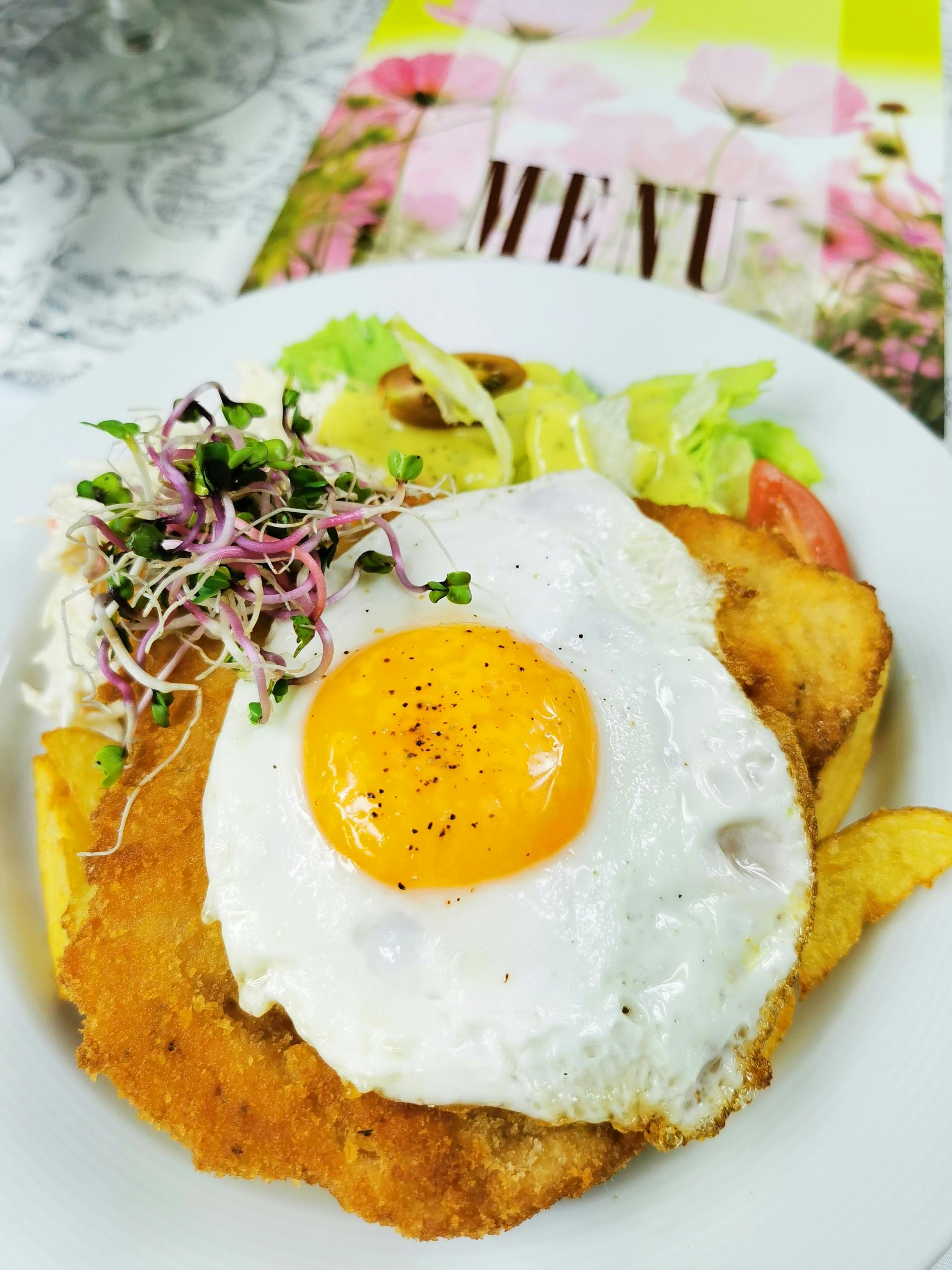
Kotlet Schabowy
The diets react (see scores below)
Common Ingredients
- pork loin
- eggs
- breadcrumbs
- flour
- salt
- pepper
- oil
Specific recipes may vary.
Incompatible with 8 of 11 diets
Diet Ratings
Kotlet Schabowy is a breaded pork cutlet — the traditional Polish schnitzel — coated in flour and breadcrumbs before frying. While the pork loin itself is keto-compatible, the breading is the disqualifying element. Breadcrumbs and flour are grain-based, high-carb coatings that can add 15-25g of net carbs per serving, immediately threatening or exceeding the daily keto limit in a single dish. This is a structurally incompatible preparation method for ketogenic eating. A keto-friendly version could substitute crushed pork rinds or almond flour for the coating, but as traditionally prepared, this dish must be avoided.
Kotlet Schabowy is a traditional Polish breaded pork cutlet containing multiple animal products. Pork loin is the primary protein — a direct animal flesh product — and eggs are used in the breading process as a binder. Both are strictly excluded under vegan dietary rules. There is no ambiguity here: this dish is fundamentally incompatible with a vegan diet.
Kotlet Schabowy is a Polish breaded pork cutlet that contains multiple non-paleo ingredients. While pork loin and eggs are fully paleo-approved, the dish is fundamentally defined by its breaded coating made from breadcrumbs (wheat-based grain) and flour (wheat grain), both of which are strictly excluded from the paleo diet. Added salt is also discouraged under paleo principles. The frying oil is unspecified — if it is a seed oil (sunflower or canola, common in Polish cooking), that adds a third violation. There is no paleo-compliant version of this dish without fundamentally restructuring it, as the breading is not an optional component but the defining characteristic of a Kotlet Schabowy.
Kotlet Schabowy is a breaded, pan-fried pork loin cutlet — a Central European dish that conflicts with Mediterranean diet principles on multiple levels. Pork is a red meat, which the Mediterranean diet limits to a few times per month. The preparation involves breading with refined white flour and breadcrumbs (refined grains), and frying in oil (typically not extra virgin olive oil). This combination of red meat + refined grain coating + deep frying makes it a poor fit for the Mediterranean dietary pattern, which emphasizes whole plant foods, fish, and minimal processed or fried preparations.
Kotlet Schabowy is a Polish breaded pork cutlet that, while built on a carnivore-friendly base (pork loin and eggs), is disqualified by its coating of breadcrumbs and flour — both grain-derived plant foods that are strictly excluded on the carnivore diet. Plant-based oil used for frying adds another violation. The pepper is a minor additional concern. The dish is structurally identical to a schnitzel and cannot be made carnivore-compliant without fundamentally altering its defining preparation method. The pork loin itself and the eggs are carnivore-approved, but they represent a minority of the dish's problematic ingredient profile when combined with the breading.
Kotlet Schabowy is a Polish breaded pork cutlet — essentially a pork schnitzel. While pork loin, eggs, salt, pepper, and oil are all Whole30-compliant, the dish requires both breadcrumbs and flour for its characteristic breaded coating. Breadcrumbs and flour are grain-derived ingredients, both explicitly excluded on Whole30. Beyond the ingredient violations, this dish also falls squarely into the 'breaded/coated' comfort food category that the program discourages even when compliant substitutes exist. There is no meaningful version of Kotlet Schabowy without the grain-based breading — it is a defining structural element of the dish, not an optional addition.
Kotlet Schabowy is a Polish breaded pork cutlet. The pork loin, eggs, salt, pepper, and oil are all low-FODMAP. The problematic components are the breadcrumbs and wheat flour used in the coating. Both are made from wheat, which is high in fructans — a key FODMAP. However, the quantity of breadcrumbs and flour used as a thin coating on a single cutlet is relatively small (typically 15–30g combined), which may fall within a low-FODMAP threshold per Monash guidance (wheat bread is low-FODMAP at ~1 slice/35g due to fructan content being dose-dependent). The thin breading layer may keep total fructan load borderline acceptable, but this is not guaranteed and depends on coating thickness and serving size. For a strict elimination phase, this dish presents meaningful risk due to wheat-based coating.
Monash University rates wheat-based foods as high-FODMAP in standard servings due to fructans, and while the thin coating may be small in quantity, many clinical FODMAP practitioners advise avoiding all wheat-containing coatings during the elimination phase. A safer alternative would be to substitute gluten-free breadcrumbs and rice flour, which would make the dish clearly low-FODMAP.
Kotlet Schabowy is a breaded and pan-fried pork loin cutlet — a Polish staple. Pork loin itself is a lean cut that DASH guidelines accommodate as a lean protein in limited portions. However, the preparation method significantly impacts its DASH compatibility. The breading (breadcrumbs + flour) adds refined carbohydrates, and pan-frying in oil substantially increases total fat content, including potentially unhealthy fats depending on the oil used. Eggs in the coating are acceptable in moderation under current DASH interpretations. Salt is added during preparation, contributing to sodium load. The dish is not inherently high in saturated fat if the oil used is vegetable-based (e.g., sunflower or canola), but the frying method and refined breading move it away from DASH ideals. It is acceptable occasionally in a DASH context if portion-controlled, paired with vegetables, and prepared with a heart-healthy oil — but it is not a DASH-emphasized food.
NIH DASH guidelines emphasize lean proteins and discourage fried preparations and refined grains, which would push this dish toward 'avoid.' However, some updated DASH-oriented clinicians note that if pork loin (a lean cut) is prepared with a modest amount of unsaturated oil and whole-grain breadcrumbs, and consumed in a portion-controlled manner alongside vegetables, it can fit within the DASH framework's lean protein allowance — placing it firmly in 'caution' rather than 'avoid.'
Kotlet Schabowy is a Polish breaded pork cutlet — essentially a schnitzel — that presents multiple Zone challenges. The pork loin base is a reasonably lean protein source acceptable in Zone, but the preparation method significantly complicates its Zone compatibility. The breading (flour + breadcrumbs) adds high-glycemic refined carbohydrates that are 'unfavorable' Zone carbs, contributing starchy carbs rather than the preferred low-glycemic vegetable carbs. Deep or pan frying in oil (typically a seed/vegetable oil) adds significant omega-6-heavy fat, directly conflicting with Zone's anti-inflammatory fat guidelines. The fat profile is problematic: frying oil is typically high in omega-6 polyunsaturated or saturated fats rather than the preferred monounsaturated fats like olive oil. Portioning is also difficult — the breading makes it hard to accurately assess protein blocks, and the fat content from frying is variable but high. A Zone practitioner could eat a small portion of Kotlet Schabowy alongside a large portion of low-glycemic vegetables to approximate Zone ratios, but the dish itself does not lend itself to easy Zone block calculation or favorable macro ratios. The combination of unfavorable high-GI carbs from breading plus likely omega-6-heavy frying fat earns a firm 'caution' rating.
Kotlet Schabowy is a Polish breaded pork cutlet — pork loin coated in flour, egg, and breadcrumbs, then pan-fried in oil. From an anti-inflammatory perspective, this dish presents a mixed profile. Pork loin is a relatively lean cut and falls closer to the 'moderate' category than red meat like beef or lamb; it provides B vitamins and some zinc. However, the preparation method raises several concerns. Deep or pan-frying in unspecified oil — likely a refined seed oil such as sunflower or rapeseed, common in Polish cooking — adds pro-inflammatory omega-6 fatty acids and introduces oxidized lipids from high-heat cooking. The refined breadcrumbs and flour coating constitute refined carbohydrates, which anti-inflammatory frameworks consistently flag as problematic. The dish contains no vegetables, herbs with anti-inflammatory properties (only salt and pepper), or omega-3 sources. The egg coating is nutritionally neutral-to-modest. Overall, this is a calorie-dense, fried, refined-carb-heavy meat dish that lacks anti-inflammatory virtues, though it is not as harmful as processed meats or trans-fat-laden foods. Occasional consumption is acceptable; regular consumption is not advisable on an anti-inflammatory diet.
The verdict depends significantly on the frying oil used. If prepared in extra virgin olive oil at moderate heat — as some modern adaptations suggest — the dish's inflammatory burden is meaningfully reduced, since EVOO contains oleocanthal with established anti-inflammatory properties. Traditional Polish preparation more commonly uses refined sunflower or lard, which most anti-inflammatory protocols discourage, though mainstream nutrition bodies like the AHA consider refined vegetable oils acceptable for cooking.
Kotlet Schabowy is a breaded and pan-fried pork cutlet — the Polish equivalent of a schnitzel. Despite starting with a relatively lean cut (pork loin), the preparation method fundamentally transforms its GLP-1 compatibility. The cutlet is dredged in flour, dipped in egg, coated in breadcrumbs, and shallow- or deep-fried in oil, resulting in a high-fat, high-calorie dish with significant saturated fat absorption from frying. This combination is problematic on multiple GLP-1 criteria: fried foods are explicitly flagged for worsening nausea, bloating, and reflux due to slowed gastric emptying; the breading adds refined carbohydrates with minimal fiber or micronutrient value; and the fat load per serving is inconsistent with the low-fat priority required to manage GI side effects. While pork loin itself offers decent protein, the net nutritional profile after frying is poor for GLP-1 patients — the protein benefit does not offset the fat and digestibility concerns. This is a dish that characteristically triggers GLP-1 side effects and offers low nutrient density per calorie.
*See how scores were generated at our methodology page.
Nutritional profile
Six traits that cut across every diet.
Fiber & Plants
How much whole-plant food and fiber it delivers.
Healthy Fats
The quality of its fats (unsaturated, omega-3).
Whole / Unprocessed
How close it is to its natural, unprocessed form.
Gut Gentle
How easy it is on digestion (low FODMAP, few irritants).
Low Glycemic
How little it spikes your blood sugar.
Protein Density
How much protein it packs per calorie.
Controversy Index
Higher controversy = more disagreement between diets.
Diet-Specific Tips
 DASH — 4/10
View tips
- Pork loin is a lean cut, acceptable on DASH in moderation
- Pan-frying increases total fat and caloric density
- Refined breadcrumbs and flour are not whole-grain, reducing DASH alignment
- Added salt during preparation raises sodium content
- Oil type matters — vegetable oils (sunflower, canola) are preferable to lard, which is traditional in some recipes
- Eggs in coating are generally acceptable under current DASH clinical interpretations
- Portion control and pairing with vegetables can make this dish more DASH-compatible
 Zone — 4/10
View tips
- Pork loin is a reasonably lean protein base, acceptable in Zone when portioned to ~25g protein per meal
- Breadcrumbs and flour create high-glycemic refined carbohydrate coating — 'unfavorable' Zone carbs
- Frying oil is typically omega-6-heavy (sunflower, vegetable oil), conflicting with Zone's anti-inflammatory fat emphasis
- Breading makes accurate block portioning difficult
- Could be partially redeemed by pairing with large servings of low-GI vegetables to balance the meal
- Saturated fat from pork plus frying fat makes total fat profile unfavorable for Zone guidelines
 Anti-Inflammatory — 4/10
View tips
- Pork loin is lean and moderately acceptable, but pork overall is not emphasized in anti-inflammatory frameworks
- Pan-frying in refined seed oil (likely sunflower) adds oxidized omega-6 fatty acids — pro-inflammatory
- Refined breadcrumbs and flour coating represent refined carbohydrates, discouraged in anti-inflammatory eating
- No anti-inflammatory ingredients present (no colorful vegetables, omega-3s, herbs like turmeric or ginger)
- High-heat frying creates advanced glycation end products (AGEs) which promote inflammatory pathways
- Egg coating is nutritionally neutral; salt and pepper add negligible anti-inflammatory benefit