Photo: Valeria Boltneva / Pexels
Polish
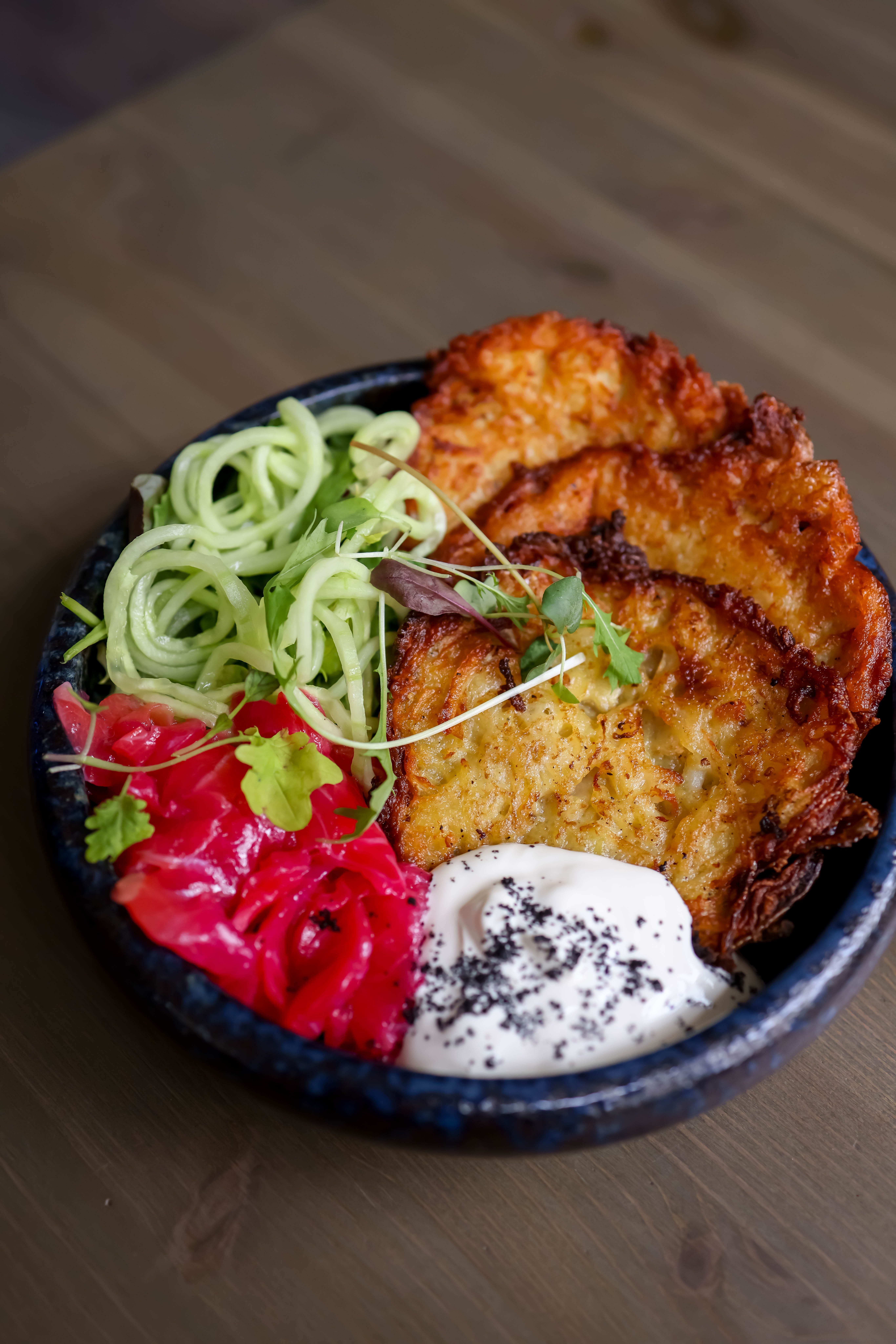
Placki Ziemniaczane
The diets react (see scores below)
Common Ingredients
- potatoes
- onion
- eggs
- flour
- salt
- pepper
- oil
- sour cream
Specific recipes may vary.
Incompatible with 8 of 11 diets
Diet Ratings
Placki Ziemniaczane (Polish potato pancakes) are fundamentally incompatible with a ketogenic diet. The two primary ingredients — potatoes and wheat flour — are both extremely high in net carbs. A single medium potato contains roughly 30-35g of net carbs, and wheat flour adds additional starch. A standard serving of two to three potato pancakes could easily deliver 50-80g of net carbs, far exceeding the entire daily keto limit in one dish. There is no reasonable portion size that makes this dish keto-compatible. The eggs, oil, and sour cream are keto-friendly, but they are minor components that cannot offset the carbohydrate load from the potatoes and flour.
Placki Ziemniaczane (Polish potato pancakes) as traditionally prepared contain two clear animal-derived ingredients: eggs, which are an animal product excluded from all vegan diets, and sour cream, a dairy product also excluded. The base ingredients — potatoes, onion, flour, salt, pepper, and oil — are fully plant-based, but the eggs and sour cream make the dish non-vegan in its standard form. Vegan versions can be made by substituting a flax egg or aquafaba for eggs and using plant-based sour cream, but the dish as listed is not vegan-compliant.
Placki Ziemniaczane (Polish potato pancakes) contains multiple non-paleo ingredients that make it clearly incompatible with the diet. Flour (wheat) is a grain and strictly excluded. Salt is an added ingredient excluded under paleo rules. Sour cream is dairy and excluded. The oil is unspecified but likely a seed or vegetable oil (e.g., canola or sunflower), which is also excluded. Even if white potatoes were accepted under more lenient modern paleo interpretations, the combination of wheat flour, dairy (sour cream), added salt, and probable seed oil makes this dish firmly in the 'avoid' category with no meaningful path to paleo compliance without fundamentally reconstructing the recipe.
Placki Ziemniaczane (Polish potato pancakes) present a mixed picture from a Mediterranean diet perspective. Potatoes are a whole, plant-based food and acceptable, but they are not a staple in traditional Mediterranean eating—whole grains and legumes are preferred carbohydrate sources. The dish is typically fried in refined oil (not specified as extra virgin olive oil), which is a concern, and the use of white flour (refined grain) and sour cream (high-fat dairy) moves it further from Mediterranean ideals. Eggs are acceptable in moderation. The sour cream topping adds saturated fat and is not a Mediterranean staple. Overall, this is a starchy, fried dish with moderate dairy that lacks the vegetable diversity, olive oil base, and whole-grain character central to the Mediterranean pattern. It can be tolerated occasionally but is not a recommended component.
Some Mediterranean diet interpreters note that potatoes appear in certain regional Mediterranean cuisines (e.g., Spanish tortilla de patatas also uses potatoes, eggs, and olive oil), and if this dish were prepared with extra virgin olive oil instead of refined oil and served without sour cream, it could be viewed as more compatible. The eggs and onion are genuinely Mediterranean-friendly ingredients.
Placki Ziemniaczane (Polish potato pancakes) are fundamentally incompatible with the carnivore diet. The dish is almost entirely plant-based: potatoes are a starchy tuber, onion is a vegetable, and flour is a grain-derived ingredient — all strictly excluded. The oil used for frying is almost certainly plant-derived (e.g., vegetable or sunflower oil), also excluded. While eggs and sour cream are animal-derived ingredients, they are minor components in what is predominantly a plant-based dish. There is no meaningful animal protein present. This dish represents exactly the type of high-carbohydrate, plant-dominant food that the carnivore diet is designed to eliminate.
Placki Ziemniaczane (Polish potato pancakes) contain multiple excluded ingredients. Flour is a grain product and is excluded on Whole30. Sour cream is a dairy product and is also excluded. Additionally, even if substitutions were made for those two ingredients, this dish falls squarely into the 'no recreating junk food/baked goods' rule — potato pancakes are explicitly listed as a prohibited food form (pancakes), regardless of whether the ingredients could theoretically be made compliant. The dish is fundamentally a pancake made from potatoes, which the Whole30 program explicitly prohibits by name.
Placki Ziemniaczane (Polish potato pancakes) contain two high-FODMAP ingredients that make the dish problematic during elimination phase: onion and sour cream. Onion is one of the highest-FODMAP foods tested by Monash University, containing significant fructans at any culinary quantity — even small amounts used in cooking are high-FODMAP. Sour cream contains lactose and is rated high-FODMAP at standard serving sizes (>2 tablespoons). The base ingredients — potatoes, eggs, salt, pepper, and oil — are all low-FODMAP. Wheat flour adds a small fructan load but is used in modest quantity. The dish could theoretically be modified (omit onion, replace with green onion tops; omit sour cream or use lactose-free version), but as traditionally prepared, the onion alone makes this a clear avoid. Sour cream served as a topping further compounds the FODMAP load.
Placki Ziemniaczane (Polish potato pancakes) are made from mostly DASH-friendly base ingredients — potatoes provide potassium, onion adds fiber and micronutrients, and eggs are acceptable in moderation. However, the dish is pan-fried in oil, which adds significant fat and calories, and the preparation typically involves added salt. The topping of full-fat sour cream is a concern under DASH guidelines, which specify low-fat or fat-free dairy. The frying method elevates saturated fat intake compared to baking or boiling, and portion control is essential since potato pancakes are energy-dense. While potatoes themselves are DASH-compatible (rich in potassium), the overall preparation method and sour cream topping make this a moderate-caution item. Sodium content can vary significantly based on how much salt is added during preparation.
NIH DASH guidelines emphasize low-fat dairy and limited added fats, making fried potato pancakes with sour cream a borderline food. However, some updated clinical interpretations note that if prepared with minimal oil (baked or air-fried), using low-fat sour cream or Greek yogurt as a substitute, and moderating portion size, this dish can fit within a DASH-adapted eating pattern — particularly given the potassium contribution of potatoes.
Placki Ziemniaczane (Polish potato pancakes) are fundamentally incompatible with Zone Diet principles. The primary ingredient — potatoes — is explicitly listed by Dr. Sears as an 'unfavorable' high-glycemic carbohydrate to avoid. Shredded and pan-fried, potatoes have a high glycemic load that triggers a significant insulin spike, directly contradicting the Zone's hormonal control objectives. The addition of white flour further compounds the high-glycemic carbohydrate load. The dish is fried in oil (typically a seed oil high in omega-6s, which Sears specifically discourages for its pro-inflammatory effects), and served with sour cream — adding saturated fat without lean protein balance. There is no meaningful lean protein source in this dish. As a side dish with no protein block, it would wildly distort any meal's 40/30/30 ratio, delivering almost entirely high-glycemic carbohydrates and fat. Even with careful portioning, the macronutrient profile is nearly impossible to balance into Zone ratios without reconstructing the dish entirely.
Placki Ziemniaczane (Polish potato pancakes) present a mixed anti-inflammatory profile. On the positive side, potatoes contain vitamin C, potassium, and resistant starch (especially when cooled), and onions provide quercetin, a notable anti-inflammatory flavonoid. Eggs offer choline and selenium with some anti-inflammatory benefit. However, the dish has several concerns: it is fried in unspecified oil — if a refined seed oil (sunflower, corn) is used, as is traditional in Polish cooking, this adds excess omega-6 fatty acids and oxidized lipids from high-heat frying, both pro-inflammatory. White flour is a refined carbohydrate with minimal fiber or nutrients. Sour cream (full-fat dairy) is a food to limit under anti-inflammatory guidelines due to saturated fat content, though the amount per serving may be modest as a topping. The frying method itself generates advanced glycation end products (AGEs) which can promote inflammation. Potatoes are also moderate-to-high glycemic, particularly when peeled and pan-fried. The dish is not inherently terrible — it lacks processed additives, trans fats, or added sugar — but its combination of refined carbs, frying in potentially omega-6-heavy oil, and full-fat dairy topping places it solidly in the 'caution' range. Substituting extra virgin olive oil or avocado oil for frying, using Greek yogurt instead of sour cream, and incorporating whole-grain flour would meaningfully improve its profile.
Some anti-inflammatory practitioners would rate this more favorably, noting that potatoes are whole foods with meaningful micronutrients and that eggs and onions contribute beneficial compounds; in modest portions with olive oil, this dish could be considered acceptable. Conversely, stricter AIP-adjacent or low-glycemic anti-inflammatory frameworks would rate it lower, flagging refined flour, high-heat frying, full-fat dairy, and the high glycemic load of peeled potatoes as collectively pro-inflammatory.
Placki Ziemniaczane are Polish potato pancakes pan-fried in oil, making them a poor fit for GLP-1 patients on multiple fronts. The primary ingredient is starchy potato with minimal protein, the cooking method introduces significant fat through frying, and the traditional sour cream topping adds saturated fat with little nutritional payoff. The flour and potato base are refined carbohydrates with low fiber density, providing largely empty calories at a time when every bite must count. Fried foods are a known trigger for the nausea, bloating, and reflux that GLP-1 medications already predispose patients to by slowing gastric emptying. The dish scores particularly poorly on protein density (eggs contribute a small amount but are diluted across a large starch-heavy portion), fiber content, and fat profile. Even a small serving delivers a poor nutrient-to-calorie ratio, and the greasy, heavy texture is exactly what GLP-1 patients are advised to avoid.
*See how scores were generated at our methodology page.
Nutritional profile
Six traits that cut across every diet.
Fiber & Plants
How much whole-plant food and fiber it delivers.
Healthy Fats
The quality of its fats (unsaturated, omega-3).
Whole / Unprocessed
How close it is to its natural, unprocessed form.
Gut Gentle
How easy it is on digestion (low FODMAP, few irritants).
Low Glycemic
How little it spikes your blood sugar.
Protein Density
How much protein it packs per calorie.
Controversy Index
Higher controversy = more disagreement between diets.
Diet-Specific Tips
 Mediterranean — 4/10
View tips
- Potatoes are whole plant food but not a Mediterranean dietary staple
- Likely fried in refined oil rather than extra virgin olive oil
- White flour is a refined grain, not preferred in Mediterranean diet
- Sour cream adds saturated fat and is not a Mediterranean ingredient
- Eggs and onion are acceptable Mediterranean ingredients
- No vegetables, legumes, or whole grains to strengthen Mediterranean profile
- Dish is a non-Mediterranean cultural food with limited alignment
 DASH — 4/10
View tips
- Potatoes are DASH-friendly (high potassium) but frying negates much of the benefit
- Full-fat sour cream conflicts with DASH low-fat dairy requirement
- Pan-frying in oil increases total and potentially saturated fat content
- Added salt raises sodium concerns; exact sodium content depends on preparation
- Eggs are acceptable in moderation under most current DASH interpretations
- Baking or air-frying with low-fat sour cream substitute would improve DASH compatibility
- Energy-dense dish requiring portion control
 Anti-Inflammatory — 4/10
View tips
- Frying in likely refined seed oil (sunflower/corn) — high omega-6, oxidation risk at high heat
- White flour is a refined carbohydrate with negligible anti-inflammatory value
- Sour cream is full-fat dairy — flagged as 'limit' under anti-inflammatory guidelines
- Onions provide quercetin, a beneficial anti-inflammatory flavonoid
- Potatoes are whole food with some micronutrients but moderate-high glycemic index when peeled and fried
- High-heat frying generates AGEs (advanced glycation end products), which promote inflammation
- No anti-inflammatory 'hero' ingredients (omega-3s, polyphenol-rich produce, herbs/spices beyond pepper and salt)
- No processed additives, HFCS, or trans fats — a relative positive