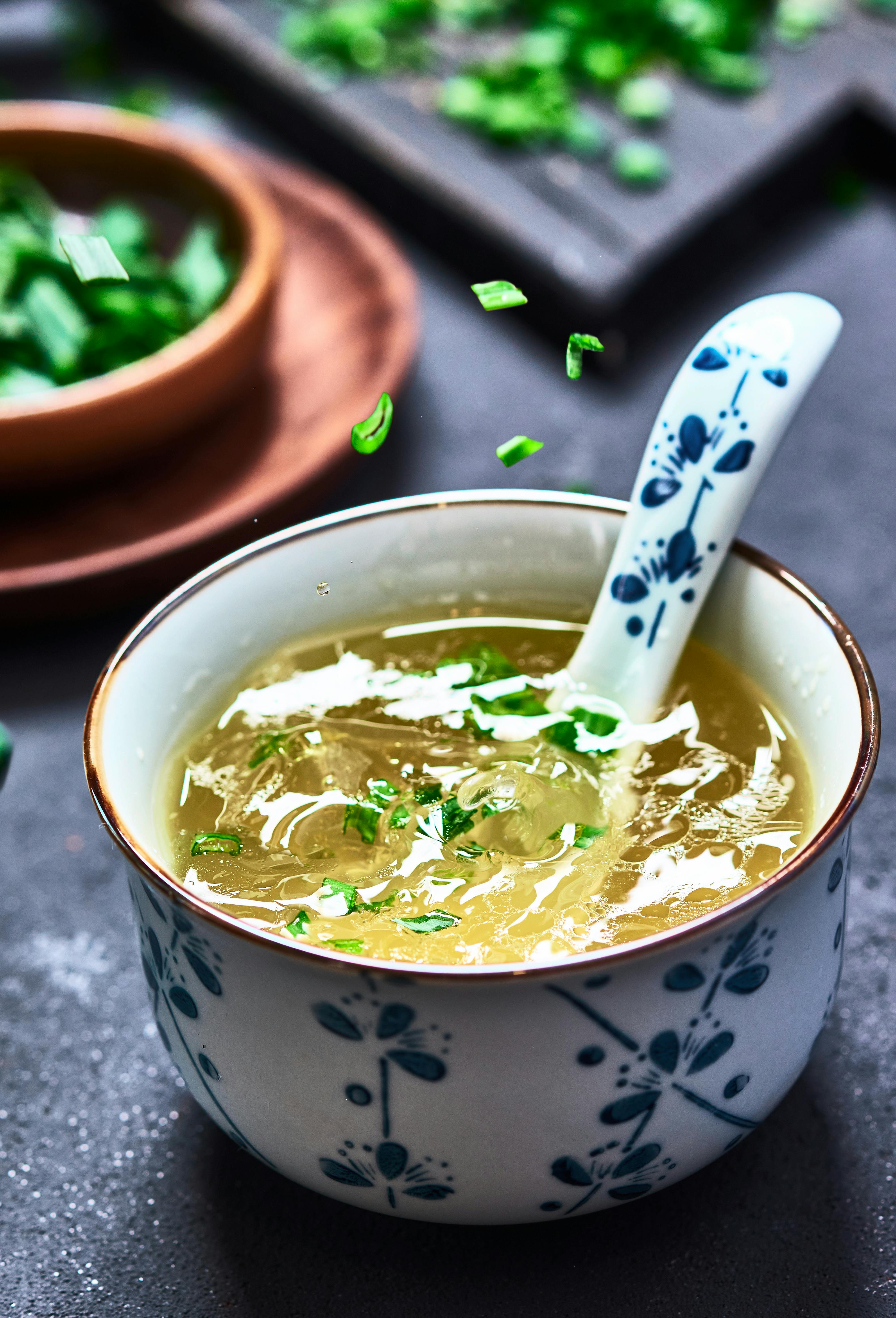
Photo: Alex Bayev / Pexels
The diets react (see scores below)
Common Ingredients
- chicken
- carrots
- celery root
- parsley root
- onion
- noodles
- bay leaf
- allspice
Specific recipes may vary.
Incompatible with 6 of 11 diets
Diet Ratings
Rosol is a traditional Polish chicken noodle soup that contains egg noodles, which are a grain-based, high-carb ingredient that is fundamentally incompatible with ketogenic eating. Even a small serving of noodles contributes significant net carbs (a typical soup serving could easily contain 20-40g net carbs from noodles alone), exceeding or consuming the entire daily keto carb budget in one dish. Additionally, carrots and parsley root add modest but non-trivial carbs. The chicken broth base and chicken meat themselves are keto-friendly, but the noodles are a dealbreaker in standard form. A keto-adapted version replacing noodles with zucchini noodles or shirataki noodles and reducing root vegetables would be viable, but the traditional dish as described is not keto-compatible.
Rosol is a traditional Polish chicken broth soup. Chicken is the primary ingredient and protein source, making this dish entirely incompatible with a vegan diet. There is no ambiguity here — chicken is an animal product, and its presence immediately disqualifies the dish regardless of the plant-based vegetables and spices also included.
Rosol is a traditional Polish chicken noodle soup. While the base — chicken, carrots, celery root, parsley root, onion, bay leaf, and allspice — is entirely paleo-compliant, the dish is fundamentally defined by its egg noodles, which are made from wheat flour. Wheat is a grain and a core exclusion in the paleo diet. Without the noodles, the broth and vegetables would be approved, but as traditionally prepared and named, Rosol is a grain-containing dish and must be avoided.
Rosol is a Polish chicken broth soup with vegetables (carrots, celery root, parsley root, onion) and egg noodles. The chicken and vegetable base aligns reasonably well with Mediterranean principles — poultry is acceptable in moderation, and the aromatic vegetables are strongly encouraged. However, the noodles are likely refined wheat pasta rather than whole grain, which conflicts with Mediterranean dietary emphasis on whole grains. The dish also lacks olive oil as a fat source, which is central to the Mediterranean pattern. Overall, it is a light, wholesome soup that is acceptable in moderation but not a Mediterranean staple due to the refined noodles and absence of olive oil or legumes.
Some Mediterranean diet interpretations, particularly those rooted in traditional Southern European peasant cuisines, include simple broths with pasta or rice as acceptable everyday meals, especially when the overall dietary pattern is plant-forward. Substituting whole-grain noodles and finishing with a drizzle of extra virgin olive oil would bring this dish closer to Mediterranean ideals.
Rosol is a traditional Polish chicken soup that is almost entirely incompatible with the carnivore diet. While the chicken itself and the resulting broth are animal-derived and acceptable, the dish contains numerous plant-based ingredients that are strictly excluded: carrots, celery root, parsley root, and onion are all vegetables, bay leaf and allspice are plant-based spices, and noodles are a grain-based pasta. The overwhelming majority of the dish's ingredients violate carnivore principles. The only salvageable component would be the plain chicken and the broth if strained of all vegetables — essentially converting it into a simple bone broth or chicken broth, which would then be fully approved.
Rosol is a traditional Polish chicken noodle soup. While most of its ingredients are fully Whole30-compliant (chicken, carrots, celery root, parsley root, onion, bay leaf, allspice), the dish contains noodles, which are made from wheat — a grain that is explicitly excluded from the Whole30 program. Additionally, noodles fall into the category of pasta/noodles, which is explicitly listed among the forbidden 'junk food recreations' even if made with compliant ingredients. The dish as traditionally prepared cannot be made Whole30-compliant without removing or substituting the noodles (e.g., with zucchini noodles or spaghetti squash).
Rosol contains two significant high-FODMAP ingredients that make it unsuitable during the elimination phase. Onion is one of the highest-fructan foods tested by Monash University and is high-FODMAP at any culinary amount — even cooked in broth, fructans leach into the liquid making the soup itself high-FODMAP. The noodles are almost certainly wheat-based (egg noodles/makaron), which are high in fructans. Celery root (celeriac) is also high-FODMAP above small portions (~75g), and in a traditional rosol serving, the combined vegetable load likely exceeds safe thresholds. Carrots, chicken, bay leaf, allspice, and parsley root are low-FODMAP, but the onion in the broth alone disqualifies this dish during elimination phase.
Rosół is a traditional Polish chicken broth soup with a favorable ingredient profile for DASH: lean chicken, nutrient-rich vegetables (carrots, celery root, parsley root, onion), and aromatic spices. These ingredients provide potassium, fiber, and lean protein aligned with DASH principles. However, the primary concern is sodium. Traditional rosół is prepared with significant added salt, and homemade versions often contain 600–1,000mg of sodium per serving, which can quickly approach or exceed DASH daily limits — especially when consumed as a starter. Additionally, the chicken broth is typically made with the whole bird including skin, introducing saturated fat unless the fat is skimmed after chilling. The egg noodles are refined rather than whole grain, which is suboptimal for DASH. If prepared with controlled salt (no added salt or minimal), skinless chicken, fat skimmed from the broth, and whole-grain noodles substituted, rosół would score much higher (8–9) and align well with DASH. As traditionally prepared, it earns a cautious approval.
NIH DASH guidelines do not specifically address broth-based soups like rosół, but flag high-sodium foods for restriction. Some DASH-oriented clinicians argue that homemade broths — unlike canned soups — allow full sodium control and can be an excellent vehicle for vegetables and lean protein, suggesting the dish could be approved if salt is managed carefully.
Rosol is a traditional Polish clear chicken broth soup that is largely Zone-friendly in concept but requires modification for optimal compliance. The protein base (chicken) is lean and excellent for Zone blocks. The vegetables — carrots, celery root, parsley root, and onion — are all low-to-moderate glycemic and contribute polyphenols and fiber, aligning well with Zone's vegetable emphasis. The broth itself is anti-inflammatory and supports the Zone's omega-3/polyphenol focus. The primary issue is the egg noodles: they are a refined, higher-glycemic carbohydrate that Zone classifies as 'unfavorable.' In a typical serving of rosol, noodles are present in moderate quantity, which can spike the carb block's glycemic load and disrupt the 40/30/30 balance. Additionally, traditional rosol is often made with bone-in, skin-on chicken including fatty cuts (thighs, drumsticks, backs), which introduces more saturated fat than Zone recommends. If made with skinless chicken breast and the noodle portion is reduced or replaced with more vegetables (e.g., zucchini noodles), this soup becomes a solid Zone meal. As served traditionally, it earns a cautious approval — workable but imperfect.
Some Zone practitioners would rate rosol more favorably, noting that the noodle quantity in a typical soup serving is small enough to fit within 1-2 carb blocks when combined with the vegetable carbs, and that the overall meal — broth, vegetables, moderate chicken, small noodle portion — can be made to approximate 40/30/30 with careful portioning. Others following Sears' later anti-inflammatory writings might also be less strict about the noodles if the overall meal is vegetable-rich and the fat source is predominantly from the broth rather than added oils.
Rosol is a traditional Polish clear chicken broth soup with a generally favorable anti-inflammatory profile, but with some notable caveats. On the positive side: chicken is a lean protein that falls in the 'moderate' category of anti-inflammatory eating; carrots, celery root, parsley root, and onion are colorful, fiber-rich vegetables providing antioxidants, flavonoids, and prebiotic compounds (onions are particularly rich in quercetin); bay leaf and allspice both contain anti-inflammatory polyphenols and eugenol. The broth itself, especially if made from bones, may provide collagen and glycine, which some research associates with reduced inflammatory markers. The main limiting factors are the egg noodles — a refined carbohydrate that adds a modest pro-inflammatory element — and the fact that the overall dish lacks the high-potency anti-inflammatory stars like omega-3-rich fish, turmeric, or leafy greens. Depending on preparation, the fat content of the broth can be significant (chicken skin, marrow), contributing saturated fat. Overall, this is a nourishing, whole-food soup that is largely anti-inflammatory but held back from a full 'approve' by the refined noodles and relatively modest antioxidant density compared to, say, a vegetable-forward or fatty-fish-based soup.
Some anti-inflammatory practitioners, particularly those following the Autoimmune Protocol (AIP) or gut-focused frameworks, would flag the refined wheat noodles as a meaningful inflammatory trigger due to gluten and blood sugar impact, and might caution that conventionally raised chicken can carry a less favorable omega-6 to omega-3 ratio than pasture-raised. Conversely, bone broth advocates (including some functional medicine practitioners like Dr. Kellyann Petrucci) argue that long-simmered chicken broth like rosol is actively anti-inflammatory due to glycine, proline, and gelatin content that supports gut barrier integrity.
Rosół is a traditional Polish clear chicken broth soup that aligns well with GLP-1 dietary priorities. The base is a long-simmered chicken broth with lean chicken meat, root vegetables (carrots, celery root, parsley root, onion), and egg noodles. It is low in fat (especially if the surface fat is skimmed, which is traditional), easy to digest, hydrating, and gentle on a slowed digestive system. The chicken provides meaningful lean protein, the vegetables contribute fiber and micronutrients, and the broth itself supports hydration — a key concern for GLP-1 patients. The noodles are refined carbohydrates and add modest caloric density with low nutritional value, which is the main drawback. Portion size is naturally small-friendly given the soup format. The aromatic spices (bay leaf, allspice) are mild and unlikely to worsen GI side effects. Overall, Rosół is one of the more GLP-1-compatible comfort foods available, particularly on days with nausea or GI sensitivity.
*See how scores were generated at our methodology page.
Nutritional profile
Six traits that cut across every diet.
Fiber & Plants
How much whole-plant food and fiber it delivers.
Healthy Fats
The quality of its fats (unsaturated, omega-3).
Whole / Unprocessed
How close it is to its natural, unprocessed form.
Gut Gentle
How easy it is on digestion (low FODMAP, few irritants).
Low Glycemic
How little it spikes your blood sugar.
Protein Density
How much protein it packs per calorie.
Controversy Index
Higher controversy = more disagreement between diets.
Diet-Specific Tips
 Mediterranean — 5/10
View tips
- Chicken is acceptable poultry — fits Mediterranean moderation guidelines
- Rich vegetable base (carrots, celery root, parsley root, onion) is a positive factor
- Noodles are likely refined wheat, not whole grain — a moderate concern
- No olive oil present — missing the primary fat source of the Mediterranean diet
- Light, low-fat broth preparation is a positive attribute
- No red meat, processed ingredients, or added sugars
 DASH — 6/10
View tips
- Lean chicken protein aligns with DASH emphasis on poultry
- Vegetable-rich broth (carrots, celery root, parsley root, onion) provides potassium, fiber, and micronutrients
- High sodium risk from traditional preparation with added salt
- Chicken fat in broth raises saturated fat concern unless skimmed
- Refined egg noodles are not whole grain — suboptimal for DASH
- Low-sodium preparation would significantly improve DASH compatibility
- No added sugars, tropical oils, or heavily processed ingredients
 Zone — 6/10
View tips
- Chicken is a lean Zone-approved protein, though skin-on/bone-in cuts add unfavorable saturated fat
- Egg noodles are a refined, higher-glycemic 'unfavorable' carbohydrate in Zone terminology
- Carrots, celery root, parsley root, and onion are low-to-moderate GI vegetables that fit Zone carb blocks
- Clear broth base is low-calorie and anti-inflammatory — aligns with Zone principles
- Macronutrient ratio may skew carb-heavy if noodle portion is not carefully controlled
- Easily modified to be more Zone-compliant by using skinless chicken breast and reducing or replacing noodles
 Anti-Inflammatory — 6/10
View tips
- Lean chicken protein — moderate/acceptable in anti-inflammatory framework
- Antioxidant-rich root vegetables (carrots, celery root, parsley root) and quercetin-rich onion
- Anti-inflammatory spices: bay leaf and allspice contain eugenol and polyphenols
- Egg noodles are a refined carbohydrate — modest pro-inflammatory factor
- Broth may contain beneficial collagen/glycine if bone-in chicken is used
- Saturated fat content variable depending on whether fat is skimmed from broth
- No omega-3 rich ingredients, turmeric, or high-potency anti-inflammatory components
- Whole-food, minimally processed preparation is a strong positive
 GLP-1 Friendly — 8/10
View tips
- Lean chicken protein supports muscle preservation during weight loss
- Clear broth format is highly hydrating and easy to digest — ideal for GLP-1 GI side effect days
- Low fat content, especially when surface fat is skimmed as traditionally prepared
- Root vegetables (carrots, celery root, parsley root) provide fiber and micronutrients
- Egg noodles are refined carbohydrates with low fiber and nutrient density — a moderate drawback
- Mild spices (bay leaf, allspice) are well-tolerated and unlikely to worsen nausea or reflux
- Small-portion friendly — soup format naturally limits overconsumption
- Protein per serving may be modest depending on chicken-to-broth ratio; adding extra chicken meat improves score