Photo: Konstantin Klimov / Pexels
The diets react (see scores below)
Common Ingredients
- flour
- butter
- lard
- sugar
- cinnamon
- anise seeds
- salt
Specific recipes may vary.
Incompatible with 11 of 11 diets
Diet Ratings
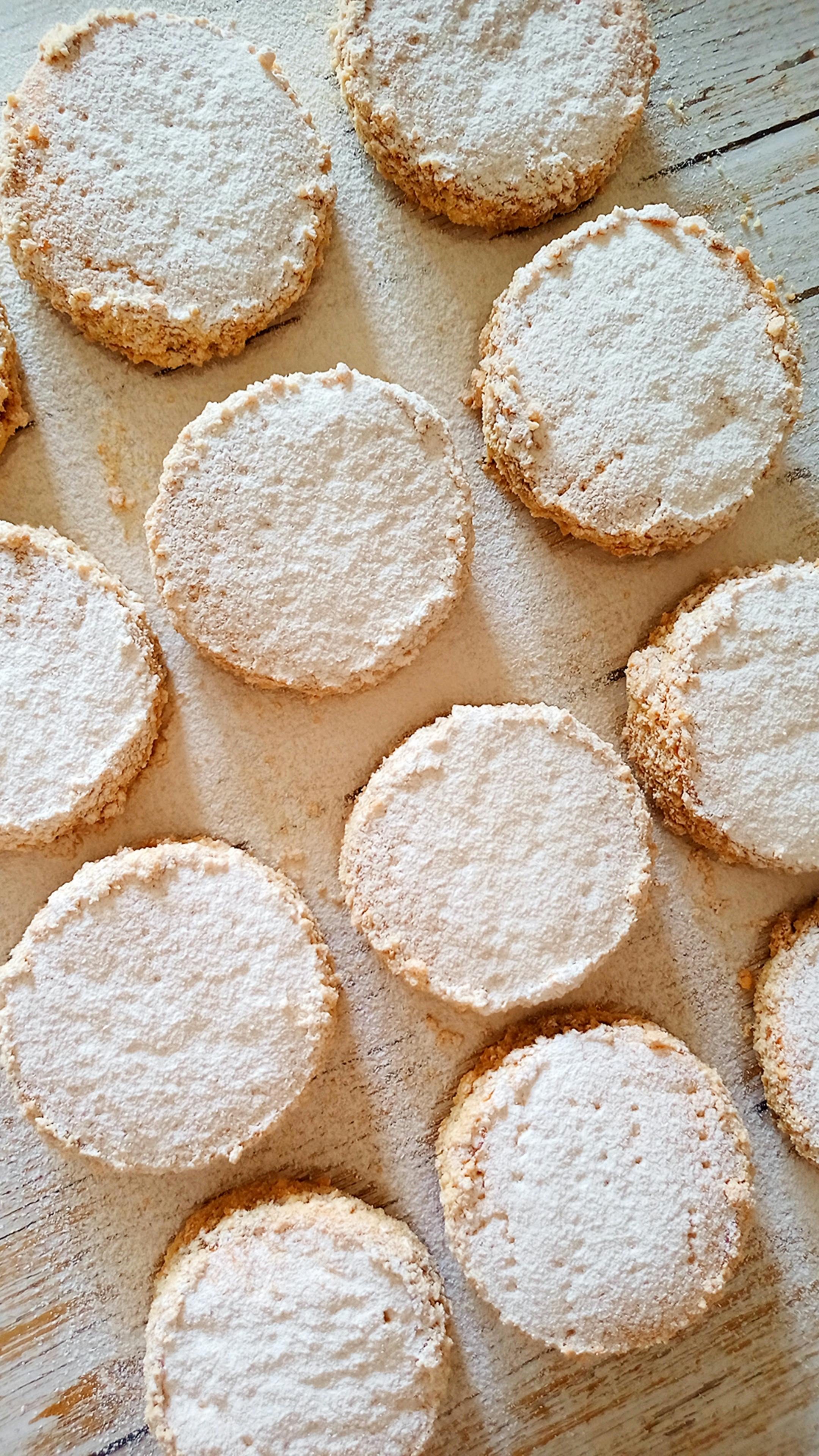
Polvorones are traditional Spanish shortbread cookies made primarily from flour and sugar — both are completely incompatible with ketogenic eating. Flour (wheat) is a high-carb grain, and sugar is a direct ketosis disruptor. A single polvorón typically contains 15-20g of net carbs, meaning even one or two cookies could exhaust or exceed the entire daily keto carb budget. While the recipe does include keto-friendly fats (butter and lard), those ingredients cannot redeem the dominant carb load from flour and sugar. There is no meaningful portion at which polvorones can be consumed without risking ketosis.
Polvorones as listed contain two animal-derived ingredients: butter (dairy) and lard (rendered pig fat). Both are unambiguously non-vegan. Butter is a dairy product excluded under vegan rule #1, and lard is animal fat excluded as a meat-derived ingredient. The remaining ingredients — flour, sugar, cinnamon, anise seeds, and salt — are all plant-based, but the presence of butter and lard makes this dish clearly incompatible with a vegan diet. Vegan versions of polvorones can be made by substituting butter with vegan margarine or coconut oil and lard with vegetable shortening, but the traditional Spanish recipe as specified here is not vegan.
Polvorones are a traditional Spanish shortbread cookie that contains multiple non-paleo ingredients. Flour (wheat) is a grain and a clear paleo exclusion. Butter is a dairy product, excluded under paleo rules. Sugar is refined and excluded. Salt is an added ingredient excluded under strict paleo. While lard, cinnamon, and anise seeds are paleo-compatible, the foundational ingredients of this dish — flour, butter, sugar, and salt — are all prohibited. This dish cannot be made without its core non-paleo ingredients and therefore receives the lowest possible rating.
Polvorones are traditional Spanish shortbread cookies made primarily from refined flour, butter, lard, and sugar — a combination that directly contradicts Mediterranean diet principles. The primary fats are saturated animal fats (butter and lard) rather than extra virgin olive oil, the grain base is refined flour rather than a whole grain, and added sugar is a significant component. These are energy-dense, nutrient-poor treats with minimal fiber, vitamins, or plant-forward nutrition. Even as an occasional indulgence, the combination of refined carbohydrates, high saturated fat, and added sugar places them firmly in the 'avoid' category under Mediterranean diet guidelines.
Some traditional Spanish Mediterranean diet interpretations acknowledge polvorones as a culturally important seasonal treat (especially during Christmas), and traditional food scholars argue that occasional consumption of culturally embedded sweets does not undermine overall dietary patterns. A minority view holds that lard, as a minimally processed animal fat used in Iberian culinary tradition, is preferable to industrial trans fats, and that rigid exclusion of heritage foods misrepresents the Mediterranean dietary pattern as a lived practice rather than a clinical protocol.
Polvorones are a traditional Spanish shortbread cookie that is almost entirely plant-based. The primary ingredients are flour (grain), sugar (processed plant-derived sweetener), cinnamon (plant spice), and anise seeds (plant spice). While lard and butter are animal-derived, they are minor components in a dish dominated by plant foods. The entire structure of this food is built on grains and sugar, making it categorically incompatible with the carnivore diet. There is no meaningful animal protein, and the carbohydrate-heavy, plant-dominant ingredient list places this firmly in the 'avoid' category with high confidence.
Polvorones are Spanish shortbread cookies that contain multiple excluded ingredients. Flour is a grain product (wheat), which is explicitly excluded on Whole30. Butter is dairy, which is excluded (only ghee/clarified butter is permitted). Sugar is an added sweetener, which is explicitly excluded. Additionally, even if all ingredients were compliant, polvorones are cookies — a classic baked good/junk food recreation that is explicitly prohibited under Whole30 Rule 4, regardless of ingredient compliance.
Polvorones are Spanish shortbread cookies made primarily with wheat flour, which is high in fructans — one of the most significant FODMAPs. Wheat flour is the dominant ingredient and cannot be avoided at any reasonable serving size of this dish. Butter, lard, sugar, cinnamon, anise seeds, and salt are all individually low-FODMAP, so the only problematic ingredient is the wheat flour. However, because wheat flour is the structural base of polvorones (typically comprising the majority of the recipe by weight), even a single polvorón would contain enough fructans to be problematic during the elimination phase. There is no low-FODMAP version of this dish without substituting wheat flour for a gluten-free alternative like rice flour or tapioca starch.
Polvorones are Spanish shortbread cookies made primarily from refined flour, butter, lard, and sugar — a combination that is fundamentally incompatible with DASH diet principles. Lard and butter together contribute significant saturated fat, which DASH explicitly limits to reduce cardiovascular risk. The use of refined (non-whole-grain) flour provides no meaningful fiber, and the high sugar content adds empty calories with no beneficial nutrients. There are no vegetables, fruits, whole grains, lean protein, or low-fat dairy components. The food offers virtually none of the key DASH nutrients (potassium, calcium, magnesium, fiber) while delivering exactly what DASH restricts (saturated fat, refined carbohydrates, added sugars). As a sweet snack or treat, it falls squarely in the 'sweets' category that DASH limits to 5 or fewer servings per week, and even within that allowance, lower-saturated-fat options are preferred.
Polvorones are Spanish shortbread-style cookies made almost entirely from refined flour, sugar, butter, and lard — a combination that is deeply problematic from a Zone Diet perspective. The macronutrient profile is essentially the opposite of Zone targets: high-glycemic refined carbohydrates from white flour and sugar, substantial saturated fat from both butter and lard, and virtually zero protein. There is no lean protein component, no low-glycemic vegetable-based carbohydrate, and no monounsaturated fat to speak of. The fat profile — dominated by saturated animal fats — directly conflicts with Zone's emphasis on monounsaturated fats and anti-inflammatory eating. The refined flour and sugar combination produces a high glycemic load that would cause exactly the insulin spike Zone seeks to prevent. As a snack with no protein, it cannot form even a partial Zone block meal without radical supplementation. While the Zone is ratio-based rather than exclusionary, polvorones offer no usable Zone building blocks and would require consuming so little of the food (to limit carb and fat damage) that it provides no satiety or nutritional value. This is one of the rare cases where the food is genuinely incompatible with Zone principles regardless of portion strategy.
Polvorones are traditional Spanish shortbread-style cookies made primarily from refined flour, butter, lard, and sugar — a combination that hits nearly every marker the anti-inflammatory framework flags. Refined white flour is a refined carbohydrate with a high glycemic load that promotes inflammatory signaling. Butter and lard are both high in saturated fat, which in excess is associated with elevated inflammatory markers like CRP and IL-6. Added sugar further drives pro-inflammatory pathways including NF-κB activation. The dish is essentially a dense delivery vehicle for saturated fat and refined carbohydrates with minimal redeeming nutritional content. The small amounts of cinnamon and anise seeds do provide trace antioxidants and anti-inflammatory compounds (cinnamaldehyde, anethole), but these are present in minor seasoning quantities and cannot meaningfully offset the pro-inflammatory load of the base ingredients. This is not a food that fits any interpretation of the anti-inflammatory framework, even liberally applied.
Polvorones are traditional Spanish shortbread-style cookies made almost entirely from refined flour, butter, lard, and sugar — a combination that is fundamentally incompatible with GLP-1 dietary priorities. They offer virtually no protein, negligible fiber, and are extremely high in saturated fat from both butter and lard. The high sugar and refined carbohydrate content provides empty calories with no nutritional payoff. The heavy fat load is likely to worsen GLP-1 side effects including nausea, bloating, and reflux due to slowed gastric emptying. As a crumbly, dense, fat-rich confection, polvorones fail nearly every rating criterion: they score near-zero on protein density, fiber content, digestibility under GLP-1 conditions, and nutrient density per calorie. Even a single small cookie delivers a disproportionate calorie-to-nutrition ratio for a patient eating significantly less food overall.
*See how scores were generated at our methodology page.
Nutritional profile
Six traits that cut across every diet.
Fiber & Plants
How much whole-plant food and fiber it delivers.
Healthy Fats
The quality of its fats (unsaturated, omega-3).
Whole / Unprocessed
How close it is to its natural, unprocessed form.
Gut Gentle
How easy it is on digestion (low FODMAP, few irritants).
Low Glycemic
How little it spikes your blood sugar.
Protein Density
How much protein it packs per calorie.
Controversy Index
Higher controversy = more disagreement between diets.