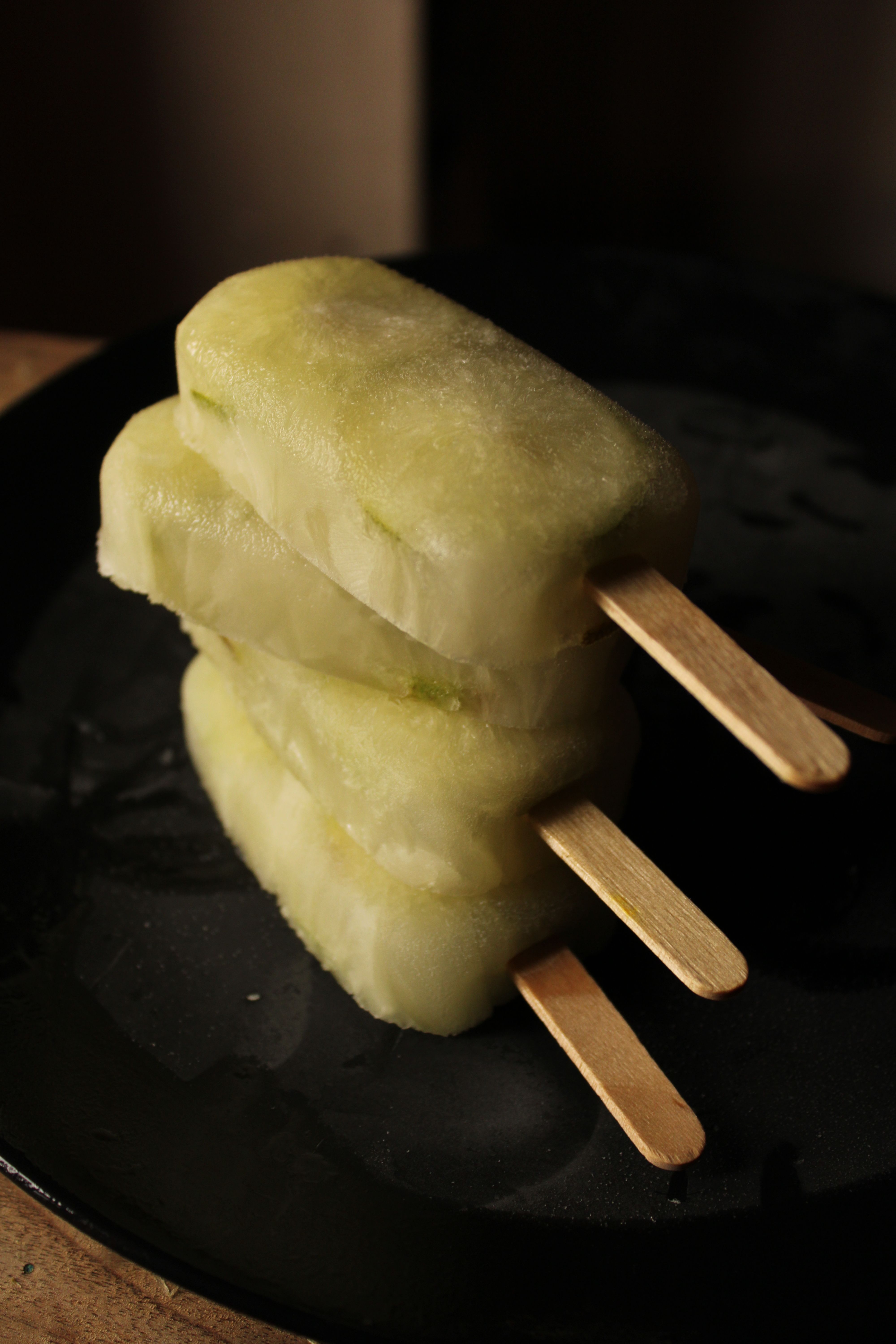
Photo: Jahra Tasfia Reza / Pexels
The diets react (see scores below)
Common Ingredients
- water
- sugar
- fruit juice or puree
- citric acid
- food coloring
Specific recipes may vary.
Incompatible with 8 of 11 diets
Diet Ratings
A standard popsicle is fundamentally incompatible with a ketogenic diet. The primary ingredients are sugar and fruit juice or puree, both of which are high-glycemic carbohydrate sources. A typical popsicle contains 15-25g of net carbs almost entirely from added sugars, which can single-handedly push a person out of ketosis. There is no fat, no fiber to offset the carbs, and no nutritional benefit from a keto perspective. This is a pure sugar-delivery vehicle with zero keto-friendly attributes.
This popsicle formulation contains only plant-based ingredients: water, sugar, fruit juice or puree, citric acid, and food coloring. All listed components are vegan-compatible. Citric acid is derived from fermentation of plant sugars. Food coloring is typically synthetic, though vegans should note that carmine (E120) is an animal-derived red dye used in some products — however, as evaluated, the ingredient is listed generically and most commercial food colorings are synthetic. The product is technically vegan-compliant. It scores a 7 rather than higher because it is a processed, sugar-forward snack with limited nutritional value, and whole-food plant-based advocates would prefer whole fruit. No animal products or animal-derived ingredients are present in this formulation.
Commercial popsicles contain refined sugar as a primary ingredient, which is explicitly excluded from the paleo diet. Additionally, food coloring and citric acid (when synthetic) are processed additives with no place in a paleo framework. While fruit juice is technically derived from paleo-approved foods, its use here is in a heavily processed, sugar-laden product. The combination of refined sugar and artificial additives makes this a clear avoid.
A standard popsicle is primarily composed of water, added sugar, and minimal fruit juice or puree, making it a high-sugar, low-nutrient processed food. Added sugar is one of the clearest contradictions to Mediterranean diet principles, which emphasize whole fruits as the preferred sweet treat. The inclusion of food coloring and citric acid further marks this as a processed item with little nutritional value. Even the fruit component is diluted and stripped of fiber. The Mediterranean diet traditionally satisfies sweet cravings with fresh fruit, dried fruit, or small amounts of honey-based desserts — not sugar-forward frozen confections.
Popsicles are entirely plant-derived and processed, containing zero animal products. The ingredients — water, sugar, fruit juice or puree, citric acid, and food coloring — are all either plant-derived or synthetic. Sugar is a processed carbohydrate explicitly excluded on the carnivore diet, fruit juice/puree are plant foods, citric acid is a plant-derived acid (typically fermented from mold), and artificial food coloring adds synthetic compounds. This food violates every core principle of the carnivore diet simultaneously: it contains plants, sugar, and processed/artificial ingredients, and provides no animal-derived nutrition whatsoever.
This popsicle contains 'sugar' as a listed ingredient, which is an explicitly excluded added sugar on the Whole30 program. Regardless of the fruit juice or puree content (which would be compliant on its own), the addition of plain sugar disqualifies this item. Commercial popsicles almost universally contain added sugar. While fruit juice and puree are Whole30-compatible per the 2024 updated guidelines, and citric acid is a generally accepted food additive, the sugar ingredient is a clear disqualifier. Food coloring is also a concern as artificial additives are contrary to the whole-food philosophy, though sugar alone is sufficient to render this non-compliant.
A basic popsicle made with water, sugar, citric acid, and food coloring is generally low-FODMAP, as sucrose (table sugar) is low-FODMAP in standard amounts and the other base ingredients are FODMAP-free. However, the FODMAP status hinges critically on the specific 'fruit juice or puree' used. Many common popsicle fruits are high-FODMAP — apple juice (excess fructose), mango puree (excess fructose/polyols), peach or cherry (polyols), and watermelon (fructose/polyols) would all make the popsicle high-FODMAP. Low-FODMAP options like strawberry, grape, pineapple, or citrus juice would keep the popsicle safe. Additionally, sugar content matters — large amounts of sugar can contribute to osmotic load, and some commercial popsicles use high-fructose corn syrup (HFCS) or honey instead of sucrose, both of which are high in free fructose. A caution rating reflects the ingredient ambiguity: the base is safe but the fruit component is undefined and could easily be problematic.
Monash University rates many fruit juices and purees individually, and the FODMAP status of this product depends entirely on which fruit is used. Clinical FODMAP practitioners often advise patients to verify the specific fruit source on commercial popsicle labels, as high-FODMAP fruits and HFCS sweeteners are common in mainstream brands, making blanket approval inappropriate during the elimination phase.
Popsicles are primarily sugar and water with minimal fruit juice or puree, making them a source of added sugar with little nutritional value. DASH guidelines explicitly limit sweets and added sugars, recommending no more than 5 servings of sweets per week, with each serving being small (e.g., 1 tablespoon sugar). A standard popsicle contains roughly 10-15g of added sugar, which counts toward this limited weekly allowance. They are low in sodium, fat, and cholesterol, which is favorable, but they provide virtually no potassium, calcium, magnesium, fiber, or protein — the key DASH-emphasized nutrients. The fruit juice component contributes minimally to nutritional value compared to whole fruit. Occasional consumption fits within DASH guidelines as one of the allowed weekly sweets, but popsicles are not a food the diet encourages or emphasizes.
A standard popsicle is essentially water, sugar, and fruit juice — a pure high-glycemic carbohydrate source with no protein, no fat, and no fiber to slow glucose absorption. The primary ingredient after water is added sugar, which Dr. Sears explicitly identifies as one of the most disruptive foods to Zone balance due to its rapid insulin spike. There is no macronutrient structure here that can be meaningfully balanced: zero protein blocks, zero fat blocks, and the carbohydrate 'block' comes entirely from high-glycemic simple sugars. Even portioning down to a very small amount yields negligible nutritional value while still delivering a disproportionate insulin response. This is exactly the type of processed, nutritionally empty food the Zone Diet is designed to avoid. Unlike, say, white rice or bread — which at least provide some satiety and can be incorporated in very small portions as a carb block — a popsicle delivers pure sugar with no compensating macronutrients and no practical way to integrate it into a Zone-balanced meal or snack without adding separate protein and fat sources that would make the 'snack' entirely constructed around compensating for the popsicle's deficiencies.
A standard commercial popsicle is built around added sugar as its primary caloric ingredient, with minimal nutritional benefit. While fruit juice or puree provides a small amount of antioxidants and vitamins, the sugar content dominates the inflammatory profile. Added sugars are well-established drivers of inflammatory markers including CRP and IL-6, and anti-inflammatory frameworks across the board — from Dr. Weil's pyramid to the IF Rating system — consistently flag added sugar as a top pro-inflammatory ingredient to limit or avoid. Citric acid is generally benign in small amounts, but artificial food coloring (common in commercial popsicles) is flagged as an artificial additive to avoid under anti-inflammatory principles, with some research linking synthetic dyes to inflammatory and immune responses. The fruit juice or puree component offers some polyphenols and vitamin C, but in the context of a sugar-forward frozen treat, this benefit is marginal and insufficient to offset the inflammatory burden. A homemade version made primarily from whole fruit puree with no added sugar and no artificial coloring would score significantly higher, but the dish as described represents a standard commercial popsicle formulation.
A standard popsicle is essentially frozen sugar water with minimal nutritional value — zero protein, negligible fiber, and primarily composed of added sugars from sugar and fruit juice concentrate. For GLP-1 patients eating significantly fewer calories, this is a textbook example of empty calories that crowd out nutritionally essential foods. The high sugar content can spike blood glucose, which is particularly counterproductive for the metabolic goals of GLP-1 therapy. While the water content provides some hydration benefit and the cold temperature may soothe nausea, these minor positives do not offset the lack of protein, fiber, or micronutrients. The citric acid can also irritate the GI tract in some patients already dealing with reflux or nausea as GLP-1 side effects.
*See how scores were generated at our methodology page.
Nutritional profile
Six traits that cut across every diet.
Fiber & Plants
How much whole-plant food and fiber it delivers.
Healthy Fats
The quality of its fats (unsaturated, omega-3).
Whole / Unprocessed
How close it is to its natural, unprocessed form.
Gut Gentle
How easy it is on digestion (low FODMAP, few irritants).
Low Glycemic
How little it spikes your blood sugar.
Protein Density
How much protein it packs per calorie.
Controversy Index
Higher controversy = more disagreement between diets.
Diet-Specific Tips
 Vegan — 7/10
View tips
- All listed ingredients are plant-based or synthetically derived
- Citric acid is vegan — produced via fungal fermentation of plant sugars
- Food coloring is assumed synthetic; carmine (E120) is an animal-derived red dye used in some popsicles and would make those non-vegan — consumers should check labels
- Sugar processing: some refined white sugar is processed with bone char, which some strict vegans flag, though the sugar itself contains no animal residue
- Scored 7 not 9-10 due to processed nature and high sugar content — not aligned with whole-food plant-based ideals
 Low-FODMAP — 4/10
View tips
- Fruit juice or puree type is unspecified — high-FODMAP fruits (apple, mango, peach, cherry, watermelon) would make this avoid
- Sucrose (table sugar) is low-FODMAP at standard serving sizes
- Commercial versions may use HFCS instead of sugar, which is high in free fructose and high-FODMAP
- Citric acid and food coloring are FODMAP-free
- Low-FODMAP fruit options (strawberry, grape, citrus, pineapple) would make this generally safe
- Portion size matters — multiple popsicles could push borderline-safe fruit juices into high-FODMAP territory
 DASH — 4/10
View tips
- High added sugar content (~10-15g per serving) counts against DASH weekly sweets allowance
- Negligible nutritional value — lacks potassium, calcium, magnesium, fiber, and protein
- Low sodium content is favorable
- Minimal real fruit content compared to whole fruit alternatives
- DASH allows up to 5 small sweets per week, so occasional consumption is acceptable
- No saturated fat, cholesterol, or trans fat — not problematic in those categories