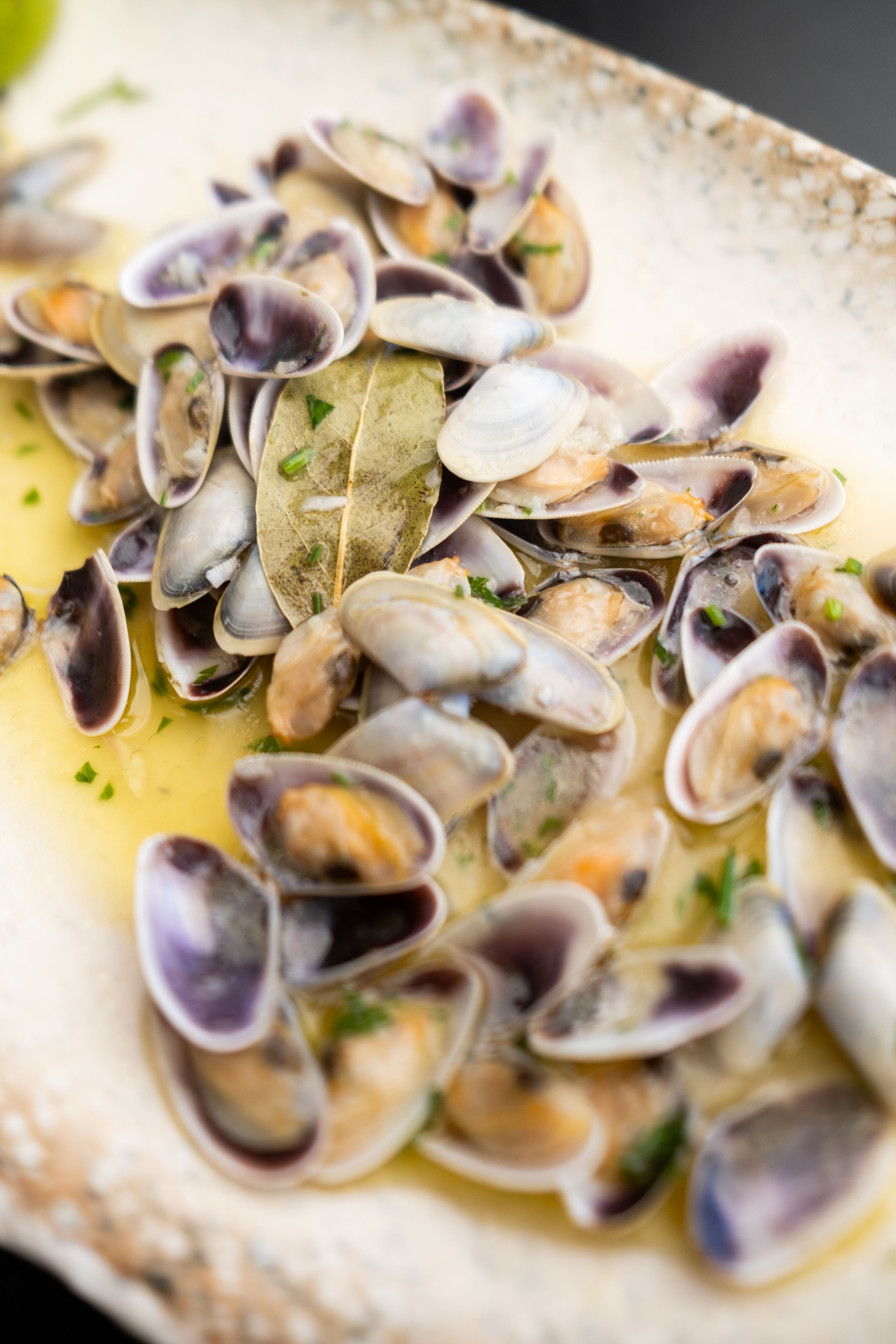
Photo: Filipp Romanovski / Pexels
Portuguese
Amêijoas a Bulhao Pato
The diets react (see scores below)
Common Ingredients
- clams
- garlic
- olive oil
- white wine
- cilantro
- lemon
- salt
Specific recipes may vary.
Incompatible with 5 of 11 diets
Diet Ratings
Amêijoas à Bulhão Pato is primarily clams cooked in olive oil, garlic, white wine, cilantro, and lemon. The core protein (clams) is low in carbs and high in protein, and olive oil is an excellent keto fat. However, white wine introduces a moderate carb concern — a typical serving may use 100-150ml of wine, contributing roughly 2-4g net carbs per serving even after cooking reduction. Clams themselves contain a small amount of glycogen (~2-3g net carbs per 100g), and lemon juice adds a minor carb load. Combined, a standard serving sits in a gray zone: acceptable for many keto practitioners but not a free-pass food. The dish is also moderate in fat rather than high-fat, which is less ideal for keto macros. Portion control is the key variable here.
Strict keto practitioners argue that alcohol-derived carbs from white wine, even in cooked dishes, can disrupt ketosis and should be avoided entirely; they recommend substituting with clam broth or water. Conversely, lazy keto adherents often approve this dish freely, arguing the net carb contribution per serving is negligible.
Amêijoas à Bulhão Pato is a classic Portuguese clam dish. Clams are shellfish — an animal product — making this dish fundamentally incompatible with a vegan diet. All remaining ingredients (garlic, olive oil, white wine, cilantro, lemon, salt) are plant-based, but the clams are the primary ingredient and the defining element of the dish. There is no meaningful vegan debate here: shellfish are animals.
Amêijoas à Bulhão Pato is a classic Portuguese clam dish. Most ingredients are paleo-compliant: clams are an excellent paleo protein source, garlic is approved, olive oil is a preferred paleo fat, cilantro and lemon are fully paleo. However, two ingredients disqualify this dish: white wine (an alcoholic, processed product made from fermented grapes — rated caution on its own, but here used as a cooking ingredient rather than consumed moderately) and salt (explicitly excluded from strict paleo as an added/refined mineral not consumed in meaningful quantities by Paleolithic hunter-gatherers). The combination of added salt and white wine used as a cooking base pushes this dish into avoid territory, though it sits at the higher end of that range. Without these two ingredients, the dish would be a strong approve.
Amêijoas à Bulhão Pato is an excellent Mediterranean diet dish. Clams are shellfish/seafood, aligning perfectly with the diet's emphasis on fish and seafood multiple times per week. The dish is cooked in extra virgin olive oil, which is the cornerstone fat of the Mediterranean diet. All other ingredients — garlic, white wine, cilantro, lemon, and salt — are whole, minimally processed foods consistent with Mediterranean culinary traditions. The dish is low in saturated fat, rich in lean protein and micronutrients, and free of added sugars or refined grains. Portuguese coastal cuisine shares strong overlap with Mediterranean dietary principles, and this dish exemplifies that tradition.
Amêijoas à Bulhão Pato is predominantly plant-based in its preparation. While clams are a carnivore-approved animal product, the dish is cooked in olive oil (a plant oil), white wine (plant-derived alcohol), garlic (plant), cilantro (plant herb), and lemon juice (plant). The carnivore diet excludes all plant foods and plant-derived oils and seasonings. The clams themselves are fine, but the preparation method disqualifies this dish almost entirely. On a strict carnivore diet, clams would need to be prepared with only animal fat and salt.
Amêijoas à Bulhão Pato contains white wine, which is alcohol — a category explicitly excluded from the Whole30 program for the full 30 days. All alcohol is prohibited regardless of the amount used in cooking, as the program does not make exceptions for cooking wine or wine used in recipes. Every other ingredient in this dish (clams, garlic, olive oil, cilantro, lemon, salt) is fully Whole30-compliant, so the dish could be made compliant simply by omitting the white wine or substituting with a splash of compliant broth and lemon juice.
The primary FODMAP concern in this dish is garlic, which is one of the highest-FODMAP ingredients tested by Monash University due to its very high fructan content. Even a small amount of garlic cloves used in cooking releases fructans into the dish, particularly when cooked in a water-based or wine-based liquid (FODMAPs are water-soluble). The white wine also contributes some FODMAP load, though dry white wine is generally low-FODMAP at standard servings (150ml). Clams, olive oil, cilantro, lemon juice, and salt are all low-FODMAP. However, the inclusion of whole garlic cloves — a defining characteristic of Bulhão Pato preparation — makes this dish high-FODMAP and unsuitable during the elimination phase. The dish cannot be meaningfully prepared without garlic while remaining true to its identity.
Amêijoas a Bulhão Pato is a Portuguese clam dish with a generally favorable nutritional profile for DASH. Clams are an excellent lean protein source rich in potassium, magnesium, iron, and B12, and olive oil aligns well with DASH's emphasis on healthy unsaturated fats. Garlic, lemon, cilantro, and white wine (in moderate cooking quantities) add flavor without significant nutritional concern. However, the primary DASH challenge here is sodium: clams are naturally high in sodium (raw clams contain ~500–800mg per 100g), and added salt elevates this further, making the dish potentially problematic for the standard DASH sodium ceiling of 2,300mg/day and especially for the low-sodium DASH limit of 1,500mg/day. The dish also falls into the shellfish category, which DASH permits but the natural sodium load of bivalves requires mindful portioning. White wine contributes minimal calories and negligible sodium. Overall, this is a nutrient-dense, low-saturated-fat dish that fits DASH principles when portioned appropriately and prepared with minimal added salt.
NIH DASH guidelines permit shellfish and lean seafood broadly without singling out clams as problematic, and some DASH-oriented clinicians would approve this dish outright given its excellent micronutrient profile and heart-healthy fats. However, more conservative DASH practitioners note that the naturally high sodium content of clams, compounded by added salt, may push total sodium beyond recommended thresholds, particularly for hypertensive patients on the low-sodium DASH protocol.
Amêijoas a Bulhão Pato is a Portuguese clam dish that aligns very well with Zone Diet principles. Clams are an excellent lean protein source — low in fat, rich in protein, and high in omega-3 fatty acids, making them ideal Zone-favorable protein blocks. Olive oil provides the primary fat component, which is monounsaturated and explicitly recommended by Dr. Sears as the preferred fat source. Garlic, cilantro, and lemon contribute minimal carbohydrates with significant polyphenol and anti-inflammatory benefits, which aligns with Sears' later anti-inflammatory focus. The main Zone consideration is the white wine, which adds some simple carbohydrates and alcohol — both of which Sears flags as less favorable — but in cooking quantities the carbohydrate contribution is modest and much of the alcohol burns off. As a snack, the dish is primarily protein and fat with minimal carbohydrates, so it would need to be paired with a low-glycemic carbohydrate source (e.g., a small serving of vegetables or a piece of fruit) to achieve the 40/30/30 ratio. The dish itself is nearly an ideal Zone protein-fat combination, with the caveat that the carb block needs supplementing.
Amêijoas à Bulhão Pato is a classic Portuguese clam dish with a notably clean and anti-inflammatory ingredient profile. Clams are an excellent source of omega-3 fatty acids, lean protein, zinc, selenium, and vitamin B12 — all nutrients associated with reduced inflammatory markers. Extra virgin olive oil is one of the cornerstone foods of anti-inflammatory eating, rich in oleocanthal (a natural COX inhibitor) and monounsaturated fats. Garlic contains allicin and organosulfur compounds with well-documented anti-inflammatory and immune-modulating effects. Cilantro provides flavonoids and antioxidants. Lemon juice adds vitamin C and polyphenols. The white wine is the one moderately cautionary element — alcohol in general is mildly pro-inflammatory, though the small quantity used in cooking (much of which evaporates) poses minimal concern. There are no refined carbohydrates, seed oils, added sugars, or processed additives. Overall, this dish strongly aligns with the principles of the anti-inflammatory diet and Mediterranean-style eating.
Amêijoas à Bulhão Pato is a classic Portuguese clam dish featuring clams cooked in olive oil, white wine, garlic, cilantro, and lemon. The clams themselves are an excellent lean protein source — a 150g serving provides roughly 20-25g of protein with very low fat — making the core ingredient highly GLP-1 friendly. The preparation is light and easily digestible, with no frying or heavy saturated fats. However, the dish scores in the caution range for several reasons: (1) White wine introduces a meaningful alcohol content. Even when cooked, a portion of alcohol remains, and GLP-1 medications interact with alcohol metabolism and increase intoxication sensitivity. For a snack-category dish, this is a notable concern. (2) Olive oil, while a healthy unsaturated fat, contributes fat that can worsen nausea or reflux in GLP-1 patients, especially if the dish is prepared generously. (3) The category is listed as 'snack,' but clams in a broth-based preparation work better as a small appetizer — portion control is achievable, which is a positive. (4) Garlic in significant quantities may trigger reflux or bloating in some GLP-1 patients with heightened GI sensitivity. On balance, this is a nutritionally sound, protein-rich, low-saturated-fat dish that falls short of 'approve' primarily due to the alcohol in the white wine and the potential for olive oil quantity to vary significantly by preparation. A version made with reduced wine (or wine cooked off thoroughly) and moderate olive oil would score higher.
Some GLP-1-focused dietitians would approve this dish outright, arguing that cooking wine burns off sufficient alcohol and that the lean protein and micronutrient profile of clams (zinc, B12, iron) make it an ideal small-portion protein source. Others are stricter about any alcohol-containing ingredient given heightened alcohol sensitivity reported by GLP-1 patients, which would push this toward a lower caution or avoid rating.
*See how scores were generated at our methodology page.
Nutritional profile
Six traits that cut across every diet.
Fiber & Plants
How much whole-plant food and fiber it delivers.
Healthy Fats
The quality of its fats (unsaturated, omega-3).
Whole / Unprocessed
How close it is to its natural, unprocessed form.
Gut Gentle
How easy it is on digestion (low FODMAP, few irritants).
Low Glycemic
How little it spikes your blood sugar.
Protein Density
How much protein it packs per calorie.
Controversy Index
Higher controversy = more disagreement between diets.
Diet-Specific Tips
 Keto — 6/10
View tips
- Clams are low net carb (~2-3g/100g) but not zero
- White wine adds moderate carbs; cooking reduces but does not eliminate them
- Olive oil is a high-quality keto-friendly fat
- Lemon juice contributes minor net carbs
- Dish is protein and fat forward but not high-fat by keto standards
- Portion size heavily determines keto compatibility
 Mediterranean — 9/10
View tips
- Clams are an excellent seafood protein source, encouraged multiple times weekly
- Extra virgin olive oil is the primary cooking fat — a Mediterranean diet cornerstone
- Garlic, lemon, cilantro, and white wine are whole, traditional Mediterranean flavor ingredients
- No processed foods, added sugars, or refined grains
- Minimal saturated fat content
- Portuguese coastal tradition closely mirrors Mediterranean dietary patterns
- White wine is used in cooking, contributing minimal alcohol per serving
 DASH — 6/10
View tips
- Clams are rich in potassium, magnesium, and lean protein — core DASH nutrients
- Olive oil provides heart-healthy monounsaturated fats consistent with DASH
- Clams are naturally high in sodium (~500–800mg/100g), limiting portion tolerance on low-sodium DASH
- Added salt further elevates sodium load; reducing or omitting it improves DASH compatibility
- No saturated fat, added sugar, or heavily processed ingredients
- White wine used in cooking contributes negligible sodium or fat concerns
- Dish is nutrient-dense and low in saturated fat, aligning with DASH principles outside the sodium issue
 Zone — 8/10
View tips
- Clams are a lean, omega-3-rich Zone-favorable protein source
- Olive oil is the gold-standard Zone fat — monounsaturated and anti-inflammatory
- Garlic, cilantro, and lemon are low-glycemic and polyphenol-rich, supporting Sears' anti-inflammatory goals
- White wine adds modest simple carbohydrates and alcohol, a minor Zone concern but minimal in cooking quantities
- As a snack, the dish is low in carbohydrates and would need a low-GI carb accompaniment to balance the 40/30/30 ratio
- No high-glycemic ingredients, processed components, saturated fat, or trans fat present
 Anti-Inflammatory — 8/10
View tips
- Clams are rich in omega-3 fatty acids, selenium, zinc, and B12 — all anti-inflammatory nutrients
- Extra virgin olive oil provides oleocanthal and monounsaturated fats with established anti-inflammatory properties
- Garlic contains allicin and organosulfur compounds that suppress NF-κB and reduce CRP
- Cilantro and lemon juice contribute antioxidant polyphenols and vitamin C
- White wine used in cooking is a minor concern; alcohol largely evaporates and the quantity is small
- No refined carbohydrates, seed oils, trans fats, or artificial additives
- Aligns closely with Mediterranean and Dr. Weil's Anti-Inflammatory Food Pyramid principles
 GLP-1 Friendly — 6/10
View tips
- Clams are a high-quality lean protein source (~20-25g protein per 150g serving) with low fat — strongly positive
- White wine introduces residual alcohol
- Olive oil is a healthy unsaturated fat but contributes to fat load; quantity in preparation significantly affects the rating
- No fried components, no saturated fat from meat, no refined carbohydrates — digestibility is generally good
- Garlic may trigger reflux or GI discomfort in some GLP-1 patients with heightened sensitivity
- Lemon and cilantro add micronutrient value and flavor without caloric or digestive concern
- Small-portion snack format is appropriate for GLP-1 eating patterns
- Low fiber content — clams provide minimal fiber, and there are no vegetables or legumes in this preparation