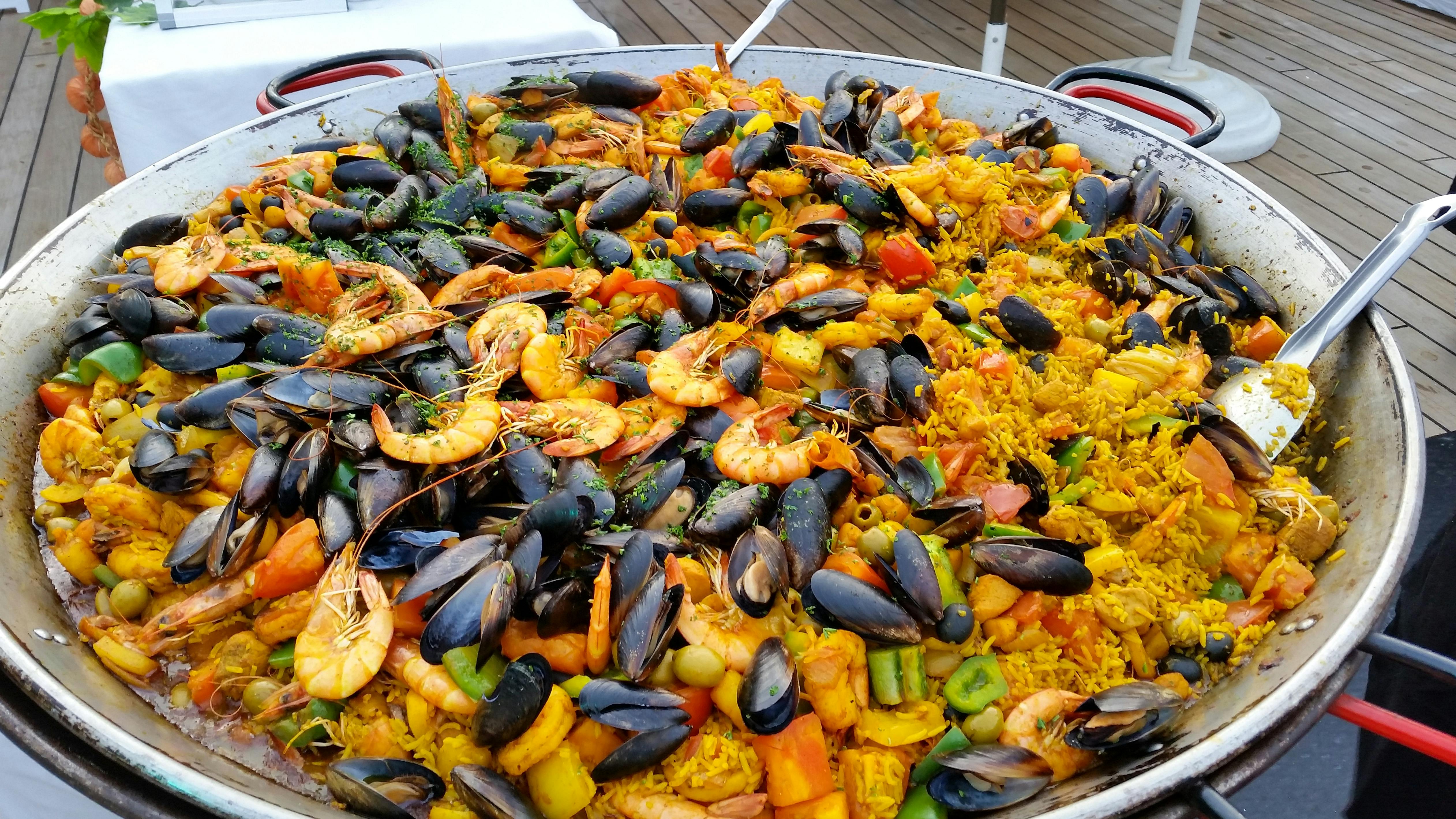
Photo: Brenda Holland / Pexels
Portuguese
Arroz de Marisco
The diets react (see scores below)
Common Ingredients
- rice
- shrimp
- clams
- mussels
- tomato
- onion
- garlic
- white wine
- cilantro
- olive oil
Specific recipes may vary.
Incompatible with 6 of 11 diets
Diet Ratings
Arroz de Marisco is a Portuguese seafood rice dish where rice is the primary base ingredient and carbohydrate source. A standard serving contains approximately 45-60g of net carbs from rice alone, which meets or exceeds the entire daily carb allowance for ketogenic dieters. While the seafood components (shrimp, clams, mussels) are excellent keto proteins, and olive oil, garlic, onion, tomato, and white wine are minor contributors, rice is fundamentally incompatible with ketosis. There is no practical portion size that makes this dish keto-friendly while remaining a recognizable serving of the dish. The dish cannot be modified without losing its essential character.
Arroz de Marisco is a traditional Portuguese seafood rice dish built entirely around animal products. The primary protein is shrimp, and the dish also contains clams and mussels — all of which are seafood and therefore excluded under vegan dietary rules. There are no plant-based substitutes implied in this recipe, and the dish's identity is fundamentally defined by its seafood content. The remaining ingredients (rice, tomato, onion, garlic, white wine, cilantro, olive oil) are all plant-based, but they serve merely as supporting elements for the animal proteins.
Arroz de Marisco is disqualified primarily by its central ingredient: rice. Rice is a grain, and all grains are excluded from the paleo diet due to their anti-nutrient content (lectins, phytic acid) and absence from the Paleolithic food supply. While the seafood components (shrimp, clams, mussels) are excellent paleo proteins, and supporting ingredients like tomato, onion, garlic, cilantro, and olive oil are fully paleo-compliant, rice is not a minor or optional element here — it is the defining base of the dish. White wine is a minor caution (alcohol is debated), but it is not the disqualifying factor. The dish cannot be considered paleo in any mainstream interpretation due to rice being a non-negotiable grain exclusion.
Arroz de Marisco is a Portuguese seafood rice dish that aligns strongly with Mediterranean diet principles. The primary proteins are shrimp, clams, and mussels — all excellent seafood sources encouraged 2-3 times weekly. The dish is built on a foundation of Mediterranean staples: olive oil, tomato, onion, and garlic. White wine is a traditional cooking ingredient consistent with Mediterranean culinary traditions. The main consideration is the use of white rice rather than a whole grain, which is common in traditional Portuguese cooking but sits below the preferred whole grain standard of modern Mediterranean diet guidelines.
Traditional Portuguese cuisine routinely uses white rice as a staple carbohydrate, and some Mediterranean diet interpretations honor regional whole-food traditions over strict whole-grain requirements. Modern clinical guidelines (e.g., Willett et al. Oldways framework) would prefer brown rice or whole-grain alternatives to maximize the dish's nutritional profile.
Arroz de Marisco is fundamentally incompatible with the carnivore diet. While the seafood components (shrimp, clams, mussels) are carnivore-approved animal proteins, the dish is built around rice as its primary base — a grain that is strictly excluded on any tier of the carnivore diet. Beyond the rice, the recipe includes multiple plant-based ingredients: tomato, onion, garlic, cilantro, olive oil, and white wine. This dish is essentially a plant-heavy seafood rice stew, making it a clear avoid regardless of which carnivore protocol is followed.
Arroz de Marisco contains rice, which is explicitly excluded on the Whole30 program as a grain. Despite the seafood (shrimp, clams, mussels), vegetables (tomato, onion, garlic), and other ingredients (olive oil, cilantro, white wine) being compliant or acceptable, rice is a core, non-negotiable excluded ingredient. The dish cannot be made compliant without fundamentally changing its identity — rice is not an incidental ingredient but the defining base of this Portuguese seafood rice dish.
Arroz de Marisco contains three high-FODMAP ingredients that make it unsuitable during the elimination phase regardless of serving size. Onion is one of the highest-FODMAP foods tested by Monash University, containing significant fructans even in small amounts. Garlic cloves are similarly high in fructans and are rated 'avoid' at any culinary quantity. White wine contains fructose and can be problematic at typical serving amounts used in cooking. These three ingredients are structural to the dish — not optional garnishes — and cannot be present in low-FODMAP quantities in a standard preparation of this recipe. Rice, shrimp, clams, mussels, tomato (in moderate amounts), cilantro, and olive oil are all low-FODMAP and would otherwise make this dish a good candidate, but the onion and garlic alone disqualify it entirely during elimination phase.
Arroz de Marisco is a Portuguese seafood rice dish with a solid nutritional profile that aligns well with several DASH principles. The lean seafood proteins (shrimp, clams, mussels) are excellent DASH-friendly choices, rich in potassium and magnesium. Tomatoes, onion, and garlic contribute beneficial nutrients and fiber. Olive oil is the recommended fat in DASH. However, the dish earns a 'caution' rating for a few reasons: (1) shellfish like clams and mussels are naturally moderate in sodium, and the combined sodium load of multiple shellfish varieties in a single dish can be significant; (2) white wine, while used in modest cooking quantities, adds some considerations; (3) rice is typically white rice in this traditional dish rather than whole grain, which is less emphasized in DASH; (4) restaurant or traditional preparations may include added salt beyond what home cooking would suggest. The overall dish is far from processed or high in saturated fat, but the cumulative sodium from shellfish and preparation warrants portion awareness.
Some DASH-oriented clinicians would rate this dish more favorably, noting that the shellfish sodium is naturally occurring (not added sodium) and accompanied by high potassium content that offsets blood pressure impact — NIH DASH guidelines emphasize the sodium-to-potassium ratio, which this dish handles reasonably well. Conversely, stricter low-sodium DASH adherents (<1,500mg/day) may classify this closer to 'avoid' if prepared with salted broth or heavy-handed seasoning.
Arroz de Marisco is a Portuguese seafood rice dish that has genuine Zone-friendly elements but is structurally misaligned due to its rice-forward nature. The protein sources — shrimp, clams, and mussels — are excellent lean proteins that Zone strongly favors, providing high-quality protein with minimal fat and no saturated fat concerns. Olive oil as the cooking fat is ideal (monounsaturated). Tomato, onion, garlic, and cilantro are all favorable low-glycemic vegetables with polyphenol benefits that Sears actively promotes. However, the dish is built around white rice, which is a high-glycemic carbohydrate that Zone classifies as 'unfavorable.' In traditional preparation, rice dominates the macro profile, skewing carbohydrate ratio upward and elevating the glycemic load significantly. The white wine adds a small amount of sugar/carbs but is negligible in cooking quantities. To bring this into Zone balance, one would need to dramatically reduce the rice portion (perhaps 1/3 cup cooked per serving) and ensure the seafood component is substantial — roughly 3-4 oz shrimp/shellfish per serving — which is not how this dish is typically served. In its standard restaurant or home preparation, the carbohydrate load from rice likely exceeds Zone targets and the protein-to-carb ratio is inverted from Zone ideals.
Some Zone practitioners, particularly those following Sears' later writings that emphasize anti-inflammatory eating, would note that the extraordinary omega-3 and polyphenol profile of this dish (shellfish, olive oil, tomato, garlic, cilantro) offsets the rice concern in moderate portions. Sears' anti-inflammatory framework in 'Toxic Fat' and 'The Zone Diet' acknowledges that whole-meal context matters, and a small serving of this dish with extra seafood could approximate Zone ratios reasonably well. The dish could be rated more favorably (score 6) if prepared with reduced rice and generous shellfish.
Arroz de Marisco is a Portuguese seafood rice dish with a strong anti-inflammatory profile. Shrimp, clams, and mussels provide lean protein along with zinc, selenium, and modest omega-3 fatty acids — shellfish are generally well-regarded in anti-inflammatory nutrition. Tomatoes contribute lycopene and other antioxidants, onion and garlic deliver quercetin and allicin (both associated with reduced inflammatory markers), and cilantro adds polyphenols. Olive oil is a cornerstone anti-inflammatory fat, rich in oleocanthal and monounsaturated fatty acids. White wine is used in cooking, meaning alcohol largely evaporates, leaving flavor compounds; this is not a meaningful concern. The main limiting factor is white rice, a refined grain with a higher glycemic index that offers less fiber and fewer nutrients than brown or whole-grain rice. However, rice is diluted here by a large volume of anti-inflammatory ingredients and seafood, and the overall dish is nutrient-dense relative to the refined carbohydrate load. This is a Mediterranean-style preparation that aligns well with anti-inflammatory dietary principles.
Arroz de Marisco is a Portuguese seafood rice dish with several GLP-1-friendly strengths: shrimp, clams, and mussels are lean, high-protein shellfish with excellent protein density per calorie. Tomato, onion, and garlic add fiber and micronutrients. Olive oil provides unsaturated fat in typically moderate amounts. However, the dish is rice-forward by design — rice is the primary volume component and a refined or semi-refined carbohydrate with low fiber and low protein density per calorie. Traditional recipes are also brothy and generous in portion, meaning the rice-to-protein ratio may be unfavorable in a standard restaurant serving. White wine contributes alcohol, which is generally flagged as a concern for GLP-1 patients, though the cooking process reduces but does not eliminate alcohol content. The dish is not fried, not high in saturated fat, and is easy to digest, which works in its favor. A home-prepared version with increased shellfish, reduced rice, and olive oil kept to 1–2 teaspoons would score higher (7–8). A restaurant portion with rice-heavy plating and generous oil would sit lower in the caution range.
Some GLP-1-focused dietitians would rate this higher, arguing that shellfish-based dishes are among the best restaurant options available — lean protein, no heavy sauces, no frying — and that patients can simply leave rice on the plate. Others flag rice-dominant dishes more firmly, noting that GLP-1 patients eating small volumes should prioritize every bite for protein and fiber rather than refined starch, making the rice component a meaningful opportunity cost.
*See how scores were generated at our methodology page.
Nutritional profile
Six traits that cut across every diet.
Fiber & Plants
How much whole-plant food and fiber it delivers.
Healthy Fats
The quality of its fats (unsaturated, omega-3).
Whole / Unprocessed
How close it is to its natural, unprocessed form.
Gut Gentle
How easy it is on digestion (low FODMAP, few irritants).
Low Glycemic
How little it spikes your blood sugar.
Protein Density
How much protein it packs per calorie.
Controversy Index
Higher controversy = more disagreement between diets.
Diet-Specific Tips
 Mediterranean — 8/10
View tips
- Abundant seafood (shrimp, clams, mussels) aligns with 2-3x weekly fish/seafood recommendation
- Olive oil as primary fat is a core Mediterranean principle
- Tomato, onion, garlic provide strong plant-based foundation
- White rice is traditional but falls short of whole grain preference
- No processed ingredients, added sugars, or red meat
- White wine used in cooking is consistent with Mediterranean culinary tradition
 DASH — 6/10
View tips
- Lean seafood proteins (shrimp, clams, mussels) align well with DASH lean protein guidelines
- Natural sodium content in shellfish is moderate to high and accumulates across multiple varieties
- Olive oil is DASH-approved; no saturated or tropical fats present
- White rice rather than whole grain is less optimal for DASH fiber goals
- Tomatoes, onion, and garlic contribute potassium, fiber, and beneficial phytonutrients
- No added sugar, processed ingredients, or high saturated fat — a relatively clean ingredient list
- Sodium management is highly preparation-dependent (home vs. restaurant, added salt vs. none)
 Zone — 5/10
View tips
- White rice is a high-glycemic 'unfavorable' carbohydrate in Zone terminology — the primary structural concern
- Shrimp, clams, and mussels are ideal Zone lean proteins with excellent amino acid profiles
- Olive oil as cooking fat is the gold standard for Zone monounsaturated fat
- Tomato, onion, garlic, cilantro are all Zone-favorable low-glycemic vegetables with polyphenol benefits
- Traditional preparation is rice-heavy, making the carb-to-protein ratio difficult to balance without significant portion modification
- Dish can be Zone-adapted by reducing rice to ~1/3 cup cooked and ensuring 3-4 oz seafood per serving
- Omega-3 content from shellfish supports Sears' anti-inflammatory Zone principles
 Anti-Inflammatory — 8/10
View tips
- Shrimp, clams, and mussels provide lean protein, selenium, zinc, and modest omega-3s
- Olive oil contributes oleocanthal and anti-inflammatory monounsaturated fats
- Garlic and onion supply allicin and quercetin, both associated with reduced CRP
- Tomatoes provide lycopene and carotenoids
- Cilantro adds polyphenols
- White rice is a refined grain with higher glycemic index — less favorable than whole grains
- Alcohol in white wine largely cooks off, minimizing concern
- Overall dish is Mediterranean in character, aligned with anti-inflammatory eating patterns
 GLP-1 Friendly — 6/10
View tips
- Shrimp, clams, and mussels are lean, low-fat, high-protein shellfish — strong GLP-1 alignment
- Rice is the dominant ingredient by volume but low in protein and fiber — dilutes nutritional density per calorie
- Olive oil is a preferred unsaturated fat but quantity matters — home preparation allows better control
- White wine used in cooking: alcohol content reduced but not eliminated — minor concern for GLP-1 patients
- No frying, no heavy cream or saturated fat base — easy to digest
- Brothy, high water content preparation supports hydration
- Tomato, onion, garlic contribute micronutrients and modest fiber
- Restaurant portions tend to be rice-heavy; home preparation with shellfish-forward ratios improves the score