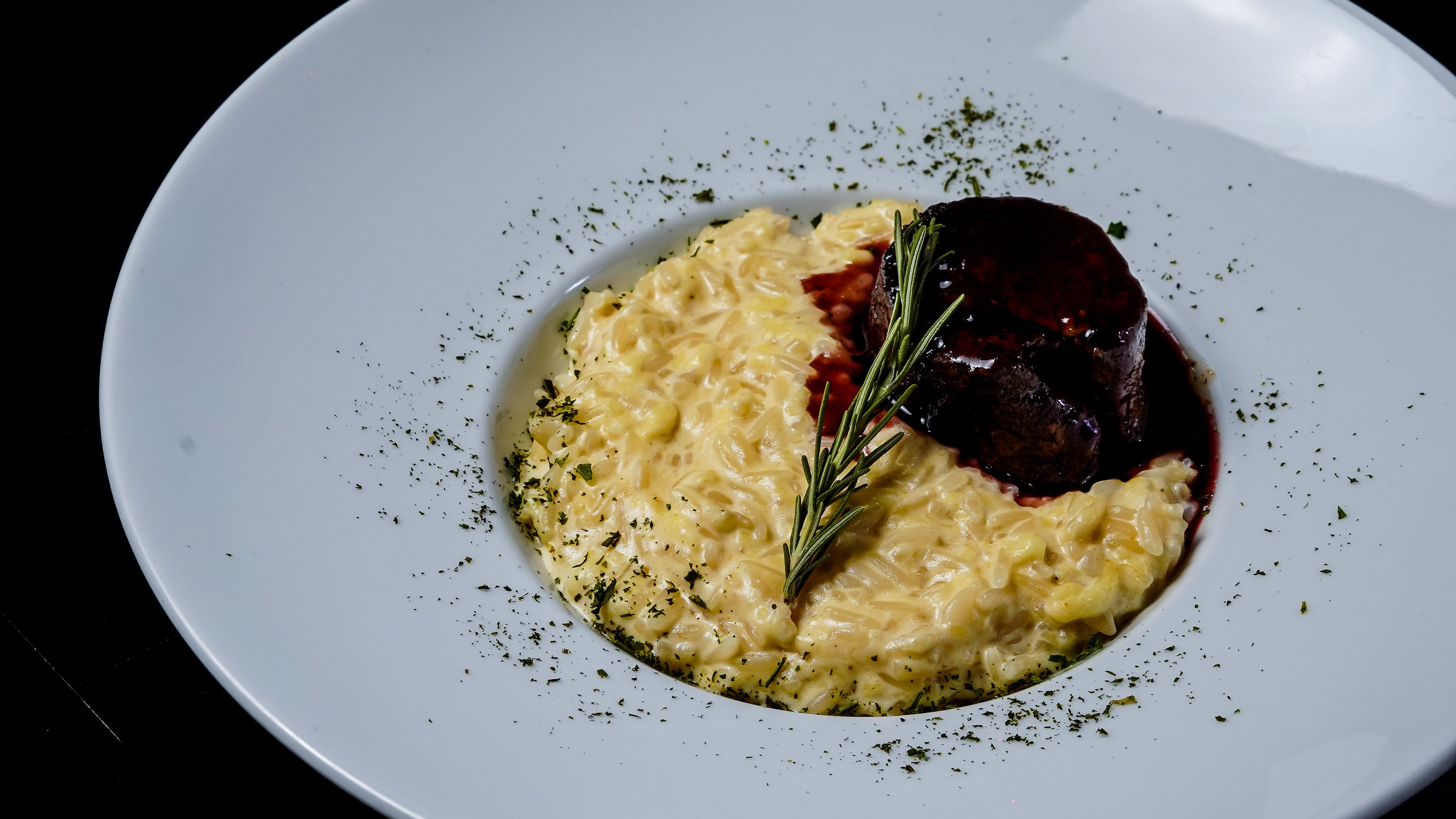
Photo: pedro furtado / Pexels
Portuguese
Arroz Doce
The diets react (see scores below)
Common Ingredients
- rice
- milk
- sugar
- egg yolks
- lemon zest
- cinnamon
- salt
- butter
Specific recipes may vary.
Incompatible with 9 of 11 diets
Diet Ratings
Arroz Doce is a Portuguese rice pudding made primarily from rice and sugar — two of the most keto-incompatible ingredients possible. Rice is a high-glycemic grain with approximately 45g of net carbs per cooked cup, and added sugar compounds the problem further. A standard serving of this dessert would contain well over 50g of net carbs on its own, instantly breaking ketosis. The egg yolks and butter are keto-friendly, and lemon zest, cinnamon, and salt are negligible, but they cannot offset the dominant carbohydrate load from rice and sugar. There is no meaningful way to consume this dish within ketogenic macros.
Arroz Doce is a Portuguese rice pudding that contains multiple animal-derived ingredients: milk (dairy), egg yolks, and butter. All three are unambiguously non-vegan under any mainstream vegan framework. There is no grey area here — these are direct animal products, not trace cross-contamination or ethically contested ingredients.
Arroz Doce is a Portuguese rice pudding that is fundamentally incompatible with the paleo diet. The dish contains multiple core non-paleo ingredients: rice is a grain and strictly excluded from all mainstream paleo frameworks; milk is dairy and excluded; refined sugar is explicitly prohibited; and salt is an excluded additive. Butter is also dairy, though ghee (clarified butter) occupies a gray area, regular butter does not. The egg yolks, lemon zest, and cinnamon are the only paleo-compliant ingredients. With at least four hard 'avoid' ingredients forming the structural backbone of the dish, no meaningful paleo substitution is possible while retaining the dish's identity.
Arroz Doce is a traditional Portuguese rice pudding built around refined white rice, added sugar, butter, milk, and egg yolks. While some individual ingredients (eggs, dairy, lemon zest, cinnamon) are acceptable in the Mediterranean diet in moderation, the dish as a whole is a dessert/snack centered on refined carbohydrates and added sugar — two categories the Mediterranean diet explicitly minimizes. Butter replaces olive oil as the fat source, dairy is present in more than moderate amounts, and the sugar content is high. This combination places it firmly in the 'avoid' category from a strict Mediterranean diet standpoint.
Some Mediterranean diet interpreters note that traditional desserts from Mediterranean-adjacent regions like Portugal are consumed in small portions and only on special occasions, and that the use of whole-food dairy and eggs tempers the concern. A small occasional serving might be tolerated within a flexible Mediterranean eating pattern, much as Greek rizogalo (a similar rice pudding) appears occasionally in traditional Greek cuisine.
Arroz Doce is a Portuguese rice pudding that is fundamentally incompatible with the carnivore diet. The dish is primarily composed of rice (a grain), sugar (processed plant-derived sweetener), lemon zest (plant), and cinnamon (plant spice) — all strictly excluded on carnivore. While it does contain some animal-derived ingredients (milk, egg yolks, butter), these are minor components in a dish whose base is entirely plant-derived carbohydrates. No amount of egg yolks or butter rescues a dish built on rice and sugar. This is a dessert/snack with no place on any tier of the carnivore diet.
Arroz Doce (Portuguese rice pudding) contains multiple excluded ingredients. Rice is a grain and explicitly banned on Whole30. Milk is dairy and excluded. Sugar (added sugar) is explicitly excluded. Butter is regular dairy butter (not ghee/clarified butter), which is also excluded. The dish fails on at least four separate Whole30 rules simultaneously, making it clearly incompatible with the program.
Arroz Doce is a Portuguese rice pudding made with a significant quantity of cow's milk as a primary ingredient. Milk is high in lactose, a key FODMAP disaccharide. A standard serving of this dessert/snack would contain a substantial amount of milk (typically 250–500ml per recipe, yielding servings with meaningful lactose content), well above Monash's low-FODMAP threshold of approximately 30ml regular cow's milk. The remaining ingredients — white rice (low-FODMAP), sugar (low-FODMAP at normal quantities), egg yolks (low-FODMAP), lemon zest (low-FODMAP), cinnamon (low-FODMAP at small amounts), salt (low-FODMAP), and butter (low-FODMAP as it is very low in lactose) — are individually acceptable. However, the large volume of regular milk is the disqualifying factor. During the elimination phase, this dish should be avoided unless reformulated with lactose-free milk, which would make it low-FODMAP.
Arroz Doce is a Portuguese sweet rice pudding made with white rice, whole milk, sugar, egg yolks, and butter — a dessert with several ingredients that conflict with DASH principles. The significant added sugar content directly contradicts DASH's recommendation to limit sweets. Butter contributes saturated fat, which DASH limits. Egg yolks add dietary cholesterol and saturated fat. Whole milk, rather than the low-fat dairy DASH emphasizes, is the likely base. White rice is a refined grain rather than the whole grain DASH prefers. On the positive side, lemon zest and cinnamon are DASH-friendly, and sodium content is low (pinch of salt). The dish is not inherently high in sodium, and when consumed as a small, occasional treat, it doesn't represent a catastrophic DASH violation — but its sugar, saturated fat, refined grain, and full-fat dairy profile make it a food to limit rather than embrace on the DASH plan.
NIH DASH guidelines explicitly limit added sugars and sweets to ≤5 servings/week and specify low-fat dairy, which would classify this dessert as a food to minimize. However, some updated clinical DASH interpretations note that small-portion, homemade desserts using whole foods (no ultra-processing, no trans fats, modest sodium) occupy a gray zone — particularly for non-hypertensive individuals using DASH for general cardiovascular health rather than strict blood pressure management.
Arroz Doce is a Portuguese rice pudding dessert that is fundamentally incompatible with Zone Diet principles. It is built almost entirely from high-glycemic, unfavorable carbohydrates: white rice and added sugar are the dominant ingredients, both of which Dr. Sears explicitly categorizes as foods to avoid or strictly minimize. The dish has no lean protein source to anchor a Zone block ratio, and the fat comes primarily from butter and egg yolks — saturated fat sources that Zone discourages. The macronutrient profile is skewed heavily toward high-glycemic carbohydrates with minimal protein and the wrong type of fat, making it essentially impossible to balance into a Zone-compliant meal without fundamentally changing what the dish is. Even as a small snack portion, the glycemic load from the sugar-rice combination would spike insulin, directly opposing the Zone's core hormonal management goal. Cinnamon and lemon zest are the only Zone-friendly elements, offering polyphenol value, but they are minor garnishes with no meaningful macronutrient impact.
Arroz Doce is a Portuguese rice pudding made primarily from white rice, whole milk, added sugar, egg yolks, butter, lemon zest, and cinnamon. From an anti-inflammatory perspective, the profile is largely mixed-to-negative. White rice is a refined carbohydrate with a high glycemic index, contributing to blood sugar spikes that promote inflammatory signaling. Added sugar is a clear pro-inflammatory ingredient, and butter adds saturated fat, both of which are in the 'limit' category. Egg yolks and whole milk add further saturated fat and modest amounts of arachidonic acid. On the positive side, cinnamon is a well-regarded anti-inflammatory spice with research support for modulating blood sugar and reducing inflammatory markers, and lemon zest provides some polyphenols and flavonoids. However, these beneficial ingredients appear in small, garnish-level quantities relative to the pro-inflammatory base of refined starch, sugar, butter, and full-fat dairy. This dish is essentially a dessert despite being categorized as a snack, and its overall macronutrient and ingredient profile tilts pro-inflammatory. Occasional consumption is unlikely to cause harm, but it does not align well with anti-inflammatory dietary principles.
Arroz Doce is a Portuguese rice pudding made primarily from white rice, whole milk, sugar, egg yolks, and butter. It is essentially a dessert being consumed as a snack, and it fails on nearly every GLP-1 dietary priority. Protein content is negligible — rice, milk, and egg yolks in typical recipe proportions deliver very little protein per serving relative to caloric load. Fiber is near zero, as white rice is a refined grain with minimal fiber content. Sugar is a primary ingredient, contributing empty calories and a glycemic spike that is particularly counterproductive for GLP-1 patients managing blood sugar and appetite. Butter and egg yolks add saturated fat, which worsens GLP-1 side effects including nausea, bloating, and reflux. The dish is calorie-dense relative to its nutritional value — the opposite of what GLP-1 patients need when appetite is suppressed and every calorie must count. Slowed gastric emptying means this high-sugar, moderate-fat dish will sit in the stomach longer, increasing the likelihood of nausea and discomfort. There is no meaningful redeeming nutritional feature for a GLP-1 patient context.
*See how scores were generated at our methodology page.
Nutritional profile
Six traits that cut across every diet.
Fiber & Plants
How much whole-plant food and fiber it delivers.
Healthy Fats
The quality of its fats (unsaturated, omega-3).
Whole / Unprocessed
How close it is to its natural, unprocessed form.
Gut Gentle
How easy it is on digestion (low FODMAP, few irritants).
Low Glycemic
How little it spikes your blood sugar.
Protein Density
How much protein it packs per calorie.
Controversy Index
Higher controversy = more disagreement between diets.
Diet-Specific Tips
 DASH — 4/10
View tips
- High added sugar content conflicts with DASH's limit on sweets
- Butter contributes saturated fat, which DASH restricts
- Whole milk likely used instead of DASH-preferred low-fat dairy
- White rice is a refined grain, not the whole grain DASH emphasizes
- Egg yolks add saturated fat and cholesterol
- Low sodium content is a modest positive
- No ultra-processed ingredients; simple whole-food preparation
- Small portion size could make occasional consumption acceptable within DASH framework
 Anti-Inflammatory — 4/10
View tips
- White rice — refined carbohydrate, high glycemic index, promotes blood sugar spikes
- Added sugar — direct pro-inflammatory ingredient, raises insulin and inflammatory cytokines
- Butter — saturated fat, recommended to limit on anti-inflammatory diets
- Whole milk — full-fat dairy, moderate saturated fat content
- Egg yolks — contain some arachidonic acid; acceptable in moderation
- Cinnamon — anti-inflammatory spice, modest blood sugar regulation benefit
- Lemon zest — small but positive contribution of polyphenols and flavonoids
- No omega-3s, fiber, or meaningful antioxidant sources in the base recipe