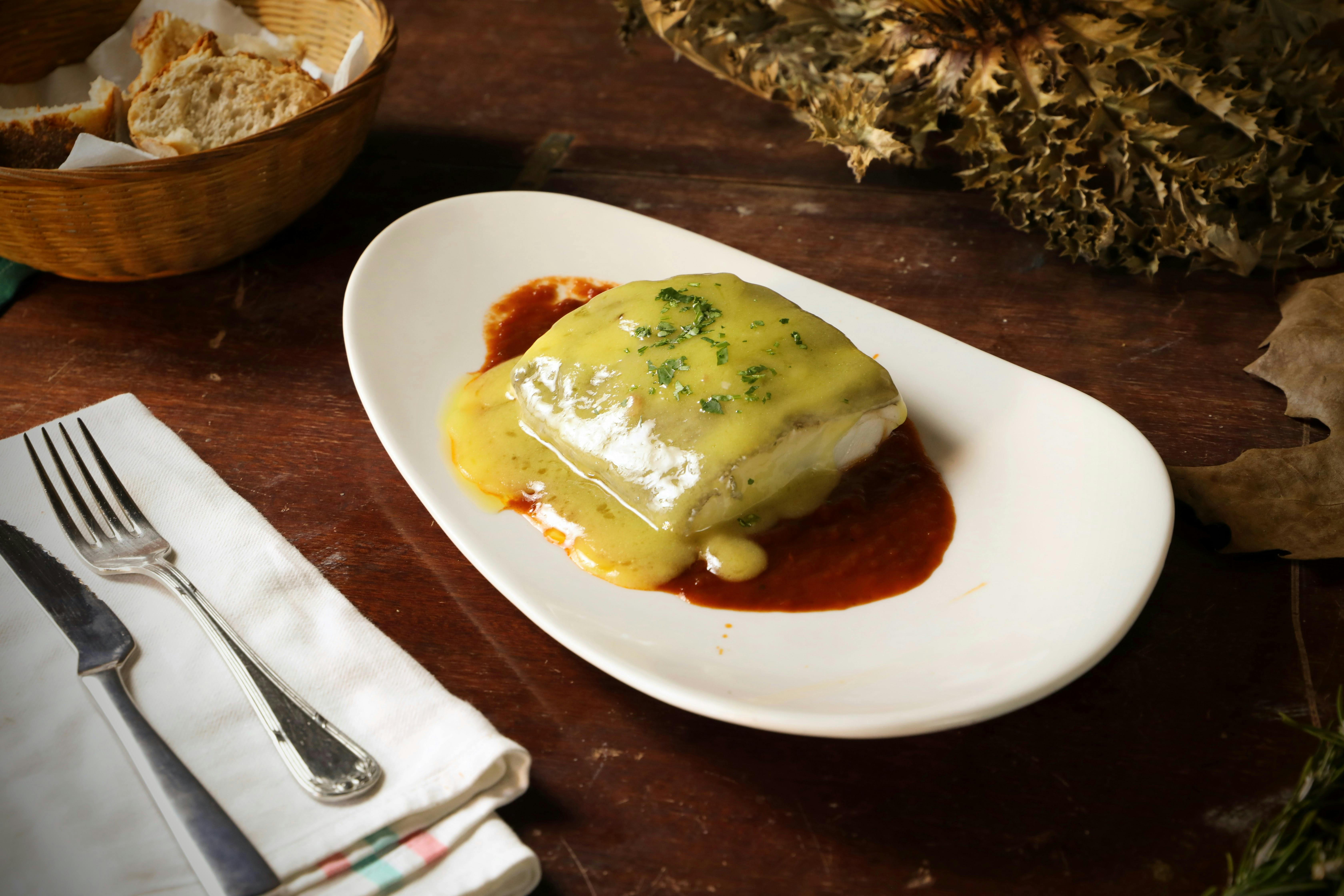
Photo: José Antonio Otegui Auzmendi / Pexels
Portuguese
Francesinha
The diets react (see scores below)
Common Ingredients
- bread
- ham
- linguica
- steak
- sausage
- cheese
- tomato
- beer
- egg
Specific recipes may vary.
Incompatible with 11 of 11 diets
Diet Ratings
Francesinha is fundamentally incompatible with ketogenic eating. The dish is built on a base of thick bread slices (high-carb grain), and the sauce contains beer — both are major keto disqualifiers. The bread alone typically contributes 30-40g of net carbs per serving, and the beer-based tomato sauce adds additional carbohydrates from both the beer and tomatoes. While the protein fillings (ham, linguiça, steak, sausage) and cheese are individually keto-friendly, the structural components of the dish make it impossible to consume in its traditional form without completely destroying ketosis. There is no meaningful portion reduction that would make this dish acceptable — removing the bread and beer sauce would mean it is no longer a Francesinha.
Francesinha is a Portuguese sandwich containing multiple animal products, making it entirely incompatible with a vegan diet. The dish contains ham, linguiça (pork sausage), steak, and sausage (all meat products), cheese and egg (dairy and animal-derived), all layered on bread and smothered in a beer-tomato sauce. There is virtually no vegan-friendly component beyond the bread, tomato, and beer. This is one of the most animal-product-dense dishes in Portuguese cuisine.
Francesinha is a Portuguese sandwich that is fundamentally incompatible with the paleo diet. The dish is built on bread (a grain product), which is an immediate disqualifier. It also contains cheese (dairy), beer (a grain-based alcohol), and processed meats such as ham, linguiça, and sausage, which typically contain added salt, nitrates, and other preservatives. Nearly every core component violates paleo principles. The only paleo-compliant ingredients are the steak, egg, and tomato. This dish is not salvageable in its traditional form.
Francesinha is a Porto street food specialty that stacks multiple processed and cured meats (ham, linguica, sausage, steak) between refined white bread, topped with melted cheese and a beer-based sauce, often crowned with a fried egg. Nearly every component contradicts Mediterranean diet principles: multiple servings of red and processed meats in one dish, refined bread, high saturated fat from cheese and processed meats, and an alcohol-based sauce. The overall dish is calorie-dense, heavily meat-centric, and relies on processed ingredients. While Portugal is a Mediterranean-adjacent cuisine, Francesinha is an industrial-era comfort food that bears little resemblance to traditional Mediterranean dietary patterns. Even occasional consumption represents a significant departure from the diet's core principles.
Francesinha is fundamentally incompatible with the carnivore diet. While it contains several animal-derived components (steak, ham, linguiça, sausage, egg, cheese), the dish is built around bread as its structural base and includes a tomato-beer sauce — both major plant-based and grain-based disqualifiers. Bread is a grain product, tomato is a plant food, and beer is a fermented grain beverage. These core components make this dish entirely off-limits on a carnivore diet regardless of the animal proteins present. The carnivore-compatible ingredients (meats, egg, cheese) are heavily outweighed by the disqualifying plant and grain elements that are central to the dish's identity, not incidental additives.
Francesinha is a Portuguese sandwich loaded with multiple Whole30-excluded ingredients. Bread is a grain-based product explicitly excluded. Beer is both alcohol and grain-based — doubly excluded. Cheese is dairy, also excluded. The dish is fundamentally a sandwich (bread-based) which falls directly into the 'no recreating baked goods/junk food' category even if other ingredients were compliant. With at least three major excluded categories present (grains/bread, alcohol/beer, dairy/cheese), this dish cannot be made Whole30-compliant without being an entirely different dish.
Francesinha is a Portuguese sandwich that contains multiple high-FODMAP ingredients making it essentially incompatible with the low-FODMAP elimination phase. The bread is standard wheat bread, which is high in fructans. The cheese sauce or melted cheese is typically made with processed or melted cheeses that may contain lactose. The beer-based sauce contains wheat (high fructans). Linguica and other sausages often contain garlic and onion as key seasonings, both of which are high in fructans. The tomato-based sauce component may also contain onion and garlic. While some individual components like steak and egg are inherently low-FODMAP, the cumulative FODMAP load from wheat bread, beer, processed sausages with garlic/onion, and potentially lactose-containing cheese makes this dish a clear avoid during elimination phase.
Francesinha is a Porto-style sandwich that stacks multiple processed and cured meats (ham, linguica, sausage, steak) between white bread, topped with melted cheese and a rich beer-tomato sauce, often finished with a fried egg. This dish is fundamentally incompatible with DASH diet principles on nearly every dimension: it is extremely high in sodium from the cured/processed meats (linguica and ham alone can contribute 1,000–2,000mg per serving), high in saturated fat from the full-fat cheese, sausage, and fatty meats, made with refined white bread rather than whole grains, and the beer-based sauce adds additional sodium and empty calories. The combined sodium load of a single serving likely exceeds the entire daily DASH sodium budget (2,300mg standard, 1,500mg low-sodium). Red and processed meats are explicitly limited under DASH, and this dish features multiple varieties simultaneously. The only modest DASH-aligned element is the tomato in the sauce. There is no realistic modification that would make Francesinha DASH-compliant while preserving its character.
The Francesinha is one of the most Zone-unfavorable dishes imaginable. It is fundamentally structured around white bread (high-glycemic carb with no fiber benefit), multiple processed fatty meats (ham, linguiça, steak, sausage — high saturated fat, processed), melted cheese (high saturated fat), and a beer-based tomato sauce (alcohol plus additional high-glycemic sugars). The macronutrient ratio is wildly skewed: extremely high carbohydrates from white bread and beer sauce, very high saturated fat from multiple meat-cheese layers, with protein that is present but comes almost entirely from fatty, processed sources. There is essentially no low-glycemic vegetable content, no monounsaturated fat, and no practical way to portion this dish into Zone blocks without disassembling it entirely. The egg on top is the only Zone-friendly element. This dish is not merely unfavorable — it structurally violates nearly every Zone principle simultaneously: high-glycemic refined carbs, processed meats, saturated fat dominance, alcohol, and zero polyphenol-rich vegetables. Even in a 'caution' framework, there is no reasonable Zone meal to be constructed from this as served.
Francesinha is a Portuguese sandwich that stacks multiple pro-inflammatory ingredients into a single dish. The bread base is refined white bread with no significant fiber or nutrients. The protein stack — ham, linguiça (cured/smoked pork sausage), steak, and additional sausage — combines processed meats (which are consistently linked to elevated inflammatory markers and classified as Group 1 carcinogens by the WHO) with red meat. These contribute saturated fat, sodium nitrates/nitrites, and advanced glycation end products (AGEs) from curing and high-heat cooking. The cheese layer adds significant saturated fat. The beer-tomato sauce introduces alcohol (not red wine) and often added sugar. While the egg and tomato offer modest nutritional value (choline, lycopene), they are overwhelmed by the surrounding ingredients. This dish is essentially the antithesis of an anti-inflammatory meal: high in saturated fat, processed meats, refined carbohydrates, sodium, and alcohol, with minimal fiber, omega-3s, antioxidants, or polyphenols in meaningful amounts.
Francesinha is a Portuguese sandwich built around multiple high-fat processed meats (ham, linguiça, steak, sausage), thick bread, and melted cheese, all submerged in a beer-and-tomato-based sauce, typically topped with a fried egg. Nearly every component conflicts with GLP-1 dietary priorities. The saturated fat load from the combination of processed meats and cheese is extremely high, virtually guaranteeing nausea, bloating, and reflux in GLP-1 patients given slowed gastric emptying. The beer-based sauce introduces alcohol, which adds empty calories. The refined bread base offers minimal fiber and poor nutrient density per calorie. Portions are inherently large — this dish is not small-serving-friendly. While there is meaningful protein present across the meat and egg components, the protein is delivered alongside excessive saturated fat and processed meat additives, making it a poor vehicle for meeting protein targets. The overall nutritional profile is the opposite of what GLP-1 patients need: calorie-dense, fat-heavy, low-fiber, high in processed ingredients, and likely to severely worsen GI side effects.
*See how scores were generated at our methodology page.
Nutritional profile
Six traits that cut across every diet.
Fiber & Plants
How much whole-plant food and fiber it delivers.
Healthy Fats
The quality of its fats (unsaturated, omega-3).
Whole / Unprocessed
How close it is to its natural, unprocessed form.
Gut Gentle
How easy it is on digestion (low FODMAP, few irritants).
Low Glycemic
How little it spikes your blood sugar.
Protein Density
How much protein it packs per calorie.
Controversy Index
Higher controversy = more disagreement between diets.