Portuguese
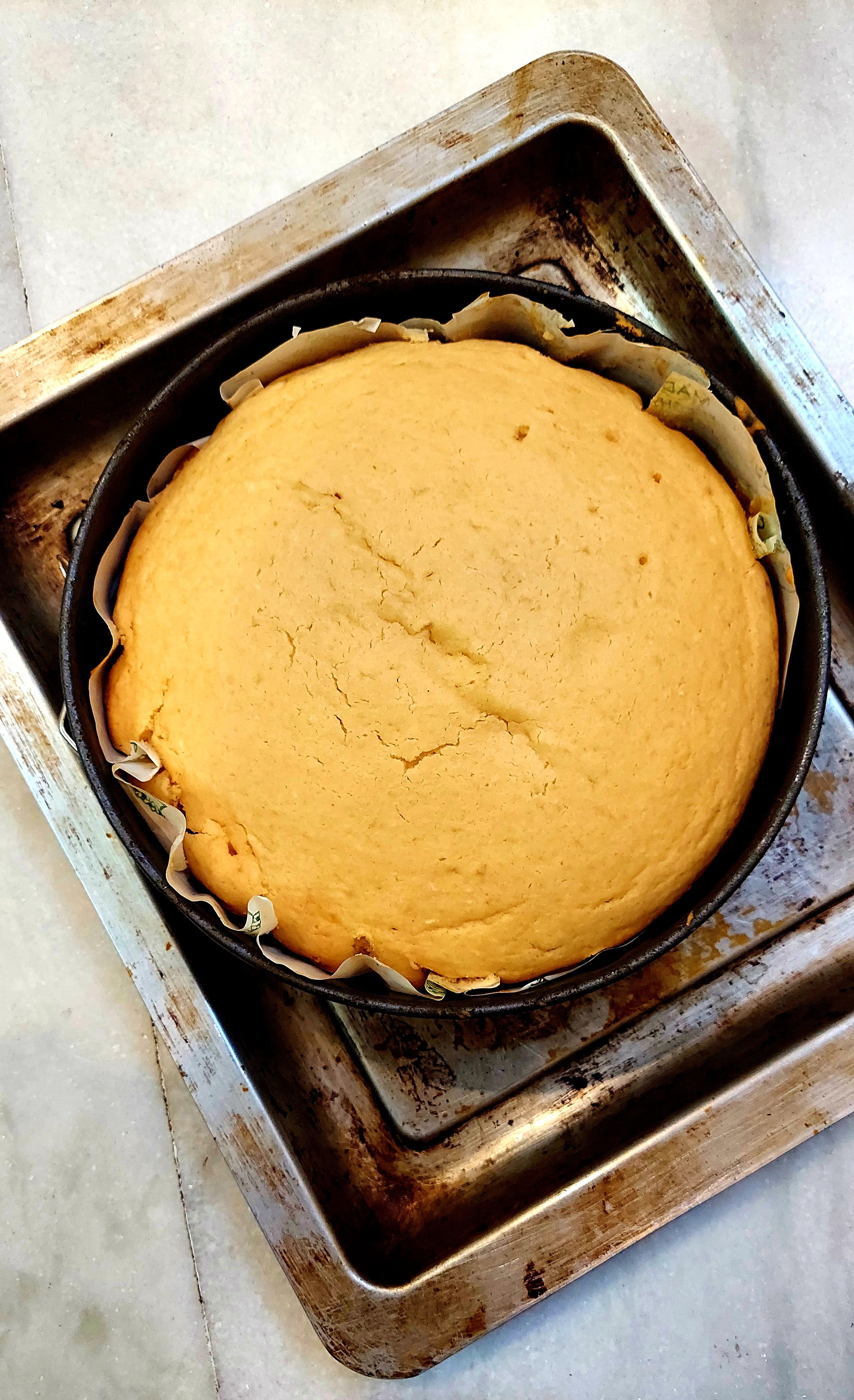
Pao de Lo
The diets react (see scores below)
Common Ingredients
- eggs
- sugar
- flour
- lemon zest
- salt
- butter
Specific recipes may vary.
Incompatible with 11 of 11 diets
Diet Ratings
Pão de Ló is a traditional Portuguese sponge cake built on two foundational keto-incompatible ingredients: wheat flour and sugar. Both are absolute disqualifiers for a ketogenic diet. Flour is a refined grain delivering high net carbs, and sugar is a direct source of glucose that immediately disrupts ketosis. A typical serving would contain 30-50g of net carbs or more, far exceeding even the most lenient keto daily limit in a single portion. While the dish does contain eggs and butter (keto-friendly fats and proteins), these are overwhelmed by the grain and sugar content. There is no meaningful way to consume this dish on a ketogenic diet.
Pão de Ló is a traditional Portuguese sponge cake made primarily from eggs, butter, sugar, and flour. It contains multiple animal-derived ingredients: eggs and butter are both unambiguously non-vegan. Eggs are an animal product (excluded under all vegan definitions), and butter is a dairy product derived from cow's milk. These are core, structural ingredients — not incidental additives — making this dish fundamentally incompatible with a vegan diet. There are no plant-based substitutions implied in the listed recipe.
Pão de Ló is a Portuguese sponge cake built around three fundamentally non-paleo ingredients: wheat flour (a grain, strictly excluded), refined sugar (excluded), and butter (dairy, excluded). Additionally, salt is added. While eggs and lemon zest are paleo-approved, they are minor supporting ingredients in a dish whose very structure depends on grains, dairy, and refined sugar. There is no version of this dish that could be considered paleo-compatible without completely reconstructing it from scratch.
Pão de Ló is a traditional Portuguese sponge cake made primarily from eggs, refined white flour, added sugar, and butter. While it holds genuine cultural heritage in Portuguese cuisine — a Mediterranean-adjacent tradition — its nutritional profile directly contradicts core Mediterranean diet principles. It is built around refined grains (white flour), significant added sugar, and butter as the primary fat rather than olive oil. These are precisely the ingredients modern Mediterranean diet guidelines discourage. The eggs provide some nutritional value, and lemon zest is benign, but they do not redeem a recipe that is essentially a refined-grain, high-sugar dessert cake.
Some Mediterranean diet interpreters argue that traditional whole-food desserts made with simple, recognizable ingredients (eggs, flour, lemon) are preferable to modern ultra-processed sweets, and that occasional indulgence in culturally authentic treats is consistent with the Mediterranean lifestyle philosophy. The Oldways Preservation Trust, for instance, emphasizes cultural eating patterns and enjoyment of food, which would allow for small, infrequent servings of traditional pastries like this.
Pão de Ló is a traditional Portuguese sponge cake that is fundamentally incompatible with the carnivore diet. While it contains eggs and butter (animal-derived), the primary structure of the dish is built on flour (a grain/plant product) and sugar (a processed plant-derived sweetener), both of which are strictly excluded on the carnivore diet. Lemon zest is also a plant-derived ingredient. The animal-derived components (eggs, butter) are completely overshadowed by the plant-based and processed ingredients that form the backbone of this baked good. There is no version of this dish that could be considered carnivore-compatible without a complete reformulation.
Pão de Ló is a traditional Portuguese sponge cake. It contains multiple excluded ingredients: added sugar (explicitly excluded), wheat flour (a grain, explicitly excluded), and butter (dairy, excluded — only ghee/clarified butter is the allowed exception). Even if those ingredients were replaced with compliant alternatives, this dish is a baked good (cake/sponge cake) that falls squarely under the Whole30 rule prohibiting recreating baked goods, bread, and similar comfort foods, even with compliant ingredients. There is no path to compliance for this dish on the Whole30 program.
Pão de Ló is a Portuguese sponge cake whose primary ingredient is wheat flour, which is high in fructans — one of the most problematic FODMAPs. A standard serving of this cake would contain a significant amount of wheat flour, making it high-FODMAP during the elimination phase. The remaining ingredients (eggs, sugar, butter, salt, lemon zest) are all low-FODMAP and pose no concern. However, the wheat flour alone is sufficient to classify this dish as 'avoid' during FODMAP elimination. The dish cannot be considered safe unless the wheat flour is substituted with a gluten-free alternative such as rice flour or a certified low-FODMAP flour blend.
Pão de Ló is a Portuguese sponge cake primarily composed of eggs, sugar, flour, butter, and lemon zest. As a sweet baked dessert/snack, it is high in added sugar, refined flour (low fiber), and contains butter (saturated fat). DASH guidelines explicitly limit sweets, added sugars, and saturated fat. This food provides no meaningful potassium, magnesium, calcium, or dietary fiber — the key nutrients DASH emphasizes. It falls squarely in the 'sweets' category that DASH recommends limiting to 5 or fewer servings per week, and even then favors low-fat, low-sugar options. Regular consumption would conflict with core DASH principles.
Pão de Ló is a traditional Portuguese sponge cake whose macronutrient profile is fundamentally incompatible with Zone Diet principles. The dish is built almost entirely on sugar and refined white flour — both high-glycemic carbohydrates that Dr. Sears explicitly classifies as 'unfavorable' and advises strongly against. The fat source is butter (saturated fat), which is not the preferred monounsaturated fat the Zone promotes. Eggs do provide some lean protein, but the ratio is overwhelmingly skewed toward high-glycemic carbs and saturated fat, with negligible protein contribution relative to the carbohydrate load. There is no practical way to portion this food into a balanced Zone block meal — reducing the portion to a Zone-compliant carb block would yield a trivially small amount that provides essentially no satiety or nutritional benefit, while the carb quality remains poor. The sugar-and-flour base makes this a near-impossible Zone food regardless of portion manipulation.
Pão de Ló is a traditional Portuguese sponge cake whose ingredient profile is largely at odds with anti-inflammatory principles. The dish is built on refined white flour and significant added sugar — two of the most consistently flagged pro-inflammatory ingredients across all major anti-inflammatory frameworks, associated with elevated blood glucose, insulin spikes, and raised inflammatory markers like CRP and IL-6. Butter contributes saturated fat, which is on the 'limit' list. Eggs are a mixed but generally acceptable ingredient, and lemon zest provides a small polyphenol contribution, but these positives are negligible in context. There are no omega-3 sources, no antioxidant-rich vegetables or fruits, no whole grains, and no meaningful anti-inflammatory compounds. As an occasional treat it would be less concerning, but as a snack category item it represents routine exposure to refined carbohydrates and added sugars — the combination that most consistently undermines anti-inflammatory dietary goals.
Pão de Ló is a traditional Portuguese sponge cake made primarily from eggs, sugar, and flour, with butter and lemon zest. Despite containing eggs, the dish functions as a dessert cake with high sugar content, refined flour (low fiber, low nutrient density), and butter (saturated fat). The primary macronutrient profile is simple carbohydrates and sugar, making it an empty-calorie food that conflicts with nearly every GLP-1 dietary priority. Protein contribution per serving is minimal relative to calorie load. The refined flour and sugar combination causes rapid blood sugar spikes, which is counterproductive for GLP-1 patients managing metabolic health. Butter adds saturated fat that can worsen GI side effects. The dish offers no meaningful fiber, low protein density per calorie, and poor nutrient density overall. There is no practical portion size that makes this a GLP-1-appropriate food.
*See how scores were generated at our methodology page.
Nutritional profile
Six traits that cut across every diet.
Fiber & Plants
How much whole-plant food and fiber it delivers.
Healthy Fats
The quality of its fats (unsaturated, omega-3).
Whole / Unprocessed
How close it is to its natural, unprocessed form.
Gut Gentle
How easy it is on digestion (low FODMAP, few irritants).
Low Glycemic
How little it spikes your blood sugar.
Protein Density
How much protein it packs per calorie.
Controversy Index
Higher controversy = more disagreement between diets.