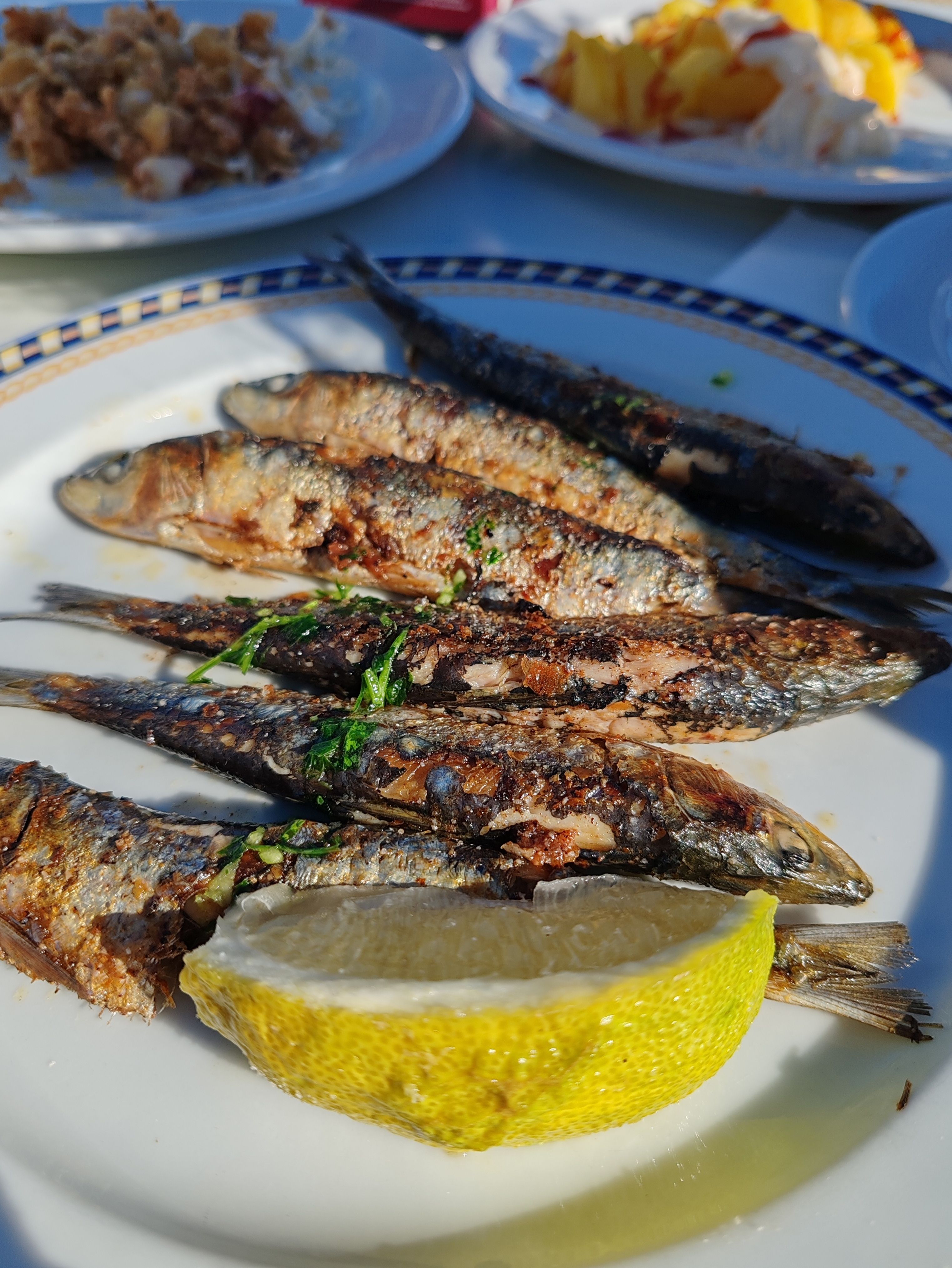
Photo: PIXAMD AMX / Pexels
Portuguese
Sardinhas Assadas
The diets react (see scores below)
Common Ingredients
- sardines
- coarse salt
- olive oil
- bell pepper
- bread
- lemon
Specific recipes may vary.
Incompatible with 5 of 11 diets
Diet Ratings
Sardinhas Assadas in its traditional Portuguese form includes bread as a core component of the dish — typically served on or with thick slices of bread (often broa or crusty white bread) that absorbs the sardine juices. Bread is a high-carb grain product that is fundamentally incompatible with ketosis. The sardines themselves are excellent for keto (fatty fish, high protein, omega-3s), olive oil is ideal, bell peppers are acceptable in small portions, and lemon juice in small amounts is fine. However, the bread alone can contribute 20-30g+ of net carbs per serving, immediately threatening or breaking ketosis. The dish as traditionally prepared cannot be considered keto-compatible without a significant structural modification (removing the bread entirely).
Sardinhas Assadas (Portuguese grilled sardines) is fundamentally a fish dish. Sardines are the primary protein and the central ingredient of this dish. Fish is an animal product and is unambiguously excluded from a vegan diet. There is no meaningful debate within the vegan community on this point — fish are sentient animals and consuming them is incompatible with veganism regardless of how they are prepared. The remaining ingredients (coarse salt, olive oil, bell pepper, bread, lemon) are all plant-based, but they function only as accompaniments and cannot redeem the dish from a vegan perspective.
Sardinhas Assadas is a traditional Portuguese grilled sardine dish that is nearly paleo-compliant but is disqualified by two clear non-paleo ingredients. Bread is a grain-based product and is strictly excluded from the paleo diet — this is one of the clearest violations in the paleo framework. Coarse salt, while less severe, is also excluded under strict paleo rules as an added/refined product not available in the form hunter-gatherers would have consumed. The remaining ingredients — sardines, olive oil, bell pepper, and lemon — are all paleo-approved. Sardines in particular are an excellent paleo protein source, rich in omega-3 fatty acids. However, because bread is a core component of the dish (not a minor seasoning), the dish as traditionally served cannot be approved or even cautioned — it must be avoided. A simple modification (removing bread, reducing or eliminating added salt) would make this dish highly paleo-friendly.
Sardinhas Assadas is a quintessential Mediterranean dish from the Portuguese tradition. Sardines are an oily, omega-3-rich fish that sits at the heart of Mediterranean eating patterns and should be consumed 2-3 times weekly. Olive oil is the canonical Mediterranean fat. Bell peppers are a vitamin-rich vegetable staple. Lemon adds brightness without any dietary concern. The only mild note is the bread, which ideally would be whole grain, but in the context of a fish-forward meal with vegetables and olive oil, it plays a supporting role and does not undermine the overall nutritional profile. This dish is a textbook example of Mediterranean diet principles in action.
Sardinhas Assadas is a traditional Portuguese grilled sardine dish that is heavily incompatible with the carnivore diet. While sardines themselves are an excellent carnivore-approved food (rich in omega-3s, protein, and fat), this dish includes multiple strictly excluded plant-based ingredients: bread (grain-based, completely off-limits), bell pepper (vegetable, excluded), lemon (fruit, excluded), and olive oil (plant-derived oil, excluded). The dish as traditionally prepared cannot be considered carnivore-compatible. Only the sardines and coarse salt would be retained in a carnivore adaptation. The disqualifying plant ingredients are not minor seasonings but structural and prominent components of the dish.
Sardinhas Assadas (Portuguese grilled sardines) is otherwise a beautifully Whole30-compatible dish — sardines, olive oil, coarse salt, bell pepper, and lemon are all fully compliant. However, bread is a core component of this dish as traditionally served, and bread is an excluded grain product on Whole30. Grains (including wheat) are completely off-limits for 30 days, and bread also falls under the 'no recreating baked goods' rule even if made with compliant ingredients. The dish as described cannot be approved in its traditional form.
Sardinhas Assadas (Portuguese grilled sardines) is largely low-FODMAP, but the inclusion of bread is the critical issue. Sardines are low-FODMAP fish. Coarse salt, olive oil, and lemon are all low-FODMAP. Bell pepper is low-FODMAP at standard servings (Monash approves up to 52g of red or green bell pepper). However, bread — as traditionally served alongside this dish — is almost certainly wheat-based, making it high-FODMAP due to fructans. If the bread is omitted or replaced with a certified gluten-free/low-FODMAP bread, the dish becomes clearly approvable. As presented with standard wheat bread, the dish warrants a caution verdict because the bread component is a significant fructan source during the elimination phase.
Monash University rates small servings of some sourdough breads (e.g., spelt sourdough, 2 slices) as low-FODMAP due to fermentation reducing fructans, but most clinical FODMAP practitioners advise avoiding all wheat-based bread during the elimination phase to minimize risk. The type and quantity of bread served with Sardinhas Assadas is variable — if it is a small portion of a low-FODMAP bread alternative, the dish could be approved; if it is standard wheat bread in typical serving quantities, it should be avoided.
Sardinhas Assadas (grilled sardines) features several DASH-friendly elements: sardines are an excellent source of omega-3 fatty acids, lean protein, calcium, potassium, and magnesium — all nutrients central to the DASH eating plan. Olive oil aligns well with DASH's emphasis on healthy vegetable oils, and bell peppers provide vitamins and fiber. Lemon adds flavor without sodium. However, the dish scores as 'caution' primarily because of coarse salt used in preparation, which is traditional and applied generously before grilling. Sardines already contain moderate natural sodium (~400mg per 100g), and the addition of coarse salt can push a serving well above DASH-friendly sodium levels. The bread component, if white bread, is a refined grain not emphasized in DASH (whole grain would be preferred). Overall this is a nutritionally dense, heart-healthy dish that can fit DASH with sodium modification.
NIH DASH guidelines emphasize limiting sodium and favor low-sodium preparations of fish; the traditional heavy salting in this dish conflicts with the <2,300mg/day target. However, updated clinical interpretations note that sardines' rich omega-3, calcium, and magnesium profile makes them an exemplary DASH protein source, and many DASH-oriented dietitians would approve this dish if salt is used sparingly and a whole-grain bread is substituted.
Sardinhas Assadas is a grilled sardine dish that has strong Zone-friendly elements but requires modification to fully align with the 40/30/30 protocol. Sardines are an excellent lean protein and one of the richest sources of omega-3 fatty acids, making them nearly ideal from an anti-inflammatory and protein-block perspective. Olive oil is the quintessential Zone monounsaturated fat. Bell peppers are a favorable low-glycemic vegetable loaded with polyphenols. However, the inclusion of bread is the primary concern — bread is a high-glycemic, unfavorable carbohydrate in Zone terminology, and traditional Portuguese servings often include a full roll or slice alongside the sardines, which can push the carbohydrate load into unfavorable glycemic territory and disrupt the 40/30/30 ratio. If the bread portion is minimized to a half-slice or replaced with more bell pepper or a side salad, this dish becomes quite Zone-compatible. As traditionally plated, the bread component warrants a caution rating. Lemon juice adds negligible carbs and polyphenols, a net positive.
Some Zone practitioners following Sears' later anti-inflammatory framework (Toxic Fat, The Anti-Inflammation Zone) would argue this dish merits a higher approve rating. The omega-3 density of sardines is so favorable that it offsets minor carbohydrate imbalances, and a modest piece of bread can be counted as a carb block with careful portioning. Strict block-counters in the original Enter the Zone framework, however, would flag the bread as an unfavorable carb that risks spiking insulin, pushing this firmly into caution territory.
Sardinhas Assadas is a textbook anti-inflammatory dish. Sardines are among the richest sources of omega-3 fatty acids (EPA and DHA) in the diet, consistently shown to reduce inflammatory markers including CRP and IL-6. They are also high in vitamin D, selenium, and coenzyme Q10 — all with anti-inflammatory properties. Olive oil provides oleocanthal, a natural COX inhibitor with ibuprofen-like anti-inflammatory action. Bell peppers are rich in vitamin C, carotenoids, and polyphenols. Lemon adds vitamin C and flavonoids. Coarse salt is neutral in this context (used as a seasoning, not a primary concern). The only modest concern is the bread, which if refined wheat introduces a small pro-inflammatory element — but as a minor accompaniment rather than a staple, it doesn't significantly alter the dish's overall profile. The simple preparation method (grilling) preserves omega-3 integrity better than high-heat frying. This dish exemplifies the Mediterranean/anti-inflammatory dietary pattern.
Sardinhas Assadas (grilled sardines) is a strong GLP-1-friendly dish. Sardines are an excellent source of lean protein and omega-3 fatty acids, and grilling is one of the best cooking methods for GLP-1 patients — no added heavy fats, easy to digest, and low in calories per gram of protein. A typical serving of 3-4 whole sardines provides roughly 20-25g of protein and meaningful omega-3s (EPA/DHA), which are among the most recommended fat sources for GLP-1 patients. Olive oil is an unsaturated fat used minimally in this preparation. Bell pepper adds fiber, vitamin C, and water content — all beneficial. Lemon juice aids palatability and digestion. The main flag is the bread: traditional Portuguese service includes crusty white bread, which is a refined carbohydrate with low fiber and nutrient density — a poor use of limited caloric capacity on GLP-1s. If the bread is limited to a small slice or substituted with a whole grain option, the dish scores higher. The coarse salt is worth noting for patients managing blood pressure or water retention. Overall, this is a nutrient-dense, high-protein, omega-3-rich meal that aligns well with GLP-1 dietary priorities, with the bread being the primary area for modification.
Some GLP-1 clinicians flag whole small fish (eaten with bones) as a texture and volume concern for patients with significant nausea or delayed gastric emptying — flaked sardine fillets may be better tolerated in those cases. A minority of practitioners also note that even healthy fats from oily fish can contribute to nausea in GLP-1 patients with severe gastroparesis-like symptoms, and recommend leaner white fish (cod, tilapia) during high-side-effect periods.
*See how scores were generated at our methodology page.
Nutritional profile
Six traits that cut across every diet.
Fiber & Plants
How much whole-plant food and fiber it delivers.
Healthy Fats
The quality of its fats (unsaturated, omega-3).
Whole / Unprocessed
How close it is to its natural, unprocessed form.
Gut Gentle
How easy it is on digestion (low FODMAP, few irritants).
Low Glycemic
How little it spikes your blood sugar.
Protein Density
How much protein it packs per calorie.
Controversy Index
Higher controversy = more disagreement between diets.
Diet-Specific Tips
 Mediterranean — 9/10
View tips
- Sardines are a top-tier Mediterranean protein source, rich in omega-3 fatty acids
- Extra virgin olive oil as the primary fat aligns perfectly with Mediterranean guidelines
- Bell pepper contributes plant-based nutrients and antioxidants
- Lemon provides flavor without added sugars or unhealthy fats
- Bread is likely refined/white, which modern guidelines deprioritize in favor of whole grains
- Overall dish is minimally processed and whole-food based
 Low-FODMAP — 5/10
View tips
- Sardines are low-FODMAP — safe protein source
- Olive oil, coarse salt, and lemon are all low-FODMAP
- Red/green bell pepper is low-FODMAP at standard serving (up to ~52g per Monash)
- Wheat bread is high-FODMAP due to fructans — the primary concern in this dish
- Bread type and portion size are the decisive variables for overall dish rating
- Dish is fully low-FODMAP if wheat bread is substituted with a certified low-FODMAP bread alternative
 DASH — 6/10
View tips
- Sardines are rich in omega-3s, calcium, potassium, and magnesium — core DASH nutrients
- Coarse salt applied generously is the primary concern, significantly raising sodium content
- Sardines have moderate baseline sodium (~400mg/100g) even before added salt
- Olive oil is a DASH-approved healthy fat
- Bell peppers add fiber, vitamins, and potassium
- Bread is likely refined grain; whole grain would better align with DASH
- Lemon enhances flavor without added sodium — a positive substitution for salt
- Dish can be made DASH-compliant by reducing coarse salt significantly
 Zone — 6/10
View tips
- Sardines are an excellent Zone protein source — lean, rich in omega-3 fatty acids, and highly anti-inflammatory
- Olive oil is an ideal Zone monounsaturated fat block ingredient
- Bell peppers are a favorable low-glycemic, polyphenol-rich Zone carbohydrate
- Bread is classified as an unfavorable high-glycemic carbohydrate in Zone methodology and disrupts the macronutrient ratio if served in typical portions
- Lemon juice contributes negligible carbs and beneficial polyphenols
- Dish can be made Zone-compliant by limiting bread to a half-slice block and supplementing carbs with additional vegetables
 Anti-Inflammatory — 9/10
View tips
- Sardines are exceptionally high in omega-3 fatty acids (EPA+DHA), among the best dietary sources
- Extra virgin olive oil contributes oleocanthal with COX-inhibiting anti-inflammatory properties
- Bell peppers provide vitamin C, carotenoids, and polyphenols with antioxidant activity
- Lemon adds flavonoids and vitamin C
- Grilling (assadas) is a low-inflammatory cooking method that preserves omega-3 content
- Minimal processing — whole, simple, traditional ingredients
- Refined bread as accompaniment is the only minor pro-inflammatory element
 GLP-1 Friendly — 8/10
View tips
- High protein from sardines (~20-25g per serving) — strong GLP-1 priority
- Excellent omega-3 fatty acid source (EPA/DHA) — preferred fat type
- Grilled preparation — no heavy added fats, easy to digest
- Bell pepper adds fiber and water content
- Olive oil is unsaturated fat used in small amounts — acceptable
- Bread component is refined carbohydrate — low fiber, low nutrient density, poor use of caloric capacity
- Lemon supports palatability and may ease digestion
- Coarse salt — monitor sodium intake, especially with blood pressure concerns
- Whole small fish texture may be harder to tolerate for patients with significant GI side effects