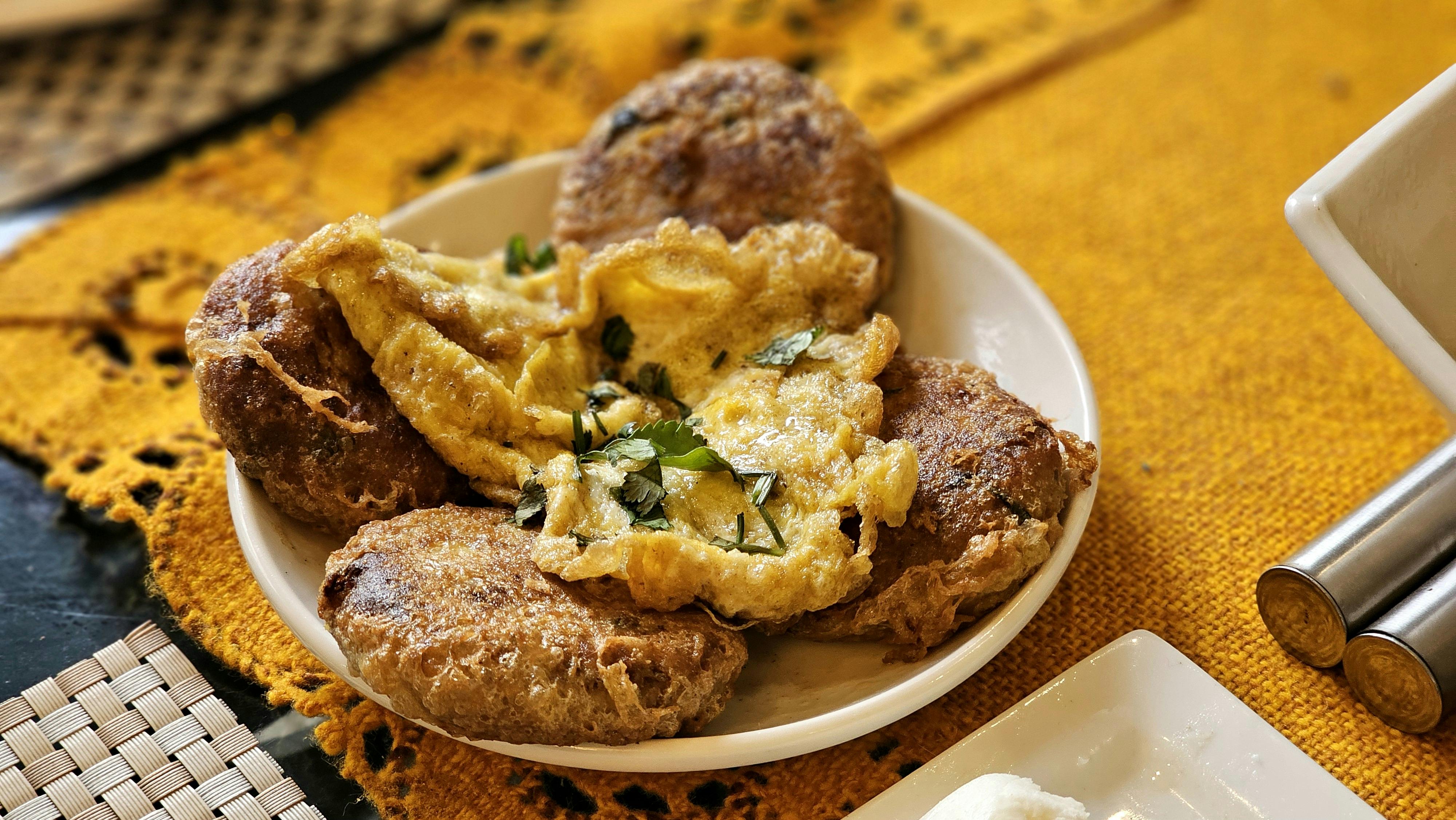
Photo: Muhammad Khawar Nazir / Pexels
Puerto-Rican
Bacalaitos
The diets react (see scores below)
Common Ingredients
- salt cod
- flour
- baking powder
- garlic
- cilantro
- onion
- water
- oil
Specific recipes may vary.
Incompatible with 8 of 11 diets
Diet Ratings
Bacalaitos are Puerto Rican salt cod fritters made with wheat flour as the primary batter ingredient. Flour is a high-carb grain product that is fundamentally incompatible with ketogenic eating. A typical serving of 2-3 bacalaitos can easily contain 20-30g of net carbs from the flour batter alone, which could consume an entire day's carb allowance. While the salt cod itself is an excellent keto protein (high protein, zero carbs), the flour-based batter makes this dish a clear avoid. There is no meaningful keto workaround without completely reformulating the recipe using almond or coconut flour, which would no longer be bacalaitos in any traditional sense.
Bacalaitos are Puerto Rican salt cod fritters. The primary and defining ingredient is salt cod (bacalao), which is dried and salted fish — a clear animal product. Fish is unambiguously excluded from a vegan diet. The remaining ingredients (flour, baking powder, garlic, cilantro, onion, water, oil) are all plant-based, but the dish cannot be considered vegan due to the fish content.
Bacalaitos are Puerto Rican fried codfish fritters whose batter is built on wheat flour and baking powder — both firmly excluded from the paleo diet. Flour is a refined grain product, and baking powder typically contains cornstarch, another grain derivative. The salt cod itself is also heavily salted and processed, which conflicts with paleo's exclusion of added salt and processed foods. The frying oil is unspecified but almost certainly a seed oil (canola, vegetable, or similar), which is also excluded. The paleo-approved ingredients — cod, garlic, cilantro, and onion — are buried under multiple disqualifying components, making the dish as a whole incompatible with paleo eating.
Bacalaitos are Puerto Rican salt cod fritters made by combining preserved fish with a refined flour batter and deep-frying. The salt cod itself is a Mediterranean-friendly protein — preserved cod is historically consumed across the Mediterranean (especially in Portugal, Spain, and Italy as 'bacalà') and fish is strongly encouraged. However, several elements undermine the dish's compatibility: the batter is made from refined white flour, which the Mediterranean diet discourages in favor of whole grains; the dish is deep-fried rather than prepared with olive oil as a primary fat in a healthful way; and the high sodium content from salt cod plus frying oil raises concerns. The aromatics (garlic, onion, cilantro) are positive Mediterranean-friendly ingredients. Overall, this is an occasional acceptable choice due to its fish base, but the refined flour batter and deep-frying method push it toward caution rather than approval.
Some Mediterranean diet scholars note that salt cod fritters have direct analogs in traditional Mediterranean cuisines — Spanish 'buñuelos de bacalao' and Italian 'baccalà fritto' are prepared similarly with batter and frying, suggesting occasional consumption fits within traditional Mediterranean patterns. Regional Mediterranean practice does not strictly forbid fried fish dishes, and some practitioners would score this higher given the fish-forward protein source.
Bacalaitos are Puerto Rican salt cod fritters that are fundamentally incompatible with the carnivore diet. While salt cod is an acceptable animal protein, the dish is essentially a batter-based fritter where the majority of the bulk comes from flour (a grain-based carbohydrate), baking powder (a processed leavening agent), garlic, cilantro, and onion (all plant foods). The fish is a minor component suspended in a plant-based batter and fried in plant oil. This dish is structurally a grain and plant product with fish flavoring — the exact opposite of carnivore principles. Even the most lenient carnivore practitioners who allow dairy or coffee would not include grain-based fried foods.
Bacalaitos are Puerto Rican salt cod fritters made with wheat flour as a primary batter ingredient. Flour (wheat) is a grain and is explicitly excluded on the Whole30. Beyond the ingredient exclusion, this dish is essentially a fried fritter/batter-based snack, which falls squarely into the 'no recreating baked goods/junk food' rule — fritters and battered fried foods are in the same spirit as pancakes, crackers, and chips, all of which are explicitly prohibited. The salt cod itself would be compliant (fish is allowed), as are garlic, cilantro, onion, and most cooking oils, but the flour makes this dish non-compliant on multiple grounds.
Bacalaitos contain multiple high-FODMAP ingredients that make them unsuitable during the elimination phase. Garlic is one of the highest-FODMAP foods (fructans) and is a core flavoring in this recipe. Onion is similarly very high in fructans and is used throughout the batter. Wheat flour is the primary structural ingredient and is high in fructans. Even small amounts of garlic and onion are problematic during elimination. The combination of three significant FODMAP sources (wheat flour, garlic, onion) means there is no realistic serving size at which this dish would be low-FODMAP as traditionally prepared. Salt cod itself is low-FODMAP (plain fish is always approved), cilantro is low-FODMAP, baking powder is low-FODMAP, and oil is low-FODMAP — but the problematic ingredients are fundamental to the dish's identity and cannot simply be omitted without fundamentally changing the recipe.
Bacalaitos are deep-fried salt cod fritters that present multiple significant concerns for DASH diet adherence. Salt cod (bacalao) is extremely high in sodium — even after soaking and rinsing, a typical serving can contain 800–1,500mg of sodium, a substantial portion of the DASH daily sodium limit of 2,300mg (or virtually all of the 1,500mg low-sodium DASH target). Deep frying in oil significantly increases total fat content and caloric density, which is inconsistent with DASH principles that favor low-fat cooking methods. The refined white flour base contributes little fiber or micronutrients compared to whole grains favored by DASH. While cod itself is a lean, DASH-compatible protein, the preparation method — heavy salting and deep frying — transforms it into a food that conflicts with the core DASH goals of sodium reduction and heart-healthy eating. The aromatics (garlic, cilantro, onion) are DASH-friendly but cannot offset the fundamental concerns. This dish is not a one-off indulgence that could fit with careful planning — the sodium load alone makes it a consistent avoid under either standard or low-sodium DASH protocols.
Bacalaitos are Puerto Rican salt cod fritters made primarily from wheat flour batter with salt cod, deep-fried in oil. While salt cod itself is an excellent Zone-friendly lean protein (low fat, high protein, fitting neatly into protein blocks), the dish's structure is fundamentally problematic for Zone balance. The dominant macronutrient by volume and calories is refined wheat flour — a high-glycemic, unfavorable Zone carbohydrate. Deep frying adds significant fat, but from unspecified frying oil (likely vegetable/seed oil high in omega-6s), which contradicts Zone's anti-inflammatory fat principles. The macro ratio skews heavily toward carbohydrates and fat with insufficient protein relative to the carb load — essentially the inverse of Zone's 40/30/30 target. The sodium content from salt cod is also very high. Garlic, cilantro, and onion are Zone-favorable aromatics and add minor polyphenol benefit, but they don't meaningfully alter the macro profile. As a snack, bacalaitos cannot be portioned into a reasonable Zone block combination without consuming a very small quantity that defeats its purpose as a satisfying snack. It's not categorically 'avoid' because the cod provides genuine protein and the portion could theoretically be minimized, but the refined flour base and frying method make this a genuinely difficult food to fit into Zone methodology.
Bacalaitos are Puerto Rican salt cod fritters with a mixed anti-inflammatory profile. On the positive side, salt cod (bacalao) is derived from white fish (typically Atlantic cod), which contains lean protein and modest omega-3 fatty acids, though far less than fatty fish like salmon. Garlic, cilantro, and onion are genuinely anti-inflammatory aromatics containing allicin, quercetin, and polyphenols. However, the dish has several offsetting concerns: (1) The batter is made from refined white flour, a refined carbohydrate that lacks fiber and can spike blood sugar, contributing to inflammatory signaling. (2) Bacalaitos are deep-fried in oil — the type of oil matters enormously. Traditional or street-food preparation often uses vegetable/seed oils (corn, soybean, sunflower) high in omega-6 fatty acids, which are pro-inflammatory at high intake; even if a neutral oil is used, deep-frying generates oxidized lipids and advanced glycation end products (AGEs). (3) Salt cod is heavily salted and requires desalting — while not directly inflammatory, the residual sodium content is high, which may be a concern for cardiovascular inflammation. The anti-inflammatory benefits of the fish and aromatics are largely offset by the refined flour base and frying method, placing this firmly in 'caution' territory.
Some anti-inflammatory practitioners would score this lower, arguing that deep-frying in seed oils and using refined flour are categorically pro-inflammatory regardless of other ingredients — placing this closer to 'avoid.' Conversely, others note that the fish and aromatic ingredients provide meaningful benefits, and occasional consumption within an otherwise anti-inflammatory diet is acceptable; the Mediterranean tradition of occasional fried fish dishes is not broadly condemned by researchers like Dr. Weil, provided it's an exception rather than a staple.
Bacalaitos are deep-fried salt cod fritters made with a refined flour batter. While salt cod itself is a lean, high-protein fish, the preparation method fundamentally undermines its nutritional profile for GLP-1 patients. Deep frying in oil dramatically increases fat content per serving, and the batter is composed almost entirely of refined white flour with negligible fiber. The fried, greasy nature of this snack is precisely the type of food most likely to worsen GLP-1 side effects including nausea, reflux, bloating, and delayed gastric emptying discomfort. Additionally, salt cod is very high in sodium, which can contribute to water retention and is generally advised in moderation. The refined flour batter adds empty calories with no meaningful protein or fiber contribution. As a snack — a category where nutrient density per small serving is especially critical for GLP-1 patients — bacalaitos fail on nearly every relevant criterion: high fat, fried, low fiber, high sodium, low nutrient density per calorie, and high likelihood of triggering GI side effects.
*See how scores were generated at our methodology page.
Nutritional profile
Six traits that cut across every diet.
Fiber & Plants
How much whole-plant food and fiber it delivers.
Healthy Fats
The quality of its fats (unsaturated, omega-3).
Whole / Unprocessed
How close it is to its natural, unprocessed form.
Gut Gentle
How easy it is on digestion (low FODMAP, few irritants).
Low Glycemic
How little it spikes your blood sugar.
Protein Density
How much protein it packs per calorie.
Controversy Index
Higher controversy = more disagreement between diets.
Diet-Specific Tips
 Mediterranean — 5/10
View tips
- Salt cod is a Mediterranean-compatible fish protein with historical cross-cultural parallels
- Refined white flour batter contradicts whole-grain preference of Mediterranean diet
- Deep-frying is not the preferred Mediterranean cooking method; olive oil sautéing or baking preferred
- High sodium content from salt cod is a health concern
- Garlic, onion, and cilantro are positive aromatic ingredients
- Dish has structural analogs in traditional Spanish and Italian Mediterranean cuisines
 Zone — 4/10
View tips
- Refined wheat flour is the dominant ingredient — high-glycemic, unfavorable Zone carbohydrate
- Salt cod is a Zone-ideal lean protein source, but is nutritionally overshadowed by the batter
- Deep-frying adds high omega-6 fat from seed oils, contradicting Zone's anti-inflammatory fat principles
- Macro ratio skews toward carbs and fat, with insufficient protein per serving to achieve 40/30/30
- Very high sodium from salt cod is a secondary concern
- Garlic, cilantro, and onion contribute favorable polyphenols but in negligible macro quantities
- As a snack format, small portions reduce utility without meaningfully improving Zone compliance
 Anti-Inflammatory — 4/10
View tips
- Salt cod provides lean white fish protein with modest omega-3s — beneficial but far less potent than fatty fish
- Garlic, cilantro, and onion contribute anti-inflammatory polyphenols, allicin, and quercetin
- Refined white flour batter is a low-fiber refined carbohydrate associated with inflammatory blood sugar spikes
- Deep-frying generates oxidized lipids and AGEs regardless of oil type
- Oil type is unspecified — seed/vegetable oils commonly used in frying are high in pro-inflammatory omega-6 fatty acids
- High residual sodium content from salt cod processing
- Beneficial ingredients (fish, aromatics) are significantly offset by frying method and refined flour base