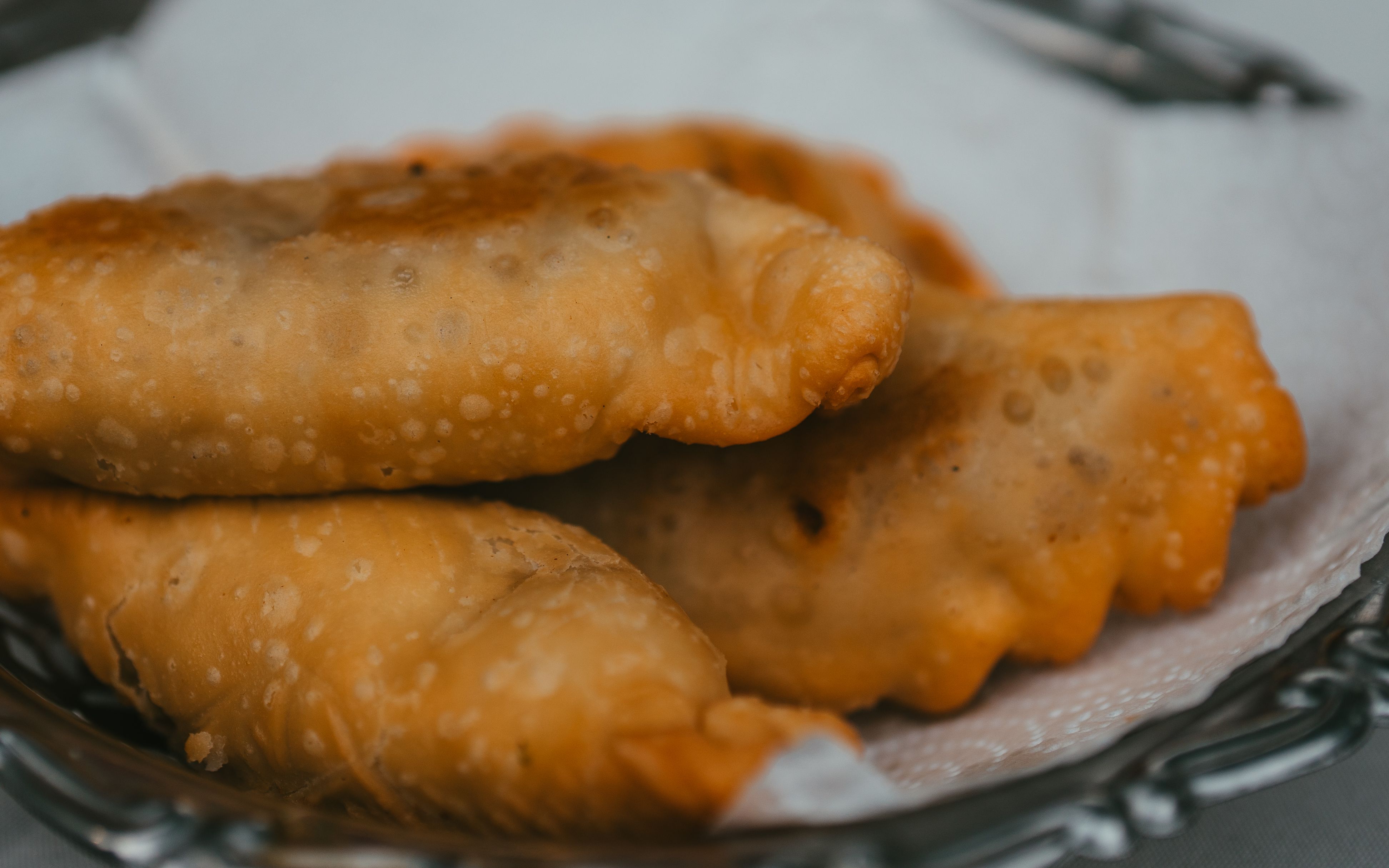
Photo: Guillermo Berlin / Pexels
Puerto-Rican
Empanadillas
The diets react (see scores below)
Common Ingredients
- flour
- ground beef
- sofrito
- annatto
- olives
- potatoes
- garlic
- oil
Specific recipes may vary.
Incompatible with 8 of 11 diets
Diet Ratings
Empanadillas are fundamentally incompatible with a ketogenic diet. The dish is built around a wheat flour dough shell, which is a high-carb grain product that alone would likely exceed the entire daily net carb allowance for keto. Potatoes in the filling add further starch and net carbs. There is no practical way to consume this dish in a standard serving without blowing ketosis. While the ground beef, sofrito, garlic, olives, and annatto components are individually keto-friendly, the flour wrapper and potato filling are disqualifying ingredients that define the dish itself.
Empanadillas contain ground beef as the primary protein, which is an animal product and therefore incompatible with a vegan diet. The remaining ingredients (flour, sofrito, annatto, olives, potatoes, garlic, oil) are all plant-based, but the presence of beef makes this dish non-vegan. A vegan version could be made by substituting the ground beef with a plant-based protein such as black beans, lentils, or mushrooms.
Empanadillas are fundamentally incompatible with the paleo diet. The dish's defining feature is its flour-based dough shell, made from wheat flour — a grain that is explicitly excluded from paleo. This alone disqualifies the dish. Additionally, the type of oil used is unspecified and likely a seed or vegetable oil, which is also non-paleo. While several individual ingredients are paleo-friendly — ground beef, sofrito (herb-based), annatto, garlic, and olives are all acceptable — and potatoes occupy a debated gray area, the flour wrapper is a hard disqualifier. No amount of paleo-compliant fillings can redeem a dish whose structure depends on a grain-based casing.
Empanadillas are fried pastries made with refined white flour dough filled primarily with ground beef, which places them in conflict with core Mediterranean diet principles on multiple levels. The shell is refined grain-based and likely fried in non-olive oil, ground beef is a red meat that should be consumed only a few times per month, and the overall dish is a processed, fried snack format that Mediterranean guidelines discourage. While some ingredients like garlic, olives, sofrito, and potatoes have Mediterranean-friendly qualities, they are minor components that do not redeem the dish overall.
Empanadillas are fundamentally incompatible with the carnivore diet. The dish is built around a flour-based pastry dough, which is a grain product and strictly excluded. Beyond the dough, the filling contains multiple plant-based ingredients: sofrito (a blend of peppers, onions, herbs, and garlic), potatoes (a starchy vegetable), olives (a plant fruit), garlic, annatto (a plant-derived spice/colorant), and plant oil. While ground beef is present and carnivore-approved, it is a minor component surrounded by a majority of prohibited plant foods. This dish is essentially a plant-heavy snack that happens to contain some meat — the opposite of what carnivore prescribes.
Empanadillas are made with flour-based dough, which contains wheat (a grain explicitly excluded from Whole30). Beyond the grain violation, empanadillas are essentially a fried pastry/turnover — a category explicitly listed as non-compliant under the 'no recreating baked goods/junk food' rule (similar to wraps, crackers, and pastry shells). The filling ingredients (ground beef, sofrito, annatto, olives, potatoes, garlic, oil) are largely Whole30-compatible, but the wheat flour dough alone is sufficient to disqualify this dish entirely.
Puerto Rican empanadillas are high-FODMAP for multiple reasons. The dough is made from wheat flour, which is high in fructans and is one of the primary foods to eliminate during the elimination phase. Garlic is a major FODMAP trigger (high in fructans even in small amounts). Sofrito, a traditional Puerto Rican base, typically contains garlic and onion, both of which are high-fructan foods and among the worst FODMAP offenders. Together, wheat flour, garlic, and sofrito make this dish clearly unsuitable during elimination phase regardless of serving size. The remaining ingredients (ground beef, annatto, olives, potatoes, oil) are generally low-FODMAP and not problematic, but they cannot offset the multiple high-FODMAP components present in every serving.
Puerto Rican empanadillas are fried or baked turnovers made with refined flour dough filled with seasoned ground beef, olives, sofrito, and potatoes. Several components conflict with DASH principles: (1) refined white flour dough lacks the fiber of whole grains DASH emphasizes; (2) ground beef is red meat, which DASH limits — fat content depends on leanness, but standard ground beef carries meaningful saturated fat; (3) olives and sofrito-based seasonings contribute moderate to significant sodium; (4) the dish is typically deep-fried in oil, adding substantial total fat and calories. On the positive side, sofrito contains vegetables (tomatoes, peppers, onion, garlic), potatoes provide potassium, and garlic and annatto are DASH-neutral. The dish is not categorically excluded from a DASH-compatible diet — using extra-lean ground beef, baking instead of frying, choosing low-sodium olives, and limiting portion size (1 empanadilla as a snack vs. multiple) can make it more acceptable. However, as commonly prepared, it sits in the caution zone due to red meat, refined flour, sodium from olives and seasoning, and frying method.
NIH DASH guidelines explicitly limit red meat and refined grains, which would push this dish toward 'avoid.' However, updated clinical interpretations note that the overall dietary pattern matters more than individual foods — a single empanadilla made with lean beef, baked, and consumed within a DASH-structured day can fit within calorie, sodium, and saturated fat targets, supporting a 'caution' rather than 'avoid' rating.
Empanadillas present multiple Zone Diet challenges simultaneously. The white flour pastry shell is a high-glycemic carbohydrate that spikes insulin — exactly what the Zone seeks to minimize. Potatoes as a filling ingredient add another high-glycemic carb load. Ground beef, depending on fat content, is likely not lean enough to be a favorable Zone protein. The frying oil (likely omega-6-heavy seed oil) adds unfavorable fat. The combination of high-GI flour dough, high-GI potato filling, and potentially fatty beef with seed oils makes this extremely difficult to fit into Zone ratios without dismantling the dish entirely. Even with careful portioning, the carbohydrate quality is poor and the macronutrient ratio will skew heavily toward high-glycemic carbs and saturated/omega-6 fats. It scores low within 'caution' territory (rather than 'avoid') only because the dish does contain some protein and beneficial ingredients like sofrito, garlic, olives, and annatto (polyphenol-rich), meaning it is not nutritionally empty — but it is a very poor Zone choice.
Puerto Rican empanadillas present a mixed anti-inflammatory profile. On the positive side, the dish contains several beneficial ingredients: sofrito typically includes onions, peppers, garlic, cilantro, and tomatoes — all rich in antioxidants and anti-inflammatory polyphenols. Garlic independently contributes allicin and organosulfur compounds with well-documented anti-inflammatory properties. Olives provide beneficial monounsaturated fats and polyphenols similar to olive oil. Annatto (achiote) contains bixin, a carotenoid with some antioxidant activity. However, the dish has notable inflammatory concerns: ground beef is a red meat with saturated fat, which anti-inflammatory guidelines recommend limiting. Refined white flour forms the pastry shell, contributing refined carbohydrates with minimal nutritional value. The frying oil (type unspecified) raises concern — if a high-omega-6 seed oil is used (corn, sunflower), it adds pro-inflammatory load, though if olive or avocado oil is used, the impact is more neutral. Potatoes are generally neutral to mildly beneficial. The overall structure — fried refined-flour dough wrapped around red meat — is not aligned with anti-inflammatory eating patterns, though the sofrito base and aromatics partially offset concerns. Acceptable occasionally, not as a regular dietary staple.
Some anti-inflammatory practitioners following the AIP or lectin-avoidance frameworks (e.g., Dr. Gundry) would flag the flour dough and potentially the sofrito peppers (nightshades) as additional concerns beyond the red meat, pushing this closer to 'avoid.' Conversely, proponents of traditional whole-food Mediterranean-adjacent diets might note that the sofrito base, garlic, and olives align well with anti-inflammatory principles, and that occasional red meat in the context of an otherwise plant-rich diet is acceptable per Dr. Weil's framework.
Puerto Rican empanadillas are deep-fried pastry turnovers filled with a ground beef mixture. The combination of a refined flour dough fried in oil and a fatty ground beef filling creates multiple problems for GLP-1 patients. The wrapper is made from refined white flour (low fiber, low protein, high glycemic) and is deep-fried, adding significant fat and making the food heavy and greasy — a known trigger for nausea, bloating, and reflux in patients with slowed gastric emptying. Ground beef contributes some protein but also saturated fat, and the overall protein density per calorie of this dish is poor given how much of the calorie load comes from the fried dough. The addition of potatoes further dilutes protein and fiber density. Olives and sofrito add flavor with minimal nutritional concern, but they cannot offset the core problems. As a fried, refined-carb-heavy snack with moderate saturated fat and poor protein-to-calorie ratio, this food fails on nearly every GLP-1 dietary priority: it is high fat, low fiber, poorly digestible, and nutrient-sparse per calorie.
*See how scores were generated at our methodology page.
Nutritional profile
Six traits that cut across every diet.
Fiber & Plants
How much whole-plant food and fiber it delivers.
Healthy Fats
The quality of its fats (unsaturated, omega-3).
Whole / Unprocessed
How close it is to its natural, unprocessed form.
Gut Gentle
How easy it is on digestion (low FODMAP, few irritants).
Low Glycemic
How little it spikes your blood sugar.
Protein Density
How much protein it packs per calorie.
Controversy Index
Higher controversy = more disagreement between diets.
Diet-Specific Tips
 DASH — 4/10
View tips
- Red meat (ground beef) — DASH limits red meat; saturated fat content depends on leanness
- Refined white flour dough — not a whole grain, low in fiber
- Typically deep-fried — adds significant total fat
- Olives contribute sodium; amount depends on quantity used
- Sofrito provides vegetable-based nutrients (peppers, onion, tomatoes)
- Potatoes contribute potassium — a DASH-favorable nutrient
- Sodium load from combined ingredients (olives, sofrito, seasoning) is a concern
- Baking instead of frying and using extra-lean beef improve DASH compatibility
 Zone — 5/10
View tips
- White flour pastry shell is a high-glycemic carbohydrate — unfavorable in Zone terminology
- Potatoes in the filling add a second high-glycemic carb source, compounding insulin spike risk
- Ground beef may be higher in saturated fat depending on grind; not a lean Zone protein
- Frying oil is likely an omega-6-heavy seed oil, contradicting Zone's anti-inflammatory fat focus
- Olives, sofrito, garlic, and annatto are Zone-favorable polyphenol and monounsaturated fat contributors, but insufficient to offset the rest
- The dish structure (fried pastry pocket) makes it very difficult to rebalance the 40/30/30 ratio without fundamentally altering the recipe
 Anti-Inflammatory — 4/10
View tips
- Ground beef is a red meat — limited in anti-inflammatory guidelines due to saturated fat content
- Refined white flour pastry shell contributes pro-inflammatory refined carbohydrates
- Frying oil type unknown — high-omega-6 seed oils would worsen profile
- Sofrito base (onions, peppers, cilantro, tomatoes) is rich in antioxidants and anti-inflammatory polyphenols
- Garlic provides allicin and organosulfur compounds with anti-inflammatory properties
- Olives contribute beneficial monounsaturated fats and polyphenols
- Annatto provides bixin, a carotenoid antioxidant
- Overall preparation method (deep-fried pastry) is not aligned with anti-inflammatory dietary patterns