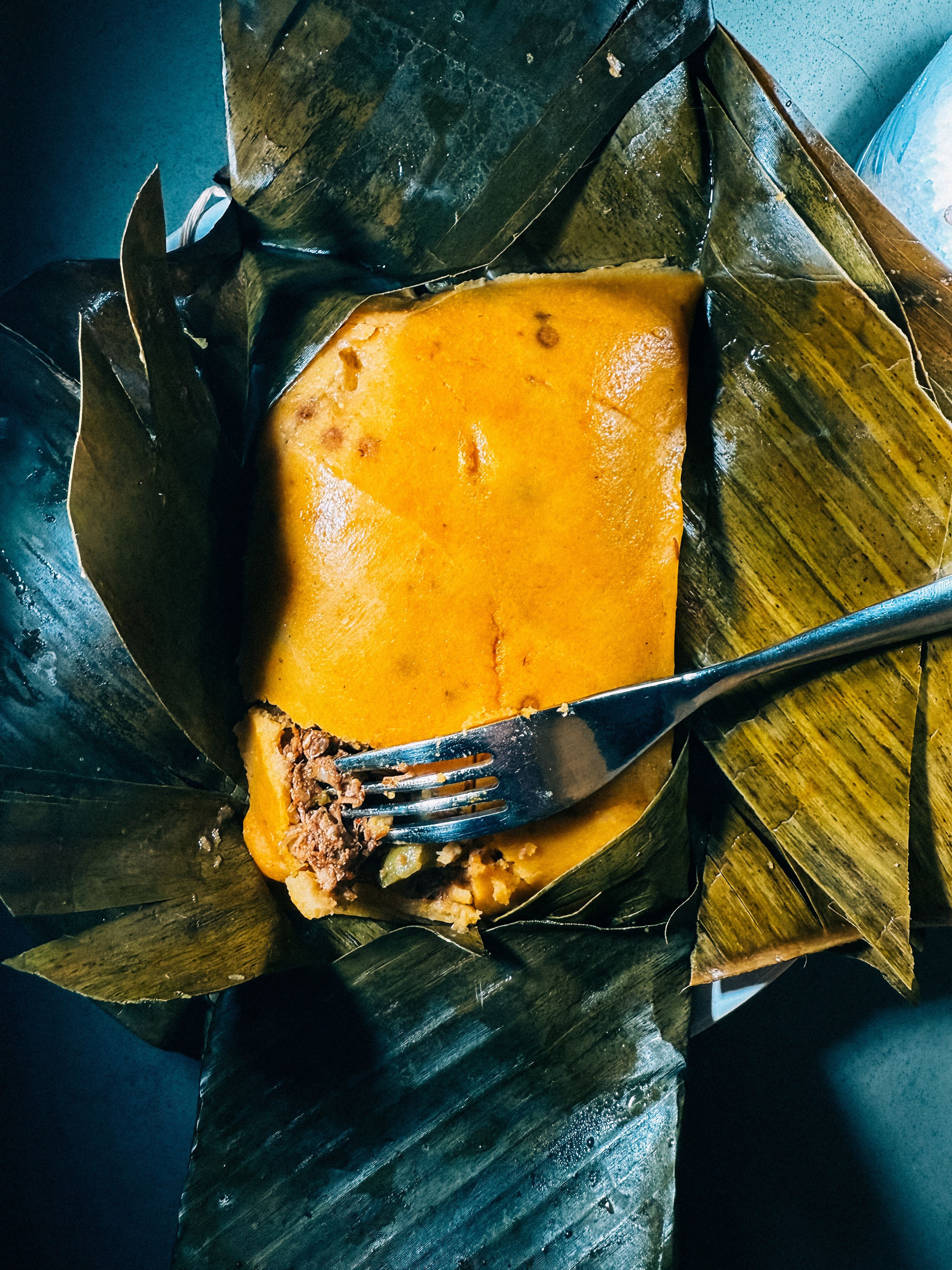
Puerto-Rican
Pasteles
The diets react (see scores below)
Common Ingredients
- green bananas
- green plantains
- pork
- sofrito
- annatto
- olives
- capers
- banana leaves
Specific recipes may vary.
Incompatible with 7 of 11 diets
Diet Ratings
Pasteles are fundamentally incompatible with ketogenic diets. The masa (dough) is made primarily from green bananas and green plantains, both of which are extremely high in starch and net carbs. A single pastele typically contains 30-50g of net carbs, largely from these starchy bases. Green bananas contain roughly 20-25g net carbs per 100g, and green plantains are similarly high at 25-30g net carbs per 100g. Even a single serving would likely exhaust or exceed an entire day's keto carb budget. While the pork filling, sofrito, olives, capers, and annatto are keto-friendly components, they are entirely overshadowed by the starchy masa wrapper, which is the defining and dominant element of the dish. There is no practical portion size that makes this dish compatible with ketosis.
Pasteles contain pork as a primary protein, which is a direct animal product and categorically excluded from a vegan diet. There is no ambiguity here — pork is meat, and meat is one of the clearest exclusions under any vegan framework. The remaining ingredients (green bananas, green plantains, sofrito, annatto, olives, capers, banana leaves) are all plant-based, but the presence of pork makes the dish entirely incompatible with veganism.
Pasteles present multiple paleo concerns. While the primary protein (pork) and several flavor components (sofrito base of peppers/onions/garlic/herbs, annatto, banana leaves) are paleo-compatible, the dish has significant problematic elements. Olives and capers are technically paleo-acceptable but are heavily processed with added salt, which is discouraged. Most critically, the traditional masa (dough) for pasteles is made from green bananas and green plantains — unripe starchy fruits that are borderline acceptable as whole foods, but the combined starch load is substantial. However, the single largest concern is that authentic pasteles almost universally include sofrito prepared with or alongside added salt, and the olives and capers (brined, salted) represent processed/preserved foods with significant added sodium. The wrapping in banana leaves is paleo-neutral. The dish as traditionally prepared — with brined olives, salted capers, and typically seasoned with added salt — pushes it firmly into avoid territory. If stripped of the brined/salted elements, the base ingredients could approach caution territory.
Some paleo practitioners following more lenient interpretations (e.g., Mark Sisson's Primal Blueprint or the ancestral health community) would argue that green bananas and plantains as unripe whole fruits are acceptable starchy carbohydrates, and that olives and capers in small quantities are tolerable despite brining, placing the dish in caution rather than avoid.
Pasteles are a traditional Puerto Rican dish with several elements that conflict with Mediterranean diet principles. Pork is a red meat, and the Mediterranean diet recommends limiting red meat to a few times per month. The masa dough made from green bananas and plantains, while whole plant foods, is typically combined with substantial amounts of lard or other animal fats in traditional preparation. The overall dish is calorie-dense, heavily meat-centered, and processed through a labor-intensive preparation that often includes added saturated fats. While some individual ingredients — green bananas, plantains, sofrito (tomatoes, peppers, onions, garlic), olives, capers — are genuinely Mediterranean-friendly and even excellent, the combination as a pork-primary main dish prepared with lard pushes this firmly into 'avoid' territory. Olives and capers are Mediterranean staples, and the vegetable-based sofrito is admirable, but these positives cannot offset the red meat centerpiece and likely saturated fat content.
Some Mediterranean diet interpreters might rate this as 'caution' rather than 'avoid,' noting that the plant-heavy masa base (green bananas, plantains) and the rich use of vegetables in sofrito, olives, and capers reflect plant-forward cooking values. If prepared with olive oil instead of lard and consumed only occasionally, a small portion could fit within a flexible Mediterranean-inspired eating pattern.
Pasteles are fundamentally incompatible with the carnivore diet. The dish is built almost entirely around plant-based ingredients: green bananas and green plantains form the masa (dough/exterior), sofrito is a plant-based seasoning blend, annatto is a plant-derived spice/colorant, olives and capers are plant foods, and banana leaves are used as wrappers. While pork is present as a filling ingredient, it is a minor component surrounded by prohibited plant foods. There is no version of this dish that could be considered carnivore-compliant without a complete reconstruction that would no longer resemble pasteles.
Pasteles in their basic form use ingredients that are largely Whole30-compatible: green bananas and green plantains (starchy vegetables/fruits), pork, annatto (a natural spice), olives, capers, and banana leaves as wrapping. However, the devil is in the details. Traditional sofrito recipes often include compliant ingredients (onion, garlic, peppers, cilantro, tomatoes), but store-bought versions frequently contain added sugars, soy, or other non-compliant additives — label-reading is essential. Additionally, traditional pasteles recipes commonly incorporate lard or achiote-infused oil, which are compliant, but some recipes add bouillon cubes (often containing MSG — now allowed per 2024 rules — but may still contain soy or sugar), or are seasoned with sazón packets that frequently contain artificial colors or non-compliant fillers. The masa (dough) made from green bananas and plantains is naturally compliant and does not constitute a 'baked good' recreation since pasteles are boiled, not baked, and are a traditional whole-food dish rather than a junk food recreation. The structural concern is that commercial or restaurant versions almost always include non-compliant ingredients, making homemade preparation with verified compliant sofrito and seasonings the safest approach.
Some Whole30 practitioners argue that the starchy masa of pasteles, while not a grain, mimics the role of a starchy wrap or dumpling and may not honor the spirit of eliminating comfort-food structures. However, Melissa Urban's official guidelines do not exclude starchy root vegetables or plantains used as dough bases, and boiled preparations are not on the excluded 'baked goods and junk food' list, so most official guidance would permit compliant homemade pasteles.
Pasteles present multiple FODMAP concerns that make them unsuitable during the elimination phase. The primary issue is sofrito, which traditionally contains onion and garlic — both high-FODMAP ingredients due to fructans, and typically used in quantities that make the dish high-FODMAP even if other ingredients were safe. Green bananas are a borderline ingredient; Monash rates unripe (green) bananas as low-FODMAP at one small banana, but the masa (dough) in pasteles uses a significant quantity of green banana and green plantain blended together, making cumulative serving size a concern. Green plantains themselves are low-FODMAP in moderate servings. Olives are generally low-FODMAP. Capers are low-FODMAP. Pork is low-FODMAP. Annatto (achiote) is low-FODMAP as a spice. Banana leaves are used only for wrapping and do not contribute FODMAPs. The dish essentially cannot be made in its traditional form without the onion and garlic in sofrito, which are the disqualifying ingredients.
Some FODMAP-adapted recipes replace traditional sofrito with garlic-infused oil and green onion tops (low-FODMAP) to replicate flavor — in that modified version, the dish could potentially reach 'caution' status. However, as traditionally prepared, no commercial or restaurant version of pasteles should be considered safe during elimination phase.
Pasteles are a traditional Puerto Rican dish that presents several significant challenges for the DASH diet. While the masa base uses green bananas and plantains (which offer potassium and fiber — positives for DASH), the overall dish is problematic primarily due to sodium load. Olives and capers are both high-sodium ingredients, and pork fillings are typically seasoned heavily with sofrito (which may contain added salt), adobo, and sazón. A single pastel can contain 600–1,000mg or more of sodium depending on preparation, making it difficult to fit within the DASH 2,300mg/day limit (and impossible within the 1,500mg target) when consuming a typical serving of 2. The pork filling, depending on the cut used (often shoulder or fatback), contributes saturated fat. The combination of high sodium from olives, capers, and seasoning, plus potentially fatty pork, places this dish clearly in the avoid category for DASH adherence.
NIH DASH guidelines flag high-sodium ingredients like olives and capers as problematic; however, some DASH-aligned dietitians note that modified versions using lean pork loin, rinsed/reduced capers and olives, low-sodium sofrito, and limiting portion to one pastel could bring sodium into a manageable range — though this requires significant departure from traditional preparation.
Pasteles present a mixed Zone Diet profile. The masa (dough) is made primarily from green bananas and green plantains, which are starchy and relatively high-glycemic compared to Zone-favorable low-glycemic vegetables, though green (unripe) versions have significantly lower glycemic indices than ripe ones due to resistant starch content. The pork filling provides protein, but depending on the cut used, it may carry notable saturated fat, making it less ideal than Zone-preferred lean proteins like skinless chicken or fish. The sofrito base (tomatoes, peppers, onions, herbs) is Zone-friendly. Olives and capers add sodium but olives contribute favorable monounsaturated fat. Annatto is primarily a natural coloring with negligible macro impact. The fundamental challenge is macronutrient ratio: the masa constitutes a large carbohydrate load relative to the protein portion, skewing the 40/30/30 ratio heavily toward carbohydrates. A traditional pastel is carbohydrate-dominant, likely running 55-65% calories from carbs. To fit Zone, one would need to eat a smaller portion (perhaps half a pastel) paired with additional lean protein and a large vegetable-forward side dish. The green banana/plantain base, while starchy, is not as problematic as white rice or refined flour given the resistant starch content, so this is not a hard avoid.
Some Zone practitioners would be more lenient given that green plantains and green bananas have lower glycemic indices than ripe versions due to resistant starch, and could treat a small portion as an 'unfavorable' carb block that still fits within Zone framework with careful balancing. Others would note Sears' later work emphasized polyphenols and anti-inflammatory foods, and the sofrito base with its vegetable and herb content provides meaningful polyphenol value.
Pasteles present a mixed anti-inflammatory profile. On the positive side, green bananas and green plantains are rich in resistant starch and fiber, which support gut health and may reduce inflammatory markers. Sofrito typically contains tomatoes, onions, garlic, peppers, and cilantro — all recognized anti-inflammatory ingredients with polyphenols and antioxidants. Annatto (achiote) contains bixin and norbixin, carotenoid compounds with demonstrated antioxidant properties. Olives and capers contribute polyphenols and beneficial plant compounds. On the negative side, pork as a primary protein is a moderate concern — while leaner cuts of pork are not strongly pro-inflammatory, it is classified as red/processed meat depending on the cut and preparation method. Traditional pasteles often use fattier pork shoulder or pork seasoned with lard, which increases saturated fat load. The dish is also relatively calorie-dense and starchy. Overall, the vegetable-forward masa base and polyphenol-rich sofrito and condiments partially offset the pork and potential fat concerns, but this is not a dish that actively promotes anti-inflammatory eating the way fish or legume-based meals would.
Some anti-inflammatory practitioners would rate this more favorably, noting that the green banana and plantain base provides prebiotic resistant starch that feeds beneficial gut bacteria, and that sofrito is genuinely rich in anti-inflammatory phytonutrients. Others following stricter protocols might rate it lower, particularly if the pork is fatty or the dish is made with lard in the masa, placing it closer to an 'avoid' for red meat and saturated fat reasons.
Pasteles are a traditional Puerto Rican dish made from a masa of grated green bananas and green plantains (resistant starches with decent fiber content) wrapped around a pork filling seasoned with sofrito, annatto, olives, and capers, then steamed in banana leaves. While the green banana and plantain base provides meaningful fiber and resistant starch — beneficial for blood sugar and digestion — several factors make this a GLP-1 caution food. First, the protein-to-calorie ratio is relatively low; pork filling is present but typically in modest quantities relative to the starchy masa, and the cut of pork used (often shoulder or butt) is moderately to highly fatty, which can worsen GLP-1 side effects like nausea, bloating, and reflux. Second, the overall fat content per serving can be significant depending on preparation — lard is traditionally used in the masa, though some modern recipes substitute vegetable oil or omit added fat. Third, the dense, starchy masa slows digestion further on top of GLP-1-induced delayed gastric emptying, potentially causing prolonged fullness, bloating, or discomfort. On the positive side, the dish is steamed (not fried), sofrito and vegetables add micronutrient value, and olives provide unsaturated fats. A half-portion or smaller serving may be manageable for patients who tolerate starchy foods well, particularly if the recipe uses leaner pork and avoids lard.
Some GLP-1-focused dietitians may view the resistant starch in green bananas and plantains more favorably — particularly for patients managing blood sugar — noting that steamed preparation and cultural food accessibility are important considerations for adherence. Others caution that the combined starch load and fatty pork filling make portion control difficult and that the dish frequently triggers GI discomfort in GLP-1 patients with already slowed gastric emptying.
*See how scores were generated at our methodology page.
Nutritional profile
Six traits that cut across every diet.
Fiber & Plants
How much whole-plant food and fiber it delivers.
Healthy Fats
The quality of its fats (unsaturated, omega-3).
Whole / Unprocessed
How close it is to its natural, unprocessed form.
Gut Gentle
How easy it is on digestion (low FODMAP, few irritants).
Low Glycemic
How little it spikes your blood sugar.
Protein Density
How much protein it packs per calorie.
Controversy Index
Higher controversy = more disagreement between diets.
Diet-Specific Tips
 Whole30 — 5/10
View tips
- Green bananas and green plantains are Whole30-compliant vegetables/fruits used as the masa base
- Sofrito must be homemade or verified compliant — store-bought versions often contain added sugar or soy
- Annatto (achiote) is a compliant natural spice/coloring
- Olives and capers are compliant if no non-compliant additives are present
- Pork is fully compliant as a protein
- Traditional sazón or bouillon used in seasoning may contain sugar, non-compliant starches, or artificial additives — label check required
- Banana leaves used as wrapping are not consumed and pose no compliance issue
- Pasteles are boiled, not baked, so they do not fall under the 'no recreating baked goods' rule
- Homemade with verified ingredients = likely compliant; restaurant or packaged versions = likely non-compliant
 Zone — 4/10
View tips
- Green banana and plantain masa creates a carbohydrate-heavy profile (~55-65% calories from carbs), disrupting Zone's 40/30/30 target
- Green/unripe plantains and bananas have lower GI than ripe versions due to resistant starch, partially mitigating glycemic concerns
- Pork filling protein quality depends heavily on cut — lean pork loin is Zone-acceptable, fatty pork shoulder less so
- Olives contribute favorable monounsaturated fat, aligning with Zone fat recommendations
- Sofrito base (peppers, onions, garlic, herbs) is Zone-favorable and adds polyphenols
- Portion control is essential — a full pastel likely exceeds Zone carbohydrate blocks significantly
- No refined flour or added sugar, which places it above many other starchy carb-heavy dishes on the Zone scale
 Anti-Inflammatory — 5/10
View tips
- Green bananas and plantains provide resistant starch and fiber with gut-health benefits
- Sofrito delivers significant anti-inflammatory phytonutrients (garlic, onions, peppers, herbs)
- Annatto contributes carotenoid antioxidants
- Olives and capers add beneficial polyphenols
- Pork is a moderate concern as a red/fatty meat; cut and preparation method matters significantly
- Traditional preparation may include lard in the masa, increasing saturated fat
- No refined sugars, trans fats, or artificial additives in the traditional recipe
- Calorie-dense and starchy — portion size is relevant
 GLP-1 Friendly — 4/10
View tips
- Starchy green banana and plantain masa provides fiber and resistant starch but adds significant carbohydrate load
- Pork filling often uses fatty cuts (shoulder/butt) that can worsen GLP-1 nausea and reflux
- Traditional recipes frequently include lard in the masa, raising saturated fat content substantially
- Steamed preparation (not fried) is a meaningful positive factor
- Protein-to-calorie ratio is low — masa dominates the dish volumetrically
- Dense, heavy texture may cause prolonged bloating due to GLP-1 slowed gastric emptying
- Small portion (half a pastel) may be tolerable for patients without significant GI side effects
- Olives and sofrito contribute unsaturated fats and micronutrients respectively