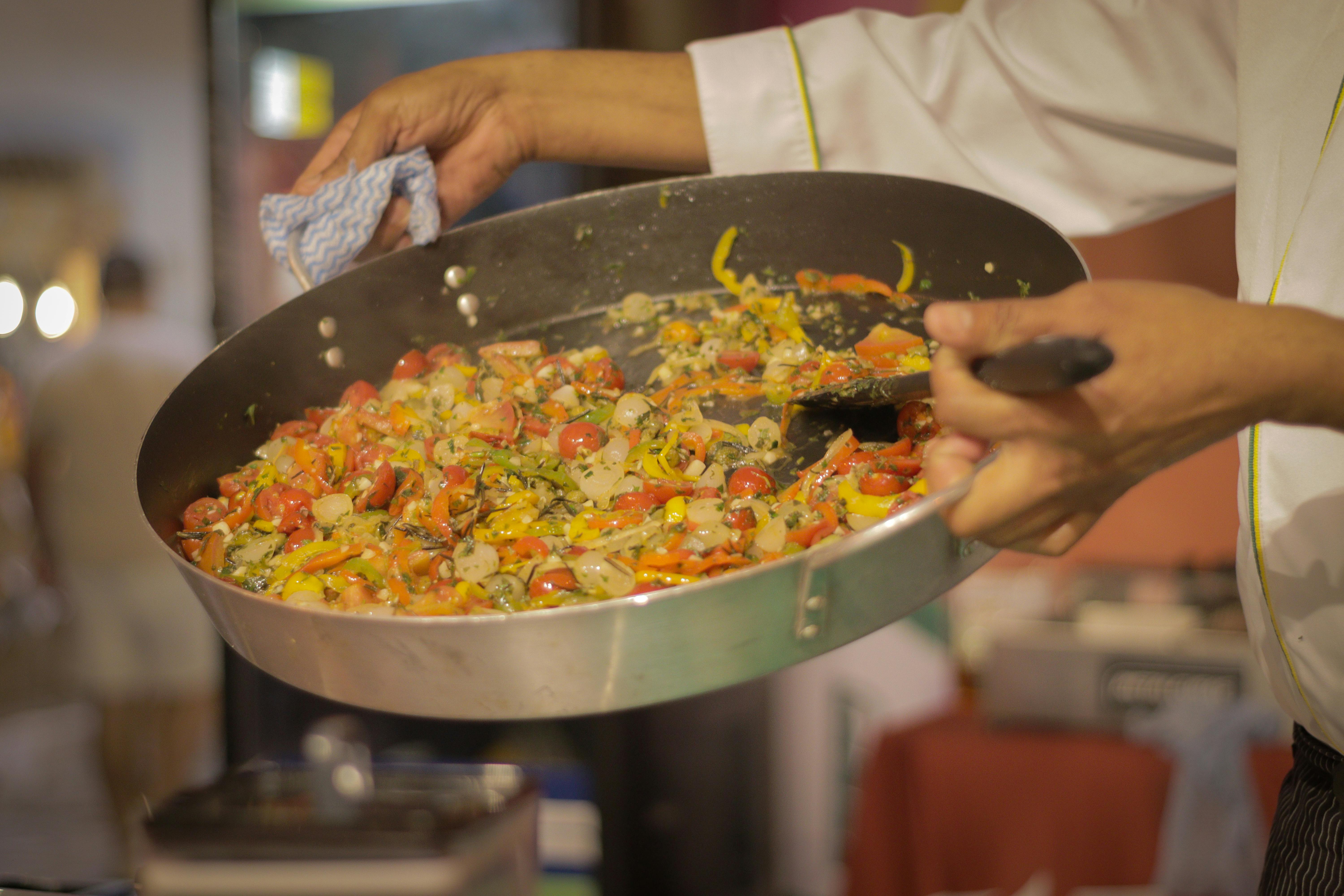
Photo: Wallyson Nascimento / Pexels
Puerto-Rican
Sofrito
The diets react (see scores below)
Common Ingredients
- green bell pepper
- cubanelle pepper
- onion
- garlic
- culantro
- cilantro
- ají dulce
- tomatoes
Specific recipes may vary.
Incompatible with 2 of 11 diets
Diet Ratings
Sofrito is a flavor base used in small amounts as a condiment or cooking sauce, which mitigates its carb impact significantly. The ingredients — bell peppers, cubanelle pepper, onion, garlic, tomatoes, ají dulce, and fresh herbs — are all whole, unprocessed vegetables with moderate net carbs individually. The main concerns are onion, tomatoes, and bell peppers, which contribute natural sugars and carbs. However, sofrito is typically used in tablespoon-sized quantities (1-2 tbsp per serving), bringing the net carb contribution per serving to roughly 2-4g — manageable within a daily keto budget. Ají dulce (sweet peppers) and tomatoes are the highest-carb contributors. As a condiment used sparingly, it can fit into keto; used liberally as a sauce base, it could push carb limits.
Some strict keto practitioners flag sofrito entirely due to the combination of tomatoes, sweet peppers, and onion — all foods with notable sugar content — arguing that cumulative use across multiple dishes in a day can silently erode the daily carb budget. Carnivore-leaning keto followers may also avoid plant-based condiments altogether.
Puerto Rican sofrito in this formulation is entirely plant-based, consisting of fresh vegetables, aromatics, and herbs. Green bell pepper, cubanelle pepper, ají dulce, onion, garlic, tomatoes, cilantro, and culantro are all whole plant foods with no animal-derived ingredients whatsoever. This is a traditional recaíto/sofrito base that happens to be naturally vegan. It is also a whole-food preparation, earning a high score within the approve range. Note that some commercial or family recipes may add tomato sauce or, in non-vegan Puerto Rican cooking, the sofrito is used to flavor meat dishes — but the condiment itself as listed here is fully compliant.
Puerto Rican sofrito in its traditional homemade form is entirely composed of fresh vegetables, aromatics, and herbs — all of which are clearly paleo-approved whole foods. Green bell pepper, cubanelle pepper, ají dulce, onion, garlic, tomatoes, cilantro, and culantro are all unprocessed plant foods that would have been analogous to what hunter-gatherers foraged. There are no grains, legumes, dairy, seed oils, refined sugars, or additives present. This is essentially a fresh herb and vegetable paste or base, making it a clean paleo condiment.
Puerto Rican sofrito is composed entirely of whole vegetables and aromatics — bell peppers, cubanelle peppers, onion, garlic, tomatoes, and fresh herbs (culantro, cilantro, ají dulce). These are precisely the plant-based ingredients that form the foundation of the Mediterranean diet. Analogous preparations exist throughout the Mediterranean world: Spanish sofrito, Italian soffritto, and French mirepoix all share the same principle of building flavor from cooked or blended vegetables and aromatics. There are no animal products, refined grains, added sugars, or processed ingredients. This condiment aligns perfectly with Mediterranean dietary principles and would typically be used to enhance vegetables, legumes, or protein dishes.
Sofrito is a 100% plant-based condiment with zero animal-derived ingredients. Every single component — green bell pepper, cubanelle pepper, onion, garlic, culantro, cilantro, ají dulce, and tomatoes — is explicitly excluded on the carnivore diet. This is a vegetable and herb paste with no redeeming carnivore-compatible elements whatsoever. There is universal consensus across all tiers of the carnivore community, from the strictest Lion Diet to the more permissive animal-based approach, that this condiment is entirely incompatible.
Puerto Rican sofrito in this form is a pure blend of whole vegetables and herbs — green bell pepper, cubanelle pepper, onion, garlic, culantro, cilantro, ají dulce, and tomatoes. Every single ingredient is explicitly allowed on the Whole30 program. There are no grains, legumes, dairy, added sugars, alcohol, or any other excluded ingredients. This is a foundational cooking base made entirely from compliant whole foods, making it an excellent Whole30-compatible condiment and flavor builder.
Puerto Rican sofrito contains multiple high-FODMAP ingredients that make it incompatible with the elimination phase. Onion is one of the highest-FODMAP foods tested by Monash University, containing significant fructans at any amount — even small quantities used in cooking can be problematic. Garlic is similarly high in fructans and is rated as one of the most potent FODMAP triggers, with no safe serving size during elimination. These two ingredients alone disqualify sofrito as a condiment, since the entire dish is built around them as foundational flavor components. Tomatoes contribute some excess fructose at larger servings, and ají dulce (a sweet pepper variety) has limited Monash testing. While green bell pepper, cubanelle pepper, cilantro, culantro, and tomatoes (in small amounts) are individually low-FODMAP, the presence of onion and garlic in meaningful quantities throughout the blend makes the final product high-FODMAP regardless of serving size.
Sofrito in this homemade Puerto Rican form is composed entirely of fresh vegetables and aromatics — bell peppers, cubanelle peppers, onion, garlic, culantro, cilantro, ají dulce, and tomatoes. There is no added sodium, no saturated fat, no added sugar, and no processed ingredients. This composition aligns perfectly with DASH diet principles: it is rich in potassium, vitamin C, fiber, and antioxidants from multiple vegetable sources. The NHLBI/NIH DASH guidelines explicitly encourage liberal use of vegetables and herbs as flavor bases, making sofrito an ideal seasoning strategy to replace salt-heavy condiments. The only minor caution is that commercial or jarred sofrito versions often contain added sodium and preservatives, which would lower the score; this assessment applies to the fresh homemade preparation as listed.
Sofrito is an herb and vegetable-based condiment made exclusively from low-glycemic, colorful vegetables and aromatics — bell peppers, cubanelle peppers, onion, garlic, tomatoes, ají dulce, culantro, and cilantro. Every ingredient is on the Zone's 'favorable' carbohydrate list. The glycemic load is minimal given that sofrito is used in small quantities as a flavor base, not consumed in bulk. It contains essentially no fat or protein, functioning as a pure low-GI carbohydrate flavor enhancer. This aligns perfectly with the Zone's emphasis on colorful vegetables, polyphenol-rich foods, and anti-inflammatory eating. The herbs (culantro, cilantro) and peppers contribute polyphenols, which Sears strongly endorses in his later work. Used as a condiment or cooking base, it adds negligible block counts while dramatically improving the flavor profile of Zone-compliant meals. It contains no sugar, no processed ingredients, no seed oils, and no high-glycemic components.
Puerto Rican sofrito is a powerhouse of anti-inflammatory ingredients with virtually no pro-inflammatory components. Bell peppers and cubanelle peppers are rich in vitamin C and carotenoids (beta-carotene, capsanthin), both potent antioxidants that reduce oxidative stress and inflammatory markers. Ají dulce, a mild sweet pepper native to the Caribbean, contains capsaicinoids and polyphenols without significant heat. Garlic is one of the most well-researched anti-inflammatory foods, with allicin and organosulfur compounds shown to reduce CRP and IL-6. Onions provide quercetin, a flavonoid with strong anti-inflammatory and antioxidant properties. Tomatoes contribute lycopene (especially relevant when the sofrito is cooked, which increases lycopene bioavailability) and vitamin C. Cilantro and culantro (its more potent relative, Eryngium foetidum) are herbs rich in flavonoids and phytonutrients. The combination of colorful vegetables, alliums, and herbs with no oils, added sugars, or processed ingredients makes this condiment an exemplary anti-inflammatory base. Used as a flavor foundation in cooking, it adds significant phytonutrient density to any dish with minimal caloric cost. The only confidence caveat is the nightshade debate (tomatoes, peppers) in the autoimmune protocol community.
Mainstream anti-inflammatory nutrition strongly supports all ingredients here, but AIP (Autoimmune Protocol) practitioners including Dr. Tom O'Bryan exclude nightshade vegetables — tomatoes, bell peppers, cubanelle, and ají dulce — citing solanine and lectin content as potentially problematic for individuals with autoimmune conditions or gut permeability issues. For the general healthy population, however, the antioxidant benefits of these vegetables far outweigh any theoretical lectin concerns.
Sofrito is a fresh herb and vegetable-based condiment used in small amounts to flavor dishes. It contains no fat, no added sugar, minimal calories, and is composed entirely of nutrient-dense whole-food ingredients. Bell peppers, tomatoes, and ají dulce contribute vitamin C and antioxidants; garlic and onion offer anti-inflammatory compounds; culantro and cilantro add micronutrients. It is easy to digest, not spicy (ají dulce is a sweet pepper with no significant heat), and poses no known risk of worsening GLP-1 side effects. While it provides no meaningful protein or fiber in the quantities typically used per serving, it functions as a flavor-boosting condiment that makes lean, high-protein foods more palatable — which is clinically valuable for patients with reduced appetite who struggle with food monotony on GLP-1 medications.
*See how scores were generated at our methodology page.
Nutritional profile
Six traits that cut across every diet.
Fiber & Plants
How much whole-plant food and fiber it delivers.
Healthy Fats
The quality of its fats (unsaturated, omega-3).
Whole / Unprocessed
How close it is to its natural, unprocessed form.
Gut Gentle
How easy it is on digestion (low FODMAP, few irritants).
Low Glycemic
How little it spikes your blood sugar.
Protein Density
How much protein it packs per calorie.
Controversy Index
Higher controversy = more disagreement between diets.
Diet-Specific Tips
 Keto — 5/10
View tips
- Used as a condiment in small portions (1-2 tbsp), net carbs are manageable (~2-4g per serving)
- Tomatoes, onion, and ají dulce contribute natural sugars and elevate carb count
- No added sugars, grains, or processed ingredients — whole food base
- Green bell peppers and herbs are keto-friendly at low quantities
- Portion control is critical — larger amounts can exceed carb tolerance
- Cumulative daily use across multiple dishes is a risk factor
 Vegan — 9/10
View tips
- All ingredients are whole plant foods — vegetables, alliums, and fresh herbs
- No animal products, dairy, eggs, or animal-derived additives present
- Culantro (Eryngium foetidum) and ají dulce are both plant-based ingredients, despite being less commonly known
- Sofrito is used as a flavor base in many non-vegan dishes, but the condiment itself is vegan
- No processing concerns — this is a fresh, minimally processed whole-food preparation
 Paleo — 9/10
View tips
- All ingredients are fresh, unprocessed vegetables, herbs, and aromatics
- No grains, legumes, dairy, or seed oils present
- Green bell pepper, cubanelle, and ají dulce are all paleo-approved peppers
- Garlic and onion are unambiguously paleo
- Culantro and cilantro are herbs fully consistent with paleo eating
- Tomatoes are botanically fruits and widely accepted in paleo
- No added salt, sugar, or preservatives in traditional homemade preparation
 Mediterranean — 9/10
View tips
- 100% plant-based with no animal products
- Rich in vegetables and aromatics emphasized by Mediterranean guidelines
- Direct analog to Spanish/Mediterranean sofrito tradition
- No refined grains, added sugars, or processed ingredients
- Fresh herbs (culantro, cilantro) provide additional phytonutrients
- Garlic and onion are Mediterranean staples with documented health benefits
- Whole food preparation with no industrial processing
 Whole30 — 9/10
View tips
- All ingredients are whole vegetables and fresh herbs — fully compliant
- No added sugar, dairy, grains, or legumes present
- Ají dulce is a sweet pepper variety, not a legume or excluded food
- Culantro and cilantro are compliant herbs
- Store-bought versions may contain non-compliant additives — homemade or label-verified versions recommended
 DASH — 9/10
View tips
- All ingredients are fresh vegetables and herbs — zero added sodium
- Rich in potassium, vitamin C, and fiber from multiple vegetable sources
- No saturated fat, no added sugar, no processed components
- Excellent DASH-aligned flavor base that reduces reliance on high-sodium seasonings
- Commercial/jarred sofrito may contain added salt and would warrant a 'caution' rating
- Garlic and onion provide additional cardiovascular benefits consistent with DASH goals
 Zone — 8/10
View tips
- All ingredients are low-glycemic, Zone-favorable vegetables and aromatics
- Rich in polyphenols from peppers, herbs, and garlic — strongly anti-inflammatory per Sears
- Used in small condiment portions, contributing negligible carbohydrate blocks
- No added sugar, oil, or processed ingredients in traditional preparation
- Colorful vegetables (peppers, tomatoes) align with Zone's preference for polyphenol-dense carbs
- Zero protein and near-zero fat — pure flavor enhancer that doesn't disrupt macronutrient ratios
 Anti-Inflammatory — 9/10
View tips
- Garlic: allicin and organosulfur compounds reduce CRP and IL-6
- Bell peppers and cubanelle: high vitamin C and carotenoid antioxidants
- Ají dulce: mild capsaicinoids and polyphenols
- Onion: quercetin flavonoid with anti-inflammatory activity
- Tomatoes: lycopene bioavailability enhanced when cooked in sofrito preparations
- Culantro and cilantro: flavonoid-rich herbs
- No oils, sugars, refined ingredients, or additives
- Nightshade concern relevant for autoimmune-sensitive individuals (AIP context)
 GLP-1 Friendly — 8/10
View tips
- Negligible fat, sugar, and calories — no concern for GLP-1 side effect triggers
- Whole-food vegetable and herb base — high nutrient density per calorie
- No significant protein or fiber contribution at condiment-level serving sizes
- Not spicy — ají dulce is sweet, not heat-bearing, so no reflux or nausea concern
- Enhances palatability of lean proteins and vegetables, supporting dietary adherence
- Easy to digest; no known gastric emptying complications