American
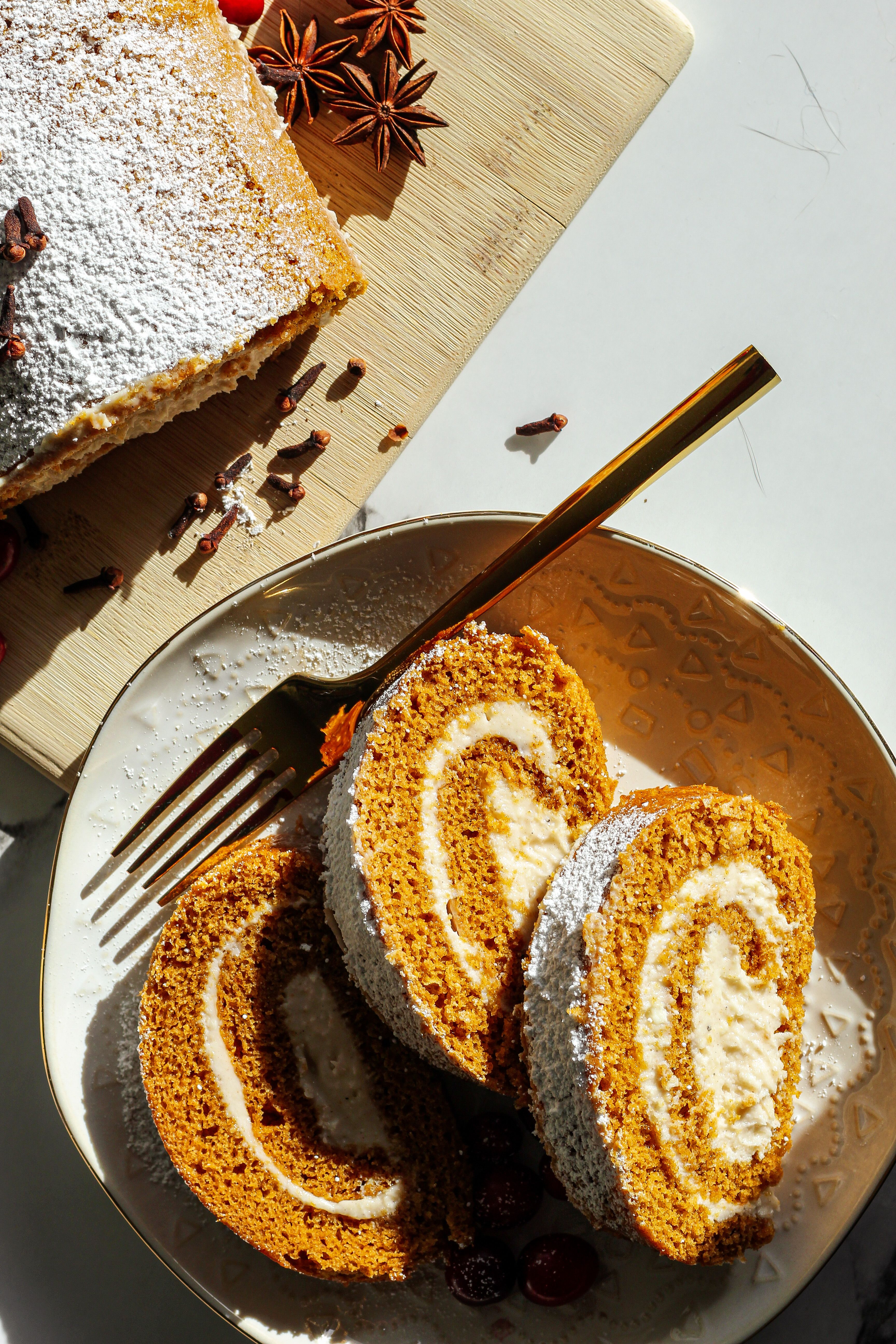
Pumpkin Roll
The diets react (see scores below)
Common Ingredients
- pumpkin puree
- eggs
- sugar
- flour
- baking powder
- cinnamon
- ginger
- nutmeg
- cream cheese
- butter
- powdered sugar
Specific recipes may vary.
Incompatible with 11 of 11 diets
Diet Ratings
Pumpkin Roll is fundamentally incompatible with a ketogenic diet. The recipe contains multiple high-carb, keto-forbidden ingredients: wheat flour (a grain), granulated sugar, and powdered sugar are the primary offenders. A standard serving would deliver an enormous net carb load — likely 40-60g or more per slice — instantly exceeding or consuming an entire day's keto carb budget. While pumpkin puree in small amounts can sometimes fit keto, and eggs, cream cheese, and butter are keto-friendly, those benefits are completely overwhelmed by the sugar and flour content. This is a classic American dessert/snack that has no meaningful place in ketogenic eating without a complete ingredient overhaul using almond/coconut flour, erythritol, and sugar-free cream cheese frosting.
Pumpkin Roll contains multiple animal-derived ingredients that make it clearly incompatible with a vegan diet. Eggs are used in the cake batter as a binding and leavening agent, cream cheese (a dairy product) forms the filling, and butter (also dairy) is used in the cream cheese filling. All three are unambiguously animal products excluded by every mainstream vegan standard. While the pumpkin puree, spices, flour, sugar, baking powder, and powdered sugar are plant-based, the presence of eggs, cream cheese, and butter means this dish cannot be considered vegan in its traditional form. Vegan adaptations do exist using flax eggs or aquafaba, vegan cream cheese (cashew- or tofu-based), and plant-based butter, but the dish as listed with these ingredients is not vegan.
Pumpkin Roll contains multiple paleo-excluded ingredients that make it fundamentally incompatible with the Paleolithic diet. Flour (wheat) is a grain and one of the clearest 'avoid' foods in paleo. Sugar and powdered sugar are refined sugars, explicitly excluded. Cream cheese and butter are dairy products, also excluded. Baking powder is a processed additive. While a few ingredients — pumpkin puree, eggs, cinnamon, ginger, and nutmeg — are paleo-approved, the dish as a whole is built around a grain-and-dairy-and-refined-sugar foundation that disqualifies it entirely.
Pumpkin Roll is a highly processed American dessert/snack that fundamentally contradicts Mediterranean diet principles. While pumpkin puree and spices are positive ingredients, the dish is dominated by refined white flour, large quantities of added sugars (both granulated and powdered), butter as the primary fat (not olive oil), and a cream cheese filling. This combination of refined grains, significant added sugars, and saturated fats from butter and cream cheese places it firmly in the 'avoid' category. It offers little nutritional value consistent with Mediterranean eating patterns and is a classic example of the processed, sugar-laden sweets the diet specifically discourages.
Pumpkin Roll is almost entirely plant-based and heavily processed, making it one of the most incompatible foods with the carnivore diet. The primary ingredients — pumpkin puree, flour, sugar, powdered sugar, baking powder, cinnamon, ginger, and nutmeg — are all plant-derived and explicitly excluded from any tier of carnivore eating. The only animal-derived ingredients are eggs, butter, and cream cheese, which appear in minor supporting roles within a dish that is fundamentally a baked grain-and-sugar product. There is no ambiguity here across any carnivore authority or protocol.
Pumpkin Roll contains multiple excluded ingredients: sugar (added sugar), flour (grain), powdered sugar (added sugar), cream cheese (dairy), and butter (dairy). Even setting aside individual excluded ingredients, this is a classic baked good — a rolled cake — which is explicitly prohibited by Whole30's Rule 4 against recreating baked goods and junk food, regardless of ingredient compliance. There is no compliant version of this dish that would honor the program's spirit.
Pumpkin Roll contains multiple high-FODMAP ingredients that make it unsuitable during the elimination phase. Regular wheat flour is high in fructans, which is the primary concern here. Cream cheese contains lactose and is high-FODMAP at typical serving sizes used in a filling. Pumpkin puree (canned pumpkin) is high-FODMAP at standard servings — Monash rates it as high-FODMAP due to fructans and GOS, with only a very small 30g serving being borderline. Powdered sugar (icing sugar) is generally low-FODMAP, as is butter. Eggs, cinnamon, ginger, and nutmeg are low-FODMAP. However, the combination of wheat flour (fructans), cream cheese (lactose), and pumpkin puree at realistic quantities makes this dish clearly unsuitable during elimination. There is no realistic way to modify the portion to make a standard slice of pumpkin roll low-FODMAP given these stacked high-FODMAP ingredients.
Pumpkin Roll is a dessert-style baked good that conflicts with core DASH principles on multiple fronts. While pumpkin puree itself is a DASH-friendly vegetable rich in potassium, fiber, and vitamins, it is a minor component in this recipe. The dish is dominated by high-sugar ingredients (granulated sugar, powdered sugar) and high-saturated-fat ingredients (cream cheese, butter). The cream cheese filling is full-fat dairy, which DASH specifically recommends against, and the butter adds significant saturated fat. The refined white flour provides negligible fiber compared to DASH-recommended whole grains. The combined added sugar load from both the cake layer and the cream cheese frosting makes this a high-sugar, high-saturated-fat dessert that NIH/NHLBI DASH guidelines explicitly categorize as a 'sweet' to be limited to 5 or fewer servings per week — and a single serving of pumpkin roll would likely consume that entire weekly allotment. There is no meaningful protein contribution, no whole grain fiber, and the caloric density from fat and sugar is high.
Pumpkin Roll is a dessert confection that is fundamentally incompatible with Zone Diet principles. The primary macronutrient profile is dominated by high-glycemic, insulin-spiking carbohydrates: refined white flour and two forms of sugar (granulated sugar in the cake and powdered sugar in the cream cheese filling). These are precisely the carbohydrate sources Dr. Sears explicitly classifies as 'unfavorable' and instructs Zone followers to eliminate or strictly minimize. The cream cheese and butter filling adds saturated fat rather than the preferred monounsaturated fats (olive oil, avocado, almonds). There is no meaningful lean protein component — eggs provide some protein but are overwhelmed by the carbohydrate-to-protein imbalance. The 40/30/30 block ratio is essentially impossible to achieve with this dish as structured: it would be extremely carbohydrate-heavy (perhaps 70%+ calories from carbs) with minimal protein and the wrong type of fat. While pumpkin puree itself is a favorable Zone vegetable, it is a minor ingredient here and its benefits are entirely negated by the surrounding dessert structure. This is not a food that can be portion-controlled into Zone compliance — even a small slice creates an unbalanceable block ratio. It belongs in the same category as cake, cookies, and other refined sugar/flour desserts that Zone explicitly discourages.
Pumpkin Roll is a dessert-style baked good with a profile that conflicts with anti-inflammatory principles on multiple fronts. While pumpkin puree itself is genuinely anti-inflammatory — rich in beta-carotene, antioxidants, and fiber — and the warming spices (cinnamon, ginger, nutmeg) offer meaningful anti-inflammatory polyphenols, these positives are overwhelmed by the dish's structural ingredients. The cake component relies on refined white flour and substantial added sugar, both strongly pro-inflammatory: refined carbohydrates spike blood glucose and insulin, driving inflammatory cytokine production (elevated CRP and IL-6 in research). The cream cheese filling doubles down with full-fat dairy — a LIMIT/AVOID tier ingredient — plus more butter (saturated fat) and powdered sugar (concentrated added sugar). The combined sugar load from two sources is significant. Eggs are a moderate ingredient that doesn't worsen the profile meaningfully, but there's no redeeming omega-3 source, no whole grains, and no legumes to offset the glycemic and saturated fat burden. This is essentially a dessert masquerading as a snack, and occasional indulgence framing does not rescue it from a structurally pro-inflammatory profile. The pumpkin and spices prevent a score of 1, but this dish sits firmly in the avoid range.
Pumpkin roll is a dessert-style snack built around refined flour, sugar, powdered sugar, butter, and cream cheese frosting — a combination that is high in simple carbohydrates, added sugars, and saturated fat with virtually no protein and minimal fiber despite the pumpkin puree. The pumpkin content is typically small relative to the sugar and flour, contributing negligible fiber or nutrients. For GLP-1 patients, this food hits nearly every avoid criterion simultaneously: high sugar drives blood glucose spikes, saturated fat from butter and cream cheese worsens nausea and GI side effects, refined flour offers empty calories, and the calorie density per small serving is high with no compensating nutritional benefit. With reduced appetite, every bite must count nutritionally — this dish does not meet that standard.
*See how scores were generated at our methodology page.
Nutritional profile
Six traits that cut across every diet.
Fiber & Plants
How much whole-plant food and fiber it delivers.
Healthy Fats
The quality of its fats (unsaturated, omega-3).
Whole / Unprocessed
How close it is to its natural, unprocessed form.
Gut Gentle
How easy it is on digestion (low FODMAP, few irritants).
Low Glycemic
How little it spikes your blood sugar.
Protein Density
How much protein it packs per calorie.
Controversy Index
Higher controversy = more disagreement between diets.