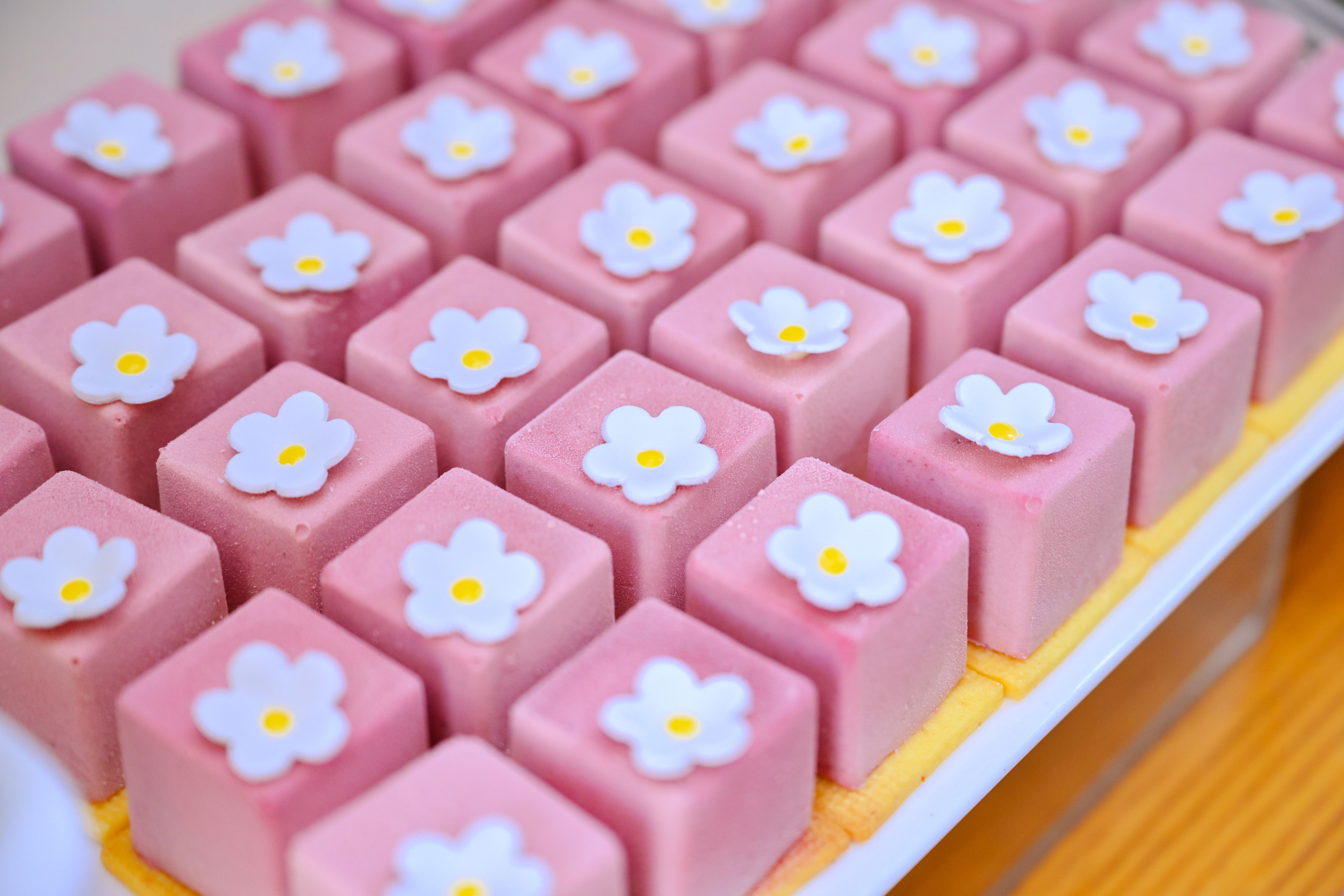
Austrian
Punschkrapfen
The diets react (see scores below)
Common Ingredients
- sponge cake
- rum
- sugar
- water
- apricot jam
- fondant icing
- coconut
- lemon juice
Specific recipes may vary.
Incompatible with 11 of 11 diets
Diet Ratings
Punschkrapfen is an Austrian confection that is entirely incompatible with a ketogenic diet. It is built on a sponge cake base (wheat flour, sugar, eggs), soaked in a rum-sugar syrup, layered with apricot jam (high sugar), coated in fondant icing (nearly pure sugar), and finished with coconut. Every major component is either a refined grain or a concentrated sugar source. A single Punschkrapfen (typically 80-100g) would contain well over 50g of net carbs — likely 60-70g — which exceeds the entire daily carb allowance for ketosis in one small pastry. There is no meaningful fat-to-carb ratio benefit, and the food provides no keto-compatible nutritional value in its standard form.
Punschkrapfen as listed contains only plant-based ingredients on the surface: sponge cake, rum, sugar, water, apricot jam, fondant icing, coconut, and lemon juice. However, the traditional Austrian sponge cake (Biskuit) almost universally contains eggs and often butter, making the default version non-vegan. The ingredients list as provided does not explicitly include eggs or dairy, but sponge cake is a key red flag — it is by definition an egg-based product in conventional baking. Additionally, white refined sugar may be processed with bone char, which is contested within the vegan community. Fondant icing is typically plant-based (sugar, glucose syrup, water), though some commercial versions contain gelatin. Evaluating the dish as described with the standard traditional recipe, this is borderline: the listed ingredients could theoretically be prepared in vegan versions, but the conventional preparation almost certainly contains eggs and butter in the sponge. A fully vegan version is achievable with substitutions but is not the default.
Some plant-based bakers argue that since vegan sponge cake and vegan fondant versions exist and all other listed ingredients are plant-based, this dish can be evaluated as potentially vegan-compliant if prepared intentionally — whole-food plant-based advocates would still caution against the heavily processed sugar and fondant component regardless.
Punschkrapfen is an Austrian confection that is fundamentally incompatible with the paleo diet. The base is sponge cake, which contains wheat flour — a grain that is strictly excluded. Sugar is a refined sweetener, explicitly banned. Fondant icing is pure processed refined sugar. Apricot jam typically contains added refined sugar. While rum is derived from sugarcane and coconut is paleo-friendly, these minor ingredients cannot redeem a dish whose core structure is built entirely on non-paleo foundations. This is a heavily processed, grain- and refined-sugar-laden dessert with virtually no paleo-compliant nutritional value.
Punschkrapfen is an Austrian confection made primarily of refined sponge cake, sugar, rum, apricot jam, and fondant icing — essentially a high-sugar, refined-grain dessert with minimal nutritional value by Mediterranean diet standards. The ingredient list is dominated by added sugars (fondant icing, sugar, apricot jam), refined grains (sponge cake), and alcohol. None of the core Mediterranean diet pillars are represented: no vegetables, no whole grains, no legumes, no healthy fats like olive oil. Coconut, while a plant ingredient, is not a Mediterranean staple and its saturated fat content is inconsistent with Mediterranean principles. This dish directly contradicts the diet's emphasis on minimizing added sugars, refined grains, and processed foods.
Punschkrapfen is an Austrian confection made entirely of plant-based and processed ingredients: sponge cake (flour, sugar, eggs potentially, but grain-based), rum, sugar, water, apricot jam, fondant icing, coconut, and lemon juice. There are zero animal-derived primary components — no meat, no fish, no significant animal protein or fat. Even the small possibility of eggs in the sponge cake does not redeem this item, as it is fundamentally a grain-based, sugar-laden pastry. Every core ingredient violates carnivore principles: grains (sponge cake), sugar, plant fruit derivatives (apricot jam, lemon juice), and coconut (a plant product). This dish is entirely incompatible with the carnivore diet.
Punschkrapfen is an Austrian confection that violates Whole30 on multiple levels. The sponge cake base contains grains (wheat flour), which are excluded. Rum is alcohol, which is excluded. Sugar is added sugar, which is excluded. Fondant icing is pure sugar. The dish is also a classic baked good/confection that falls squarely into the 'no recreating baked goods/junk food' rule. There is virtually nothing about this dish that is Whole30 compatible.
Punschkrapfen is an Austrian rum-soaked sponge cake confection with multiple high-FODMAP ingredients. The sponge cake base is made with wheat flour, which is high in fructans — a primary FODMAP concern during elimination. Apricot jam is a significant issue: apricots are stone fruits high in polyols (sorbitol), and jam concentrates these polyols; Monash rates apricot jam as high-FODMAP at typical serving sizes. The fondant icing typically contains large amounts of sugar which in isolation is low-FODMAP, but some fondant formulations include glucose-fructose syrup or other additives. Coconut in small amounts (e.g., desiccated coconut at ~14g) is low-FODMAP per Monash, but quantity matters. Rum, sugar, lemon juice, and water are generally low-FODMAP. However, the combination of wheat-based sponge cake and apricot jam alone makes this dish high-FODMAP at any standard serving during the elimination phase.
A FODMAP practitioner might note that if a gluten-free sponge base were substituted and a low-FODMAP jam used (e.g., strawberry jam in small amounts), the dish could theoretically be modified to be low-FODMAP. However, as traditionally made, Punschkrapfen cannot be considered safe during elimination due to wheat fructans and apricot polyols.
Punschkrapfen is an Austrian rum-soaked sponge cake confection coated in fondant icing, filled with apricot jam, and typically containing coconut. This is a high-sugar, high-calorie dessert/snack with multiple DASH-incompatible components. The fondant icing and added sugar represent significant amounts of added sugars, which DASH explicitly limits. The sponge cake is made from refined flour, not whole grains. Coconut, a tropical oil/fat source, is limited under DASH guidelines due to its saturated fat content. Rum adds empty calories and alcohol, which DASH does not encourage. There is minimal nutritional benefit — no meaningful potassium, calcium, magnesium, or fiber contribution. This food falls squarely in the 'sweets' category that DASH limits to 5 or fewer servings per week, and even a single serving of this dense confection would likely exhaust that weekly allowance.
Punschkrapfen is an Austrian confection built almost entirely from high-glycemic, sugar-dense ingredients: sponge cake (refined flour + sugar), rum (alcohol with sugar), sugar syrup, apricot jam (concentrated fruit sugar), and fondant icing (essentially pure sugar). The macro profile is overwhelmingly carbohydrate-dominant — and the wrong kind of carbohydrates. There is virtually no lean protein, no monounsaturated fat, and no fiber to blunt the glycemic spike. This is the antithesis of a Zone-balanced food: it provides almost no material for a protein block or a fat block, making it structurally impossible to fit into Zone ratios without building an entirely separate, compensatory meal around it. The rum adds empty calories. The fondant icing and sugar syrup represent exactly the kind of highly processed, insulin-spiking carbohydrates Dr. Sears most strongly warns against. A small taste (a few grams) would technically not 'break' the Zone, but as a snack — which implies meaningful consumption — this dish cannot serve any constructive role in Zone eating. It scores a 2 rather than 1 only because trace amounts of fruit (apricot jam) and coconut provide minimal redeeming nutritional content.
Punschkrapfen is an Austrian confection with a strongly pro-inflammatory nutritional profile. The base is sponge cake — refined white flour and sugar — soaked in rum (alcohol, not the red wine that some anti-inflammatory frameworks permit in moderation) and sugar syrup. It is coated in fondant icing, which is essentially pure refined sugar. The apricot jam adds modest fruit content but is typically high in added sugar. Coconut in small decorative quantities provides negligible benefit. There are no meaningful sources of omega-3 fatty acids, polyphenols, fiber, or antioxidants. The dish is dominated by refined carbohydrates and added sugars, which are well-established drivers of inflammatory markers including CRP and IL-6. Rum represents alcohol beyond the limited red wine exception in anti-inflammatory frameworks. Fondant icing is processed sugar with no redeeming nutritional value. This dish hits multiple 'avoid' categories simultaneously: refined carbohydrates, added sugars, alcohol (non-red-wine), and highly processed ingredients. There is essentially no anti-inflammatory offset.
Punschkrapfen is an Austrian confection made almost entirely of sugar-dense, low-nutrient ingredients: sponge cake (refined flour + sugar), rum (alcohol), sugar syrup, apricot jam, and fondant icing. It delivers virtually no protein, negligible fiber, and a very high glycemic load from multiple sugar sources. The alcohol content — even if partially reduced during preparation — is a direct concern for GLP-1 patients. The fondant icing and jam layer pile on additional simple sugars. The refined sponge cake base is easily digestible in one sense but spikes blood sugar rapidly and provides no satiety value. This is the definition of empty calories — precisely what GLP-1 patients cannot afford given their significantly reduced appetite and caloric intake. There is no meaningful nutritional redeeming quality per serving relative to the GLP-1 dietary framework.
*See how scores were generated at our methodology page.
Nutritional profile
Six traits that cut across every diet.
Fiber & Plants
How much whole-plant food and fiber it delivers.
Healthy Fats
The quality of its fats (unsaturated, omega-3).
Whole / Unprocessed
How close it is to its natural, unprocessed form.
Gut Gentle
How easy it is on digestion (low FODMAP, few irritants).
Low Glycemic
How little it spikes your blood sugar.
Protein Density
How much protein it packs per calorie.
Controversy Index
Higher controversy = more disagreement between diets.