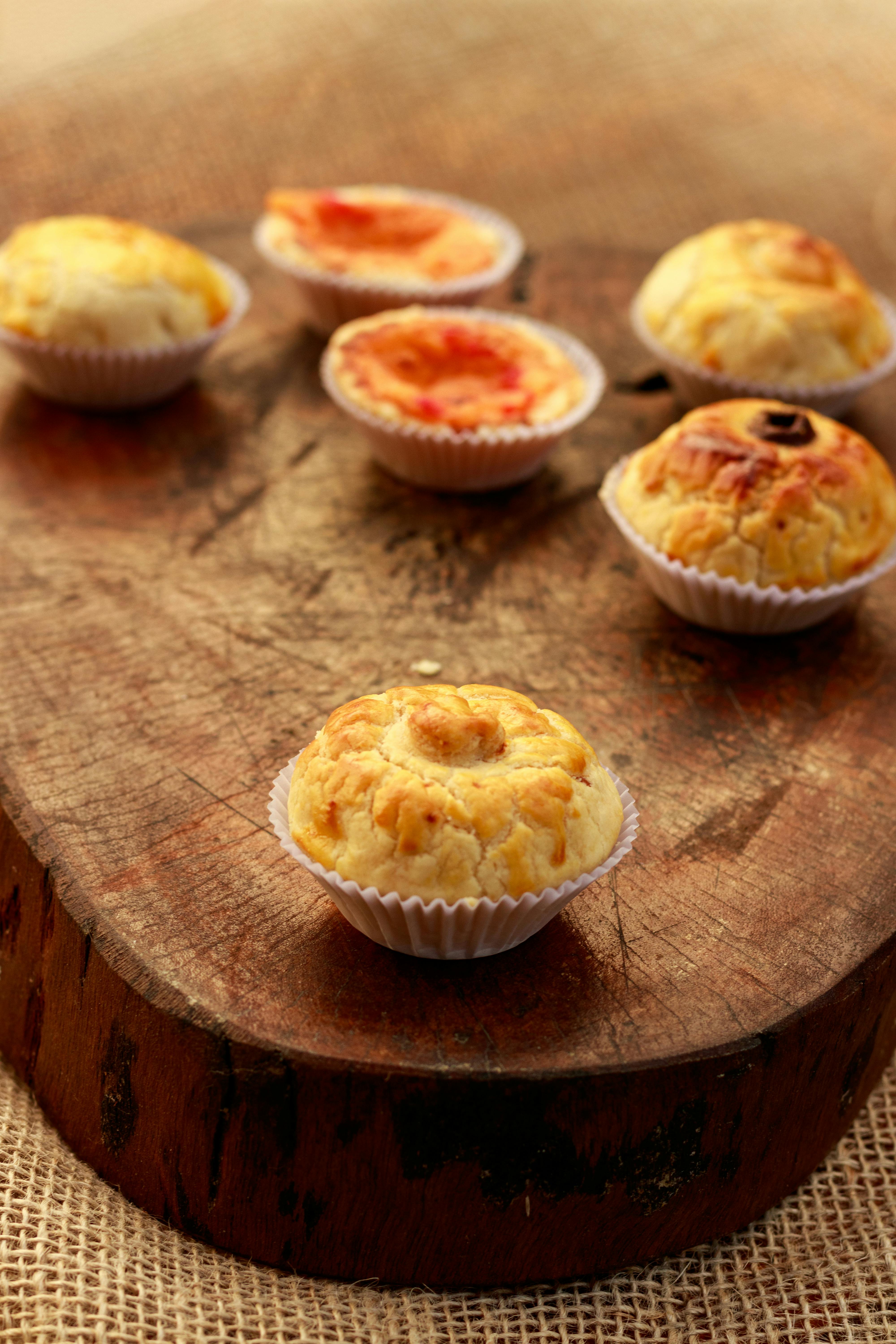
Photo: Victor Cayke / Pexels
Portuguese
Queijada
The diets react (see scores below)
Common Ingredients
- fresh cheese
- eggs
- sugar
- pastry dough
- butter
- cinnamon
Specific recipes may vary.
Incompatible with 11 of 11 diets
Diet Ratings
Queijada is a traditional Portuguese pastry that is fundamentally incompatible with a ketogenic diet. It contains two major keto-disqualifying ingredients: sugar (a direct source of simple carbohydrates) and pastry dough (grain-based, high-carb). A single queijada typically contains 30-45g of net carbs, which alone can exhaust or exceed the entire daily carb allowance for ketosis. While the fresh cheese, eggs, and butter are keto-friendly components, they are far outweighed by the sugar and pastry dough in terms of metabolic impact. Cinnamon is fine in trace amounts. There is no realistic portion size that makes this compatible with maintaining ketosis.
Queijada is a traditional Portuguese pastry that contains multiple animal-derived ingredients, making it entirely incompatible with a vegan diet. Fresh cheese (dairy), eggs, and butter are all direct animal products that are unambiguously excluded under vegan principles. There is no ambiguity here — this dish is built around animal ingredients as its foundational components, not as trace additives or processing aids.
Queijada is fundamentally incompatible with the Paleolithic diet. The dish contains multiple non-paleo ingredients: fresh cheese (dairy), pastry dough (grain-based flour), refined sugar, and butter (dairy). These are core exclusions in the paleo framework — dairy products introduce casein and lactose that Paleolithic humans did not consume in processed form, grains were not part of the pre-agricultural diet, and refined sugar is a modern processed ingredient. While eggs and cinnamon are paleo-approved, they are minor components that cannot redeem a dish so structurally built on excluded food groups. This is a classic European pastry with no meaningful paleo adaptation possible without a complete ingredient overhaul.
Queijada is a traditional Portuguese pastry tart that combines fresh cheese and eggs (moderate dairy/protein components) with significant amounts of added sugar, refined pastry dough, and butter. While dairy and eggs are acceptable in moderation within the Mediterranean diet, the combination of refined grain pastry dough, added sugar, and butter makes this dish primarily a high-sugar, refined-grain dessert/snack that contradicts core Mediterranean principles. The use of butter rather than olive oil as the fat source, the refined pastry shell, and the substantial sugar content collectively push this firmly into the 'avoid' category for regular consumption.
Some Mediterranean diet practitioners acknowledge that traditional, culturally embedded pastries like queijada — made with whole, recognizable ingredients (cheese, eggs, minimal processing beyond home baking) — can be enjoyed occasionally as part of a balanced dietary pattern, distinguishing them from ultra-processed commercial sweets. The Portuguese culinary tradition does include such pastries as celebratory or festive foods, not daily staples.
Queijada is a Portuguese pastry that is fundamentally incompatible with the carnivore diet. While it contains some animal-derived ingredients (fresh cheese, eggs, butter), the dish is dominated by plant-based and processed components: pastry dough (grain-based flour), sugar (processed plant-derived sweetener), and cinnamon (plant spice). The pastry dough alone is a complete disqualifier, as grains are among the most excluded food categories on any tier of carnivore eating. Sugar adds further violation as a refined carbohydrate. Even the most lenient 'animal-based' practitioners like Paul Saladino would not include grain-flour pastries or refined sugar in this context. This is a classic baked sweet snack, not an animal food.
Queijada contains multiple Whole30-excluded ingredients. Fresh cheese is dairy (excluded), sugar is an added sweetener (excluded), pastry dough contains grains/wheat (excluded), and butter is excluded dairy (only ghee/clarified butter is permitted). Cinnamon and eggs are compliant, but the dish is disqualified by at least four separate excluded ingredients. Additionally, even if ingredient substitutions were attempted, queijada is a pastry/baked good, which falls squarely into the 'no recreating baked goods' rule.
Queijada is a Portuguese pastry tart that presents multiple FODMAP concerns. The primary issue is fresh cheese (requeijão or ricotta-style), which is high in lactose and forms the dominant filling ingredient. At a standard serving of one queijada, the lactose load from fresh cheese alone is likely to exceed safe thresholds for the elimination phase. The pastry dough traditionally contains wheat flour, a significant source of fructans, adding a second major FODMAP hit. Eggs, butter, sugar, and cinnamon are individually low-FODMAP and do not contribute to the concern. However, the combination of lactose from fresh cheese and fructans from wheat pastry dough makes this dish high-FODMAP at any realistic single-serving portion during the elimination phase.
Some FODMAP practitioners note that if the queijada were made with a gluten-free pastry base and lactose-free fresh cheese (or a low-lactose hard cheese substitute), the dish could theoretically be adapted to low-FODMAP status. Monash University has not specifically tested traditional queijada, so the rating is inferred from its component ingredients rather than direct testing data.
Queijada is a Portuguese sweet pastry tart made primarily of fresh cheese, eggs, sugar, butter, and pastry dough. From a DASH perspective, this food is problematic on multiple fronts. It contains significant added sugar as a primary ingredient, which DASH explicitly limits. The butter contributes saturated fat, which DASH restricts to reduce cardiovascular risk. The pastry dough is a refined grain product, not a whole grain. The combination of high added sugar, saturated fat from butter, and refined carbohydrates places this firmly in the 'avoid' category. While the fresh cheese and eggs do provide some protein and calcium, the overall nutritional profile is dominated by nutrients DASH discourages. As a snack, it offers little fiber, potassium, magnesium, or other DASH-emphasized micronutrients. Occasional very small portions might be tolerated within an otherwise strict DASH diet, but as a regular snack choice it conflicts with core DASH principles.
Queijada is a traditional Portuguese sweet pastry tart that presents multiple Zone Diet challenges. The primary macro profile is dominated by high-glycemic carbohydrates (sugar and pastry dough made from refined flour) and saturated fat (butter), with only modest protein from eggs and fresh cheese. Sugar is a direct Zone 'avoid' ingredient — a pure high-glycemic carbohydrate with no fiber to moderate glycemic load. Refined pastry dough adds more high-GI carbs. Butter contributes saturated fat rather than the preferred monounsaturated fat. While eggs and fresh cheese do provide some usable protein and fat blocks, they are overwhelmed by the sugar and refined flour content. The 40/30/30 ratio cannot realistically be achieved with this dish as-is — it skews heavily toward high-glycemic carbohydrate calories and saturated fat, with insufficient lean protein. Even small portions would deliver a glycemic spike inconsistent with Zone principles. This is a dessert/sweet snack with no practical path to Zone balance without fundamentally reformulating it.
Queijada is a traditional Portuguese pastry tart made primarily from fresh cheese, eggs, sugar, butter, and pastry dough — a combination that presents several anti-inflammatory concerns. The dish is high in added sugar, which is one of the most consistently pro-inflammatory dietary components, raising CRP and IL-6 markers in research. Butter contributes saturated fat, which anti-inflammatory frameworks recommend limiting. The refined pastry dough adds refined carbohydrates with minimal fiber, causing rapid glycemic spikes that promote inflammatory signaling. Full-fat cheese, while less problematic than butter in moderate amounts, adds to the overall saturated fat load. The one redeeming ingredient is cinnamon, a well-regarded anti-inflammatory spice, but its quantity in a dessert pastry is too small to meaningfully offset the cumulative pro-inflammatory profile. Eggs contribute some choline and selenium, which have modest anti-inflammatory properties, but again, this is outweighed by the other ingredients. Overall, Queijada is a high-sugar, high-saturated-fat, refined-carbohydrate dessert with little fiber, antioxidants, or omega-3 content — a poor fit for an anti-inflammatory eating pattern on any regular basis.
Queijada is a traditional Portuguese sweet tart made primarily from fresh cheese, eggs, sugar, butter, and pastry dough — a combination that makes it a poor fit for GLP-1 patients on nearly every key criterion. The dish is high in added sugar and refined carbohydrates from the pastry dough, providing mostly empty calories with little fiber. Butter and pastry dough contribute significant saturated fat, which worsens GLP-1 side effects including nausea, bloating, and reflux due to slowed gastric emptying. While eggs and fresh cheese do contribute some protein, the overall protein density per calorie is low relative to the sugar and fat load. Nutrient density per calorie is poor — a small queijada delivers a high proportion of its calories from sugar and saturated fat. Cinnamon is benign and mildly beneficial for blood sugar, but does not meaningfully offset the other concerns. This is essentially a dessert pastry reframed as a snack, and it conflicts with the core GLP-1 dietary priorities of high protein density, high fiber, low saturated fat, and nutrient density per calorie.
*See how scores were generated at our methodology page.
Nutritional profile
Six traits that cut across every diet.
Fiber & Plants
How much whole-plant food and fiber it delivers.
Healthy Fats
The quality of its fats (unsaturated, omega-3).
Whole / Unprocessed
How close it is to its natural, unprocessed form.
Gut Gentle
How easy it is on digestion (low FODMAP, few irritants).
Low Glycemic
How little it spikes your blood sugar.
Protein Density
How much protein it packs per calorie.
Controversy Index
Higher controversy = more disagreement between diets.