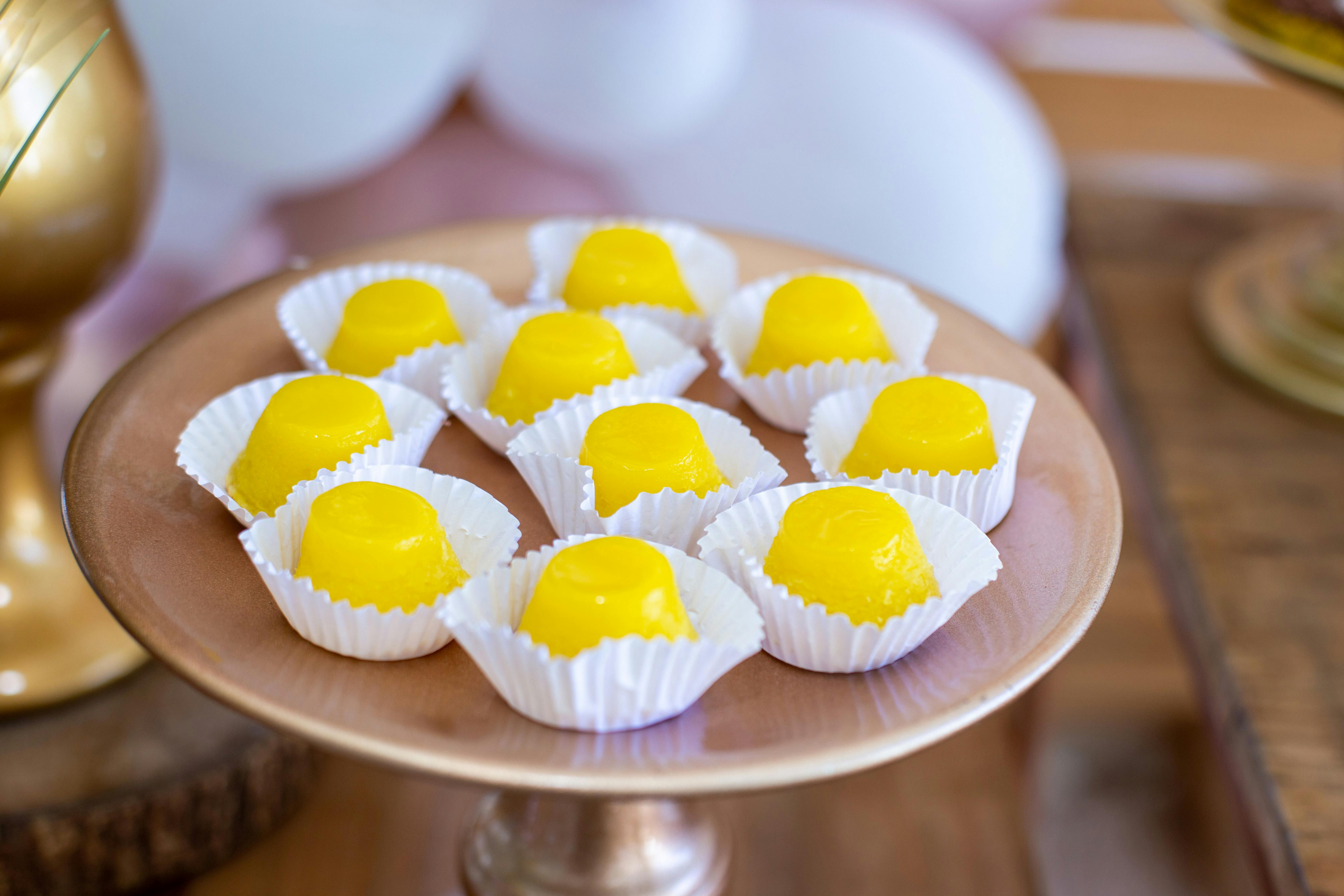
Photo: Vidal Balielo Jr. / Pexels
The diets react (see scores below)
Common Ingredients
- egg yolks
- condensed milk
- coconut
- sugar
- butter
Specific recipes may vary.
Incompatible with 11 of 11 diets
Diet Ratings
Quindim is a Brazilian custard dessert made primarily from condensed milk and sugar — two of the most keto-incompatible ingredients possible. Condensed milk is essentially milk with massive amounts of added sugar, containing roughly 55g of sugar per 100g. A single serving of quindim would deliver an enormous carbohydrate load that would instantly break ketosis. While egg yolks, butter, and coconut are individually keto-friendly, they are overwhelmed by the condensed milk and added sugar. There is no realistic portion size that makes this dish compatible with a ketogenic diet.
Quindim is a traditional Brazilian custard dessert that contains multiple animal-derived ingredients, making it entirely incompatible with a vegan diet. Egg yolks are the primary protein and structural base of the dish. Condensed milk is a dairy product. Butter is also dairy-derived. These three ingredients alone represent clear, unambiguous animal products, and there is no version of quindim in its traditional form that qualifies as vegan.
Quindim is a Brazilian custard dessert made primarily from egg yolks, condensed milk, coconut, sugar, and butter. While egg yolks and coconut are paleo-approved ingredients, the remaining core ingredients disqualify this dish. Condensed milk is a heavily processed dairy product containing both lactose and added refined sugar — excluded under paleo rules on both dairy and refined sugar grounds. Refined sugar is a clear paleo violation with strong consensus. Butter is a dairy product discouraged by strict paleo guidelines. The dish as a whole is a processed, sugar-heavy confection that fundamentally contradicts the paleo philosophy, regardless of its two compliant ingredients.
Quindim is a Brazilian dessert custard that directly contradicts Mediterranean diet principles across multiple dimensions. It is built on egg yolks, condensed milk (high in added sugar), coconut (high in saturated fat, not a traditional Mediterranean ingredient), sugar, and butter — none of which are core Mediterranean foods. The combination results in a high-sugar, high-saturated-fat, highly processed sweet with no meaningful plant-forward, whole-food, or fiber-rich components. Added sugars and refined sweets are explicitly minimized in the Mediterranean diet. While eggs and dairy have a limited role in moderation, they appear here in a form concentrated with sugar and saturated fat, rendering the dish incompatible with Mediterranean dietary patterns.
Quindim is a Brazilian dessert that is fundamentally incompatible with the carnivore diet. While it contains egg yolks and butter (animal-derived), the dish is primarily defined by coconut (a plant food), sugar (processed plant-derived sweetener), and condensed milk (a heavily processed dairy product with significant sugar content). Coconut is explicitly excluded from carnivore as a plant product, and sugar is one of the most universally rejected substances in the carnivore framework. The condensed milk adds further processed sugar content. This dish is essentially a confection built around plant and sugar ingredients, with animal products playing a supporting role. There is no meaningful way to frame this as a carnivore-compatible food.
Quindim contains multiple excluded ingredients that make it clearly non-compliant with Whole30. Condensed milk is a dairy product (excluded), sugar is an added sweetener (excluded), and butter is excluded dairy (only ghee/clarified butter is permitted). Even if those ingredients were removed, this is a classic baked dessert — a custard-style sweet — that would fall under the 'no recreating baked goods/junk food' rule regardless of ingredient substitutions. There is no realistic compliant version of this dish.
Quindim is a Brazilian coconut custard made from egg yolks, condensed milk, coconut, sugar, and butter. The primary FODMAP concern is condensed milk, which is high in lactose — a disaccharide that is a key FODMAP. A standard serving of quindim would contain a meaningful amount of condensed milk per portion, making lactose intake a real concern during elimination. Coconut (desiccated or fresh, shredded) is low-FODMAP at approximately 1/4 cup (24g) per Monash, but larger quantities become high-FODMAP due to sorbitol and fructans. Egg yolks, sugar, and butter are all low-FODMAP. The combined lactose load from condensed milk in a typical serving, along with potential coconut overload depending on recipe ratios, makes this dish risky during the strict elimination phase. A very small portion might reduce FODMAP load, but standard serving sizes of this dessert make it difficult to recommend without caution.
Monash University has not specifically tested quindim, so exact FODMAP thresholds for this dish are not established. Some FODMAP practitioners may consider a very small portion (e.g., a mini quindim of ~30-40g) potentially manageable if condensed milk content is limited, but most elimination-phase protocols would flag condensed milk as a lactose risk that is difficult to control in a traditional recipe.
Quindim is a Brazilian custard dessert made almost entirely from ingredients that conflict with DASH diet principles. Condensed milk and sugar contribute very high amounts of added sugar. Egg yolks in large quantities add significant saturated fat and cholesterol. Butter is a saturated fat source explicitly limited by DASH guidelines. Coconut (especially when sweetened or as coconut milk/cream) is a tropical oil/saturated fat source that DASH discourages. Together, these ingredients create a dessert that is high in added sugars, saturated fat, and calories with essentially no beneficial fiber, potassium, magnesium, or calcium in DASH-relevant quantities. This dish is antithetical to DASH diet goals of limiting sweets, saturated fat, and added sugars while emphasizing nutrient-dense whole foods.
Quindim is a Brazilian dessert custard made almost entirely from sugar-dense, high-glycemic, and high-saturated-fat ingredients. Condensed milk and sugar are the primary carbohydrate sources — both are extremely high-glycemic and nutritionally empty from a Zone perspective, spiking insulin rapidly. Egg yolks provide some protein but are paired with butter, adding significant saturated fat rather than the preferred monounsaturated fats. Coconut contributes additional saturated fat. There is virtually no low-glycemic carbohydrate content, no lean protein contribution, and no monounsaturated fat. The macronutrient profile is wildly skewed — dominated by simple sugars and saturated fat, with minimal usable protein. Even with strict portion control, there is no practical way to incorporate Quindim into a Zone-balanced meal without profoundly disrupting the 40/30/30 ratio. This is exactly the type of food Dr. Sears identifies as maximally unfavorable: high-glycemic, pro-inflammatory, and insulin-spiking.
Quindim is a Brazilian dessert/confection made almost entirely of pro-inflammatory ingredients. Condensed milk is high in added sugar and full-fat dairy. Sugar is added on top of this, making the dish extremely high in refined sugars, which directly elevate inflammatory markers like CRP and IL-6. Butter adds saturated fat, which in large amounts is linked to increased inflammation. Egg yolks are present in high quantities (typically 6–12 yolks per recipe), contributing significant arachidonic acid, a pro-inflammatory omega-6 fatty acid. While coconut provides some medium-chain triglycerides and minor nutritional value, it is also high in saturated fat, which most anti-inflammatory frameworks consider problematic in excess. There are no meaningful anti-inflammatory components — no omega-3s, no antioxidant-rich vegetables or fruits, no polyphenols, no fiber from whole grains or legumes. This dish is essentially a concentrated sugar-fat confection with no redemptive anti-inflammatory properties. It should be treated as an occasional indulgence at best, and avoided entirely by those following a strict anti-inflammatory protocol.
Quindim is a Brazilian dessert made almost entirely of egg yolks, condensed milk, sugar, butter, and coconut — a combination that is high in sugar, saturated fat, and empty calories with negligible fiber and minimal usable protein per serving. Despite containing eggs and coconut, the macronutrient profile is dominated by sugar and fat rather than protein. Condensed milk and added sugar make this a high-glycemic, calorie-dense food that delivers little nutritional value per calorie. Butter adds saturated fat, which can worsen GLP-1 side effects including nausea, bloating, and reflux. The high sugar content is counterproductive to the metabolic goals of GLP-1 therapy. This is a classic empty-calorie dessert that fails on nearly every GLP-1 dietary criterion: low protein density, zero fiber, high saturated fat, high sugar, and poor nutrient density per calorie.
*See how scores were generated at our methodology page.
Nutritional profile
Six traits that cut across every diet.
Fiber & Plants
How much whole-plant food and fiber it delivers.
Healthy Fats
The quality of its fats (unsaturated, omega-3).
Whole / Unprocessed
How close it is to its natural, unprocessed form.
Gut Gentle
How easy it is on digestion (low FODMAP, few irritants).
Low Glycemic
How little it spikes your blood sugar.
Protein Density
How much protein it packs per calorie.
Controversy Index
Higher controversy = more disagreement between diets.