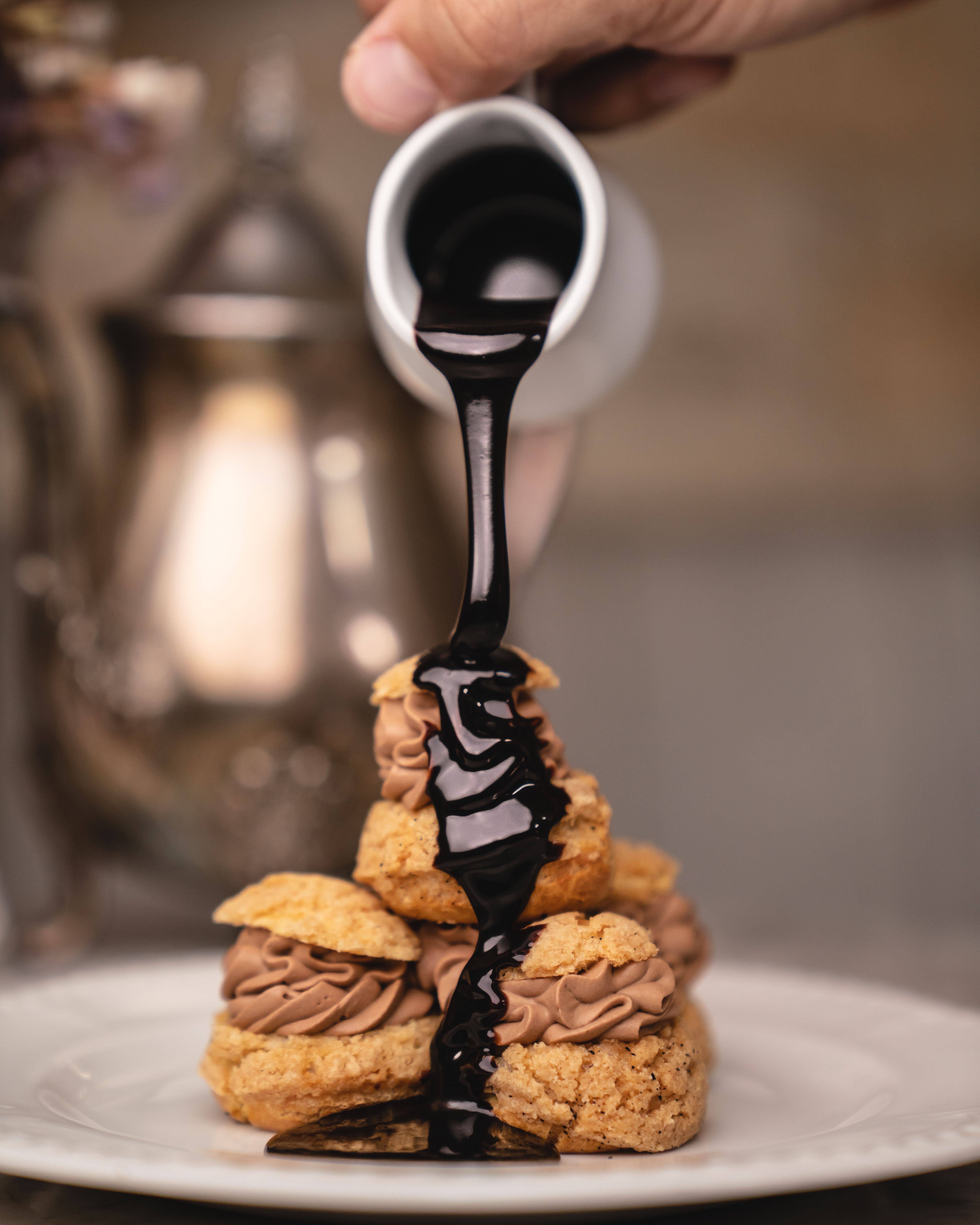
Photo: Cyprus Eats / Pexels
The diets react (see scores below)
Common Ingredients
- choux pastry
- pastry cream
- milk
- eggs
- butter
- flour
- chocolate
- fondant
- coffee extract
Specific recipes may vary.
Incompatible with 11 of 11 diets
Diet Ratings
A Religieuse is a classic French pastry consisting of two choux pastry shells filled with pastry cream and coated in fondant icing — a near-perfect storm of keto incompatibility. Choux pastry is made with flour, a high-carb grain product. Pastry cream contains milk and sugar. Fondant is essentially pure sugar. The combination delivers an extremely high net carb load (likely 40-60g+ per single pastry) from multiple sources: refined flour, sugar-based fondant, and sweetened cream filling. There is no meaningful fiber offset. The fat content, while present from butter and eggs, is entirely overshadowed by the dominant carbohydrate structure of the dish. No reasonable portion adjustment makes this keto-compatible.
Religieuse is a classic French pastry that contains multiple animal-derived ingredients, making it entirely incompatible with a vegan diet. The choux pastry requires eggs and butter; the pastry cream (crème pâtissière) is made with milk, eggs, and butter; and the fondant glaze typically contains no animal products but is used alongside these heavily dairy- and egg-dependent components. Every structural element of this dish relies on animal products. There is no meaningful vegan debate here — this is a clear avoid.
Religieuse is a classic French pastry that is fundamentally incompatible with the Paleo diet. The dish is built almost entirely on non-paleo ingredients: choux pastry relies on wheat flour (a grain), pastry cream contains milk and refined sugar (dairy and processed sugar), fondant is pure refined sugar, and the overall preparation is a highly processed confection. While eggs and butter are present — eggs being fully paleo-approved and butter being borderline — they are minor components in a structure that violates core paleo principles at every level. There is no meaningful paleo adaptation possible for this dish without completely deconstructing it.
A Religieuse is a classic French pastry made of choux dough filled with pastry cream and coated in fondant icing — essentially a refined sugar and refined flour dessert with high butter content and no meaningful plant-based nutrition. It contradicts nearly every core principle of the Mediterranean diet: it is built on refined grains (white flour), loaded with added sugar (fondant), relies on butter as the primary fat rather than olive oil, and provides no vegetables, legumes, whole grains, or other plant-forward components. While eggs and milk appear as ingredients (moderate Mediterranean foods in isolation), here they serve as vehicles for a high-sugar, high-saturated-fat confection. This is precisely the category of processed sweets and refined-grain desserts the Mediterranean diet explicitly minimizes.
Religieuse is a classic French pastry that is fundamentally incompatible with the carnivore diet. It is built almost entirely on plant-derived and heavily processed ingredients: choux pastry and pastry cream rely on flour (a grain), fondant is pure refined sugar, and coffee extract is a plant compound. While a few animal-derived ingredients are present — eggs, butter, and milk — they exist only as minor components within a wheat-and-sugar-based dessert. No amount of eggs or butter rescues a product whose primary structure is grain flour and whose primary flavoring and coating are sugar and plant extracts. This is a processed, plant-dominant confection with no meaningful place in any tier of carnivore eating.
A Religieuse is a classic French pastry made of choux pastry (flour-based), pastry cream, milk, butter, and topped with fondant (sugar-based coating). It contains multiple excluded ingredients: flour (a grain product), dairy (milk and butter), and fondant (added sugar). Beyond the ingredient violations, it is precisely the kind of baked good/pastry that Whole30 explicitly prohibits recreating even with compliant ingredients. This dish fails on virtually every Whole30 criterion simultaneously.
Religieuse is a classic French pastry that contains multiple high-FODMAP ingredients. The choux pastry and pastry cream both rely on wheat flour, which is high in fructans — a key FODMAP to eliminate. Pastry cream is made with milk, which contains lactose, another high-FODMAP disaccharide; the quantity used in a filled religieuse is well above any low-FODMAP lactose threshold. Fondant icing is typically made with glucose/sucrose but may also include polyols depending on formulation. Even setting fondant aside, the combination of wheat flour (fructans) and milk-based pastry cream (lactose) at the portion sizes typical of a full religieuse makes this firmly high-FODMAP during the elimination phase. Butter and eggs are low-FODMAP, and dark chocolate in small amounts can be low-FODMAP, but they cannot offset the primary FODMAP loads from wheat and dairy.
A Religieuse is a classic French pastry consisting of choux dough filled with pastry cream and topped with fondant icing — essentially a high-sugar, high-fat dessert with no meaningful DASH-beneficial nutrients. The combination of butter-rich choux pastry, full-fat pastry cream (made with whole milk, eggs, and butter), sugar-laden fondant, and chocolate results in a food high in saturated fat, added sugars, and refined carbohydrates. DASH guidelines explicitly limit sweets, added sugars, saturated fat, and refined grains while emphasizing nutrient-dense whole foods. This pastry provides negligible potassium, calcium, magnesium, or fiber relative to its caloric and saturated fat load. It fits squarely in the 'sweets' category that DASH limits to ≤5 servings per week of small portions, and even a single Religieuse would likely exceed a reasonable weekly sweets allowance in one sitting.
A religieuse is a French pastry consisting of two choux puffs filled with pastry cream and coated in fondant icing — essentially a pure dessert with no Zone-friendly redeeming macronutrient profile. The carbohydrate load comes from refined flour (choux pastry), sugar-heavy fondant, and pastry cream, all of which are high-glycemic. There is virtually no lean protein to speak of (eggs and milk contribute some, but they are minor and dwarfed by fat and refined carbs). The fat profile is dominated by saturated butter fat rather than monounsaturated fats. The 40/30/30 Zone ratio is essentially impossible to achieve with this food as a snack — it would deliver something closer to 60-70% calories from carbs, 20-25% from fat (saturated), and only 5-10% from protein. There is no meaningful low-glycemic vegetable or fiber content to moderate the glycemic response. The fondant coating is pure sugar, which Zone categorically discourages. As a snack with no protein block and no favorable carb source, this item cannot be incorporated into Zone balance without a complete restructuring that would leave the dish unrecognizable.
A Religieuse is a classic French pastry consisting of choux pastry filled with pastry cream, glazed with fondant, and flavored with chocolate or coffee. From an anti-inflammatory perspective, this dessert is problematic on multiple fronts. The choux pastry is made with refined white flour and butter, both of which contribute to inflammatory load — refined flour spikes blood sugar and insulin, while butter provides saturated fat. The pastry cream filling adds substantial amounts of whole milk, sugar, and eggs combined in a high-sugar custard. The fondant glaze is essentially pure refined sugar, one of the most pro-inflammatory ingredients in the modern diet. While chocolate contains cocoa (which has anti-inflammatory polyphenols), the amount used here is likely minimal and in a highly processed, sugared form rather than the ≥70% dark chocolate recommended. Coffee extract adds negligible anti-inflammatory benefit. The overall profile — refined carbohydrates, added sugars, saturated fat, no fiber, no omega-3s, no vegetables or protective phytonutrients — represents essentially the opposite of anti-inflammatory eating principles. This is a treat food with virtually no redeeming anti-inflammatory qualities.
A religieuse is a classic French pastry consisting of two choux puffs filled with rich pastry cream, glazed with fondant, and flavored with chocolate or coffee extract. It is essentially a high-sugar, high-fat, low-protein dessert with negligible fiber. The choux pastry is made from butter and eggs but delivers its calories primarily as refined carbohydrates and fat. The pastry cream filling is dense with sugar, milk, egg yolks, and butter. Fondant glaze adds a concentrated sugar load with no nutritional return. For GLP-1 patients, this item fails on nearly every priority: it provides minimal protein, no meaningful fiber, significant saturated fat from butter and cream, and high refined sugar — all in a small, calorically dense package that offers almost zero nutrient density per calorie. The coffee extract may also contribute a small caffeine load. High-fat, high-sugar foods are among the most likely to worsen GLP-1 side effects including nausea, reflux, and blood sugar instability. Although the small physical size might seem portion-friendly, the caloric and sugar density make it counterproductive on a reduced-appetite, nutrient-priority eating plan.
*See how scores were generated at our methodology page.
Nutritional profile
Six traits that cut across every diet.
Fiber & Plants
How much whole-plant food and fiber it delivers.
Healthy Fats
The quality of its fats (unsaturated, omega-3).
Whole / Unprocessed
How close it is to its natural, unprocessed form.
Gut Gentle
How easy it is on digestion (low FODMAP, few irritants).
Low Glycemic
How little it spikes your blood sugar.
Protein Density
How much protein it packs per calorie.
Controversy Index
Higher controversy = more disagreement between diets.