Photo: Valeria Boltneva / Pexels
British
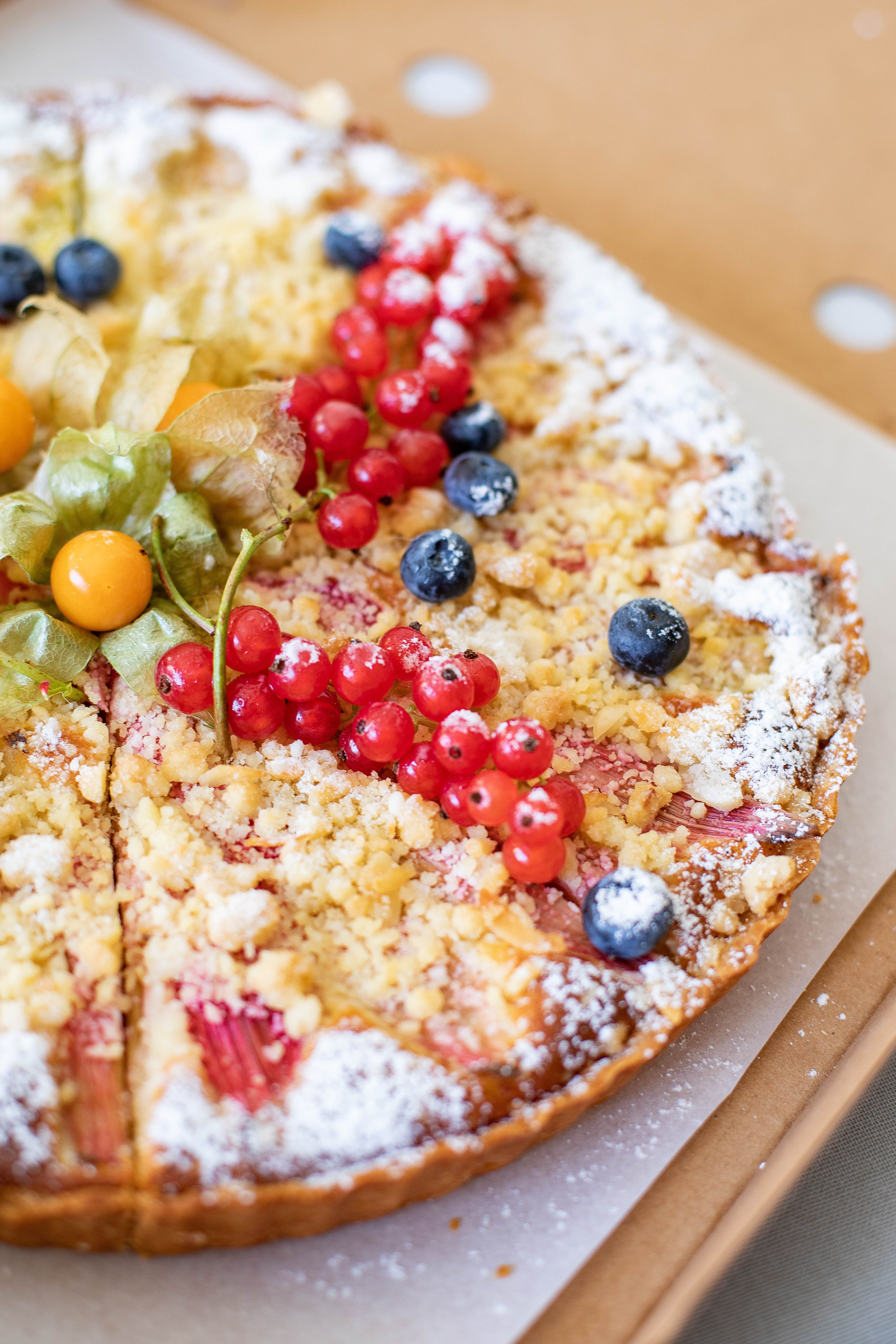
Rhubarb Crumble
The diets react (see scores below)
Common Ingredients
- rhubarb
- butter
- flour
- oats
- sugar
- salt
Specific recipes may vary.
Incompatible with 10 of 11 diets
Diet Ratings
Rhubarb Crumble is fundamentally incompatible with a ketogenic diet. The crumble topping contains flour (refined grain, high-carb), oats (high-carb grain), and sugar (pure glucose/fructose) — all of which are explicitly forbidden on keto. A standard serving would deliver well over 50g of net carbs from these ingredients alone, instantly breaking ketosis. While rhubarb itself is relatively low-carb, it is typically heavily sweetened due to its tartness, adding even more sugar. Butter is the only keto-friendly ingredient in this dish. There is no realistic portion size that would make this dish compatible with ketosis.
Rhubarb Crumble as listed contains butter, which is a dairy product derived from animal milk. This directly violates the core vegan principle of excluding all animal products. The dish is otherwise plant-based — rhubarb, flour, oats, sugar, and salt are all vegan-friendly — but butter is a clear animal-derived ingredient. A vegan version is straightforward to make by substituting butter with a plant-based alternative such as vegan margarine, coconut oil, or cold-pressed vegetable fat, in which case the dish would score highly as an approve.
Rhubarb Crumble is heavily non-paleo. The crumble topping contains flour (wheat — a grain), oats (a grain), sugar (refined), salt (added), and butter (dairy) — four to five clear paleo violations in a single dish. While rhubarb itself is a paleo-compatible plant, it is a minor component surrounded by ingredients that are explicitly excluded under all mainstream paleo frameworks. This dish cannot be considered paleo in any reasonable interpretation.
Rhubarb Crumble is a British dessert that significantly contradicts Mediterranean diet principles. The dish is built around butter (a saturated animal fat rather than olive oil), refined white flour, and added sugar — three ingredients that the Mediterranean diet explicitly discourages. While rhubarb itself is a fruit/vegetable and oats are a whole grain, these positives are heavily outweighed by the problematic components. The high sugar content, refined grain base, and butter-driven fat profile place this firmly in the 'avoid' category. It is essentially a processed, sugar-laden dessert with no olive oil, no legumes, and no plant-forward structure consistent with Mediterranean eating patterns.
Rhubarb Crumble is almost entirely plant-based and contains no animal protein whatsoever. Rhubarb is a plant, flour and oats are grains, and sugar is a processed plant-derived sweetener — all strictly excluded on the carnivore diet. While butter and salt are the only carnivore-compatible ingredients, they are minor components in a dish that is fundamentally incompatible with carnivore principles. There is universal consensus across all carnivore community camps that this dish must be avoided.
Rhubarb Crumble contains multiple excluded ingredients under the Whole30 program. Butter (dairy) is excluded — only ghee or clarified butter is permitted. Flour (grain-based) and oats (grains) are both explicitly excluded grain products. Sugar is an excluded added sweetener. Additionally, even if compliant substitutions were made for each individual ingredient, a crumble is a baked-good-style dessert dish that falls squarely into the 'no recreating junk food/baked goods' rule, which explicitly prohibits items like crumbles, cookies, and similar comfort food recreations regardless of ingredient compliance.
The primary FODMAP problem in this dish is the wheat flour used in the crumble topping. Wheat flour is high in fructans and is a clear 'avoid' during the elimination phase. A standard crumble topping uses a meaningful amount of flour, making this dish high-FODMAP. Rhubarb itself is low-FODMAP at standard servings (up to ~150g per Monash). Butter is low-FODMAP (fat, no FODMAPs). Rolled oats are low-FODMAP at up to 52g per Monash. Sugar and salt are FODMAP-free. However, the wheat flour alone is sufficient to classify this dish as high-FODMAP and unsuitable during elimination phase. The dish could be made low-FODMAP by substituting a gluten-free flour blend for the wheat flour, keeping the oats within safe serving sizes.
Rhubarb Crumble is a classic British dessert (here listed as a snack) that conflicts with several core DASH diet principles. While rhubarb itself is a low-calorie vegetable with some potassium and fiber, the crumble topping is made from butter (high saturated fat), refined white flour (not whole grain), sugar (added sugar), and salt. The dish is essentially a high-sugar, high-saturated-fat dessert with refined carbohydrates — all categories the DASH diet explicitly limits. Butter contributes saturated fat, which DASH restricts in favor of vegetable oils. The substantial added sugar content places it firmly in the 'sweets' category that DASH recommends minimizing. The use of refined flour rather than whole grain is also contrary to DASH grain recommendations. Oats are a positive DASH-friendly ingredient, but they are outweighed by the problematic components. A DASH-modified version using whole-grain oat topping, minimal sugar, and a small amount of vegetable oil instead of butter would score significantly higher.
Rhubarb Crumble is a poor fit for the Zone Diet. While rhubarb itself is low in carbohydrates and would be a favorable ingredient, the crumble topping is dominated by high-glycemic, nutritionally problematic components: refined white flour, sugar, and butter. Sugar is essentially a pure high-glycemic carbohydrate that spikes insulin — exactly what Zone is designed to prevent. Refined flour is similarly unfavorable. Butter provides saturated fat rather than the preferred monounsaturated fats (olive oil, avocado, almonds). Critically, as listed there is no protein source whatsoever, making it impossible to construct a Zone-balanced 40/30/30 block meal or snack from this dish as-is. The carbohydrate load is heavily dominated by refined sugar and flour rather than low-glycemic vegetables or fruit. As a snack category item, it provides essentially no protein, high-glycemic carbs, and saturated fat — hitting three of the Zone's key unfavorable markers simultaneously. It scores a 2 rather than 1 only because rhubarb itself is a favorable low-GI ingredient and oats have some nutritional merit, but these are overwhelmed by the other components.
Rhubarb Crumble presents a mixed anti-inflammatory profile. On the positive side, rhubarb itself contains antioxidants including anthocyanins and vitamin K, and has some evidence of anti-inflammatory polyphenols. Oats provide beta-glucan fiber, which has modest anti-inflammatory and gut-health benefits. However, the dish is dominated by pro-inflammatory elements: butter contributes saturated fat, refined white flour offers minimal nutritional value with a high glycemic impact, and added sugar is a well-established driver of inflammation via elevated blood glucose and AGE (advanced glycation end-product) formation. Together, the butter-flour-sugar crumble topping is a classic refined, high-saturated-fat combination that anti-inflammatory frameworks consistently advise limiting. The dish is not in the 'avoid' category because rhubarb and oats provide genuine value and it is not processed or containing trans fats or HFCS, but it cannot be recommended as a regular snack in an anti-inflammatory diet without meaningful modification — such as replacing butter with extra virgin olive oil or coconut oil in modest amounts, using whole wheat or almond flour, and reducing sugar.
Rhubarb crumble is a poor fit for GLP-1 patients as a snack. The crumble topping is made primarily of butter, flour, sugar, and oats — delivering high saturated fat, refined carbohydrates, and significant added sugar with minimal protein (none listed) and limited fiber despite the oats and rhubarb. The butter-heavy topping is exactly the type of high-fat, calorie-dense food that worsens GLP-1 side effects including nausea, bloating, and reflux due to slowed gastric emptying. The sugar content drives empty calories at a time when every calorie must count nutritionally. As a snack category item, it fails on virtually every GLP-1 priority: no meaningful protein, high saturated fat, high added sugar, and low nutrient density per calorie. While rhubarb itself has some fiber and is low-calorie, its contribution is overwhelmed by the crumble topping. A small occasional dessert portion might be tolerated by some patients, but as a categorized snack it should be avoided.
*See how scores were generated at our methodology page.
Nutritional profile
Six traits that cut across every diet.
Fiber & Plants
How much whole-plant food and fiber it delivers.
Healthy Fats
The quality of its fats (unsaturated, omega-3).
Whole / Unprocessed
How close it is to its natural, unprocessed form.
Gut Gentle
How easy it is on digestion (low FODMAP, few irritants).
Low Glycemic
How little it spikes your blood sugar.
Protein Density
How much protein it packs per calorie.
Controversy Index
Higher controversy = more disagreement between diets.
Diet-Specific Tips
 Anti-Inflammatory — 4/10
View tips
- Rhubarb contains anthocyanins and polyphenols with anti-inflammatory potential
- Oats provide beta-glucan fiber with modest anti-inflammatory benefits
- Butter contributes saturated fat, a pro-inflammatory element per anti-inflammatory guidelines
- Refined white flour has high glycemic impact and minimal fiber or nutrients
- Added sugar promotes inflammation via blood glucose spikes and AGE formation
- No omega-3 sources, antioxidant-rich vegetables, or emphasized anti-inflammatory ingredients present
- No trans fats, processed additives, or HFCS — limits severity of concern