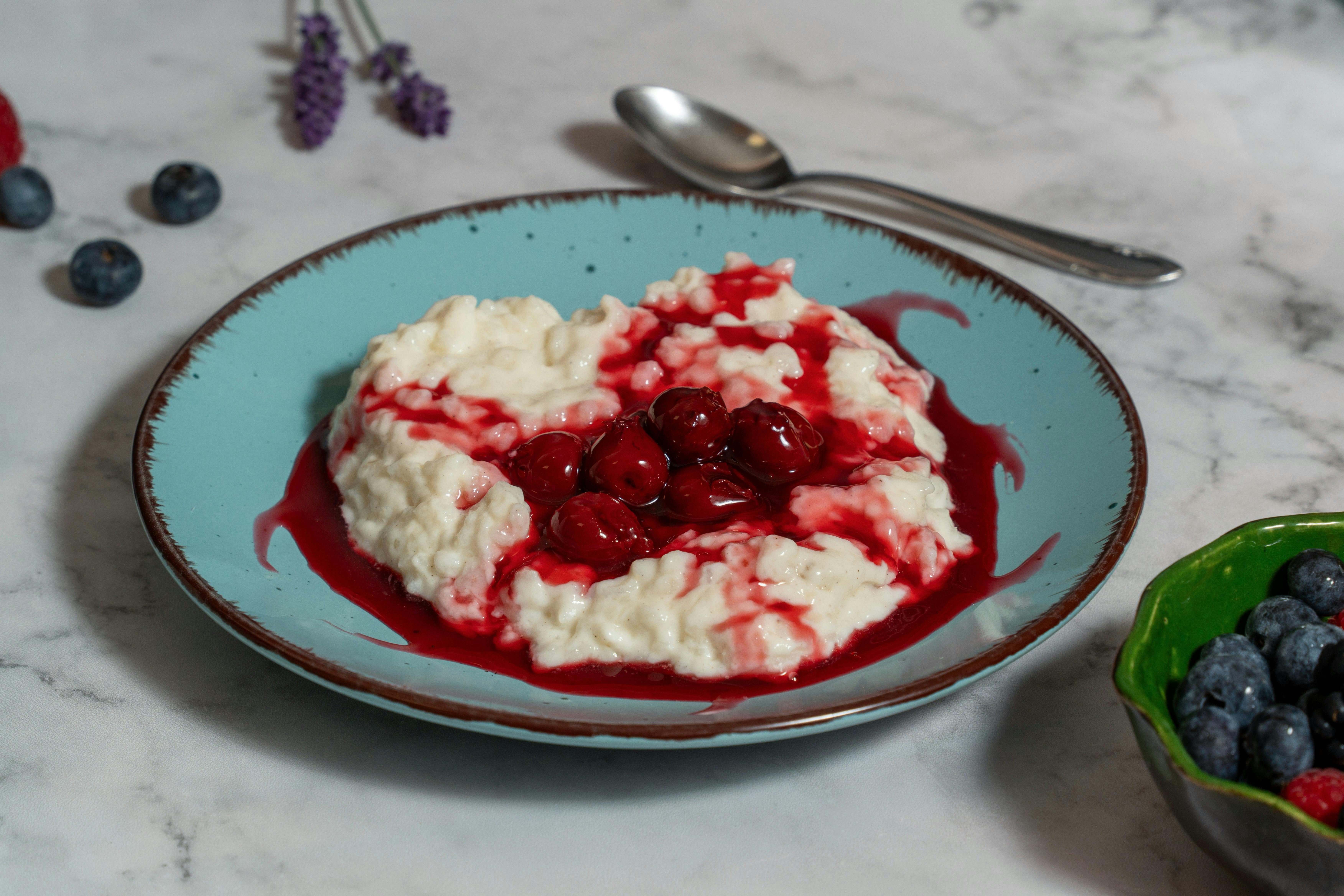
Photo: Gundula Vogel / Pexels
British
Rice Pudding
The diets react (see scores below)
Common Ingredients
- rice
- milk
- sugar
- butter
- nutmeg
- salt
Specific recipes may vary.
Incompatible with 8 of 11 diets
Diet Ratings
Rice pudding is fundamentally incompatible with a ketogenic diet. Rice is a high-glycemic grain with approximately 28g of net carbs per 100g cooked serving, and added sugar compounds the carbohydrate load further. A standard serving of rice pudding can easily contain 30-45g of net carbs, which alone can exceed or consume the entire daily keto carb allowance. Milk also adds lactose (natural milk sugar), pushing net carbs even higher. There is no meaningful portion size that makes this dish keto-compatible without completely reformulating it with keto-friendly substitutes (e.g., cauliflower rice, heavy cream, sugar-free sweetener).
British rice pudding contains both milk and butter, which are dairy products derived from animals. These are core, non-incidental ingredients that define the dish. No meaningful debate exists within the vegan community — dairy is unequivocally excluded from a vegan diet. While vegan versions of rice pudding can be made by substituting plant-based milk (oat, almond, coconut) and vegan butter, the traditional recipe as listed is not vegan-compliant.
Rice Pudding is fundamentally incompatible with the Paleo diet. It contains multiple core non-Paleo ingredients: rice (a grain, strictly excluded), milk (dairy, excluded), refined sugar (excluded), butter (dairy, excluded), and added salt (excluded). Every primary ingredient violates Paleo principles, making this dish one of the clearest possible 'avoid' cases. There is no meaningful Paleo substitution that would preserve the identity of this dish.
Rice pudding as prepared in British tradition combines several elements that conflict with Mediterranean diet principles. The dish uses white refined rice (not a whole grain), added sugar as a primary ingredient, and butter as the fat source rather than olive oil. The combination of refined starch, added sugar, and saturated fat from butter makes this a poor fit. While dairy (milk) is acceptable in moderation on a Mediterranean diet, the overall nutritional profile of this dish — high glycemic, high in added sugar, and built around non-core fats — places it firmly in the avoid category. It offers little of the plant-forward nutrition, fiber, or healthy fats central to Mediterranean eating.
Some Mediterranean cultures do have traditional rice-based desserts (e.g., Greek rizogalo or Turkish sütlaç) made with milk, rice, and sugar, suggesting that a small portion of a dairy-and-rice pudding could be considered an occasional cultural indulgence. Modern Mediterranean diet frameworks, however, consistently flag added sugars and refined grains as foods to minimize, even in traditional dessert contexts.
Rice Pudding is fundamentally incompatible with the carnivore diet. The dish is built on rice, a grain and plant food that is entirely excluded from the carnivore protocol. Beyond the rice, it contains sugar (a processed plant-derived sweetener), nutmeg (a plant-based spice), and while milk and butter are animal-derived, they cannot redeem a dish so thoroughly anchored in plant foods. Even the most liberal 'animal-based' practitioners who permit raw dairy and honey would not include a grain-based dessert. This dish fails at its foundational level.
Rice Pudding contains multiple excluded ingredients under the Whole30 program. Rice is a grain and is explicitly excluded. Milk is dairy and is excluded (only ghee/clarified butter are allowed dairy exceptions). Sugar is an added sugar, which is explicitly excluded. Regular butter is also excluded (only ghee/clarified butter is permitted). With four separate excluded ingredients, this dish is firmly off-limits on Whole30.
Rice pudding contains a mix of low- and high-FODMAP ingredients. White rice is firmly low-FODMAP and safe in standard servings. Sugar (sucrose), butter, nutmeg (in small culinary amounts), and salt are all low-FODMAP. The critical problem is regular cow's milk, which is high in lactose — a key FODMAP disaccharide. A standard serving of rice pudding (typically 150–200g) will contain a significant quantity of milk, easily exceeding the low-FODMAP threshold of approximately 30ml of regular milk. However, if the milk is substituted with lactose-free milk or a low-FODMAP plant-based alternative (e.g., rice milk, oat milk in small serves), the dish becomes low-FODMAP. As traditionally made with regular milk, rice pudding is a caution-to-avoid dish during the elimination phase. The score reflects that the dish *can* be made low-FODMAP with a simple swap, but as traditionally prepared it poses a real lactose risk.
Monash University rates regular cow's milk as high-FODMAP above ~30ml per serving, and a typical rice pudding portion contains many times this amount of milk. Some clinical FODMAP practitioners may allow small tastes or advise that cooking may alter lactose levels marginally, but this is not supported by Monash guidance — those with lactose sensitivity should treat traditional rice pudding as avoid, reserving 'caution' only for those who tolerate small amounts of lactose or use lactose-free milk.
British rice pudding sits in a gray zone for DASH. The base ingredients include white rice (not a whole grain, offering little fiber) and milk (a DASH-approved dairy food, though full-fat milk is common in this recipe rather than the low-fat dairy DASH emphasizes). The added sugar contributes to the sweets category that DASH limits, and butter adds saturated fat — both are discouraged. Nutmeg and salt add minimal but notable sodium. However, the dish is not deeply processed, does provide some calcium and protein from the milk, and portions are typically modest as a snack. It is not a DASH staple but is not categorically off-limits in small, occasional servings. Using low-fat or skimmed milk, reducing or eliminating butter, using minimal added sugar, and omitting added salt would move this dish significantly closer to DASH-compatible territory.
NIH DASH guidelines specifically limit added sugars, sweets, and saturated fat from butter and full-fat dairy, which this dish contains. However, some updated DASH-oriented clinicians note that a small, portion-controlled serving of rice pudding made with low-fat milk and minimal sugar can fit within the discretionary calorie allowance, and recent evidence questioning the harm of full-fat dairy in cardiovascular outcomes may soften the concern about the milk component somewhat.
Rice pudding is a poor fit for the Zone Diet due to multiple unfavorable macro components stacking together. White rice is a high-glycemic carbohydrate that Sears explicitly lists as unfavorable, and added sugar compounds the glycemic load further — both spike insulin significantly. The fat source is butter (saturated fat), which Zone discourages in favor of monounsaturated fats like olive oil or avocados. The milk provides some protein and fat, but the overall dish is overwhelmingly carbohydrate-heavy with very little lean protein to balance the blocks. As a snack, it would deliver a large carb block surplus with almost no protein block contribution, making a 40/30/30 ratio virtually impossible to achieve without drastically restructuring the dish. This is one of the rare cases where the combination of high-GI carbs, added sugar, and saturated fat with minimal lean protein make Zone-balancing nearly impossible without transforming the dish into something unrecognizable.
British rice pudding presents a mixed anti-inflammatory profile. On the negative side: white rice is a refined carbohydrate with a high glycemic index that can spike blood sugar and promote inflammatory signaling; added sugar compounds this glycemic load; and butter contributes saturated fat, which in excess is associated with elevated inflammatory markers. Milk (full-fat implied by traditional recipes) is a moderate concern. On the positive side: nutmeg contains eugenol and other bioactive compounds with mild anti-inflammatory properties, and the dish is not heavily processed, contains no trans fats or artificial additives. Overall, the combination of refined starch, added sugar, and saturated fat places this squarely in caution territory — not aggressively pro-inflammatory, but offering little anti-inflammatory benefit. Modifications such as using brown rice, reducing sugar, swapping butter for extra virgin olive oil or coconut oil, and choosing low-fat milk would improve the profile.
Traditional British rice pudding is a low-protein, moderate-sugar, moderate-fat dish made primarily from refined white rice and whole milk with added butter and sugar. A standard serving (~150-200g) delivers only 4-6g of protein — well below the 15-30g per meal target critical for GLP-1 patients. The refined rice provides minimal fiber, offering little digestive or blood sugar stabilization benefit. Added sugar and butter contribute empty calories and saturated fat, which can worsen GLP-1 side effects like nausea and reflux. On the positive side, the dish is soft, easy to digest, and the milk base provides some calcium and modest protein — making it tolerable for patients struggling with GI side effects when other foods are poorly tolerated. It is not fried, not spicy, and not carbonated. However, as a routine snack it displaces more nutrient-dense options and fails to support the protein and fiber priorities essential on GLP-1 therapy. It scores higher than an outright avoid because it is easy to digest and not aggressively harmful, but it offers poor nutritional value per calorie for this patient population.
Some GLP-1-focused dietitians allow rice pudding as an occasional comfort food during periods of high nausea or food aversion, when soft, easily tolerated calories are prioritised over nutritional density. Others argue it reinforces high-glycaemic eating patterns and recommend even nausea-friendly alternatives with better protein content, such as plain Greek yogurt or a soft scrambled egg.
*See how scores were generated at our methodology page.
Nutritional profile
Six traits that cut across every diet.
Fiber & Plants
How much whole-plant food and fiber it delivers.
Healthy Fats
The quality of its fats (unsaturated, omega-3).
Whole / Unprocessed
How close it is to its natural, unprocessed form.
Gut Gentle
How easy it is on digestion (low FODMAP, few irritants).
Low Glycemic
How little it spikes your blood sugar.
Protein Density
How much protein it packs per calorie.
Controversy Index
Higher controversy = more disagreement between diets.
Diet-Specific Tips
 DASH — 4/10
View tips
- Added sugar conflicts with DASH limits on sweets
- Butter contributes saturated fat, which DASH limits
- Full-fat milk is not the DASH-preferred low-fat dairy
- White rice lacks the fiber of whole grains favored by DASH
- Milk provides calcium and some protein, aligning with DASH dairy goals
- Low-sodium potential is reasonable if added salt is omitted
- Modest portion size as a snack limits overall impact
- Reformulation with skimmed milk, no butter, and less sugar would improve DASH compatibility
 Anti-Inflammatory — 4/10
View tips
- White rice — refined carbohydrate, high glycemic index, minimal fiber or micronutrients
- Added sugar — raises glycemic load, associated with elevated CRP and IL-6
- Butter — source of saturated fat, limit category in anti-inflammatory guidelines
- Full-fat dairy (milk) — moderate concern; low-fat dairy is preferred by most anti-inflammatory protocols
- Nutmeg — minor positive; contains eugenol with mild anti-inflammatory activity
- No trans fats or artificial additives — neutral positive
- Minimal omega-3 content; no significant antioxidant or polyphenol contribution
 GLP-1 Friendly — 4/10
View tips
- Very low protein per serving (4-6g) — well below the 15-30g per meal GLP-1 target
- Refined white rice provides negligible dietary fiber
- Added sugar and butter contribute saturated fat and empty calories
- Saturated fat from butter and whole milk may worsen nausea and reflux
- Soft texture and easy digestibility are the primary redeeming qualities
- Poor nutrient density per calorie — critical weakness on reduced-appetite GLP-1 regimen
- Not fried, not spicy, not carbonated — avoids the worst GLP-1 triggers