Photo: Berkan Can / Pexels
Turkish
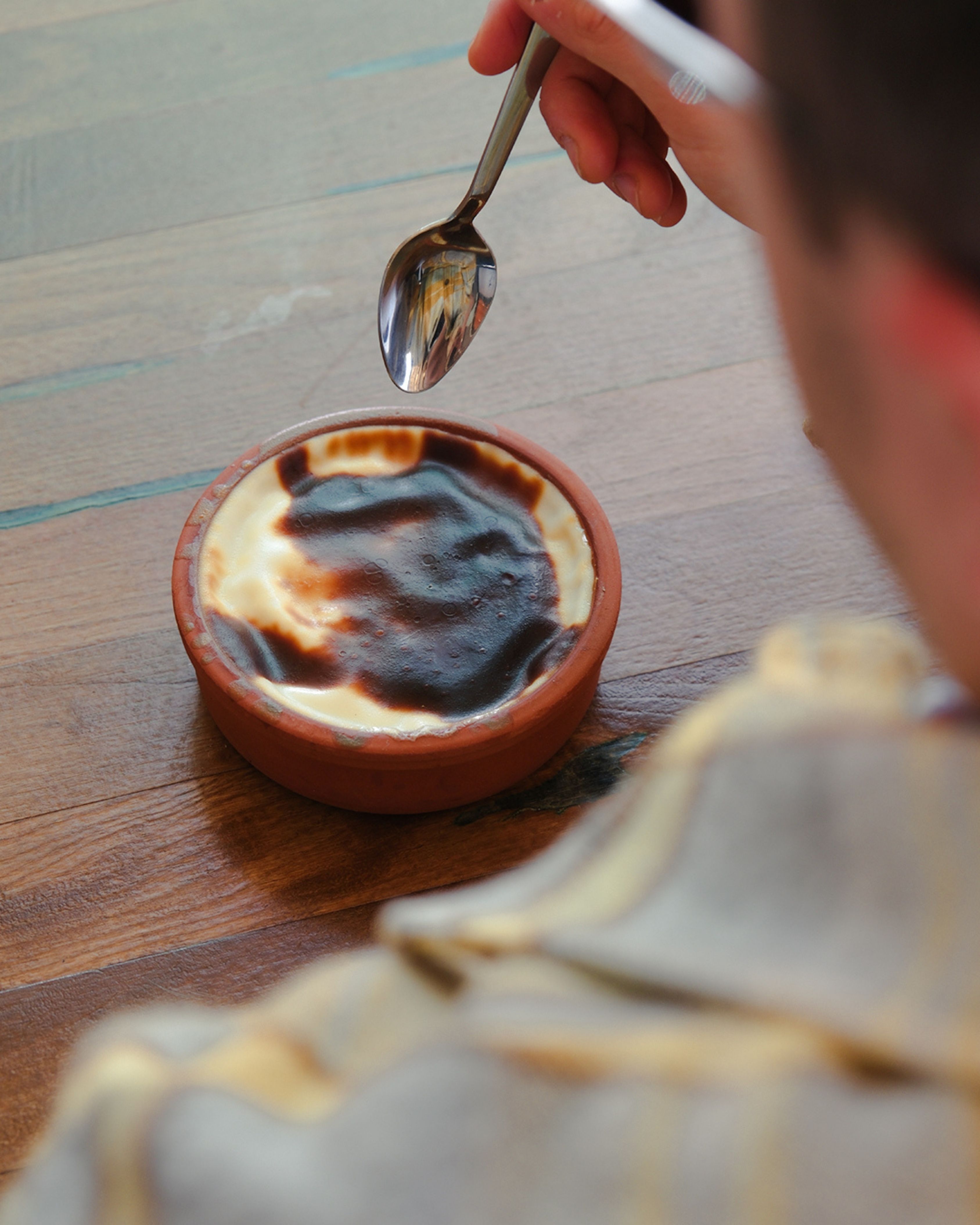
Rice Pudding Turco
The diets react (see scores below)
Common Ingredients
- short-grain rice
- milk
- sugar
- cinnamon
- butter
- pistachios
- pine nuts
- salt
Specific recipes may vary.
Incompatible with 7 of 11 diets
Diet Ratings
Rice Pudding Turco is fundamentally incompatible with a ketogenic diet. Short-grain rice is a high-glycemic grain that alone contributes roughly 25-30g of net carbs per small serving, and the addition of sugar compounds this dramatically. A typical serving could easily contain 40-60g of net carbs, far exceeding the entire daily keto allowance of 20-50g. Milk also adds lactose-based carbohydrates. The only keto-friendly components are butter, pistachios, pine nuts, and cinnamon — but they are overwhelmed by the core high-carb ingredients. No reasonable portion adjustment can make this dish compatible with ketosis.
Rice Pudding Turco contains multiple animal-derived ingredients that are explicitly excluded from a vegan diet. Milk is a dairy product, and butter is a dairy fat — both are animal products. These are not trace contaminants or processing aids but primary, intentional ingredients in this dish. The remaining ingredients (short-grain rice, sugar, cinnamon, pistachios, pine nuts, salt) are fully plant-based, but the presence of milk and butter makes this dish unambiguously non-vegan. A vegan version could be made by substituting plant-based milk (oat, almond, coconut) and vegan butter or coconut oil.
Rice Pudding Turco is fundamentally incompatible with the Paleolithic diet. The dish contains multiple core non-paleo ingredients: short-grain rice (a grain, universally excluded from paleo), milk (dairy, excluded), sugar (refined sugar, excluded), butter (dairy, excluded or highly debated), and salt (added salt, excluded). While pistachios and pine nuts are paleo-approved and cinnamon is a welcome paleo spice, they are minor components that cannot redeem a dish built almost entirely on prohibited foods. This is one of the clearest possible avoid verdicts.
Turkish rice pudding (sütlaç) is a traditional dessert with mixed Mediterranean diet compatibility. It contains dairy (milk, butter) which is acceptable in moderation, and beneficial nuts (pistachios, pine nuts) which are Mediterranean staples. However, it also contains added sugar, refined short-grain white rice, and butter — all of which are discouraged in modern Mediterranean diet guidelines. The dish is a treat/snack category dessert, not a core Mediterranean food, but its use of whole milk, nuts, and cinnamon gives it some redeeming qualities. The combination of refined carbohydrates, added sugar, and butter tips it toward caution rather than approval.
Traditional Eastern Mediterranean and Turkish culinary traditions incorporate dairy-based puddings and rice desserts as part of a balanced diet enjoyed occasionally. Some Mediterranean diet researchers acknowledge that traditional sweets made with whole-food ingredients like nuts and spices — consumed in small portions — are culturally consistent with the Mediterranean lifestyle, especially compared to ultra-processed alternatives.
Rice Pudding Turco is overwhelmingly plant-based and incompatible with the carnivore diet. The primary ingredient is short-grain rice, a grain that is strictly excluded. Sugar is a processed carbohydrate with no place in carnivore eating. Cinnamon is a plant-derived spice. Pistachios and pine nuts are plant foods (legume/nut). While milk and butter are animal-derived, they are completely overshadowed by the dominant plant ingredients. This dish is essentially a grain-and-sugar dessert with trace dairy — not a carnivore food by any reasonable interpretation.
Rice Pudding Turco contains multiple excluded ingredients that make it clearly non-compliant with Whole30. Short-grain rice is a grain and is explicitly excluded. Milk is dairy and is excluded (only ghee/clarified butter is the dairy exception). Sugar is an added sweetener and is explicitly excluded. Regular butter is also excluded (only ghee/clarified butter is permitted). With four separate excluded ingredients, this dish fails comprehensively on multiple fronts.
Rice Pudding Turco contains several ingredients that create FODMAP concerns, primarily centered on the milk (lactose) and pistachios (GOS/fructans). Short-grain rice is low-FODMAP and safe. Sugar (sucrose) is low-FODMAP. Cinnamon in small culinary amounts is fine. Butter is very low in lactose and generally considered low-FODMAP. Pine nuts are low-FODMAP at small servings (1 tablespoon / ~14g) but become moderate at larger amounts. The two main problem ingredients are: (1) Milk — a standard serving of rice pudding typically contains a significant volume of cow's milk, which is high in lactose. Lactose is a key FODMAP to avoid during elimination; this alone is a major disqualifier at normal serving sizes. (2) Pistachios — rated high-FODMAP by Monash at even modest servings (>10 pistachios contains significant GOS and fructans). A traditional Turkish rice pudding (sütlaç) is milk-heavy and often garnished with a meaningful handful of pistachios, making the overall dish high-FODMAP at any standard portion. The dish could theoretically be modified (lactose-free milk, omit pistachios) but as described it requires caution or avoidance.
Monash University rates cow's milk as high-FODMAP above 1/4 cup (61ml) due to lactose, and pistachios as high-FODMAP above 10 nuts; some clinical FODMAP dietitians would rate this dish 'avoid' outright given that a realistic rice pudding serving far exceeds the safe lactose threshold. However, individuals who have already completed reintroduction and tolerate lactose moderately may find smaller portions acceptable, which is why 'caution' rather than 'avoid' is assigned here.
Rice Pudding Turco contains several DASH-compatible ingredients (milk provides calcium, pistachios and pine nuts offer magnesium, potassium, and healthy unsaturated fats, and rice provides some carbohydrate energy), but the dish has notable DASH concerns. Added sugar is a primary ingredient, which DASH explicitly limits. Butter adds saturated fat, which DASH discourages. Whole milk (the standard assumption for this dish) is a full-fat dairy product, which DASH specifies should be replaced with low-fat or fat-free dairy. The combined effect of added sugar, saturated fat from butter, and likely full-fat milk makes this a treat-category food rather than a DASH staple. Pistachios and pine nuts are genuinely DASH-friendly in moderate portions. The dish is not high in sodium, which is a positive factor. Overall, acceptable occasionally in small portions but not a food DASH emphasizes.
NIH DASH guidelines clearly limit added sugars, sweets, and full-fat dairy, placing this dessert firmly in the moderation category. However, some updated DASH-aligned clinical interpretations note that emerging research on full-fat dairy does not consistently show cardiovascular harm, and small portions of nut-enriched desserts with modest added sugar may be compatible with an otherwise adherent DASH pattern.
Rice Pudding Turco is fundamentally incompatible with Zone Diet principles. The dish is built on three high-glycemic, Zone-unfavorable foundations: short-grain white rice (very high GI, minimal fiber), added sugar, and butter (saturated fat). Together these produce a carbohydrate-dense, sugar-spiking snack with virtually no lean protein and dominated by unfavorable fat sources. The milk contributes some protein but is far too little relative to the carbohydrate load to approach a 40/30/30 ratio. Pistachios and pine nuts provide monounsaturated fat, which is Zone-favorable, but they are minor components that cannot rescue the macro imbalance. As a snack, a Zone-compliant option should approximate a mini-meal with balanced blocks — this dish delivers almost exclusively unfavorable carbs with negligible protein and the wrong fats. Even with aggressive portion reduction, the high-GI carb density makes it nearly impossible to fit into Zone blocks without the carb block count vastly overwhelming protein and fat contributions. This is among the rare snack formats that genuinely merits an 'avoid' rating rather than 'caution.'
Turkish rice pudding (sütlaç-style) is a mixed dish from an anti-inflammatory perspective. On the positive side, cinnamon is a well-supported anti-inflammatory spice (cinnamaldehyde reduces NF-κB signaling), pistachios provide healthy monounsaturated fats, antioxidants, and some anti-inflammatory polyphenols, and pine nuts offer modest omega-3 (pinolenic acid) and omega-6 content. However, the dish's core is built on refined short-grain white rice (high glycemic index, drives glucose spikes linked to inflammatory markers like CRP and IL-6), added sugar (a primary pro-inflammatory driver), butter (saturated fat, should be limited), and full-fat milk (acceptable in moderation but not emphasized). The overall glycemic load of this dessert is high, and the sugar-butter combination is precisely the type of profile anti-inflammatory diets flag for regular avoidance. As an occasional treat, the beneficial components (cinnamon, pistachios, pine nuts) provide partial offset, but the dish's structural foundation is pro-inflammatory. It is acceptable in strict moderation but not a food to consume regularly on an anti-inflammatory diet.
Turkish rice pudding (sütlaç-style) is a dairy-based dessert with moderate protein from milk but significant drawbacks for GLP-1 patients. The primary ingredients are short-grain rice (refined carbohydrate, low fiber), sugar (added sugar, empty calories), butter (saturated fat), and milk (moderate protein but diluted across a serving). The pistachios and pine nuts add small amounts of healthy unsaturated fats and a protein boost, but not enough to meaningfully offset the high sugar and refined carb load. Fat content from butter and nuts is moderate. The dish is easy to digest and portion-friendly in small servings, which works in its favor on GLP-1 medications. However, the sugar content and low fiber from refined white rice are meaningful concerns — blood sugar spikes are counterproductive, and fiber is near zero per serving. Protein per serving is low (roughly 4-6g from milk in a standard portion), failing to meet the 15-30g per meal target. This is not a food that earns its place nutritionally on a GLP-1 diet, but a small occasional serving is unlikely to cause serious harm or worsen side effects significantly given its soft texture and digestibility.
Some GLP-1-focused dietitians consider small portions of milk-based desserts acceptable because dairy provides calcium, phosphorus, and modest protein, and the soft texture is gentle on a slowed digestive system — particularly useful on high-nausea days. Others argue that any high-sugar, low-fiber, low-protein snack is counterproductive given the reduced caloric budget GLP-1 patients are working within, and that this dish should be displaced by higher-nutrient options entirely.
*See how scores were generated at our methodology page.
Nutritional profile
Six traits that cut across every diet.
Fiber & Plants
How much whole-plant food and fiber it delivers.
Healthy Fats
The quality of its fats (unsaturated, omega-3).
Whole / Unprocessed
How close it is to its natural, unprocessed form.
Gut Gentle
How easy it is on digestion (low FODMAP, few irritants).
Low Glycemic
How little it spikes your blood sugar.
Protein Density
How much protein it packs per calorie.
Controversy Index
Higher controversy = more disagreement between diets.
Diet-Specific Tips
 Mediterranean — 4/10
View tips
- Added sugar is a negative factor per Mediterranean diet guidelines
- Short-grain white rice is a refined grain, less preferred than whole grains
- Butter is used as fat rather than the preferred extra virgin olive oil
- Pistachios and pine nuts are Mediterranean-approved healthy fats
- Dairy (milk) is acceptable in moderate amounts
- Cinnamon is a beneficial spice consistent with Mediterranean cooking
- Dessert/snack category — occasional consumption is culturally traditional
- Not a core Mediterranean dish but not wholly incompatible when eaten sparingly
 DASH — 4/10
View tips
- High added sugar content conflicts with DASH limits on sweets
- Butter contributes saturated fat, which DASH discourages
- Whole milk (standard preparation) is full-fat dairy, not DASH-preferred low-fat dairy
- Pistachios and pine nuts are DASH-friendly sources of unsaturated fats, magnesium, and potassium
- Low sodium content is a positive attribute
- Refined short-grain white rice is lower in fiber than whole grains preferred by DASH
- Suitable only as an occasional small-portion treat within a DASH plan
 Anti-Inflammatory — 4/10
View tips
- High added sugar — primary pro-inflammatory concern, drives glycemic response and raises CRP
- Refined white rice — high glycemic index contributes to inflammatory glucose spikes
- Butter — saturated fat source that anti-inflammatory guidelines recommend limiting
- Full-fat milk — acceptable in moderation per anti-inflammatory framework but not emphasized
- Cinnamon — well-supported anti-inflammatory spice (cinnamaldehyde, antioxidants)
- Pistachios — anti-inflammatory polyphenols, healthy monounsaturated fats, fiber
- Pine nuts — contain some pinolenic acid with modest anti-inflammatory properties
- Overall glycemic load is high, undermining the beneficial ingredients present
 GLP-1 Friendly — 4/10
View tips
- Low protein per serving (~4-6g), well below the 15-30g per meal target
- High added sugar content is counterproductive for blood sugar stability and caloric efficiency
- Refined short-grain rice provides minimal fiber, failing the fiber priority
- Butter adds saturated fat, a category to limit on GLP-1 medications
- Soft, easy-to-digest texture is a genuine positive for patients with GLP-1 GI side effects
- Pistachios and pine nuts add unsaturated fats and modest protein but in small quantities
- Small portion friendliness is a mild positive — damage is limited if portion is controlled
- Nutrient density per calorie is poor — primarily carbohydrate and fat with little micronutrient return