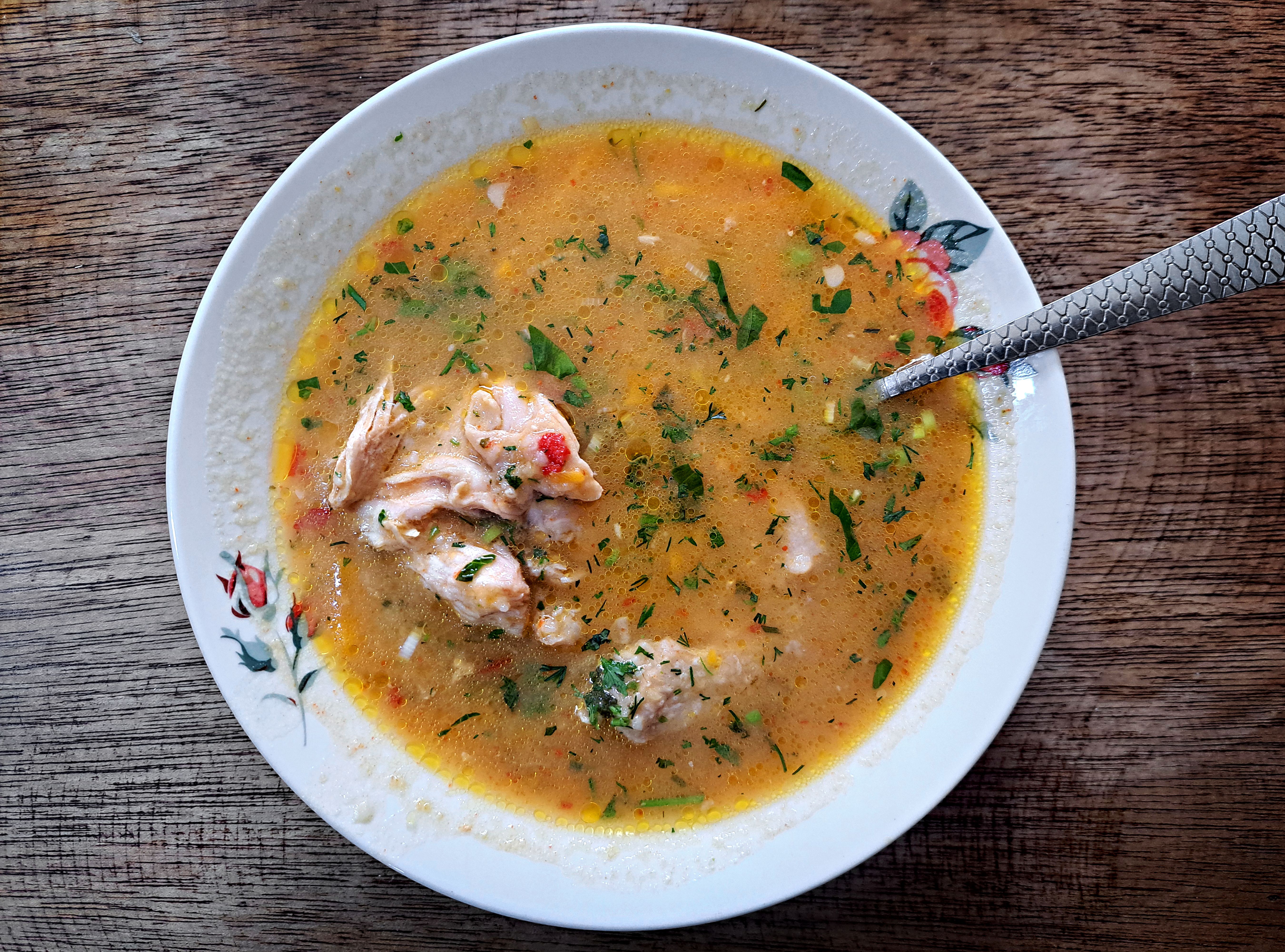
Photo: DΛVΞ GΛRCIΛ / Pexels
Romanian
Ciorba de Burta
The diets react (see scores below)
Common Ingredients
- beef tripe
- carrot
- onion
- garlic
- sour cream
- egg yolk
- vinegar
- hot pepper
Specific recipes may vary.
Incompatible with 7 of 11 diets
Diet Ratings
Ciorba de Burta (Romanian tripe soup) is moderately keto-compatible but requires portion awareness. Beef tripe is an excellent protein source with minimal carbs and is keto-friendly. Sour cream and egg yolks add healthy fats and are keto staples. The main carb contributors are carrot and onion, which contain moderate net carbs — a typical serving of this soup may contain 8-15g net carbs depending on quantities of these vegetables. Vinegar adds negligible carbs. If portion-controlled and the carrot/onion quantities are kept small, this soup can fit within a daily keto budget, but a large bowl could push net carbs toward the daily limit, especially when combined with other meals.
Strict keto practitioners may flag the carrot entirely, as it is a higher-glycemic root vegetable that some keto protocols eliminate regardless of portion size; they would recommend substituting or omitting it to make the dish fully approve-worthy.
Ciorba de Burta is a traditional Romanian tripe soup that contains multiple animal products, making it entirely incompatible with a vegan diet. Beef tripe is an animal organ product, sour cream is a dairy product, and egg yolk is an animal-derived ingredient. There is no plant-based version of this dish in its traditional form — the tripe, sour cream, and egg yolk are all structurally central to the recipe, not incidental additions.
Ciorba de Burta is disqualified primarily by sour cream, a dairy product explicitly excluded from the paleo diet. Beef tripe, carrot, onion, garlic, egg yolk, vinegar, and hot pepper are all paleo-compatible ingredients, but sour cream is a core non-paleo item with no ambiguity. The dish cannot be rated 'caution' because sour cream is not a gray-area dairy product like ghee (which has casein and lactose removed) — it is a full dairy product. Without sour cream, a tripe-based broth with vegetables would be broadly paleo-approved.
Ciorba de Burta is a traditional Romanian tripe soup that conflicts with Mediterranean diet principles on multiple fronts. Beef tripe is an organ meat from red/processed meat category, which is limited to only a few times per month in the Mediterranean diet. The dish is also enriched with sour cream and egg yolk as a thickening base, adding saturated fat typical of Eastern European rather than Mediterranean culinary tradition. There is no olive oil as the primary fat, and the protein source (beef offal) is not encouraged. The vegetables present (carrot, onion, garlic) are positive elements, and the vinegar and hot pepper are acceptable, but they cannot offset the core incompatibility of tripe and high-fat dairy enrichment.
Some Mediterranean diet interpretations, particularly those rooted in traditional peasant cuisines of the broader region, allow for occasional organ meats as a whole-food, nose-to-tail protein source that avoids waste. A small serving infrequently, within an otherwise plant-rich diet, might be tolerated by more flexible Mediterranean diet frameworks.
Ciorba de Burta, while centered on beef tripe (an excellent organ meat highly valued on carnivore), contains multiple plant-based ingredients that disqualify it from carnivore compliance. Carrot, onion, garlic, and hot pepper are all plant foods explicitly excluded from the carnivore diet. Vinegar, typically derived from plant sources (wine or apple), is also non-carnivore. Sour cream and egg yolk are animal-derived and would be acceptable on their own, but the dish as prepared is dominated by plant ingredients that cannot simply be removed without fundamentally changing the recipe. The tripe itself is carnivore-approved, but the overall dish is not.
Ciorba de Burta contains sour cream, which is dairy and explicitly excluded on the Whole30 program. Sour cream is listed among the dairy products (along with milk, cheese, and yogurt) that are prohibited for the 30 days. The egg yolk thickener and vinegar are compliant, and beef tripe, vegetables, garlic, and hot pepper are all fine, but the sour cream is a disqualifying ingredient with no compliant substitute that would preserve the character of this dish. Without sour cream, this would not be an authentic Ciorba de Burta.
Ciorba de Burta contains multiple high-FODMAP ingredients that make it unsuitable during the elimination phase. Onion is one of the highest-FODMAP foods (high in fructans) and a core flavoring ingredient in this soup. Garlic is similarly very high in fructans and another foundational flavoring. Sour cream contains lactose and is high-FODMAP at typical serving sizes used in this dish (it is stirred in generously as a thickening agent, well above the Monash low-FODMAP threshold of roughly 2 tablespoons). The combination of onion, garlic, and sour cream in meaningful quantities makes this dish definitively high-FODMAP. Beef tripe itself is a plain protein and low-FODMAP, carrot is low-FODMAP at standard servings, vinegar is low-FODMAP, and hot pepper (capsicum/chili) is generally low-FODMAP in small amounts. However, the fructan load from onion and garlic alone is sufficient to classify the dish as avoid, regardless of other ingredients.
Ciorba de Burta (Romanian tripe soup) presents a mixed DASH profile. On the positive side, it contains DASH-friendly vegetables (carrot, onion, garlic) and is a soup format that can be broth-based. However, several concerns arise: beef tripe, while relatively lean, is an organ meat high in dietary cholesterol; the sour cream is full-fat dairy, which DASH explicitly discourages in favor of low-fat alternatives; the egg yolk adds additional cholesterol and saturated fat; and traditional preparations of this soup tend to be moderately high in sodium. The vinegar and hot pepper are neutral to positive. The dish is not heavily processed and lacks added sugars, but the combination of full-fat sour cream, egg yolk, and organ meat places it in the caution zone rather than outright avoidance, since the vegetable base and lean protein aspects partially offset the concerns. A modified version using low-fat yogurt instead of sour cream would score higher.
NIH DASH guidelines specifically limit full-fat dairy and high-cholesterol foods like organ meats and egg yolks. However, updated clinical interpretations note that the 2020-2025 Dietary Guidelines removed the strict dietary cholesterol cap, and some DASH-aligned practitioners now view moderate egg yolk and organ meat consumption as acceptable within an otherwise balanced eating pattern, particularly given tripe's relatively low saturated fat content compared to other beef cuts.
Ciorba de Burta is a Romanian tripe soup with a mixed Zone Diet profile. Beef tripe is a lean, high-protein offal meat — relatively low in fat compared to other beef cuts — making it a workable Zone protein source, though it is not a 'favorable' lean protein like skinless chicken or fish. The vegetable base (carrot, onion, garlic) contributes low-glycemic carbohydrates aligned with Zone principles, especially carrot and onion which are favorable Zone carbs in modest portions. The problematic elements are the sour cream and egg yolk used for the finishing liaison: sour cream is relatively high in saturated fat, which Zone cautions against, and the egg yolk adds additional saturated fat. These together push the fat profile away from the preferred monounsaturated fats. The vinegar and hot pepper are Zone-neutral or mildly favorable (vinegar can moderate glycemic response). Overall, the dish can be incorporated into a Zone meal with careful portioning — particularly limiting the sour cream quantity — but the saturated fat content and offal protein source make it 'unfavorable' in strict Zone terminology rather than outright avoid.
Some Zone practitioners following Sears' later anti-inflammatory writings (Toxic Fat, The Anti-Inflammation Zone) may be more lenient about moderate saturated fat from whole-food dairy sources like sour cream, especially in the context of an otherwise low-glycemic, protein-centered meal. In this view, the dish scores closer to a 6. Conversely, strict early-Zone adherents would flag both the tripe (organ meat, not a listed favorable protein) and the sour cream (saturated fat source) more heavily, potentially scoring it a 4.
Ciorba de Burta is a traditional Romanian tripe soup with a mixed anti-inflammatory profile. On the positive side, it contains garlic (allicin, anti-inflammatory), onion (quercetin), carrot (beta-carotene), hot pepper (capsaicin), and vinegar (may support gut health and glycemic control). These vegetables and spices provide meaningful antioxidant and polyphenol content. However, the dish has several pro-inflammatory concerns: beef tripe is organ meat from red meat, which falls in the 'limit' category. Sour cream (full-fat dairy) adds saturated fat, which is flagged in anti-inflammatory frameworks. Egg yolk adds arachidonic acid, a precursor to pro-inflammatory eicosanoids, though its overall inflammatory effect is debated. The dish is broth-based rather than fried or heavily processed, which moderates its overall inflammatory load. The combination of full-fat dairy (sour cream) with organ meat and egg yolk tips the balance toward caution rather than avoidance, as the vegetable and spice components provide partial offset. This is a comfort food that can be consumed occasionally but is not a dish to emphasize in an anti-inflammatory pattern.
Some traditional food advocates and gut-health researchers point to organ meats like tripe as rich in collagen, glycine, and zinc — nutrients that may support gut lining integrity and dampen systemic inflammation. From this perspective, tripe-based broths are sometimes considered therapeutic, particularly in the context of leaky gut protocols. Mainstream anti-inflammatory nutrition (e.g., Dr. Weil's framework) does not endorse organ meats specifically but also does not categorically condemn them the way it does processed meats.
Ciorba de Burta is a traditional Romanian tripe soup that poses several significant challenges for GLP-1 patients. Beef tripe is an organ meat with a distinctive fatty, gelatinous texture that is notoriously difficult to digest — a serious concern given that GLP-1 medications already slow gastric emptying substantially. The sour cream and egg yolk finishing (used to thicken and enrich the broth) add meaningful saturated fat and caloric density per serving. Hot pepper is a known irritant for the reflux and nausea that GLP-1 patients commonly experience. On the positive side, tripe does contain a reasonable amount of protein (roughly 17g per 100g cooked) and the vegetable base (carrot, onion, garlic) contributes some fiber and micronutrients. Vinegar in small amounts is generally fine. However, the combination of high-fat dairy enrichment, organ meat that is slow and heavy to digest, and spicy pepper makes this a poor fit for most GLP-1 patients, particularly those in early treatment phases when GI side effects are most pronounced.
Some GLP-1-aware dietitians may allow tripe-based soups in moderate portions for patients who have established tolerance, noting that tripe is lower in fat than many other beef cuts and the broth-based format supports hydration. However, most would flag the sour cream enrichment and spicy pepper as meaningful concerns that warrant caution or avoidance, especially on injection days or during nausea-prone periods.
*See how scores were generated at our methodology page.
Nutritional profile
Six traits that cut across every diet.
Fiber & Plants
How much whole-plant food and fiber it delivers.
Healthy Fats
The quality of its fats (unsaturated, omega-3).
Whole / Unprocessed
How close it is to its natural, unprocessed form.
Gut Gentle
How easy it is on digestion (low FODMAP, few irritants).
Low Glycemic
How little it spikes your blood sugar.
Protein Density
How much protein it packs per calorie.
Controversy Index
Higher controversy = more disagreement between diets.
Diet-Specific Tips
 Keto — 5/10
View tips
- Beef tripe is low-carb, high-protein, and keto-appropriate
- Sour cream and egg yolks provide healthy fats consistent with keto
- Carrot is the primary carb concern — root vegetable with moderate net carbs
- Onion adds additional carbs and should be used sparingly
- Vinegar and hot pepper are negligible in carb content
- Net carbs per serving estimated at 8-15g depending on vegetable quantities
- Works within keto if vegetable portions are minimized and meal fits daily carb budget
 DASH — 4/10
View tips
- Full-fat sour cream conflicts with DASH low-fat dairy requirement
- Beef tripe is an organ meat with high dietary cholesterol
- Egg yolk adds additional cholesterol and saturated fat
- Traditional preparation typically moderate-to-high in sodium
- DASH-positive vegetables: carrot, onion, garlic provide potassium and fiber
- No added sugars or heavily processed ingredients
- Low-fat yogurt substitution would significantly improve DASH compatibility
- Vinegar and hot pepper are DASH-neutral flavor enhancers
 Zone — 5/10
View tips
- Beef tripe is lean protein but classified as 'unfavorable' offal in strict Zone — not among Sears' preferred lean proteins
- Sour cream and egg yolk introduce saturated fat, conflicting with Zone's preference for monounsaturated fats
- Carrot, onion, and garlic are favorable low-glycemic Zone carbohydrates
- Broth-based soup format is naturally low-calorie and easy to portion-control for Zone blocks
- Vinegar may have a mild beneficial effect on glycemic response, consistent with Zone anti-inflammatory principles
- Hot pepper (capsaicin) is Zone-neutral and adds polyphenols consistent with Sears' anti-inflammatory focus
- Fat profile could be improved by reducing sour cream and substituting with a small amount of olive oil
 Anti-Inflammatory — 4/10
View tips
- Beef tripe is a red meat organ meat — falls in the 'limit' category for anti-inflammatory diets
- Sour cream (full-fat dairy) contributes saturated fat, flagged as pro-inflammatory
- Egg yolk contains arachidonic acid, a pro-inflammatory precursor, though effects are context-dependent
- Garlic, onion, carrot, and hot pepper provide anti-inflammatory polyphenols, quercetin, beta-carotene, and capsaicin
- Vinegar may support gut health and glycemic modulation
- Broth-based preparation avoids frying or refined carbohydrates, limiting additional inflammatory burden
- No processed additives, trans fats, refined sugars, or seed oils in the traditional recipe
- Tripe is rich in collagen and glycine, which some researchers associate with anti-inflammatory gut support