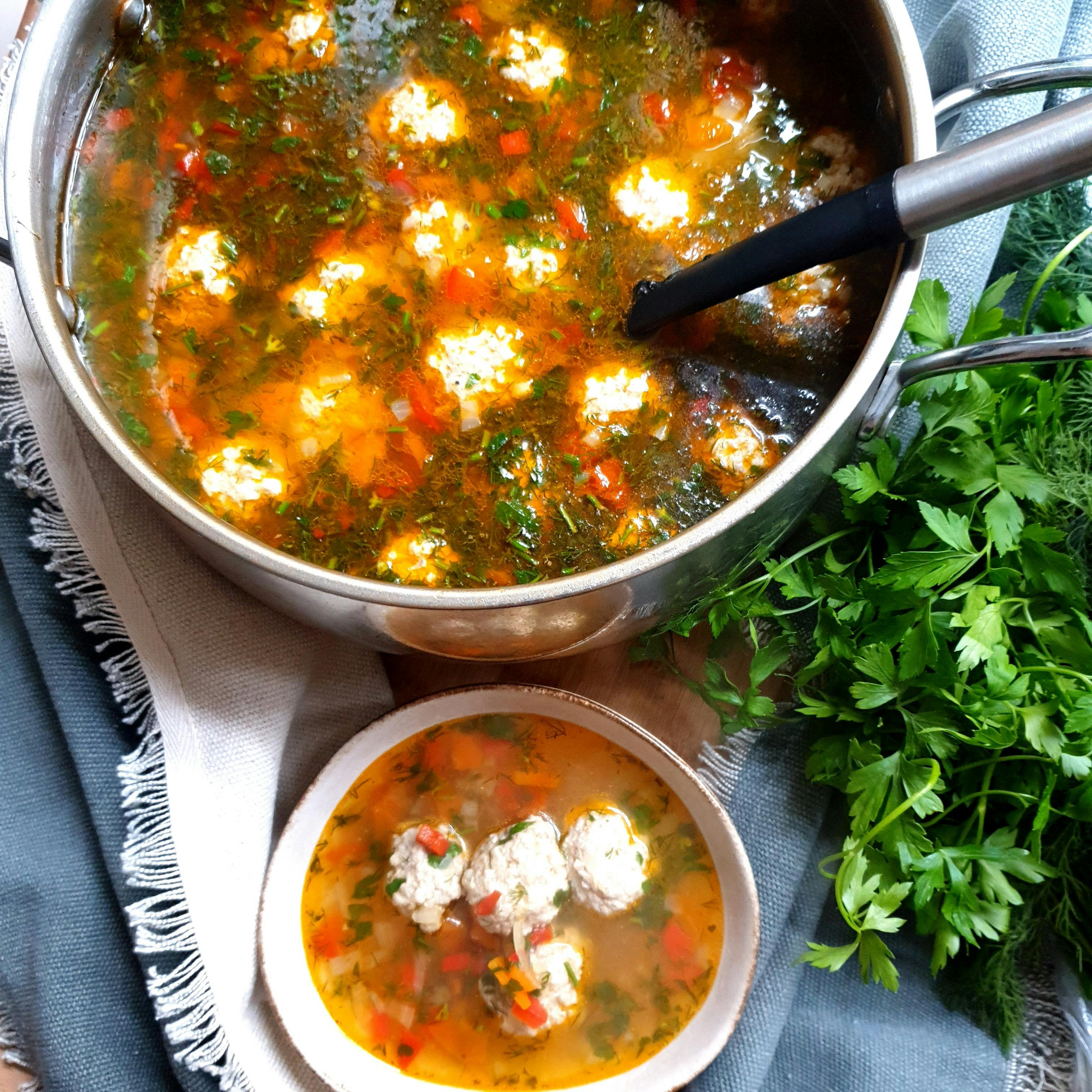
Photo: Ana Palade / Pexels
Romanian
Ciorba de Perisoare
The diets react (see scores below)
Common Ingredients
- ground pork
- rice
- carrot
- onion
- celery
- tomato
- borscht
- parsley
Specific recipes may vary.
Incompatible with 7 of 11 diets
Diet Ratings
Ciorba de Perisoare is fundamentally incompatible with ketogenic diets. The meatballs (perisoare) contain rice as a binding agent, which is a high-carb grain that alone can spike net carbs significantly. The soup base compounds the problem with carrots and tomatoes (moderate carb vegetables), onion (higher carb), and traditional borscht (fermented wheat bran liquid), adding further carbohydrates. Combined, these ingredients easily push a single serving well beyond the 20-50g daily net carb limit, leaving virtually no room for other foods. The ground pork itself is keto-friendly, but the overall dish as traditionally prepared is not salvageable without major structural changes (removing rice, replacing borscht, limiting root vegetables).
Ciorba de Perisoare is a traditional Romanian meatball soup whose defining ingredient is ground pork, an animal product that is categorically excluded from a vegan diet. The dish cannot be considered vegan in any interpretation of the diet. While several of the supporting ingredients — rice, carrot, onion, celery, tomato, borscht (fermented wheat bran liquid), and parsley — are fully plant-based, the primary protein and structural component of the dish is pork. There is no meaningful debate within the vegan community on this point.
Ciorba de Perisoare contains two clear paleo violations: rice (a grain) used as a binder in the meatballs, and borscht (fermented wheat bran liquid), which is grain-based. These are not gray-area ingredients — both are explicitly excluded under strict paleo rules. The remaining ingredients (ground pork, carrot, onion, celery, tomato, parsley) are all paleo-approved, but the dish as traditionally prepared cannot be considered paleo-compatible. A modified version substituting cauliflower rice or no binder, and replacing borscht with lemon juice or apple cider vinegar for sourness, could make it paleo-friendly.
Ciorba de Perisoare is a traditional Romanian meatball soup where the primary protein is ground pork — a red meat that the Mediterranean diet limits to just a few times per month. The vegetable base (carrot, onion, celery, tomato, parsley) and the fermented borscht (a sour wheat bran liquid) are genuinely positive components, adding nutrients, fiber, and probiotic-adjacent qualities. However, the dish is anchored by pork meatballs with rice as a binder, making red meat the central ingredient rather than a minor addition. This structural reliance on pork pushes the dish into 'avoid' territory under Mediterranean guidelines, though the abundant vegetables and traditional fermented souring agent (borscht) prevent it from scoring at the very bottom.
Some Mediterranean diet interpreters apply a more flexible 'overall dietary pattern' lens, arguing that a vegetable-rich, broth-based soup with a modest amount of ground pork (diluted across many servings) is preferable to processed or fried alternatives. In this view, the dish could be rated 'caution' if portion sizes keep the pork content small relative to the vegetables.
Ciorba de Perisoare is a traditional Romanian meatball soup that is heavily incompatible with the carnivore diet. While ground pork forms the protein base, virtually every other ingredient is plant-derived and explicitly excluded from the carnivore diet. Rice is a grain used as a binder in the meatballs. The soup base contains carrot, onion, celery, tomato, and parsley — all plant foods. Borscht (borș) is a fermented wheat bran liquid used to sour the soup, adding both a grain derivative and a plant-based souring agent. The dish is fundamentally a vegetable-forward soup with meat as one component rather than an animal-product-centric meal. There is no meaningful adaptation possible while retaining the identity of this dish.
Ciorba de Perisoare contains rice, which is a grain explicitly excluded on the Whole30 program. Rice is used as a binder/filler inside the meatballs (perisoare), making it a direct component of the dish rather than a side. Additionally, borscht (the Romanian sour liquid, typically fermented wheat bran or wheat-based) often contains gluten-containing grains, which are also excluded. Even if the borscht were replaced with a compliant souring agent (e.g., lemon juice or tomato-based acid), the rice in the meatballs alone is sufficient to disqualify this dish. All other ingredients — ground pork, carrot, onion, celery, tomato, and parsley — are individually Whole30-compliant.
Ciorba de Perisoare contains two significant high-FODMAP ingredients that make it problematic during the elimination phase. Onion is one of the highest-FODMAP foods due to fructans and is high-FODMAP at any cooking amount — critically, fructans leach into the soup broth, meaning even removing the onion pieces after cooking does not make the broth safe. Celery root/stalks contain polyols (mannitol) and are moderate-to-high FODMAP above small servings. The traditional borscht (borș) souring agent is a wheat bran or beet ferment — if wheat bran-based, it contributes fructans; if beet-based, it may be better tolerated but is not reliably tested. Ground pork meatballs are low-FODMAP as a protein. Rice (in the meatballs and soup) is low-FODMAP. Carrot is low-FODMAP at standard servings. Tomato is low-FODMAP at up to ~65g. Parsley is low-FODMAP as a herb. However, the onion alone renders this dish a clear avoid during elimination phase, and the borscht souring agent adds further uncertainty.
Monash University confirms onion is high-FODMAP at any culinary amount, including when cooked into broths — fructans dissolve into cooking liquid, making the entire soup high-FODMAP. Some clinical practitioners suggest using only the green tops of spring onions as a substitute, which would change the dish's FODMAP status, but as traditionally prepared with onion, this dish is not suitable for elimination. The borscht souring agent (borș) lacks direct Monash testing, adding low-confidence uncertainty to the full FODMAP load.
Ciorba de Perisoare is a Romanian meatball soup with a mixed DASH compatibility profile. On the positive side, it contains a wealth of DASH-friendly vegetables (carrot, onion, celery, tomato, parsley) that provide potassium, magnesium, and fiber, along with rice as a grain and tomato as a good source of potassium. The broth-based format is inherently lower in saturated fat than cream-based soups. However, several factors limit its DASH score: (1) Ground pork is a red meat, which DASH limits due to saturated fat content — leaner cuts or substituting with turkey/chicken would improve the profile. (2) Borscht (fermented wheat bran liquid, the traditional souring agent) adds a modest fermentation-derived sodium contribution, and in practice the dish is often salted generously during preparation, raising total sodium. (3) The pork meatballs may also contain added salt and sometimes egg yolk as a binder. If prepared with lean ground pork (or pork loin, <10% fat), sodium carefully controlled during cooking, and moderate portion sizes, this dish is acceptable within a DASH framework due to its vegetable richness and broth base. Standard restaurant or home preparations, however, likely exceed DASH sodium targets per serving.
NIH DASH guidelines clearly limit red meat including pork due to saturated fat concerns, placing this dish in 'caution' territory. However, updated clinical DASH interpretations note that lean pork tenderloin and trimmed cuts have saturated fat profiles comparable to chicken thigh, and some DASH-aligned dietitians consider lean pork acceptable in moderation (1-2 servings/week), which would slightly improve this soup's rating if lean ground pork is used.
Ciorba de Perisoare is a Romanian meatball soup with a generally reasonable macro profile, but it requires careful portioning to fit Zone blocks. The ground pork meatballs are the primary concern — pork is a less-than-ideal Zone protein because it carries more saturated fat than lean poultry or fish. However, ground pork is not excluded from the Zone; it simply occupies the 'unfavorable' protein category and should be leaner cuts when possible. The rice used as a binder in the meatballs is a high-glycemic carbohydrate that Sears classifies as unfavorable, though the quantity per serving is typically small (likely 1-2 tablespoons in the whole batch, diluted per serving). The vegetables — carrot, onion, celery, tomato, parsley — are Zone-favorable low-glycemic carbohydrates that contribute polyphenols and fiber. Borscht (fermented wheat bran liquid) is the souring agent; it adds negligible macronutrients but provides some fermented food benefit. The soup's carbohydrate content comes predominantly from Zone-favorable vegetables with only minor rice contribution, which is a positive. The main issues are the saturated fat from ground pork and the rice, but neither is present in quantities that make this dish impossible to incorporate into a Zone meal plan. A moderate serving (controlling pork meatball quantity to ~3 oz cooked protein) paired with a side salad and a drizzle of olive oil could bring the meal closer to Zone ratios. This dish sits firmly in 'caution' territory — usable but not optimal without modifications.
Zone practitioners who follow Sears' later anti-inflammatory writings (The OmegaRx Zone, The Mediterranean Zone) may rate this more favorably, noting that the tomato and vegetable base provides significant polyphenols, the borscht adds probiotic benefit, and the overall soup format naturally limits caloric density. Some may argue the small rice binder quantity is negligible and that lean ground pork (93%+ lean) is close enough to acceptable Zone protein. Conversely, strict early-Zone followers would flag both the pork and rice as unfavorable and recommend substituting ground turkey and omitting the rice binder.
Ciorba de Perisoare is a traditional Romanian meatball soup with a mixed anti-inflammatory profile. On the positive side, the vegetable base (carrot, onion, celery, tomato, parsley) provides meaningful antioxidants, carotenoids, quercetin, and vitamin C. Tomatoes are a good source of lycopene, which has demonstrated anti-inflammatory effects. Parsley contributes flavonoids and vitamin K. The fermented wheat bran borscht (borș) used for souring is a traditional lacto-fermented ingredient that may offer modest probiotic and anti-inflammatory benefits, similar to other fermented foods. Rice adds neutral carbohydrates without being highly refined or sugary. The primary concern is ground pork, which is categorized as red meat in the anti-inflammatory framework — associated with higher saturated fat and arachidonic acid content, both of which can promote inflammatory signaling. However, the pork meatballs are diluted throughout a broth-based soup with substantial vegetable content, which mitigates the impact compared to a pork-centric main dish. The overall fat load of the dish is moderate since it's a soup, not a roast or fried preparation. This dish sits in the 'moderate' zone: it is not the ideal anti-inflammatory meal due to red meat, but it is far from a highly pro-inflammatory processed food.
Some anti-inflammatory practitioners following stricter protocols (such as AIP or those emphasizing very low red meat intake) would rate this more harshly due to the pork, arguing that even moderate consumption of red meat elevates arachidonic acid and saturated fat intake. Conversely, proponents of whole-food, Mediterranean-adjacent eating patterns (closer to Dr. Weil's more moderate stance) would note that a broth-based soup rich in vegetables, with lean meatballs in modest portions, is an acceptable and nutritious meal when pork is not consumed daily.
Ciorba de Perisoare is a traditional Romanian meatball soup made with ground pork meatballs, rice, vegetables (carrot, onion, celery, tomato), and soured with borscht (fermented wheat bran liquid). It has meaningful strengths for GLP-1 patients: high water content from the broth base supports hydration, the vegetable mix adds fiber and micronutrients, and the borscht souring agent is a low-calorie flavoring that adds digestive-friendly acidity. The soup format is inherently GLP-1 friendly — easy to digest, portion-controllable in small servings, and gentle on a slowed GI tract. However, the primary protein source is ground pork, which depending on fat content (standard ground pork is typically 20-30% fat) contributes significant saturated fat per serving. This is the main liability: fatty pork meatballs can worsen nausea, bloating, and reflux — core GLP-1 side effects. Protein contribution is moderate but not high-density per calorie compared to leaner alternatives. Rice adds digestible carbohydrates but minimal fiber. The dish lands in caution territory: acceptable and even beneficial in moderate portions if made with lean ground pork (93% lean or higher), but problematic if made with standard-fat ground pork. A modification to lean pork or a pork-turkey blend would improve the score substantially.
Some GLP-1-focused dietitians would rate this more favorably, noting that soup-based meals are among the most tolerated formats for patients experiencing nausea and early satiety, and that the overall fat per bowl is diluted by the broth volume. Others would flag any ground pork dish as a default caution due to unpredictable fat content in home or restaurant preparation, where lean vs. standard grind is rarely specified.
*See how scores were generated at our methodology page.
Nutritional profile
Six traits that cut across every diet.
Fiber & Plants
How much whole-plant food and fiber it delivers.
Healthy Fats
The quality of its fats (unsaturated, omega-3).
Whole / Unprocessed
How close it is to its natural, unprocessed form.
Gut Gentle
How easy it is on digestion (low FODMAP, few irritants).
Low Glycemic
How little it spikes your blood sugar.
Protein Density
How much protein it packs per calorie.
Controversy Index
Higher controversy = more disagreement between diets.
Diet-Specific Tips
 DASH — 5/10
View tips
- Ground pork is a red meat — DASH recommends limiting red meat due to saturated fat content
- Rich vegetable base (carrot, onion, celery, tomato, parsley) aligns well with DASH vegetable servings
- Borscht souring agent adds some sodium; overall dish sodium depends heavily on preparation
- Broth-based soup format is preferred over cream-based — lower in saturated fat
- Rice provides whole grain benefits if brown rice is used; white rice is less optimal
- Tomatoes contribute potassium, a key DASH mineral
- Sodium can be managed by reducing added salt and using homemade low-sodium borscht
- Substituting lean turkey or chicken for pork would elevate this dish to 'approve' territory
 Zone — 5/10
View tips
- Ground pork is an unfavorable Zone protein due to higher saturated fat content compared to lean poultry or fish
- Rice as meatball binder is a high-glycemic, unfavorable Zone carbohydrate — though portion per serving is small
- Vegetable base (carrot, onion, celery, tomato, parsley) provides Zone-favorable low-glycemic carbohydrates and polyphenols
- Soup format naturally controls portion density and caloric load, making Zone ratios easier to manage
- No added oils or fats in the broth, so fat content depends on the fat percentage of the ground pork used
- Borscht (fermented liquid) is nutritionally neutral but adds probiotic value consistent with Sears' anti-inflammatory focus
- Can be made more Zone-compliant by using lean ground pork or turkey and omitting or minimizing the rice binder
 Anti-Inflammatory — 5/10
View tips
- Ground pork is red meat — contains saturated fat and arachidonic acid, which are pro-inflammatory at high intake
- Rich vegetable base (carrot, onion, celery, tomato, parsley) contributes antioxidants, carotenoids, and quercetin
- Tomatoes provide lycopene, a potent antioxidant with anti-inflammatory properties
- Fermented borscht (borș) may offer probiotic and anti-inflammatory benefits as a lacto-fermented souring agent
- Broth-based preparation keeps overall fat content moderate compared to pan-fried or roasted pork dishes
- Rice is a neutral, minimally processed carbohydrate — no significant inflammatory impact
- Parsley contributes flavonoids (apigenin, luteolin) and vitamin K with anti-inflammatory associations
- Overall dish is a diluted red-meat exposure in a vegetable-forward format — moderate rather than strongly pro-inflammatory
 GLP-1 Friendly — 5/10
View tips
- Ground pork fat content is the central variable — standard grind is high in saturated fat, worsening GLP-1 GI side effects
- Soup format is GLP-1 friendly: high water content supports hydration, easy to digest, small-portion tolerant
- Vegetable mix (carrot, onion, celery, tomato, parsley) adds fiber and micronutrients
- Borscht souring agent is low-calorie and digestive-friendly
- Rice adds carbohydrates with minimal fiber contribution
- Protein density per calorie is moderate, not optimal compared to lean protein sources
- Modifying with 93%+ lean ground pork or a turkey blend would significantly improve GLP-1 compatibility