Photo: Boryslav Shoot / Pexels
Romanian
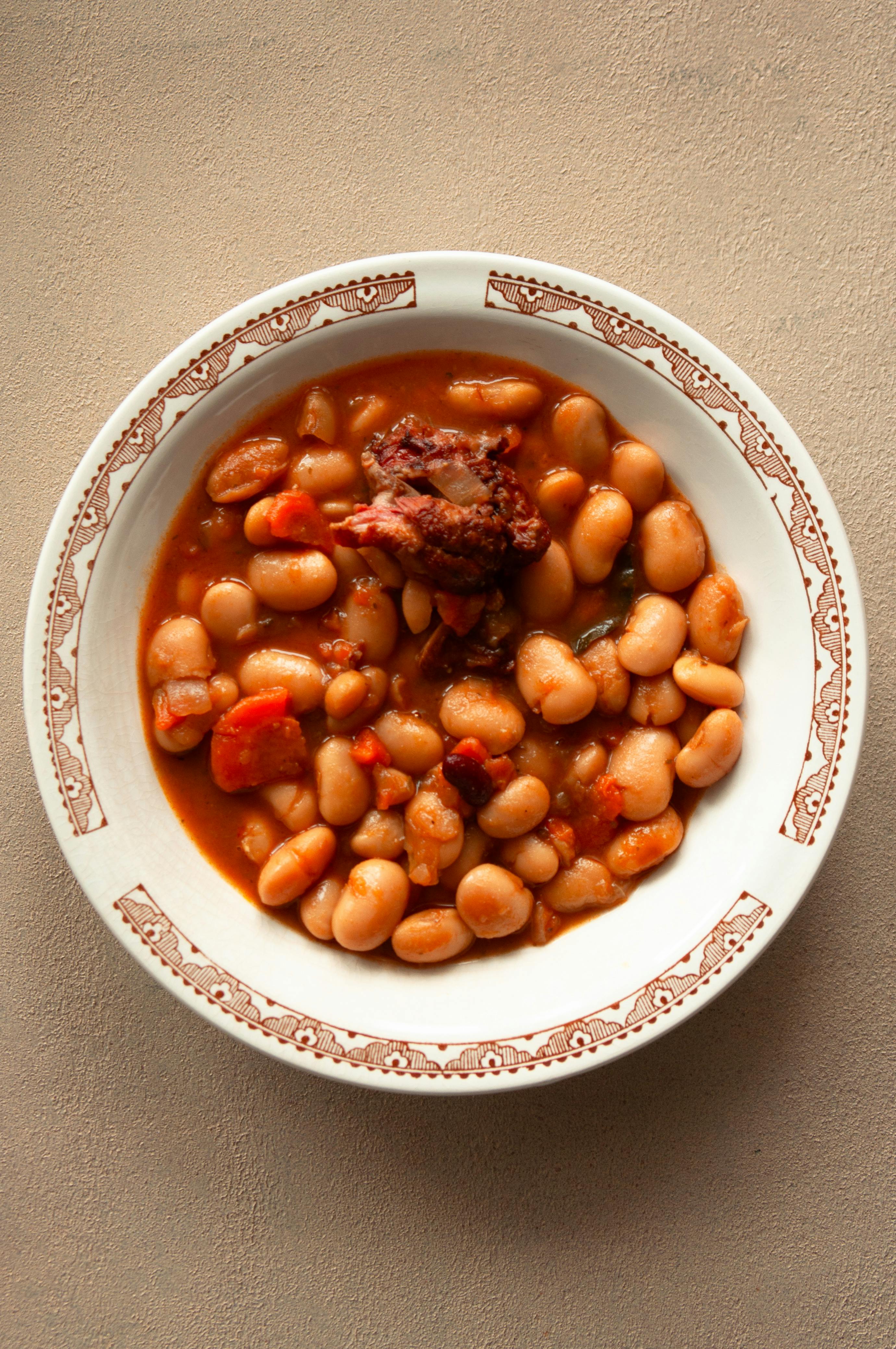
Fasole cu Ciolan
The diets react (see scores below)
Common Ingredients
- white beans
- smoked pork knuckle
- onion
- carrot
- tomato
- paprika
- bay leaf
- thyme
Specific recipes may vary.
Incompatible with 7 of 11 diets
Diet Ratings
Fasole cu Ciolan is fundamentally incompatible with ketogenic diet due to its primary ingredient: white beans. White beans are extremely high in net carbohydrates — a single cup of cooked white beans contains approximately 40-45g of net carbs, which alone can exceed or meet the entire daily keto carb budget. The dish is bean-centric, meaning the carb load cannot be mitigated through portion control without removing the dish's defining ingredient entirely. While the smoked pork knuckle is an excellent keto protein and fat source, the remaining ingredients (carrot, tomato, and the beans themselves) compound the carb count further. This is a traditional legume-based stew and is structurally incompatible with ketosis.
Fasole cu Ciolan is a traditional Romanian bean and pork knuckle soup. The smoked pork knuckle (ciolan) is a central, defining ingredient of this dish — it is an animal product (pork) and cannot be considered vegan under any interpretation. This is a clear disqualification with no ambiguity.
Fasole cu Ciolan is fundamentally incompatible with the paleo diet. The dish's primary ingredient, white beans, is a legume — one of the most clearly excluded food categories in paleo. Legumes contain lectins, phytates, and antinutrients that the paleo framework explicitly rejects. Compounding this, the smoked pork knuckle is a processed/cured meat, which falls outside paleo guidelines due to the smoking process typically involving added salt, nitrates, and other preservatives. The remaining ingredients — onion, carrot, tomato, paprika, bay leaf, and thyme — are all paleo-compliant vegetables, herbs, and spices, but they cannot redeem a dish built on a legume base with a processed meat centerpiece.
Fasole cu Ciolan is a Romanian bean and smoked pork knuckle soup. While white beans are an excellent Mediterranean staple — rich in fiber, protein, and plant nutrition — the smoked pork knuckle is a form of processed red meat (cured/smoked), which doubly conflicts with Mediterranean principles: it is both red meat (limited to a few times per month) and a processed/cured product (to be minimized). The high sodium content from smoking and the saturated fat load from the knuckle further push this dish away from Mediterranean ideals. The vegetable aromatics (onion, carrot, tomato, paprika, bay leaf, thyme) are positive, but the dominant protein source undermines the dish. If the smoked knuckle were replaced with olive oil as the fat base, this could be a classic Mediterranean legume soup. As prepared, however, it scores low.
Some Mediterranean diet practitioners argue that bean-centric dishes with small amounts of pork used as a flavoring agent (rather than a primary protein) can be acceptable occasionally, drawing parallels to Italian fagioli traditions where cured pork (pancetta, prosciutto rind) is used sparingly for depth. In this framing, the dish could be a 'caution' if the knuckle is treated as a condiment rather than the main feature.
Fasole cu Ciolan is fundamentally incompatible with the carnivore diet. While it contains smoked pork knuckle — an acceptable animal protein — the dish is primarily defined by white beans as the main protein source, which are a legume and strictly excluded from all tiers of carnivore eating. The remaining ingredients compound the problem: onion, carrot, and tomato are plant vegetables; paprika, bay leaf, and thyme are plant-derived spices. Every ingredient except the pork knuckle violates carnivore principles. The smoked pork knuckle itself could be isolated and consumed, but the dish as a whole is essentially a plant-based bean stew with pork flavoring.
Fasole cu Ciolan is a traditional Romanian bean and smoked pork knuckle soup. White beans are legumes, which are explicitly excluded on the Whole30 program. Unlike green beans, sugar snap peas, or snow peas — which are specifically excepted — white beans (dried/shelled legumes) are firmly in the excluded category. This is a foundational Whole30 rule with no ambiguity. The smoked pork knuckle may also present concerns, as smoked meats commonly contain added sugars or sulfites in their curing process (though sulfites are now permitted per 2024 rules, added sugar in curing brines remains excluded). All other ingredients — onion, carrot, tomato, paprika, bay leaf, thyme — are individually compliant, but the white beans alone make this dish non-compliant regardless.
Fasole cu Ciolan is fundamentally incompatible with the low-FODMAP elimination phase due to multiple high-FODMAP ingredients. White beans are the primary protein and are very high in GOS (galacto-oligosaccharides), making them a significant FODMAP source even at small servings — a standard soup serving would contain a large quantity of beans, well above any tolerable threshold. Onion is one of the highest-fructan foods tested by Monash University and is a core aromatic in this dish; it cannot be omitted without fundamentally changing the recipe. Together, these two ingredients alone make the dish a clear avoid. The smoked pork knuckle itself is low-FODMAP, and carrot, tomato, paprika, bay leaf, and thyme are all low-FODMAP ingredients, but they cannot offset the high-FODMAP load from beans and onion. This dish would require a complete reformulation — replacing white beans with a low-FODMAP alternative (e.g., canned lentils in strictly controlled portions, or tofu) and omitting onion entirely (substituting with the green tops of spring onions) — to be considered during the elimination phase.
Fasole cu Ciolan is a traditional Romanian bean and smoked pork knuckle soup. The white beans are an excellent DASH food — high in fiber, potassium, magnesium, and plant protein, all core DASH nutrients. The vegetables (onion, carrot, tomato) and herbs (bay leaf, thyme, paprika) are fully DASH-compatible. However, the smoked pork knuckle is the primary concern: it is high in sodium (smoking and curing process), high in saturated fat, and falls into the red/processed meat category that DASH explicitly limits. A typical smoked pork knuckle can contribute 800–1,500mg of sodium to the dish, pushing the meal significantly toward or beyond the DASH daily sodium limit in a single serving. The saturated fat content from the pork knuckle skin and marbling further conflicts with DASH guidelines. The dish has a strong nutritional foundation in beans and vegetables, but the smoked cured pork component makes it a 'caution' at best as prepared traditionally. Substituting with a small amount of unsmoked lean pork or omitting the knuckle entirely would dramatically improve its DASH compatibility.
Fasole cu Ciolan is a traditional Romanian bean and smoked pork knuckle soup with genuine Zone potential but notable challenges. White beans are a 'favorable' Zone carbohydrate source — they are low-glycemic, high in fiber, and provide useful net carbs per block. The vegetables (onion, carrot, tomato) add polyphenols and micronutrients consistent with Zone principles. However, smoked pork knuckle is a fatty, skin-on cut with significant saturated fat, which conflicts with Zone's preference for lean proteins. The protein-to-fat ratio in the knuckle skews heavily toward fat, making it difficult to hit the 30/30 protein/fat calorie balance without overshooting fat. Additionally, white beans serve dual roles as both carbohydrate AND protein sources, which complicates block calculations — they contribute carb blocks primarily, so additional lean protein may be needed to complete a Zone meal. With careful portioning (modest knuckle, larger bean and vegetable proportion, trimming visible fat), this dish can be made Zone-compatible, but as traditionally prepared it leans toward excess saturated fat and an unbalanced macro ratio.
Some Zone practitioners, especially those influenced by Sears' later anti-inflammatory writings, would note that legumes like white beans are among the most favorable Zone carbohydrates and that a small amount of smoked pork knuckle provides a flavorful protein anchor without necessarily derailing the overall meal ratio. If the knuckle meat is pulled lean (skin and excess fat removed before eating) and portion-controlled, this dish could arguably score a 6-7, functioning as a reasonable Zone soup meal.
Fasole cu Ciolan is a traditional Romanian bean and smoked pork knuckle soup with a genuinely mixed anti-inflammatory profile. On the positive side, white beans are a strongly anti-inflammatory ingredient — high in fiber, plant protein, and resistant starch, all associated with reduced inflammatory markers including CRP. The vegetable base (onion, carrot, tomato) contributes antioxidants, quercetin, lycopene, and beta-carotene. Thyme, paprika, and bay leaf all carry meaningful anti-inflammatory polyphenols and are emphasized in anti-inflammatory frameworks. The tomato-paprika combination provides carotenoids. These elements collectively represent a solid anti-inflammatory foundation. The problematic element is the smoked pork knuckle (ciolan afumat), which brings multiple concerns: it is a fatty cut of pork with substantial saturated fat content, it is processed/cured via smoking (adding nitrates/nitrosamines and sodium), and pork knuckle falls squarely in the 'red meat / high-fat processed meat' category that anti-inflammatory frameworks advise limiting or avoiding. Smoked and cured meats have been associated with increased inflammatory markers in epidemiological research. The dish as traditionally prepared uses a generous portion of this cut, meaning the pro-inflammatory signal from the meat is not trivial. The overall dish lands in 'caution' territory: the legume-vegetable base is genuinely beneficial, but the smoked fatty pork is a meaningful liability that prevents an approval verdict.
Some anti-inflammatory-leaning practitioners (particularly those in the Mediterranean/traditional food movement) would note that beans dominate the nutritional profile of this dish and argue that a modest amount of smoked pork as a flavoring agent — rather than the centerpiece — is acceptable within an otherwise plant-rich dietary pattern, consistent with Dr. Weil's moderate allowance for lean poultry and the broader principle that dietary context matters more than individual ingredients. Conversely, stricter anti-inflammatory and AIP-aligned practitioners would flag smoked/cured pork more severely due to advanced glycation end products (AGEs) formed during smoking and the saturated fat load, potentially pushing this dish closer to 'avoid.'
Fasole cu Ciolan is a traditional Romanian bean and smoked pork knuckle soup. The white beans are a genuine strength — they provide meaningful plant-based protein, substantial fiber (supporting the #2 priority and helping prevent GLP-1-related constipation), and are easy to digest in soup form. The vegetables (onion, carrot, tomato) add micronutrients and water content, supporting hydration. The herbs and spices (paprika, bay leaf, thyme) are mild and unlikely to worsen GI side effects. The critical liability is the smoked pork knuckle: this is a fatty, heavily processed cut high in saturated fat and sodium. Pork knuckle skin and connective tissue are rich in fat, which worsens GLP-1 side effects including nausea, bloating, and reflux. The smoked/cured processing also adds significant sodium, which can contribute to water retention. Protein content per serving is moderate but the fat-to-protein ratio is poor compared to lean alternatives. The dish is not fried and is soup-based (a positive for digestibility and portion control), but the fatty meat component prevents an approve rating. A modified version with the meat removed or replaced with a lean protein (chicken breast, white fish) and the beans as the primary protein would score significantly higher.
Some GLP-1-focused dietitians may allow this dish in small portions if the fatty skin and excess fat are skimmed off the broth and the knuckle meat is consumed sparingly, arguing the bean base provides sufficient nutritional value to justify inclusion. Others would flag the saturated fat load and sodium content from smoked/cured pork as consistently problematic for GLP-1 patients regardless of portion size, given the already-slowed gastric emptying making fat tolerance worse.
*See how scores were generated at our methodology page.
Nutritional profile
Six traits that cut across every diet.
Fiber & Plants
How much whole-plant food and fiber it delivers.
Healthy Fats
The quality of its fats (unsaturated, omega-3).
Whole / Unprocessed
How close it is to its natural, unprocessed form.
Gut Gentle
How easy it is on digestion (low FODMAP, few irritants).
Low Glycemic
How little it spikes your blood sugar.
Protein Density
How much protein it packs per calorie.
Controversy Index
Higher controversy = more disagreement between diets.
Diet-Specific Tips
 DASH — 4/10
View tips
- White beans are a DASH-approved legume: high fiber, potassium, magnesium, and plant protein
- Smoked pork knuckle is cured/smoked — high sodium (800–1,500mg+ per serving) conflicting with DASH sodium limits
- Smoked pork knuckle contains significant saturated fat from skin and marbling
- Red and processed meat is explicitly limited on the DASH eating plan
- Vegetables (onion, carrot, tomato) and spices are fully DASH-compatible
- Overall sodium load of the dish as traditionally prepared likely exceeds a single-meal budget on both standard and low-sodium DASH
- Replacing smoked knuckle with a small portion of unsmoked lean pork or turkey would elevate this dish to 'approve'
 Zone — 5/10
View tips
- White beans are a favorable, low-glycemic Zone carbohydrate with good fiber content
- Smoked pork knuckle is high in saturated fat and does not qualify as a lean Zone protein
- Beans function as both carb and protein blocks, requiring careful macro accounting
- Vegetables (carrot, tomato, onion) add polyphenols and low-glycemic carb volume
- Traditional preparation likely includes skin and significant fat from the knuckle
- Portion control and fat trimming can substantially improve Zone compatibility
- No trans fats or high-glycemic refined carbohydrates present
 Anti-Inflammatory — 5/10
View tips
- White beans: strongly anti-inflammatory — high fiber, plant protein, associated with reduced CRP
- Smoked pork knuckle: pro-inflammatory — high saturated fat, processed/cured meat with nitrates and AGEs from smoking
- Tomato, carrot, onion: anti-inflammatory — lycopene, beta-carotene, quercetin
- Thyme, paprika, bay leaf: anti-inflammatory spices with polyphenols
- High sodium content from smoked/cured meat is an additional concern
- Legume-to-meat ratio is key — traditional recipes use a large pork knuckle relative to beans
 GLP-1 Friendly — 5/10
View tips
- White beans are high in fiber and plant protein — strong positives for GLP-1 patients
- Smoked pork knuckle is a high-fat, high-saturated-fat cut that can worsen nausea and bloating
- Smoked/cured pork adds significant sodium, a secondary concern
- Soup format supports hydration and easy digestibility — positives
- No frying, no added sugar, mild spices — avoids several common GLP-1 triggers
- Bean-to-meat ratio matters significantly; bean-heavy portions are better tolerated
- Removing or minimizing the knuckle and relying on beans as primary protein would substantially improve the rating